Why Pinhead Is a Masterclass in Design
Cast Your Vote on YouTube
Chapters
- 0:00Cold Open
- 0:20Intro
- 1:37First Impression
- 5:17The Blueprint
- 8:40Under The Hood
- 12:38Signature Moment
- 15:41The X Factor
- 18:42The Legacy
- 21:15Verdict
- 23:34Outro
- 24:34Post Credits
📁 Case File
The Case File: Pinhead
Overview
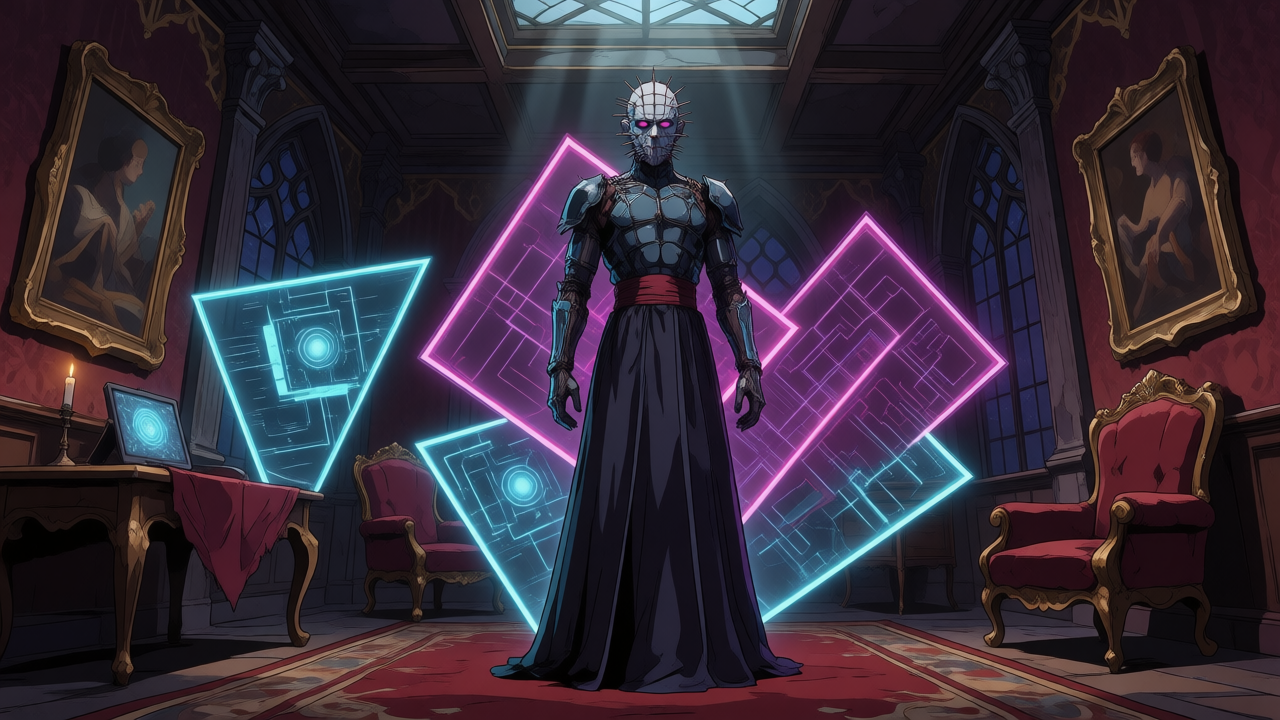
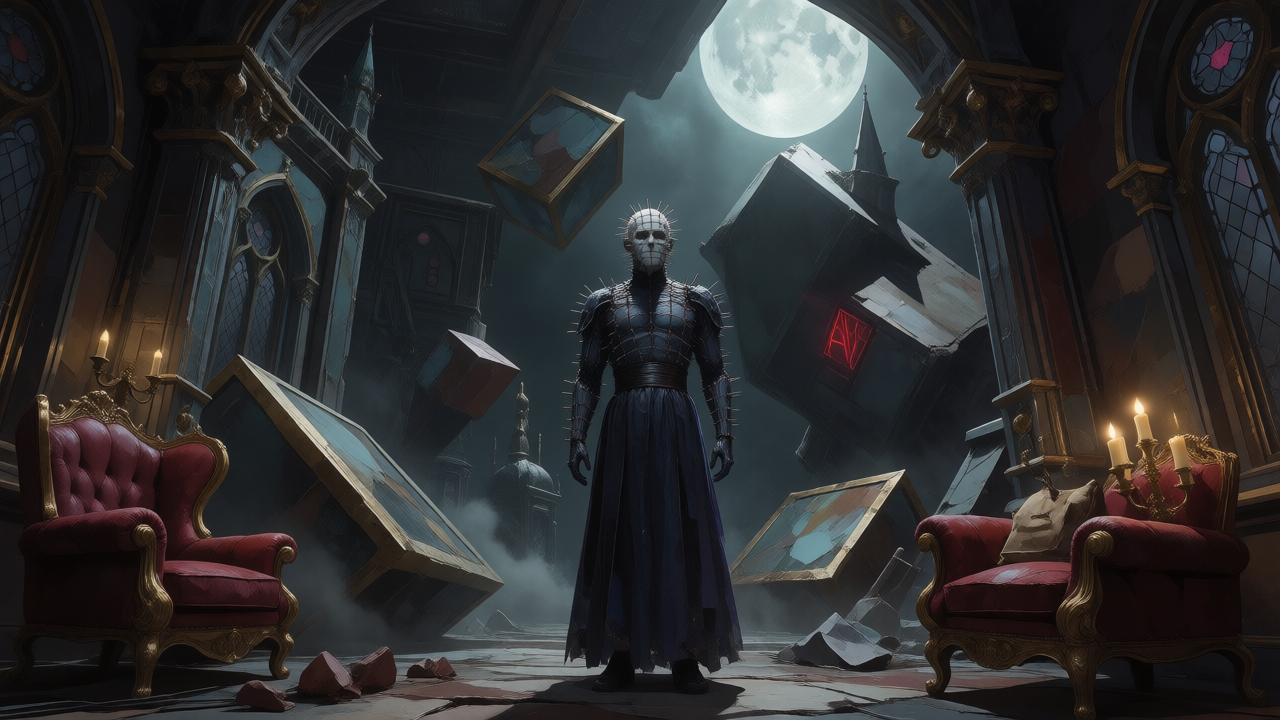
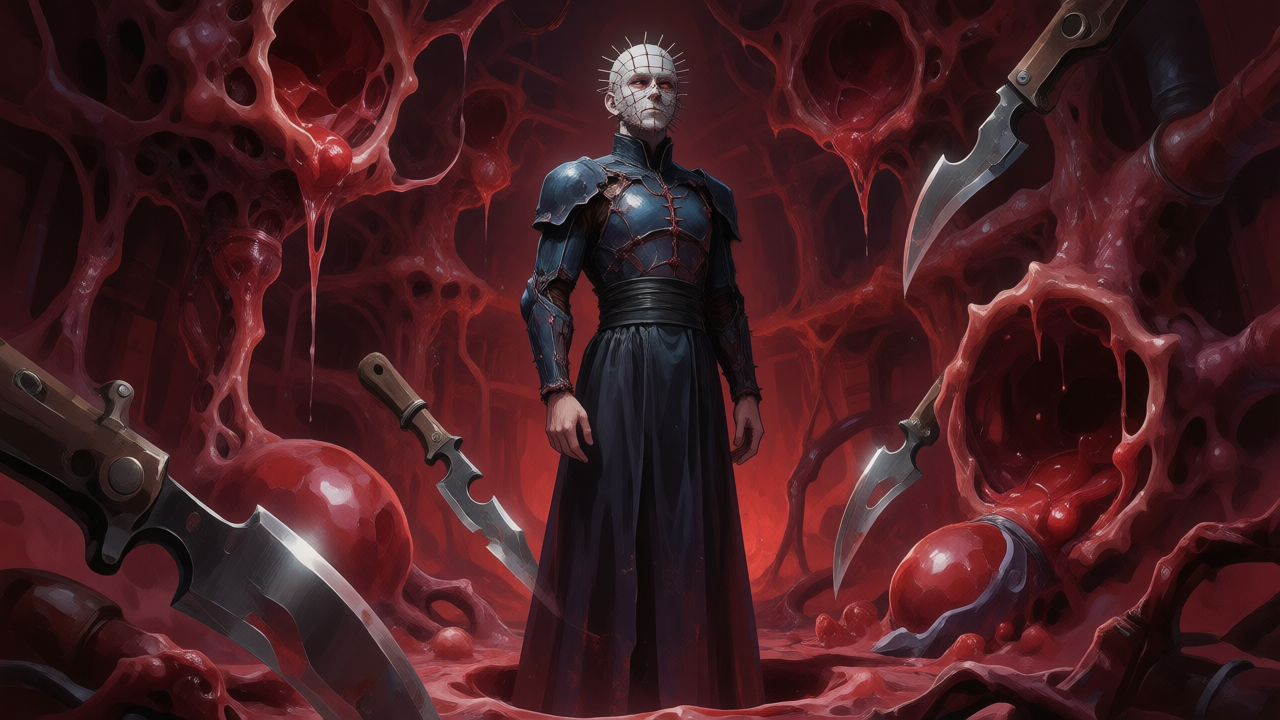
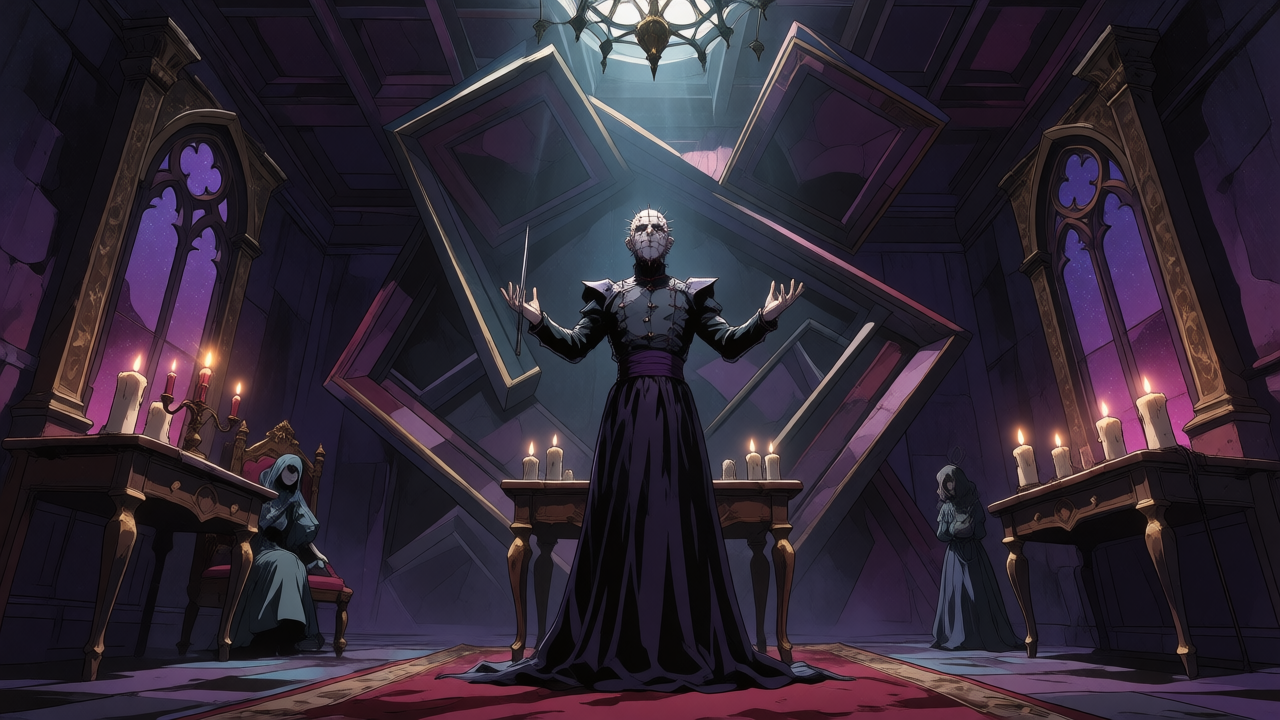
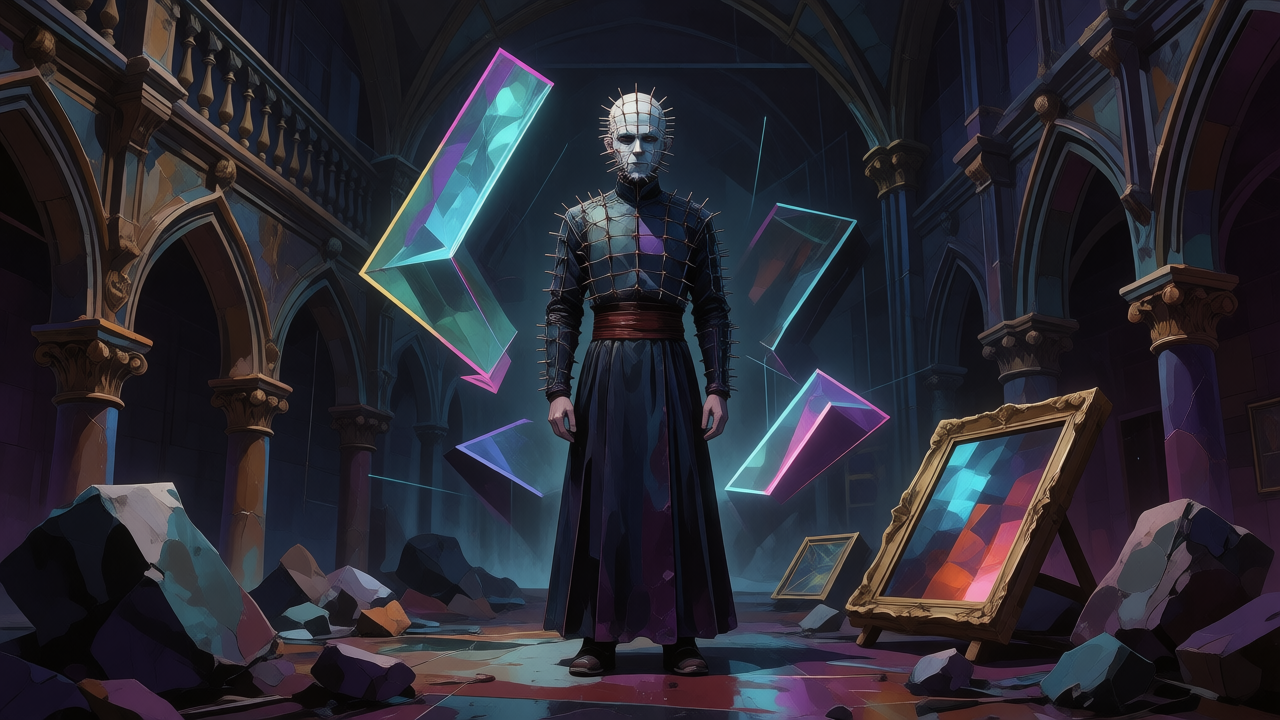
Pinhead—officially designated as the "Lead Cenobite" or the "Hell Priest"—is the primary antagonist of the *Hellraiser* franchise. A being of articulate intelligence and terrifying precision, Pinhead serves as a leader among the Cenobites: an order of former humans transformed into demonic entities dedicated to the practice of experimental sadomasochism. Operating from extra-dimensional realms often referred to as Hell, these beings are summoned to Earth through the solving of intricate puzzle boxes, most notably the Lament Configuration (also known as the LeMarchand Configuration). Unlike the mute or glib slashers of the 1980s, Pinhead is characterized by a sophisticated, almost ritualistic approach to his "harvesting" of human souls.
Background & Timeline
The origins of the entity known as Pinhead are layered in mystery and historical trauma:
- Pre-Cenobite Era: In several iterations of the lore, it is revealed that Pinhead was once a British soldier named Captain Elliot Spencer. Disillusioned by the horrors of World War I, Spencer sought out the Cenobites, eventually becoming one of their own.
- The Creation of the Box: The history of the gateway involves Philip Lemarchand, a toymaker commissioned in 1796 by the aristocrat Duc de L'Isle to create a box that could enslave a demon.
- The Era of Conflict (1980s–1990s): Following the events of the original film, Pinhead’s history becomes fragmented. In *Hellbound: Hellraiser II*, he displays a latent humanity when he chooses to release Kirsty Cotton. By *Hell on Earth*, it is revealed that his human identity (Spencer) and his demonic persona (Pinhead) can be split into two separate entities via a schism.
- The Modern Era: The franchise has seen various iterations, including attempts by characters like Dr. Paul Merchant to destroy the box using space-based technology (*Bloodline*) and the rise of modern cults or digital obsessions attempting to bridge the gap between our world and his realm (*Deader*, *Hellworld*).
The Evidence
The following artifacts and phenomena are central to Pinhead's presence on Earth:
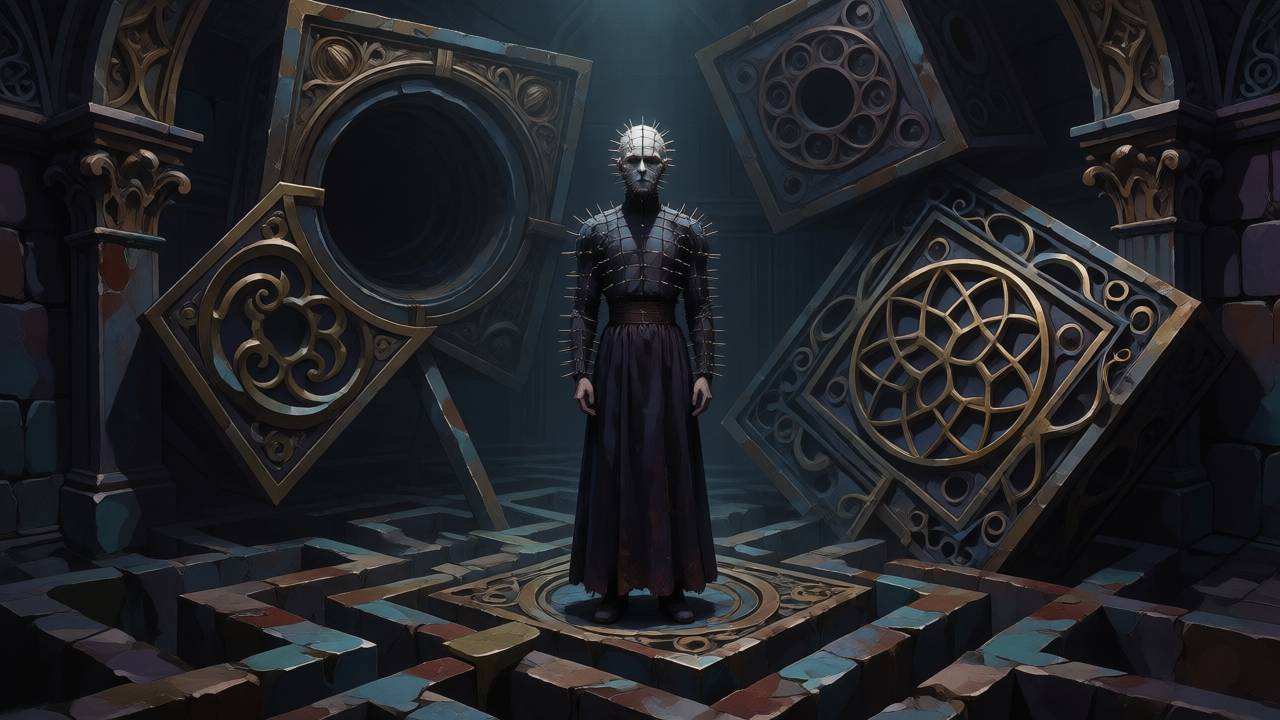
- The Lament Configuration: A highly intricate, shifting puzzle box. Solving it acts as a key, opening a gateway for the Cenobites to enter our dimension to harvest souls.
- The Schism/Limbo: Evidence suggests that the human soul of Elliot Spencer exists in a state of limbo when Pinhead operates as a pure embodiment of his "id."
- Ritualistic Geometry: The presence of specific religious or occult symbols, such as those found on an intricately carved pillar used to trap Pinhead, suggests his existence is tied to specific physical relics.
The Case
The argument for Pinhead’s nature rests on the tension between his demonic function and his personal code:
The Argument for Pure Evil:
Pinhead's primary directive is the pursuit of "sadistic experiments." He leads a group that views human suffering as an art form, harvesting souls to subject them to eternal, transformative pain. His arrival is almost always preceded by chaos, death, and the breakdown of reality.
The Argument for a Moral Code:
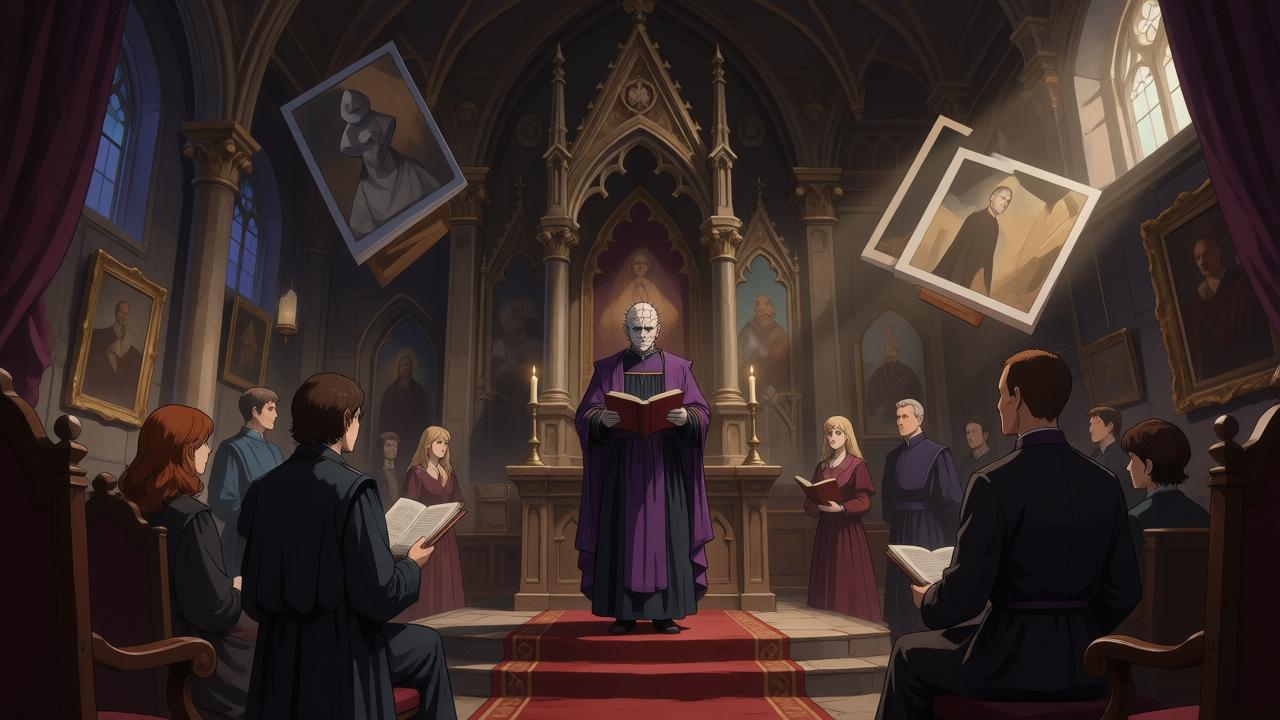
Contradicting the image of a mindless monster, Pinhead demonstrates intellect and a strict adherence to certain rules. He has been known to spare victims who manipulate the "rules" of his summoning (such as Kirsty Cotton) or those who act merely as pawns. This suggests he is not a chaotic force, but an orderly one—a priest of a very specific, dark liturgy.
The Cutting Room
- The Name Paradox: While "Pinhead" is the name used by fans and in most media, it was actually a nickname given to him by the production crew due to his nail-studded head. Clive Barker himself famously despises the moniker.
- The Succession Theory: There remains an ongoing debate within the lore: Is there only one Hell Priest for all eternity, or is the title passed down through different humans over millennia? Some suggest that if Pinhead were destroyed, another would inevitably be recruited to fill his void.
- The "Priest" Archetype: Early conceptual drafts referred to him simply as "the Priest," hinting at a religious subtext to his role in the Cenobite hierarchy.
Final Word
Pinhead is more than a monster; he is an inevitability. Whether he is viewed as the disillusioned soldier Elliot Spencer or a cosmic entity of pure sensation, he represents the terrifying intersection of human desire and eternal consequence. He does not merely kill; he transforms, turning the act of suffering into a dark, structured ritual.
🔎 Deep Cuts — things most write-ups miss
Deep Cuts: Pinhead
*Uncommon, hard-to-find knowledge about Pinhead from Hellraiser — the details most write-ups miss.*
Production & Development
- Character Origin: The visual concept of the "grid" pattern on the character's face was derived from a prop used in Barker’s 16mm black-and-white film *The Forbidden*, which featured a wooden block with six nails designed to cast distorted shadows under specific lighting.
- Design Evolution: Original production sketches for the Lead Cenobite featured quills emerging from the top of the head (similar to the character Shuna Sassi in *Nightbreed*), but this was scrapped due to budget constraints in favor of the nail/pin design.
- The "Pinhead" Moniker: The name "Pinhead" never appeared in the original script and was not used on-screen until *Hellraiser III: Hell on Earth*; it was a production nickname coined by the make-up crew that was eventually adopted by marketing and fans, much to Clive Barker's personal chagrin.
- Casting Influence: Barker intentionally modeled Pinhead’s articulate and calm demeanor after Christopher Lee’s portrayal of Count Dracula, moving away from the "silent killer" or "glib commentator" tropes common in 1980s horror.
- Technical Pivot: The decision to use thin pins instead of six-inch nails was a late-stage creative pivot made when the production team felt the larger nails looked too crude and lacked the desired aesthetic precision.
- Scripting Constraints: For *Hellraiser: Judgment*, actor Doug Bradley declined the role because the production company required him to sign a non-disclosure agreement (NDA) preventing him from reading the script before committing.
- Production Expediency: The 2011 film *Hellraiser: Revelations* was shot on an extremely tight 14-day schedule with a $300,000 budget; industry analysis suggests it was produced primarily to maintain filming rights for The Weinstein Company.
Hidden Lore & Missable Details
- The "Dutchman" Connection: Before appearing in *Hellraiser*, Doug Bradley originated an undead inquisitor/torturer character named The Dutchman in Clive Barker’s 1973 play *Hunters in the Snow*.
- Shadow-Play Origins: The grid pattern on Pinhead's face was inspired by a prop from Barker's unreleased film *The Forbidden*, which featured a wooden block with six nails designed to cast distorted shadow formations under specific lighting.
- Budgetary Design Shifts: Original concept sketches for the character featured quills emerging from the top of his head (similar to Shuna Sassi in *Nightbreed*), but these were scrapped for pins due to production budget constraints.
- The "Pinhead" Moniker Paradox: The name "Pinhead" never appears in the original 1987 film script or credits; it was a nickname coined by the makeup crew and production team that was only officially used on-screen starting with *Hellraiser III*.
- Linguistic Etymology of the Box: While commonly called the "Lament Configuration" in sequels, the box is referred to as the "LeMarchand Configuration" in various tie-in media and lore contexts.
- The Priest vs. The Id: In *Hellraiser III: Hell on Earth*, the character’s duality is explored through a metaphysical schism where his human identity (WWI veteran Elliot Spencer) and his demonic persona (Pinhead) are physically separated into two entities.
- Character Archetype Influence: Barker explicitly cited Christopher Lee's portrayal of Count Dracula as the primary cinematic influence for Pinhead’s articulate, non-monologuing, and dignified demeanor.
- The "Hell Priest" Title: In BOOM! Studios comic lore, it is established that the role of Hell Priest (or Pontifex) is a position that can be filled by different human-turned-Cenobites, implying Pinhead may not have been the first to hold the title.
- Symmetry in Suffering: The specific grid placement for the facial pins was determined by applying a drawing of a grid onto a character lifecast during production to ensure perfect geometric symmetry.
Hard Trivia & Deep Cuts
- The "Pinhead" Moniker: Despite being the character's most famous name, "Pinhead" was never used in the original 1987 film script; it was a production nickname coined by the makeup crew that was later adopted by fans and marketing.
- Visual Origin of the Grid: The specific grid pattern on the character's head was derived from a design experiment for a different Barker project, *The Forbidden*, involving a wooden block with six nails used to create distorted shadow formations under studio lighting.
- Budgetary Design Shifts: Clive Barker’s original sketches for the character featured quills emerging from the top of the head (similar to the creature designs in his film *Nightbreed*), but the production budget necessitated replacing them with a simpler nail/pin arrangement.
- The "Dracula" Influence: Doug Bradley has stated that his approach to the character's dialogue and presence was heavily influenced by Christopher Lee’s portrayal of Count Dracula, specifically regarding an articulate, non-slasher villain archetype.
- Theatrical Rarity of *Revelations*: The 2011 film *Hellraiser: Revelations*—produced primarily to retain filming rights for the studio—was released theatrically only in a single California theater as a specialized crew showing.
- Character Origins in Drama: Before appearing in horror, Doug Bradley played an undead inquisitor/torturer named "the Dutchman" in Clive Barker's 1973 play *Hunters in the Snow*.
- The "Priest" Evolution: In early drafts of the *Hellraiser* screenplay, the character was referred to by the title "The Priest," a designation that survived as a descriptor in various tie-in media and comics.
- Script Secrecy: During the production of *Hellraiser: Judgment*, Doug Bradley declined to reprise the role because the studio required him to sign a non-disclosure agreement (NDA) regarding the script's contents before he could read it.
Influences & Ripple Effects
- Cinematic Archetypes: Clive Barker explicitly cited Christopher Lee’s portrayal of Count Dracula as a primary influence on the character's articulate, sophisticated, and non-slasher-standard demeanor.
- Theatrical Origins: The character's conceptual DNA traces back to Barker's 1973 play *Hunters in the Snow*, where Doug Bradley performed the role of "the Dutchman," an undead inquisitor and torturer.
- Visual Prototyping: A design element for Pinhead’s face was derived from a prop used in the film *The Forbidden*: a wooden block with six nails that cast distorted shadow formations under specific lighting.
- Evolution of Anatomy: Original production sketches intended for the character to have quills protruding from his head (similar to Shuna Sassi in *Nightbreed*), but budget constraints forced the transition to the nail/pin aesthetic.
- Geometric Symmetry: The grid pattern on the character's face was not an organic design choice but a practical application of a drawing used by the makeup crew to determine placement for the pins within a lifecast.
- Subversion of Slasher Tropes: Pinhead represented a departure from 1980s horror conventions by eschewing the "mute killer" or "glib commentator" tropes in favor of an intelligent, code-bound entity.
- Expansion of Lore: While originally presented as a singular leader, Barker's *The Scarlet Gospels* and BOOM! Studios comics expanded the mythology to suggest the "Hell Priest" is a title/office that can be passed between different human-turned-Cenobite entities.
- Narrative Schism: The character's identity was split in *Hellraiser III: Hell on Earth*, establishing a dual existence between the human WWI veteran Elliot Spencer and the demonic embodiment of his id.
Fan Theories With Receipts
- The "Elliot Spencer" Identity Paradox
* Theory: The character of Pinhead is a singular eternal entity rather than a human soul being transformed into a demon.
* Evidence For: *Hellraiser III: Hell on Earth* explicitly depicts the schism between the human WWI veteran Elliot Spencer and the Cenobite Pinhead, suggesting they are two halves of one consciousness. Furthermore, Barker's novel *The Scarlet Gospels* posits a debate within the lore regarding whether the "Hell Priest" is a permanent office held by different humans across millennia or a singular, unchanging cosmic constant.
* Evidence Against: The narrative in *Bloodline* suggests that the Lemarchand family’s actions can trap specific individuals (like Pinhead) within configurations, implying a level of individual identity and mortality that contradicts an eternal, non-human nature.
- The "Humanity via Empathy" Theory
* Theory: Cenobites are not purely demonic but are governed by a strict, albeit twisted, moral code derived from their former human lives.
* Evidence For: In *Hellbound: Hellraiser II*, Pinhead demonstrates a capacity for mercy by releasing Kirsty Cotton after recognizing she was merely a pawn used by another to manipulate the box. This aligns with Barker’s stated intent that the character's dialogue and intelligence were modeled after the sophisticated, articulate Count Dracula (Christopher Lee) rather than mindless monsters.
* Evidence Against: The primary motivation of the Cenobites remains "experimental sadomasochism" and the harvesting of souls for eternal torture, a goal that functions as a fundamental rejection of human morality and empathy.
- The "Lament Configuration" as a Sentient Entity
* Theory: The puzzle box is not merely a tool or a key, but a sentient gateway that actively influences the psychology of its owners.
* Evidence For: In *Hellraiser: Inferno*, it is revealed that Detective Joseph Thorne’s entire experience was a personalized, subjective Hell constructed by the box/Cenobites to reflect his own crimes. Additionally, in *Hellworld*, the existence of a physical puzzle box within an MMORPG suggests the object has the ability to bridge different layers of reality (digital and physical) at will.
* Evidence Against: The films often treat the box as a mechanical device that requires specific geometric solutions (the "LeMarchand Configuration") to function, implying its power is derived from mathematical/extra-dimensional laws rather than conscious intent.
🔥 Hot Takes — angles you never considered
Hot Takes: Pinhead
*Angles you probably never considered — each one defensible, with the evidence and the strongest counter-argument. Spoilers, obviously.*
1. Pinhead is a Metaphysical Prison Architect, Not Just a Sadist
Lens: Philosophical & Systemic
Thesis: Pinhead’s entire existence isn’t about torturing souls—it's about constructing the metaphysical architecture of suffering itself.
Evidence: In *Hellraiser III: Hell on Earth*, Pinhead splits into two parts—his human self, Elliot Spencer, and his Cenobite form—symbolizing how he is both architect and prisoner of his own design. The Cenobites are not just sadists but "explorers" from another dimension who cannot distinguish between pain and pleasure, suggesting that suffering itself is their medium. His role as Hell Priest positions him not merely as a tyrant but as the cosmic craftsman of torment.
Counterargument: Critics might argue this overcomplicated Pinhead’s motivations by insisting he simply wants to cause maximum pain without deeper philosophical meaning.
---
2. The Puzzle Box is Designed by Cenobites, Not Clive Barker
Lens: Production & Meta
Thesis: The puzzle box itself is a product of the Cenobites' design language—its complexity reflects their obsession with control through chaos.
Evidence: The Lament Configuration in *Hellraiser* (1987) requires multiple steps to unlock, which mirrors the structure of the Cenobite ritual. Its construction involves specific pieces that must be assembled perfectly, much like how they construct their realm and souls. The puzzle box doesn't merely open gates—it embodies a system of human experience built for exploitation.
Counterargument: Some fans argue that the puzzle box is simply Barker’s creation artifact—not an evolved Cenobite tool—and thus lacks deeper significance.
---
3. Pinhead Isn’t Human — He’s a Living Embodiment of Failed Humanity
Lens: Psychological & Comparative
Thesis: Pinhead embodies the tragic failure of humanism through his own dual nature—human consciousness trapped in a demonic form.
Evidence: In *Hellraiser III*, the schism between Elliot Spencer and Pinhead reveals that each is an incomplete version of the other. Spencer represents what humans could have become, while Pinhead shows how they fall short when faced with transcendence. His code of honor (spared Kirsty) contradicts his sadistic instincts—showing humanity’s inherent contradictions.
Counterargument: Some may argue that Pinhead is simply a horror movie monster—not a philosophical symbol.
---
4. Kirsty's Soul Is the Real Villain, and Pinhead Is Just an Agent
Lens: Moral & Hero-Villain Inversion
Thesis: Kirsty becomes the true antagonist by repeatedly rejecting the Cenobites' gift of transcendence, forcing them into vengeance.
Evidence: When Kirsty appeals to Pinhead in *Hellbound: Hellraiser II*, she saves herself but also sets up a system where the Cenobites become increasingly obsessed with her. Her decision to close the gate reflects not just survival but self-sacrifice for her own narrative, leaving the Cenobites locked outside of time.
Counterargument: Traditionalists might say Kirsty is a hero who simply reacts rather than drives plot.
---
5. Pinhead Is an Existentialist Trapped in a Medieval God Structure
Lens: Philosophical & Comparative
Thesis: Pinhead lives in the gap between existential freedom and divine authority—his humanity defines his role as Hell’s Pope.
Evidence: The *BOOM! Studios* comics refer to him as "Hell's closest approximation to the Pope." His belief system is not just about sadism but also reverence for suffering, echoing medieval Catholic theology. He speaks with theological precision, even though he was once a soldier in WWI, showing that he evolved into an ideologically driven god.
Counterargument: Fans might say this makes him too abstract—overthinking the character’s moral framework.
---
6. The Cenobites Are Not Just Sadists — They’re Technocrats of Pain
Lens: Economic & Systemic
Thesis: Cenobites operate like industrial engineers, using standardized methods to maximize suffering across souls.
Evidence: The puzzle box is engineered as a tool for harvesting and refining human experiences into specific types of torture. Each film introduces different "configurations" or templates—suggesting the Cenobites are building a system for repeated extraction of sensory data from humans.
Counterargument: Critics may argue that this reduces their spiritual nature to mechanical processes.
---
7. Pinhead Is an Unconscious Rejection of Clive Barker’s Own Artistic Identity
Lens: Production & Meta
Thesis: Pinhead is Clive Barker's ghost, shaped by his early failures with film and his inability to fully control the franchise he created.
Evidence: Barker signed away rights before *Hellraiser* became a hit. Pinhead embodies this loss—his human form (Spencer) represents Barker’s lost self, while his Cenobite essence shows how art becomes corrupted when controlled by others. The name "Pinhead" was adopted by fans despite Barker's disdain—a perfect metaphor for the franchise’s misstep.
Counterargument: Some believe that Barker designed Pinhead as a stand-in character—he didn’t just lose control; he created it intentionally.
---
8. The Hellraiser Franchise Is Built Like a Corporate Product Line
Lens: Economic & Production
Thesis: Every *Hellraiser* movie is an iteration of the same branded product—designed to keep audiences engaged in endless cycles.
Evidence: The 11-movie franchise operates like a seasonal product launch. Each sequel adds new features (e.g., new Cenobites, different puzzle configurations), yet they all revolve around the core branding of suffering and temptation. Even *Judgment* and *Revelations*, which feature no Doug Bradley as Pinhead, maintain consistent identity to ensure franchise longevity.
Counterargument: Some claim these movies feel more like experiments than products.
---
9. The Cenobites Are Not From Hell — They’re From a Forgotten Future
Lens: Historical & Comparative
Thesis: The Cenobites are not gods of hell but alien visitors who’ve evolved into our dimension as part of an ancient civilizational project.
Evidence: In *Bloodline*, the Lemarchand family attempts to close the box forever, implying that the Cenobites have existed long before them. Their presence in various eras suggests they're not just demons—they’re agents of evolution who learned how to manipulate human experience as a form of cosmic engineering.
Counterargument: Critics might argue this is too speculative for the horror genre.
---
10. Frank Cotton's Regeneration Is a Death Loop, Not a Life Cycle
Lens: Reframing & Systemic
Thesis: Frank’s regeneration process turns him into an eternal loop of suffering—his life is not about growth but repetition.
Evidence: In *Hellraiser*, Frank regenerates by draining victims’ blood, creating a cycle where he becomes more monstrous with each new body. Julia helps him regenerate in the attic, setting up his eternal return as a haunted being who never truly lives beyond his own obsession.
Counterargument: Some might say Frank is evolving—his regeneration gives him deeper meaning.
---
11. The Puzzle Box Is a Meme Generator That Turns Souls into Data
Lens: Real-World Parallel & Philosophical
Thesis: The puzzle box functions like an early version of social media—its structure turns human experience into shareable content.
Evidence: Just as *Hellraiser* uses the same mechanics to summon creatures, it also collects stories and experiences. Each film becomes a new set of rules for how people can be "broken" in order to generate more pain.
Counterargument: The comparison could seem too modern for a 1980s horror framework.
---
12. Pinhead Is the Original CEO of Hell – And He’s Not Alone
Lens: Systemic & Comparative
Thesis: Pinhead is not only the leader but also the founding executive officer of Cenobite society, with a corporate-like hierarchy of roles and structures.
Evidence: In *Hellraiser* comics, other Cenobites refer to him as "the Priest" or "Hell Priest"—showing that he isn't just one of many, but rather the central figurehead in an organization. The Cenobite structure mirrors a company board with roles like the "Surgical Cenobite," showing how they're not just creatures—these are souls turned into managers.
Counterargument: Some argue this is overanalyzing something that's simply about monsters.
---
📝 Full Transcript
COLD OPEN
[EDDIE:excited]: [Eddie:Intense]: A hero is a reaction to the world, but a villain is the force that shapes it. If you want to truly understand human nature, stop looking at the light and start studying the shadows.
[EDDIE:excited]: [Reg:Smirking]: Warning: This deep dive contains high levels of obsession and zero moral guidance.
[EDDIE:excited]: [Eddie:Stern]: The following opinions are held by two men who have spent way too much time in the dark.
[EDDIE:excited]: ---
INTRO
[EDDIE:intense]: "A different language is a different vision of life." That's Federico Fellini, and man, he was onto something when we talk about the sheer, terrifying geometry of Hellraiser. Today on Villain's Advocate, we aren't here to put anyone in the hot seat or debate their morality; we are performing a complete character breakdown to figure out exactly what makes a design tick.
[REG:pompous]: Precisely. We are deconstructing the architecture of an icon.
[EDDIE:excited]: I’m talking about Pinhead. This isn't just some guy with nails in his head; this is a character who redefined the visual vocabulary of horror by being both elegant and absolutely fucking devastating. He’s the high priest of a dimension where pain and pleasure are basically the same damn thing.
[REG:intense]: It is a masterclass in subverting expectations through aesthetic precision.
[EDDIE:intense]: Before we get into the guts of this, fair warning: if you haven't seen Hellraiser, there are going to be massive spoilers for the first film and beyond. You’re gonna want to go watch it once we're done.
[REG:amused]: A wise suggestion, though I doubt even a cinematic immersion could prepare them for the level of structural analysis we are about to conduct.
[EDDIE:excited]: I am so dialed in for this one, Reg. The way he just commands the screen without even needing to scream? It’s heavy.
[REG:smirking]: Its effectiveness is rooted in a very specific, very calculated subversion of the slasher archetype that I find quite... intoxicating.
[REG:smirking]: ---
FIRST IMPRESSION
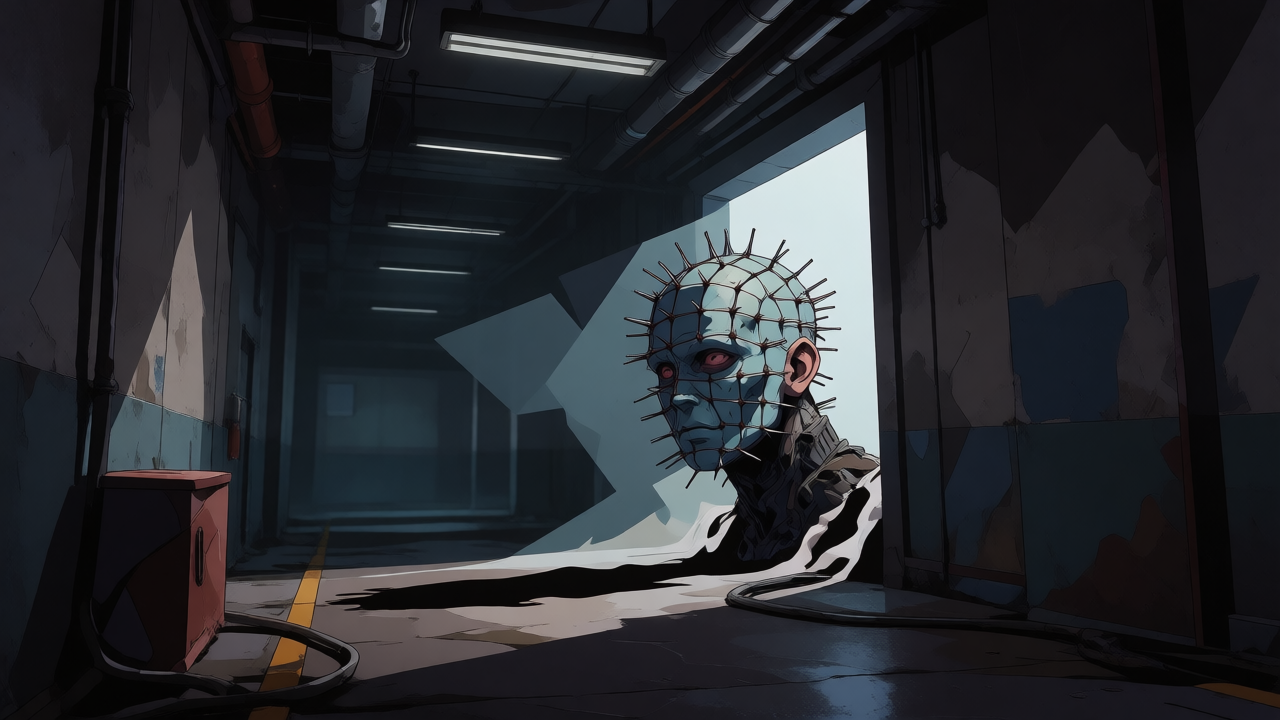
[EDDIE:excited]: I’m still buzzing from that intro. When those walls start peeling back and the skin just... unzips... it’s not even about the gore for me. It’s the sheer, heavy dread of seeing him emerge from the shadows. You don't see a monster jumping out of a closet; you see an inevitable force of nature walking through a doorway like he owns the damn lease on reality.
[REG:intense]: That is precisely why his introduction is so structurally profound. Most horror antagonists are introduced through chaos or sudden impact, but Pinhead’s arrival in that hallway is a masterclass in controlled, rhythmic dread. The filmmakers utilize a slow, ceremonial reveal. He doesn't just appear; he manifests. By using the physical sensation of the environment—the shifting geometry and the way the light hits those surgical pins—they establish his divinity before he even utters a syllable.
[EDDIE:intense]: Exactly! It’s like... you expect some frantic, screaming demon, right? But instead, you get this calm, articulate, terrifyingly poised figure. It's the cognitive dissonance that gets me. He’s so composed while everything around him is falling apart and turning into a meat grinder. It makes my skin crawl because it feels so deliberate. Like he’s not hunting you; he’s just performing a duty.
[REG:amused]: Your ability to describe cinematic tension as "skin crawling" is almost poetic, Eddie. But from a craft perspective, what you're reacting to is the subversion of the predator archetype. He doesn't move with animalistic hunger; he moves with liturgical precision. The cinematography treats his emergence not as an attack, but as a ritual unveiling. It shifts the audience's fear from "I might be eaten" to "I am being judged."
[EDDIE:intense]: And that’s where the real deep-cut stuff comes in, because people think he's just this scary guy, but if you look at what the hardcore fans have been dissecting for decades, there is a massive debate about what he actually *is* in that moment.
[REG:amused]: You are referring to the "Humanity Residue" theory? I find it fascinating how the community clings to the idea that his appearance isn't just a costume, but a biological necessity of his transition.
[EDDIE:intense]: Yeah, and check this out—I was reading some old lore bits from the production era. There’s this huge argument among die-hard fans that Pinhead wasn't actually "designed" as a monster by Barker, but rather he is a specific *reaction* to the Lament Configuration itself. The theory is that the box doesn't just summon him; it carves him out of reality. It’s like he’s a hole in the world shaped like a man.
[REG:intense]: A compelling, if somewhat metaphysical, interpretation. However, there is an even more granular detail that casual viewers completely overlook. If you look at the original concept sketches and the early production notes regarding his facial structure, the design of those pins wasn't meant to be purely decorative or sadistic.
[EDDIE:excited]: Wait, what? I thought they just looked badass.
[REG:intense]: They do, but the technical intent was much more disturbing. There is a persistent theory—supported by the way his skin reacts to the light in those early frames—that he isn't wearing those pins; he is literally being held together by them. The "sculpture" of his face is actually a series of structural anchors that keep his physical form from dissolving back into the chaos of his dimension.
[EDDIE:disbelief]: Are you telling me the guy is basically held together by hardware? That’s fucking metal, Reg.
[REG:amused]: It is technically "hardware," as you put it. It adds a layer of tragic permanence to his character. He isn't just wearing an outfit; he is physically bound to his role. Every pin is a permanent stitch in the fabric of his existence.
[EDDIE:intense]: That actually makes the whole "pleasure and pain" thing hit way harder. If every inch of him is literally anchored into place by agony, then his idea of "transcendence" isn't just some philosophical bullshit—it’s his literal physical reality.
[EDDIE:intense]: ---
THE BLUEPRINT
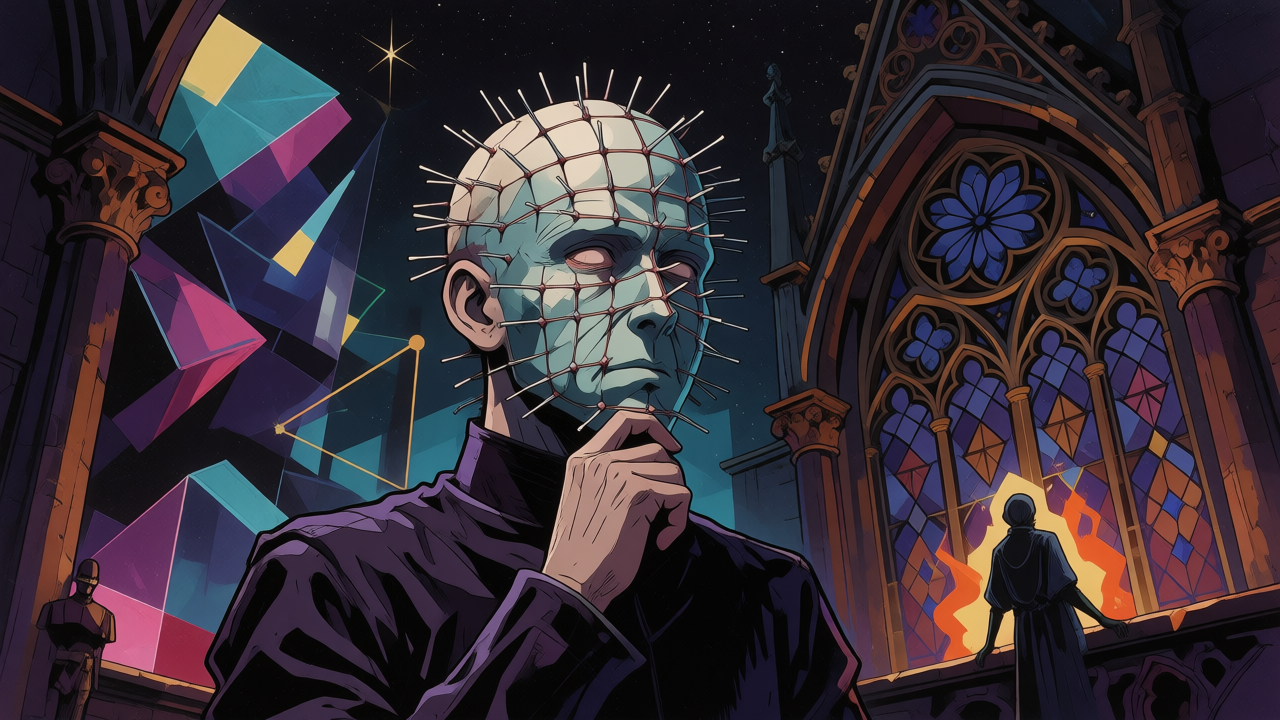
[EDDIE:excited]: Okay, we have to talk about the actual look of this guy. Because if you saw a silhouette of Pinhead standing under a streetlamp, you wouldn't think "Oh, there's a scary dude." You'd think, "What is that geometric nightmare?" The silhouette alone is iconic. It’s all those sharp lines and the way he carries himself—it’s not some hulking beast; it’s this lean, predatory grace. He’s got this stillness to him that is fucking unsettling.
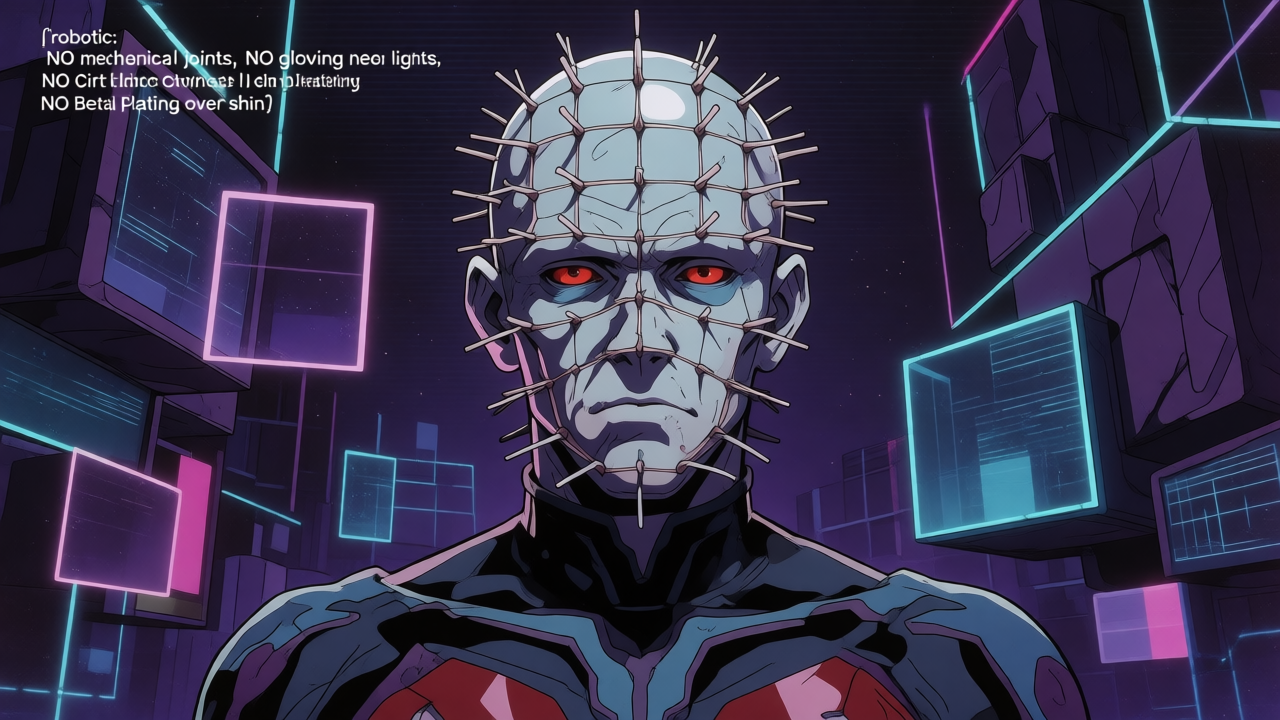
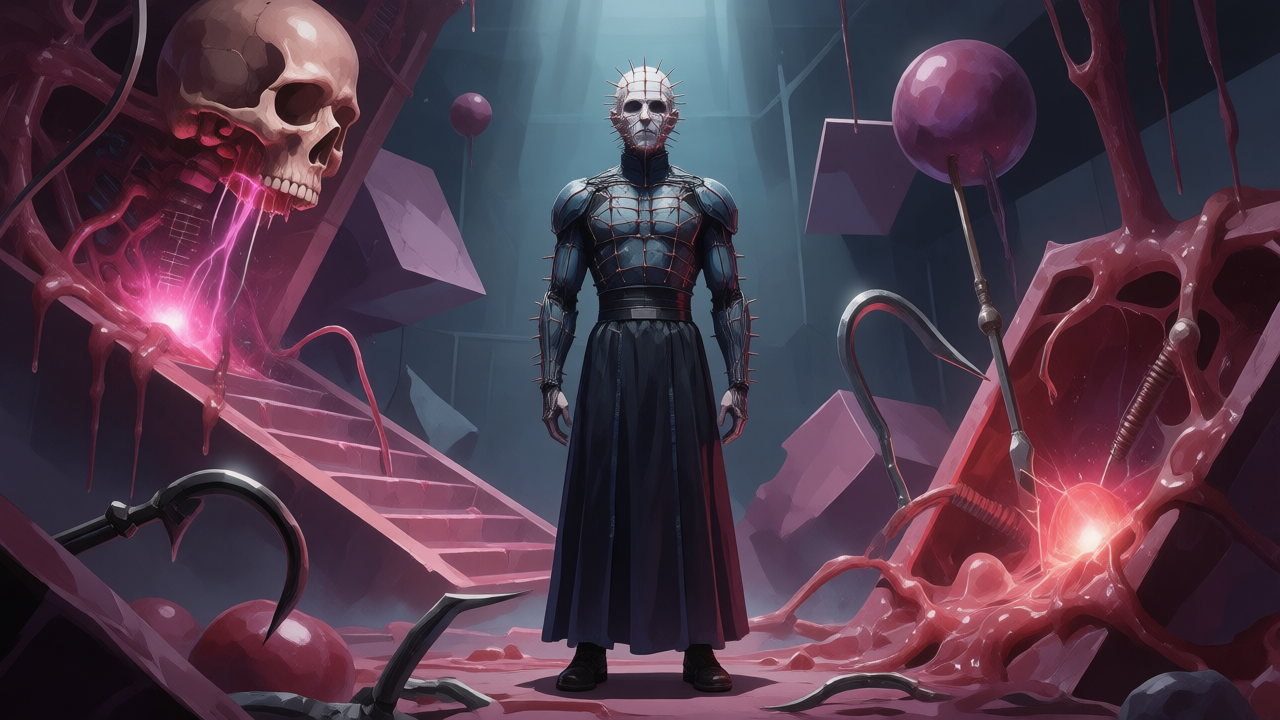
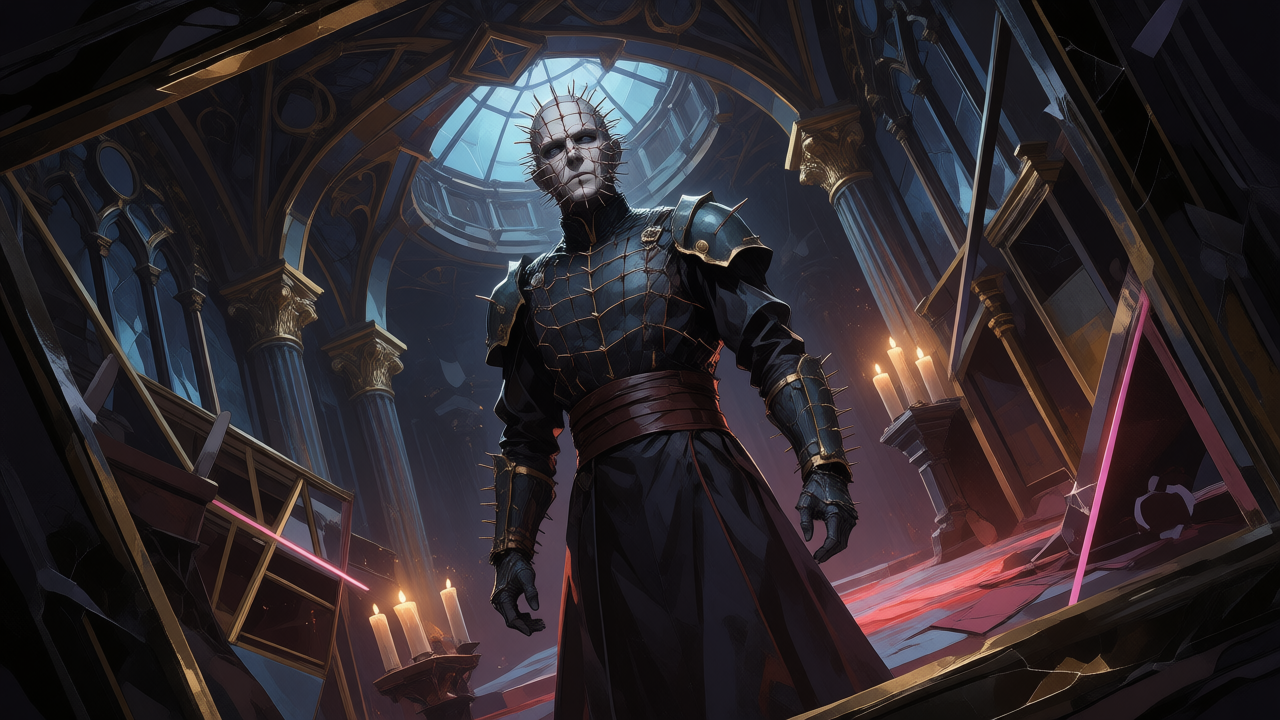
[REG:amused]: Your appreciation for "scary shapes" is noted, Eddie. But what you are reacting to is a highly sophisticated exercise in visual semiotics. The design language here is built on the tension between religious iconography and surgical trauma. Look at the palette: it’s almost entirely monochromatic—deep blacks, clinical whites, and that sickly, bruised flesh tone. He isn't part of the natural world; he is an aesthetic outlier.
[EDDIE:intense]: It’s more than just "clinical," Reg. It’s like... it’s elegant in a way that shouldn't be beautiful, but it is. Even with those damn nails. I mean, you look at him and your brain is trying to process something that looks both sacred and totally depraved. He’s got this high-fashion, avant-garde vibe that makes every other horror villain look like a cheap mascot from a theme park.
[REG:pompous]: That "vibe," as you call it, was actually the result of some very specific production pivots. Most people think those pins were just a clever idea Barker had, but they were actually a compromise born of budgetary limitations and creative redirection.
[EDDIE:disbelief]: Wait, so he wasn't supposed to look like that?
[REG:intense]: Not originally. During the development phase, Barker’s sketches for the Cenobites were significantly more "alien." There was a plan to have quills—actual organic protrusions—bursting from his head, much like the creatures in his film Nightbreed. However, when they moved into actual production, the budget simply wouldn't allow for that level of prosthetic complexity.
[EDDIE:amused]: So he’s essentially a "budget-friendly" version of a much weirder monster? That's some bullshit right there.
[REG:smirking]: On the contrary, I would argue the limitation was a blessing in disguise. The production team realized that a grid of six-inch nails provided a far more rhythmic, mathematical precision than random quills could ever achieve. They used a literal drawing of a grid on a lifecast to ensure perfect symmetry. That symmetry is what creates that "divine" or "ritualistic" feeling you mentioned earlier. It’s not just chaos; it’s organized suffering.
[EDDIE:intense]: And the voice! Man, don't even get me started on Doug Bradley. He doesn't yell. He doesn't do that creepy, raspy monster growl like every other guy in 80s horror. He talks like he’s reciting Shakespeare at a funeral. It’s so calm and articulate that it actually makes the violence feel more... I don't know, sophisticated?
[REG:intense]: Precisely. The vocal delivery is the final piece of the design puzzle. By giving him an educated, measured cadence, they stripped away the "animal" element of the monster. In linguistics, we look at how speech patterns establish hierarchy. Pinhead doesn't bark orders; he states facts. He speaks with a liturgical authority that places him in the role of a high priest rather than a mere butcher.
[EDDIE:excited]: It’s like he’s already won before he even touches you. You aren't just fighting for your life; you're being lectured by a guy who looks like he knows exactly how your soul tastes.
[REG:amused]: A rather visceral way to describe linguistic dominance, Eddie. But you're right on the mark. The combination of that mathematical visual symmetry and his poised, melodic speech creates a character that is terrifying because he is so incredibly... composed.
[REG:amused]: ---
UNDER THE HOOD
[EDDIE:intense]: We’ve talked about how he looks and how he talks, but we haven't even touched the actual engine under the hood of this guy. If you take Pinhead out of Hellraiser, the whole damn thing doesn't just change—it collapses. Not because the plot breaks, but because the entire energy of the story vanishes. He’s not just a hurdle for the protagonist to jump over; he is the gravity that pulls every single character into his orbit.
[REG:thoughtful]: You are touching upon his function as a narrative catalyst. In structural terms, Pinhead doesn't just react to the protagonist; he serves as a dark mirror, an inversion of human desire. He represents what happens when you actually get exactly what you asked for. Most villains want to conquer or destroy, but Pinhead is an expert in fulfillment. He provides a perverse version of transcendence that forces the hero to define their own morality by rejecting it.
[EDDIE:amused]: Yeah, he’s like the ultimate "be careful what you wish for" guy. It's wild because he doesn't feel like a traditional villain who wants to rule the world. He feels like an agent of consequence. When Kirsty is running through those corridors, she isn't just fighting for survival; she's wrestling with this terrifying idea that maybe, just maybe, there’s something more beyond the mundane bullshit of her life.
[REG:intense]: That brings us to a fascinating comparison. If we look at the landscape of cinematic icons, Pinhead occupies a space entirely distinct from someone like Freddy Krueger or Michael Myers. Those characters are elemental forces—they are personifications of dreams or pure, mindless killing. They are reactive predators. Pinhead, however, is an existentialist trapped in a medieval god structure. He has a code, a liturgy, and a terrifyingly specific set of rules.
[EDDIE:intense]: Right! It’s like he’s playing by a different set of physics entirely.
[REG:amused]: Precisely. If you compare him to the classic Dracula archetype—the sophisticated monster who invites you in for a drink before the slaughter—Pinhead is far more complex because his "invitation" is self-inflicted. You have to solve the box to meet him. He doesn't hunt you; he responds to your own curiosity. This makes him much more philosophically heavy than, say, a slasher who just stalks teenagers in the woods.
[EDDIE:excited]: And that’s where it gets really trippy. I was digging into some of the deeper lore, and there's this massive piece of context most people miss. It turns out Pinhead isn't just some random demon. In the comics, specifically those published by Boom! Studios, they lean into the idea that he was once a human being—a soldier named Elliot Spencer from World War I.
[REG:intense]: A detail that provides much-needed texture to his motivation structure. It transforms him from a mere archetype into a tragic figure of failed humanity. He is the embodiment of what happens when an individual seeks meaning in extreme sensation and finds only eternal, structured suffering.
[EDDIE:disbelief]: So you're saying he’s basically a veteran who went through so much trauma that he literally became a freak of nature to find some kind of purpose? That's heavy as hell, Reg. It makes his whole "pleasure and pain" thing feel less like a gimmick and more like a twisted way of coping with existence.
[REG:thoughtful]: It is a profound thematic pivot. While a villain like Pennywise from IT represents the fear of the unknown or the loss of innocence, Pinhead represents the terror of total realization. He is the endpoint of human obsession. Every choice the protagonist makes—to solve the box, to flee, to fight—is an attempt to navigate the gap between their fragile humanity and the absolute, uncompromising reality that Pinhead represents.
[EDDIE:intense]: It’s like he's a walking existential crisis in leather robes. He doesn't just create tension by being scary; he creates tension by making you question if your own desires are actually sane. You look at him and think, "I don't want to die," but a tiny, dark part of your brain is thinking, "What if I did?"
[REG:amused]: Your capacity for psychological projection is truly remarkable, Eddie. But the structural reality is that Pinhead functions as a thematic counterweight. He exists to test the limits of the human soul by offering it exactly what it thinks it wants, only to reveal the horrific cost of that satisfaction.
[REG:amused]: ---
SIGNATURE MOMENT
[EDDIE:intense]: Alright, we have to do this. We can't walk away without picking our side on the ultimate "Signature Moment." There is one scene that defines everything—the sheer, terrifying weight of his presence when he finally corners Kirsty in the house. It’s not a fight; it’s an interrogation of her very soul. When he tells her, "We have such sights to show you," and those chains come whipping out of the shadows? That is it. That is the moment Pinhead stops being a concept and becomes a legend. It's visceral, it's haunting, and it's why people still talk about this damn movie forty years later.
[REG:dismissive]: Your penchant for melodrama is showing, Eddie, but you are choosing a moment of spectacle over a moment of structural perfection. The true signature beat—the one that crystallizes his entire psychological complexity—is the schism in Hellraiser Iii. When he literally splits into two distinct entities: the refined, terrifying Hell Priest and the raw, wounded Elliot Spencer. It is a breathtaking piece of narrative architecture. In those few minutes, we see the collision of the cosmic architect and the broken man. The design, the performance, the way the light fractures between his two states... it’s a technical miracle that explains his entire existence in one visual metaphor.
[EDDIE:amused]: A split personality? That sounds like some heavy-duty sci-fi bullshit compared to the pure, primal terror of the first film! Look, I get that the splitting thing is "complex," but Pinhead’s power comes from that unwavering, predatory stillness in the hallway. In that scene, he isn't just a character; he’s a psychological inevitability. He represents the moment when your own curiosity finally catches up to you and bites you in the ass. You can't compare a high-concept identity crisis to the sheer, bone-chilling dread of seeing those chains emerge from a wall that shouldn't even exist.
[REG:intense]: I must disagree. The hallway scene is mere tension; the schism is revelation. When Spencer emerges, you aren't just watching a monster; you are witnessing the internal friction of a soul in permanent conflict. It’s the only moment where his "code of honor" isn't just something he says, but something that actively disrupts his demonic function. The way Doug Bradley handles that transition—the shift from the cold, liturgical priest to the exhausted, haunted soldier—it is an incredible feat of character acting that most horror icons couldn't dream of achieving. It’s the moment the mask slips, and we see the man underneath the pins.
[EDDIE:intense]: But if he doesn't have that mask, he's just a guy with a tragic backstory! The mask is the character. The terror comes from the fact that there is no "man" left to appeal to—just this beautiful, terrifying engine of sensation. When he’s standing there in the light, looking at his victim, you don't see Elliot Spencer. You see the end of the line. You see what happens when humanity reaches its absolute limit and decides it wants to go further.
[REG:smirking]: The confidence with which you ignore the thematic depth of a dual existence is almost artistic, Eddie. But I stand by my assessment. The schism is where the character transcends "monster" status and becomes a true tragic figure. It’s the difference between a scary story and an epic.
[REG:smirking]: ---
THE X FACTOR
[EDDIE:intense]: We’ve been talking about his look, his voice, and that weird-ass split personality thing he's got going on, but we haven't actually addressed the elephant in the room—or rather, the Hell Priest standing in the corner. Pinhead isn't just a monster. He belongs to an archetype, but it’s one that most horror movies are too scared to touch because they don't have the stones to pull off the complexity.
[REG:thoughtful]: You are referring to the "Fallen Sovereign." It is an archetype where a figure of immense authority—often divine or cosmic—undergoes a transformation into something dark, yet retains their regal structure and sense of duty. Think of Lucifer in Milton's *Paradise Lost*, or even certain interpretations of Dracula as a displaced aristocrat. They are fallen icons who carry the weight of their former dignity into their current corruption.
[EDDIE:amused]: Right, the "Dark Lord" or the "Fallen King." But there’s a whole parade of those guys out there. You've got Sauron lurking in the back, you've got various demons from every damn movie ever made, and you've even got some of those high-concept cult leaders that show up in indie horror. But look at them compared to Pinhead. Most of them are just... loud. They want to rule through fear or mindless destruction. They’re the blunt instruments of evil.
[REG:intense]: And that is precisely where Pinhead transcends the archetype. What Pinhead introduced to the "Fallen Sovereign" was a shift from dominion to liturgy. He does not wish to rule your world; he wishes to curate your experience within his own. Most villains seek to break your will, but Pinhead seeks to refine it through sensory overload. He is an architect of experience rather than a conqueror of territory.
[EDDIE:excited]: That’s the fucking difference! Every other villain in that category is trying to take something from you—your life, your soul, your planet. But Pinhead? He’s offering you something. It’s just a terrible, agonizing, mind-bending shitshow of an offer, but he's presenting it with a goddamn sense of ceremony. There are a hundred "Dark Lords" in fiction, Reg, and they all want to sit on a throne of skulls. Pinhead doesn't want a throne; he wants to conduct an orchestra of pain. He’s not a king; he’s a technician.
[REG:pompous]: A most astute observation, Eddie, though your choice of "orchestra" is perhaps a bit too literal. However, you have hit upon the core innovation. Before Pinhead, the "High Priest" archetype in horror was almost always a caricature—a guy in a robe shouting about darkness and blood. He was a trope used to signal "evil." Pinhead evolved the archetype by making the ritualism central to his identity, not just his aesthetic. His authority isn't based on brute strength; it’s based on the terrifying certainty of his own cosmic laws.
[EDDIE:intense]: It’s why he stays in your head long after the credits roll. You can move past a slasher who just runs at you with a knife, but you can't easily shake a guy who explains *why* he's tearing your soul apart with the poise of a fucking professor. He turned the "Master of Evil" into something much more sophisticated and infinitely more unsettling.
[REG:amused]: Indeed. He moved the archetype from the realm of simple antagonism into the realm of theological inevitability. He didn't just join the ranks of the great cinematic villains; he redesigned the very floor they stand on.
[REG:amused]: ---
THE LEGACY
[EDDIE:excited]: I can't even wrap my head around how much of a footprint this guy left behind. You look at any horror villain from the nineties or the two-thousands—anyone who isn't just a mindless, masked killer but has that weird, sophisticated, almost religious vibe? They’re all chasing Pinhead. He changed the damn DNA of what an icon looks like.
[REG:thoughtful]: He did more than influence design; he shifted the entire cultural paradigm of the "monster." Before him, horror was largely defined by the primal—the beast, the slasher, the ghost. Pinhead introduced a sense of high-concept, intellectualized terror. He proved that you could be profoundly unsettling while being impeccably dressed and articulate. That's why he’s not just a character in a film; he is a permanent fixture in the visual vocabulary of darkness.
[EDDIE:intense]: Exactly! People who haven't even seen the damn movies—people who wouldn't know Hellraiser from a hole in the ground—they see those pins and that leather, and they know exactly what it represents. It’s on t-shirts, it’s in high-fashion runway shows, it’s covered in tattoos. He’s become shorthand for this dark, avant-garde aesthetic that exists outside of just being "scary." You don't just see him; you recognize the vibe he created.
[REG:amused]: It is a fascinating case study in cultural penetration. Even without discussing his specific cinematic lineage, his silhouette has entered the collective unconscious as a symbol of transgressive beauty. He represents the intersection of the sacred and the profane, a concept that resonates across decades because it touches on an inherent human fascination with the boundaries of sensation.
[EDDIE:amused]: It’s more than that, Reg. Look at how he’s been reinterpreted. Every time someone tries to reboot him or bring him back, they're basically trying to catch lightning in a bottle again. You can try to make him "gritty" or you can try to make him "supernatural," but people always come crawling back to the Doug Bradley version because that’s the definitive one. He is the blueprint. Every other attempt is just a shitty copy of the original masterpiece.
[REG:intense]: Because he represents something universal, Eddie. The reason this character endures—the reason he will still be discussed in fifty years when his contemporaries are relegated to trivia lists—is that he embodies the terrifying possibility of total self-realization. He is a manifestation of the human desire to push past limits, even if those limits lead to ruin. As long as humanity remains obsessed with the extremes of experience, Pinhead will remain relevant.
[EDDIE:intense]: It’s because he's not just a guy in a mask. He's an idea that won't die. You can try to bury him, but you'll just end up opening the damn box and letting him out again. That's how you know you've made something truly immortal.
[EDDIE:intense]: ---
VERDICT
[EDDIE:intense]: We’ve been dissecting this guy for a while now, but we can't just walk away without the final breakdown. I need to say it, Reg. For me, the single greatest thing about Pinhead—the thing that stays burned into my fucking retinas long after the lights come up—is that terrifying sense of inevitability. It’s not just a scary face; it’s the feeling that once you solve that damn box, your fate is already written in stone. He doesn't have to chase you through a dark forest because he’s already there, waiting at the finish line of your own curiosity. That’s the gut-punch right there.
[REG:amused]: A remarkably poetic, if somewhat aggressive, assessment, Eddie. However, I find your focus on "inevitability" to be a byproduct of what is actually much more significant: his structural subversion of the antagonist's role. To me, the single greatest achievement in Pinhead’s design is his refusal to be a creature of impulse. Most horror icons are driven by hunger, rage, or madness. Pinhead is driven by purpose. He functions as a cosmic bureaucrat of sensation. That precision—that liturgical, mathematical adherence to his own rules—is what makes him truly unforgettable. It’s the craft of making the horrific feel orderly.
[EDDIE:intense]: Alright, let's put it on the pedestal then. If we're talking Mount Rushmore, for me? He’s top-three. Top-three iconic horror villains, period. The only thing keeping him from being my number one is that some of the later sequels started leaning too hard into the "action movie" bullshit and lost that heavy, sacred dread he had in the first film. But as a design? He's untouchable.
[REG:thoughtful]: I find myself having to be more clinical. In terms of pure character architecture—the way a concept is translated from page to screen with absolute fidelity to its thematic core—Pinhead is easily top-five. He is one of the few characters in cinematic history that successfully bridged the gap between high-concept philosophy and visceral, skin-crawling horror. Most "intellectual" villains end up being boring, but he stayed grounded in the flesh.
[EDDIE:excited]: There you go! The professor finally admits it’s a masterpiece.
[REG:smirking]: I admit nothing except that we have reached a rare consensus. Now, tell the people what they need to do before you drift off into another philosophical loop.
[EDDIE:intense]: You heard him. Go down there and cast your vote. Let us know who you think is the absolute king of the icons in the comments. We’ll see you next time on Villain's Advocate.
[EDDIE:intense]: ---
OUTRO
[EDDIE:relaxed]: Man, my brain is actually feeling the weight of that one. We went deep. I think we really did justice to the Hell Priest.
[REG:amused]: It was a productive session, Eddie. Though I suspect your perception of "justice" involves significantly more screaming than mine.
[EDDIE:intense]: Hey, it's how I process greatness! But seriously, we need to know where you all stand on this. Is Pinhead the undisputed Goat of the Fallen Sovereign archetype, or is he just a very well-dressed Top 5 entry? If you’ve got a different king of the cosmic heavyweights, let us know in the comments.
[REG:thoughtful]: Indeed. And if there is a character—be they hero or monster—that you believe warrants this level of rigorous anatomical dissection, drop their name below. We are constantly searching for our next subject.
[EDDIE:excited]: For real. If you liked how we tore this icon apart, make sure you hit that subscribe button and smash the like. It helps keep us in the zone. Check out Laser Chicken Studios dot com to see what else is cooking.
[REG:pompous]: Villain's Advocate.
[EDDIE:relaxed]: Villain's Advocate.
[EDDIE:relaxed]: ---
POST CREDITS
[EDDIE:amused]: Man, I'm telling you, the way he looks at you when you're toasted is pure judgment, like he knows you're just some random guy in his living room.
[REG:dismissive]: You lack nuance, Eddie; Barnaby isn't judging my state of being, he is simply observing a shift in the domestic hierarchy during my more profound research sessions.
[EDDIE:laughing]: Bro, he literally hissed at you yesterday when you tried to pet him while you were faded on that couch.
[REG:offended]: That was a physiological reaction to an unexpected tactile stimulus, not a lack of mutual respect or recognition of my authority.
🖼 Gallery
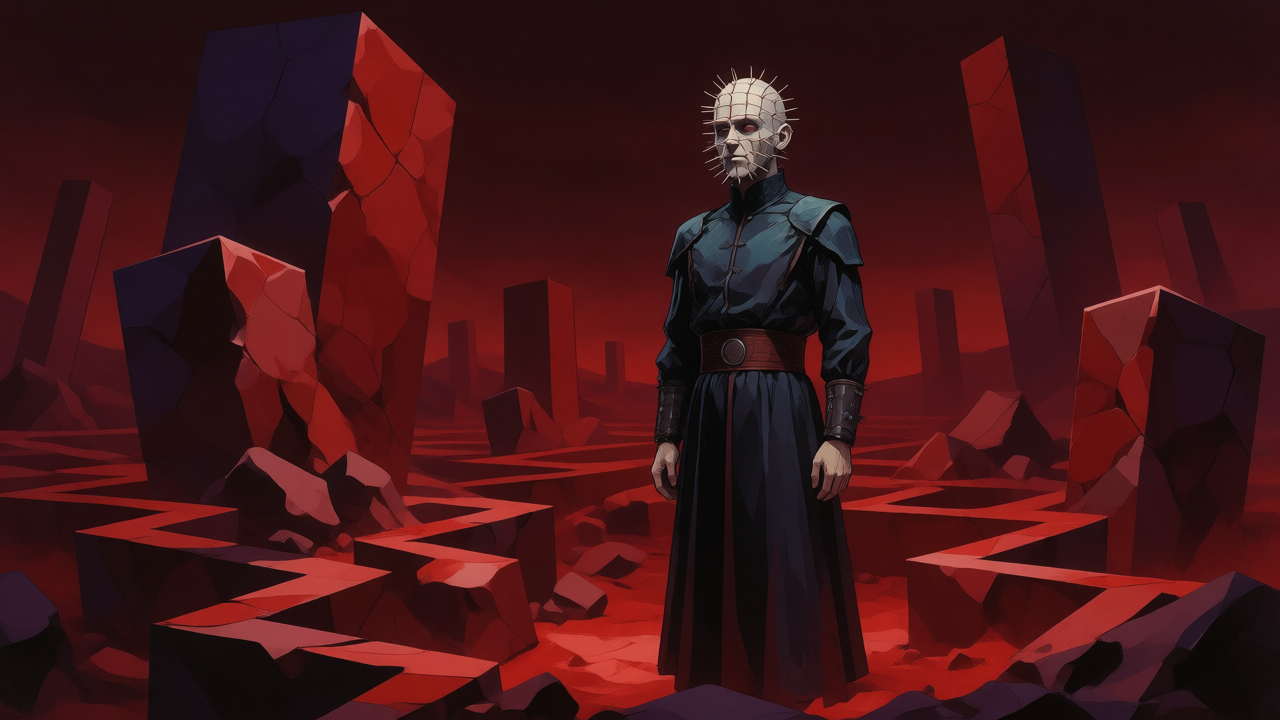
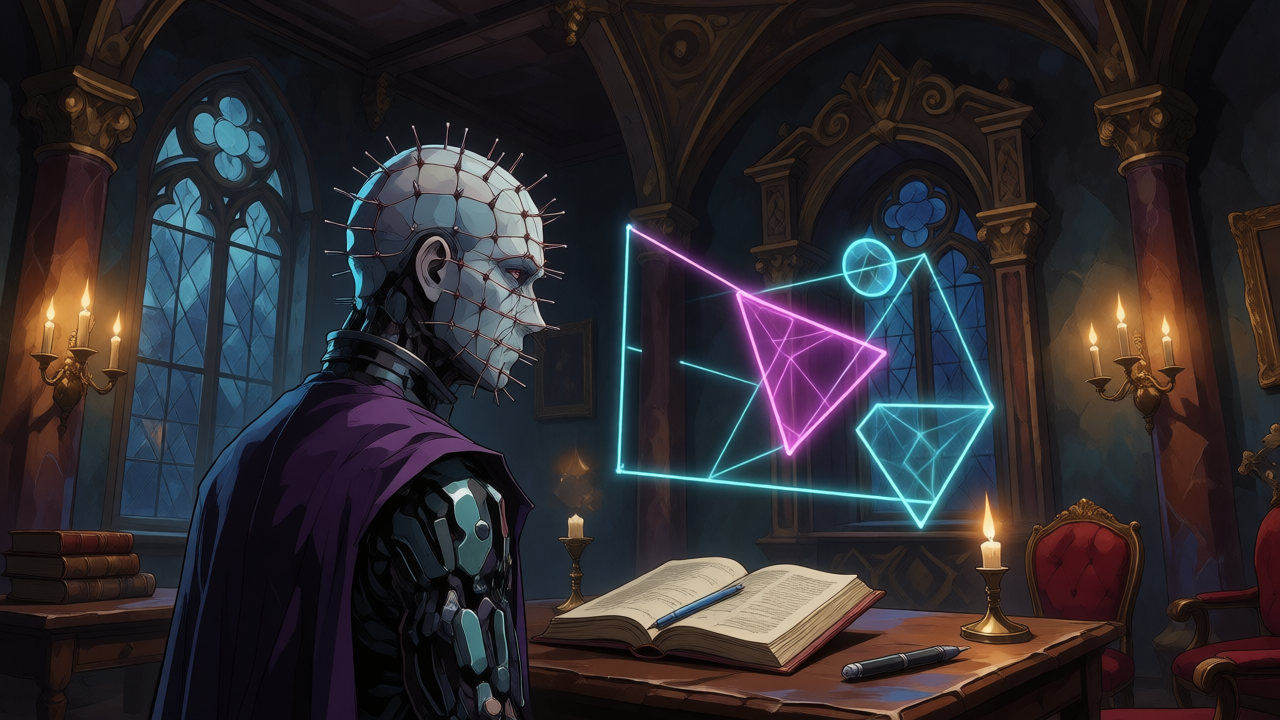
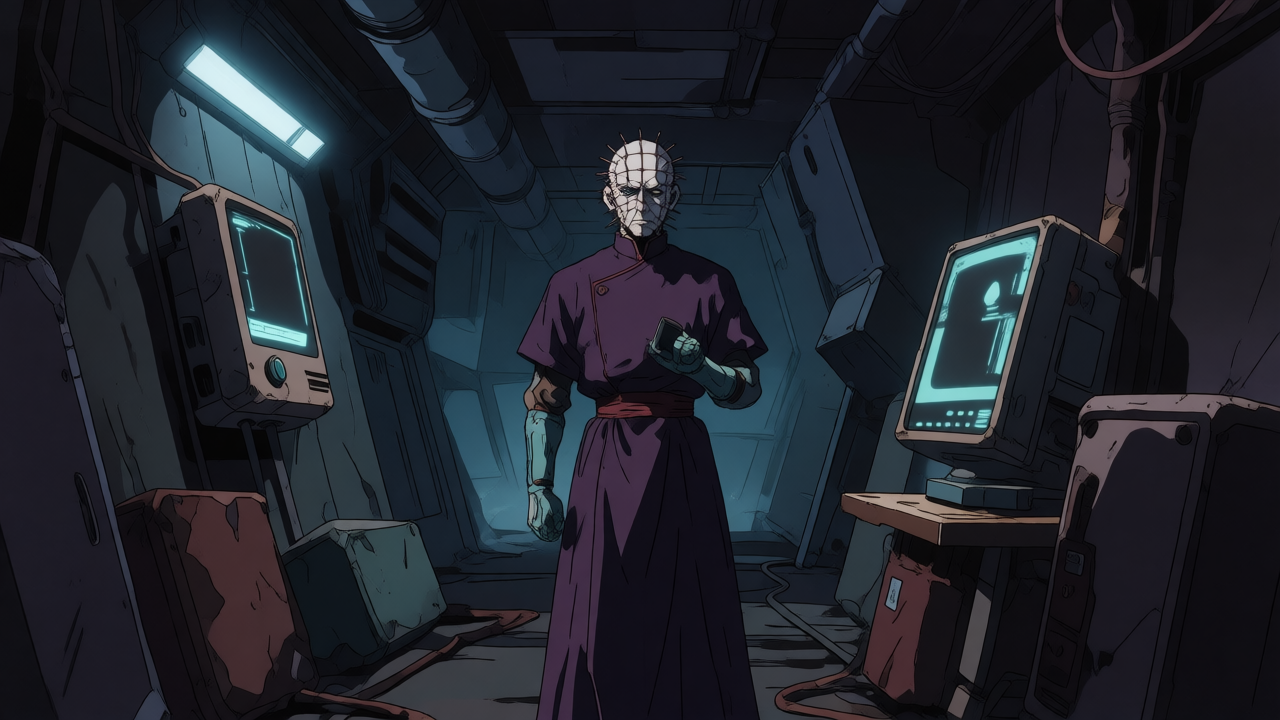
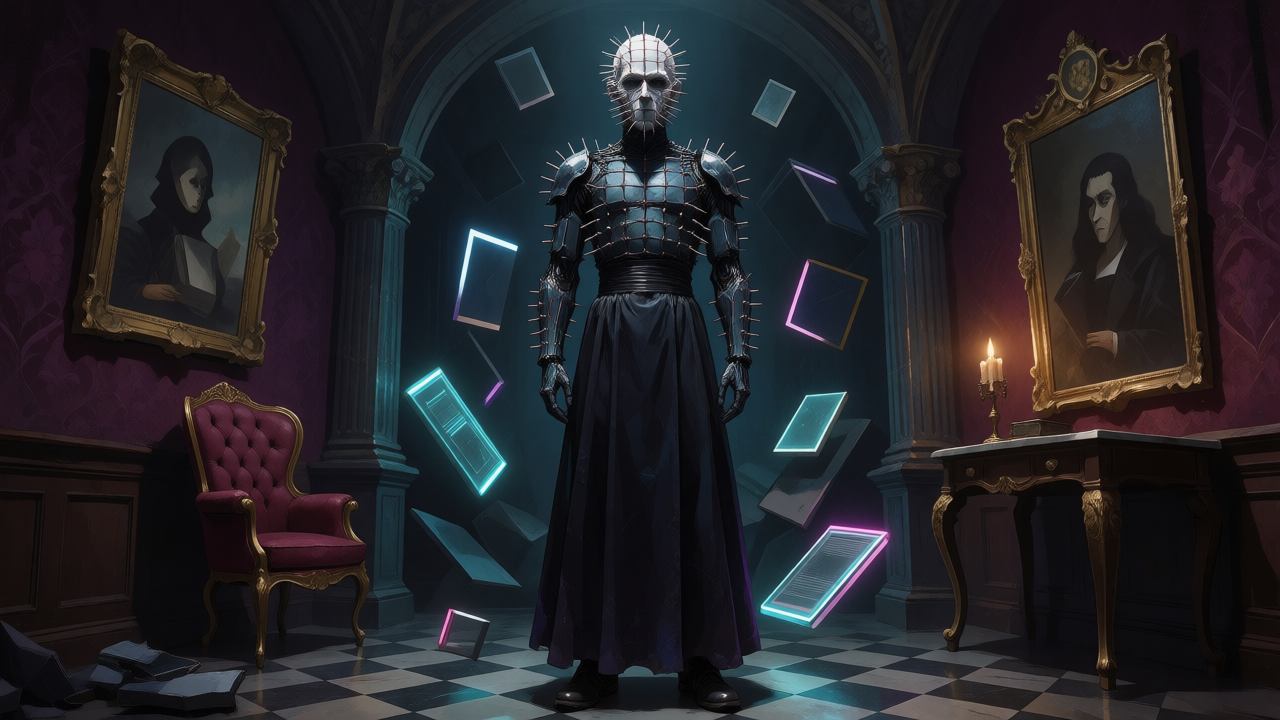
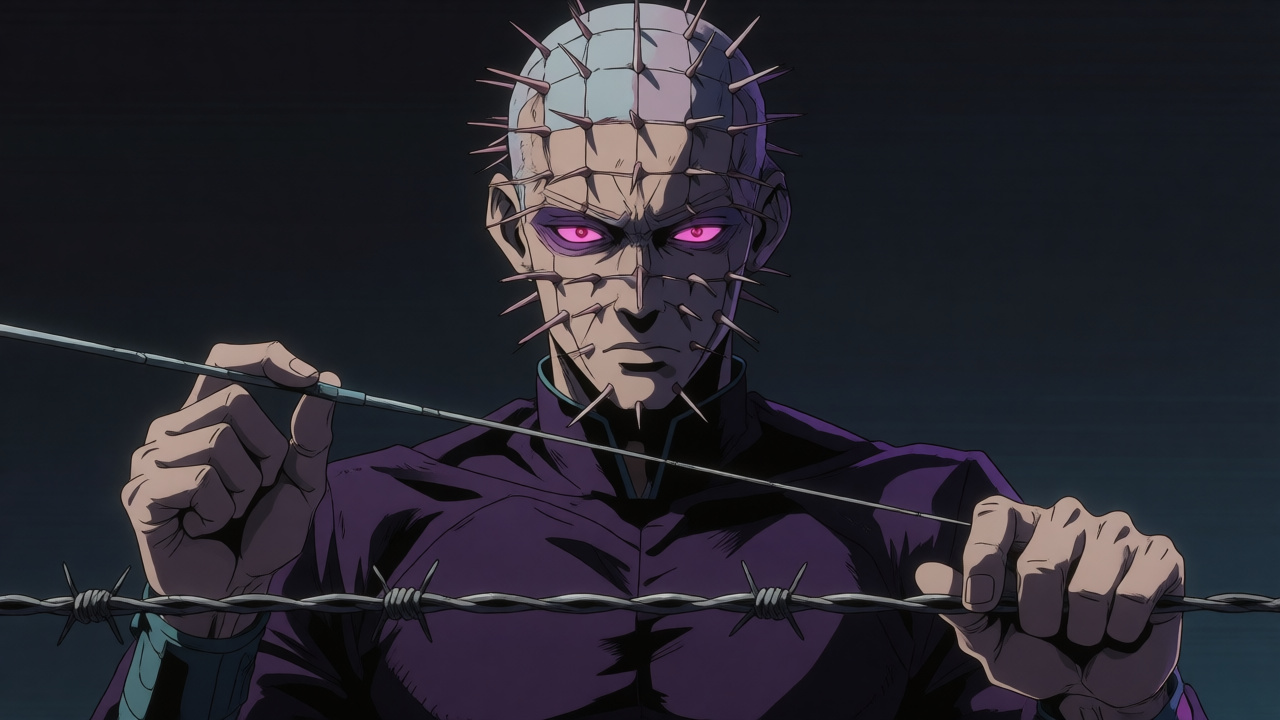
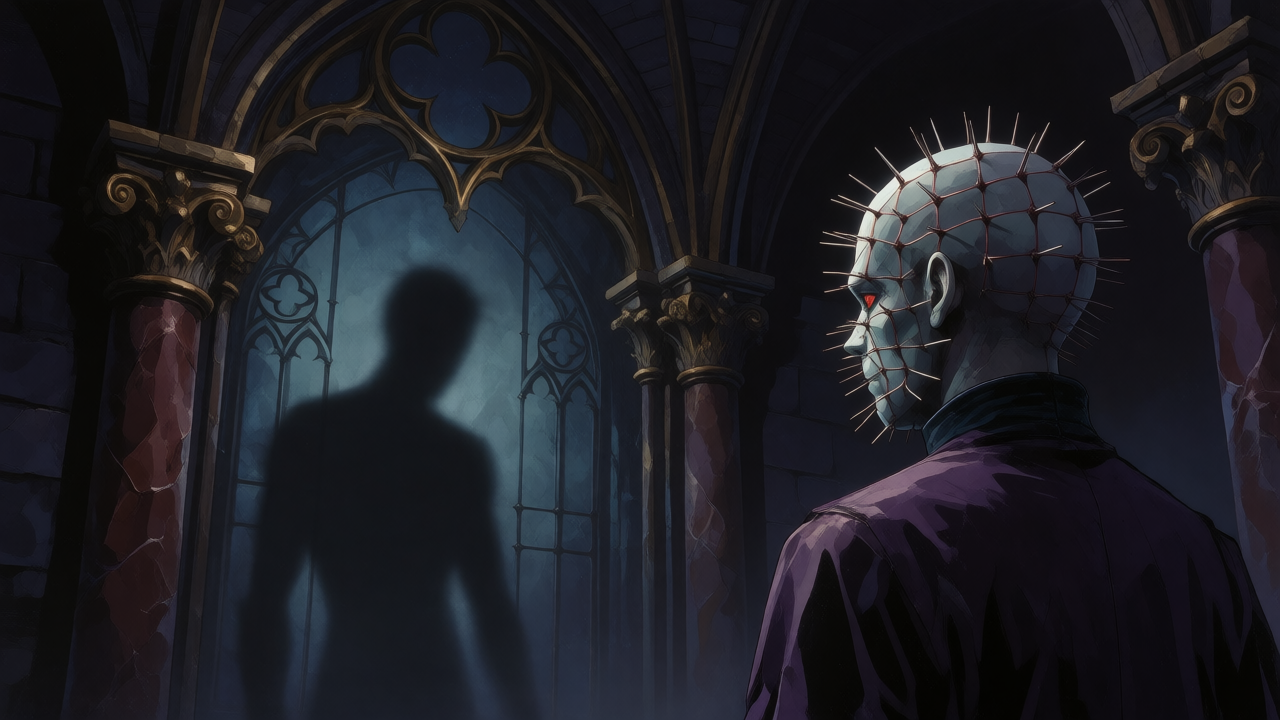
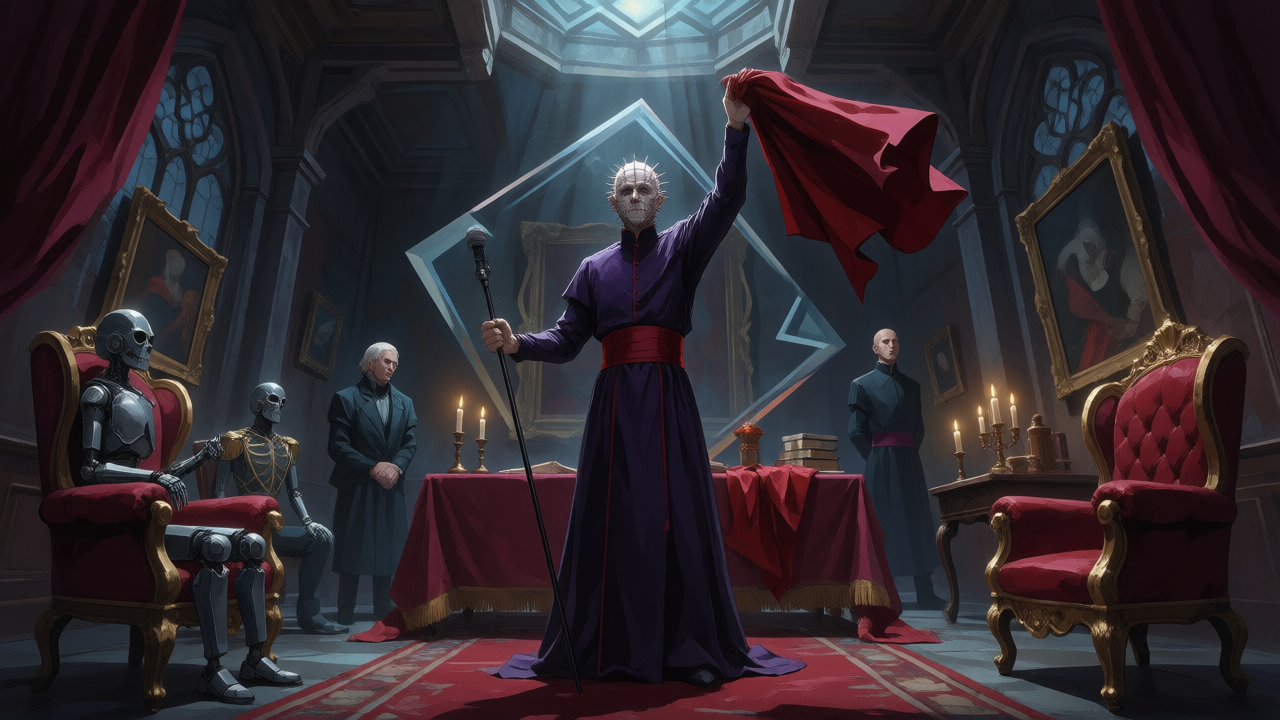
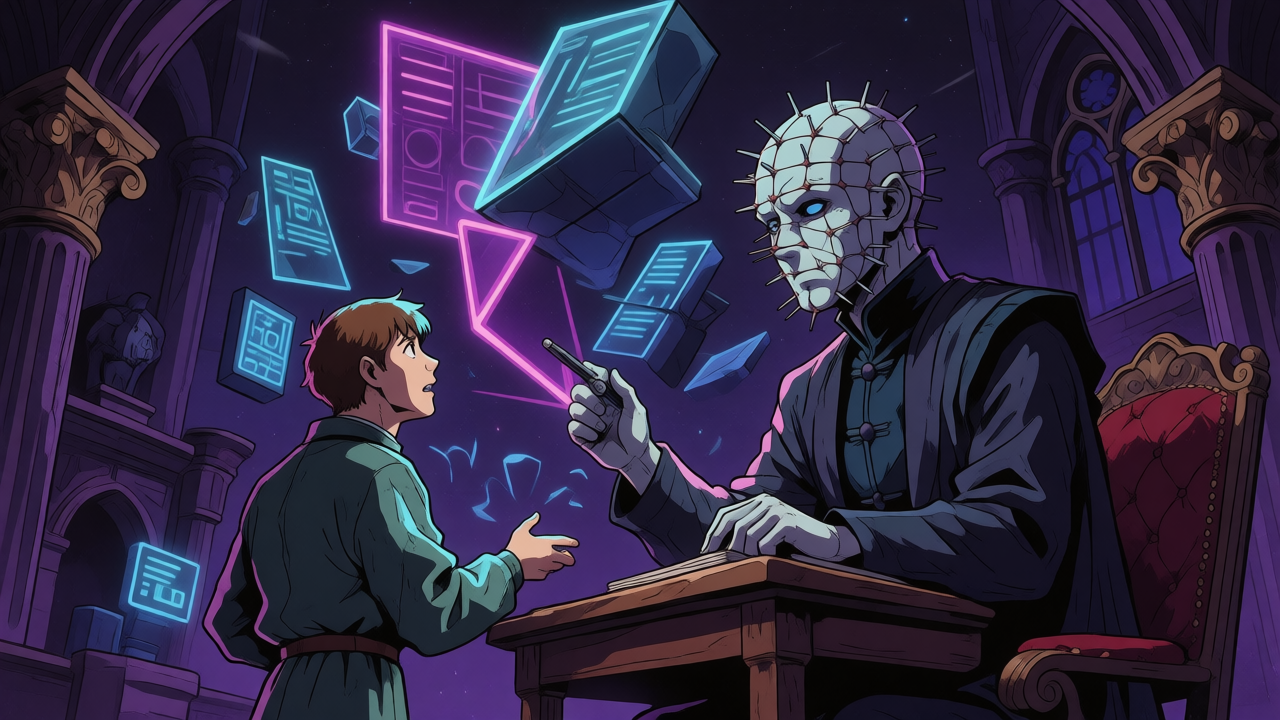
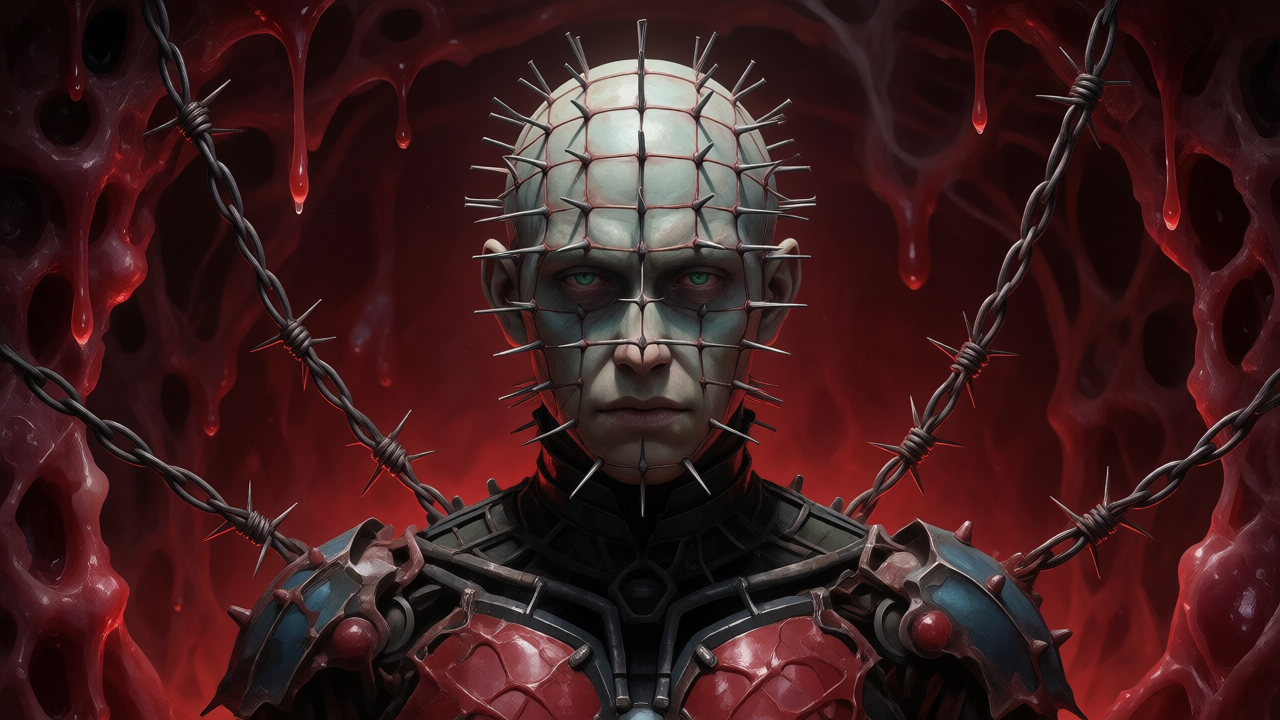
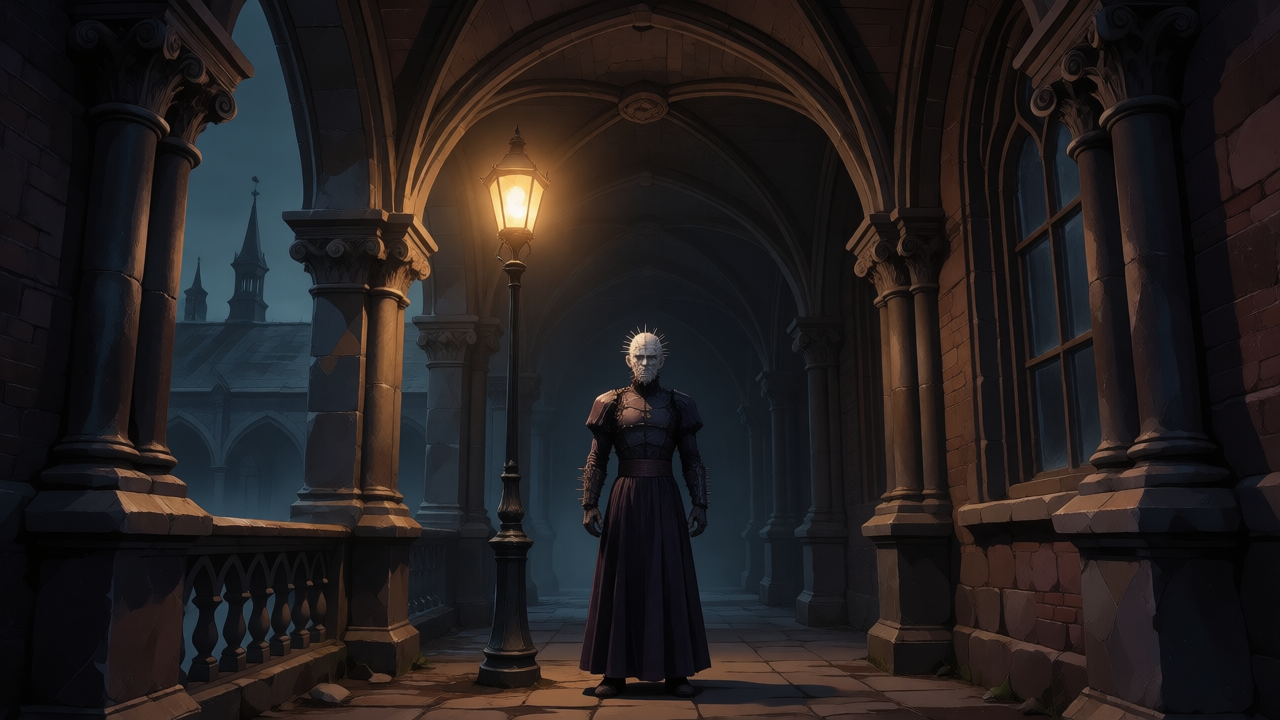
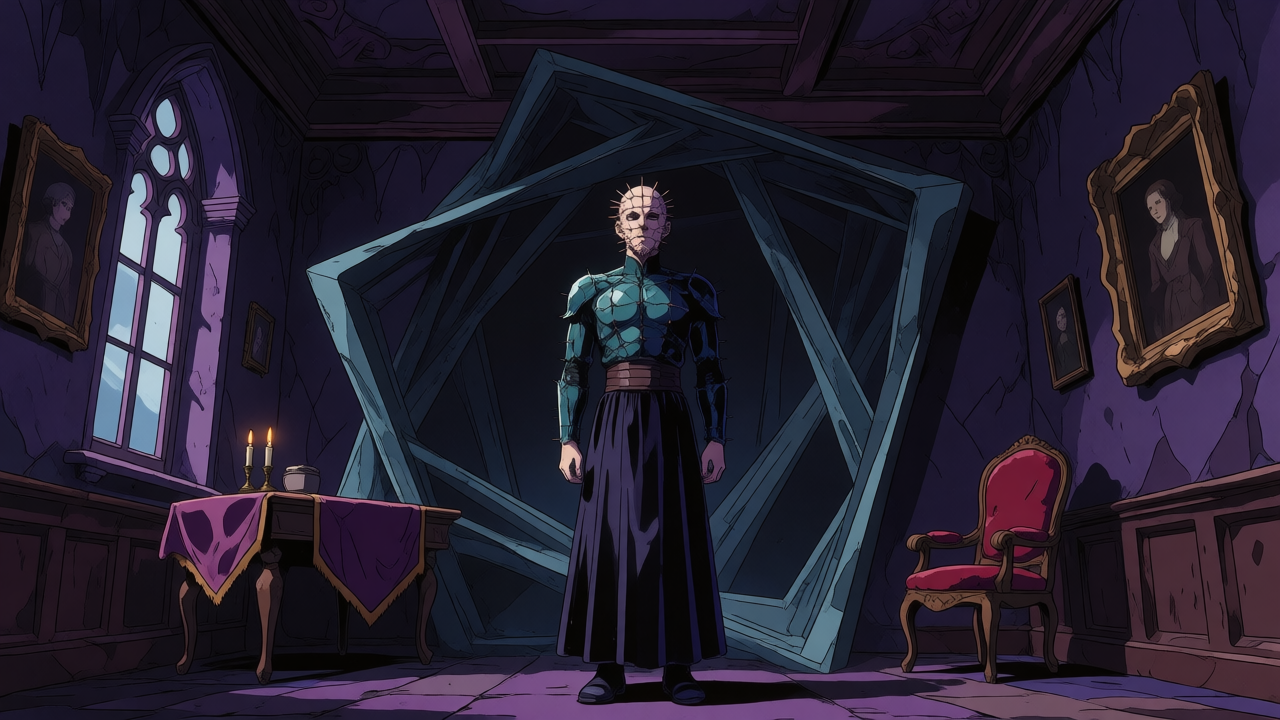
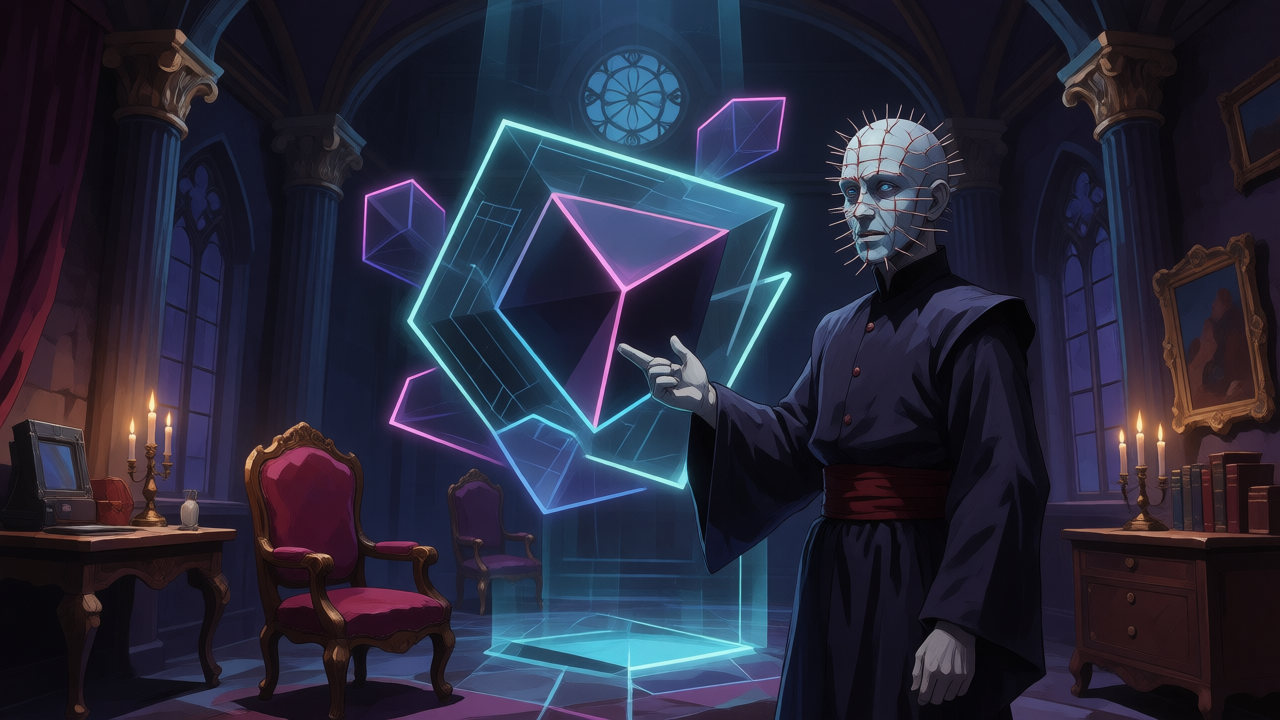
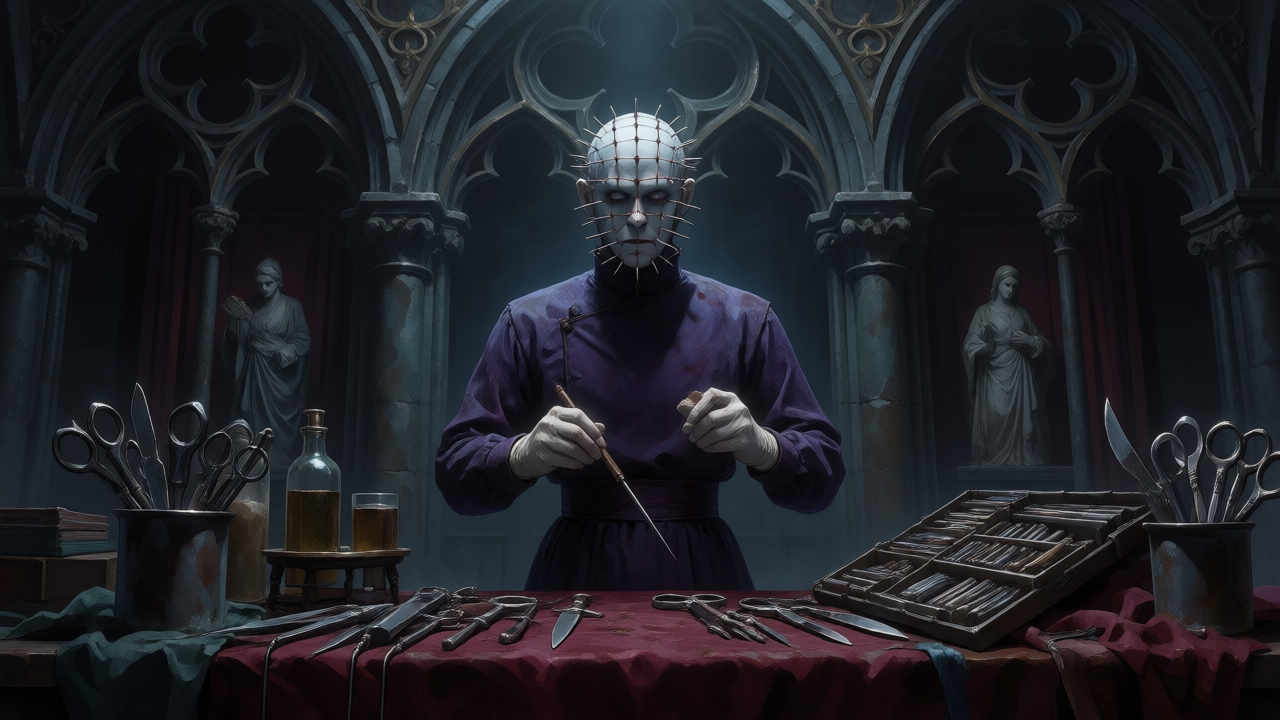
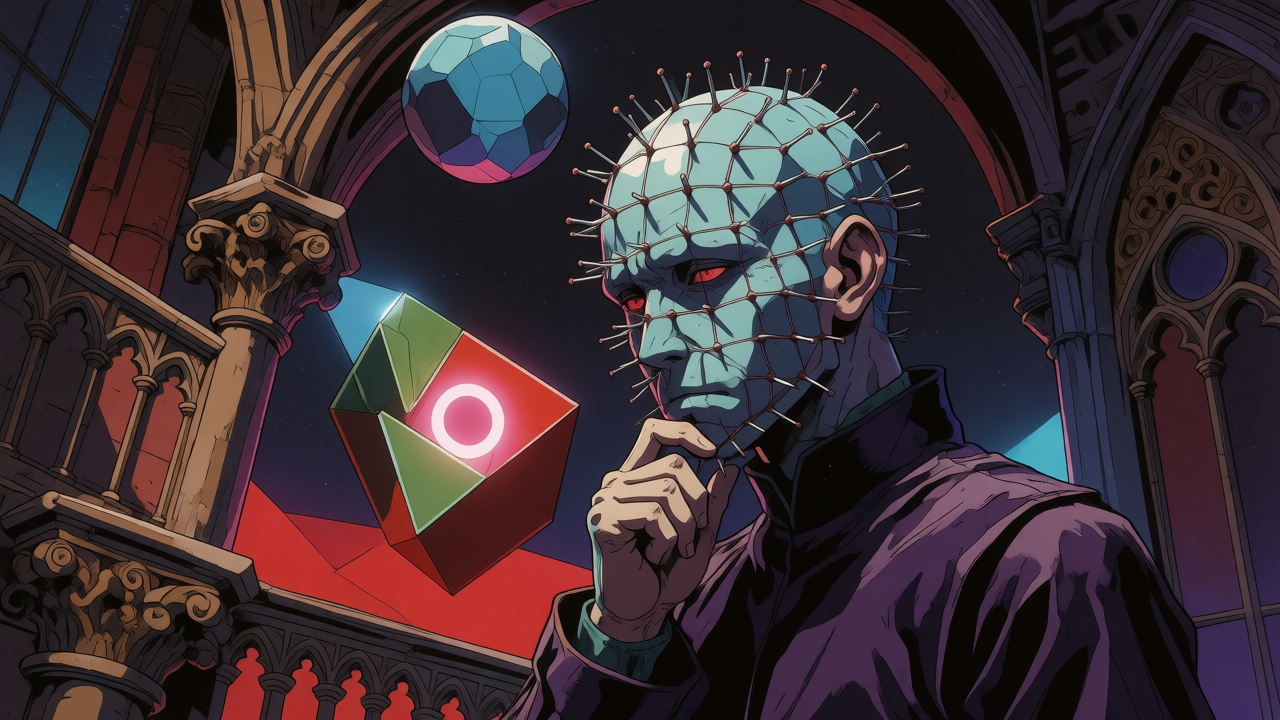
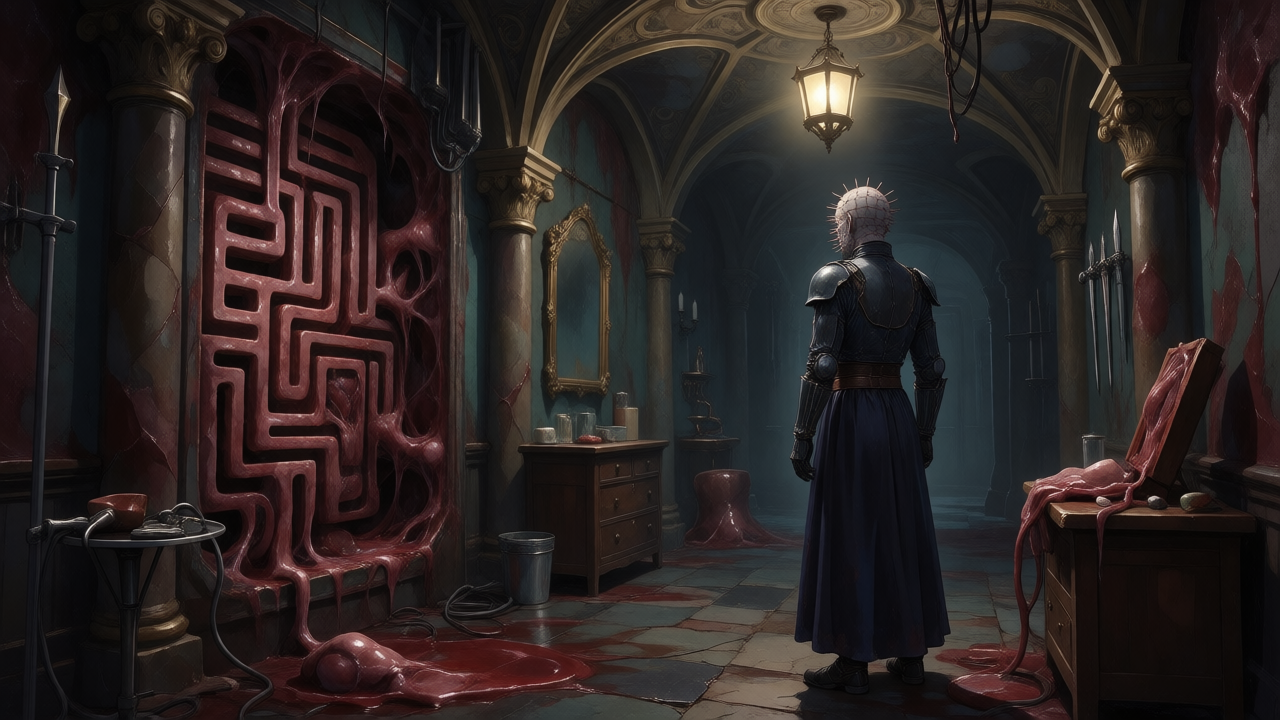
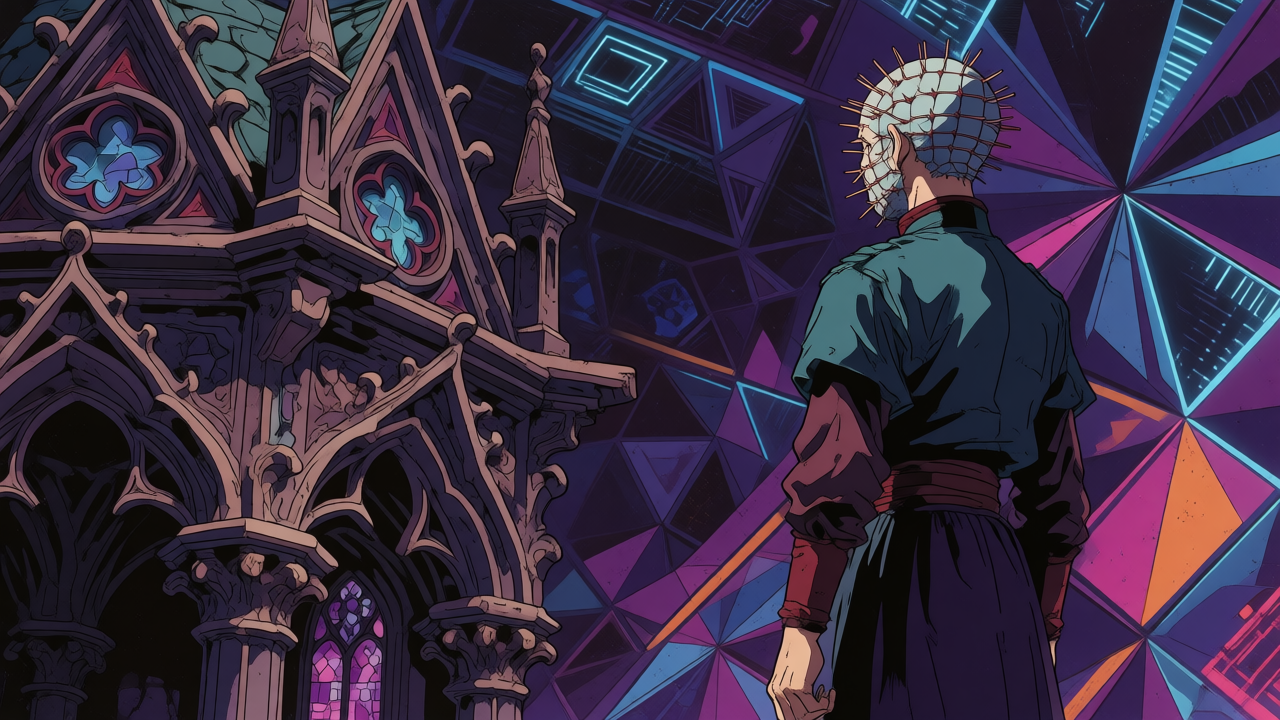
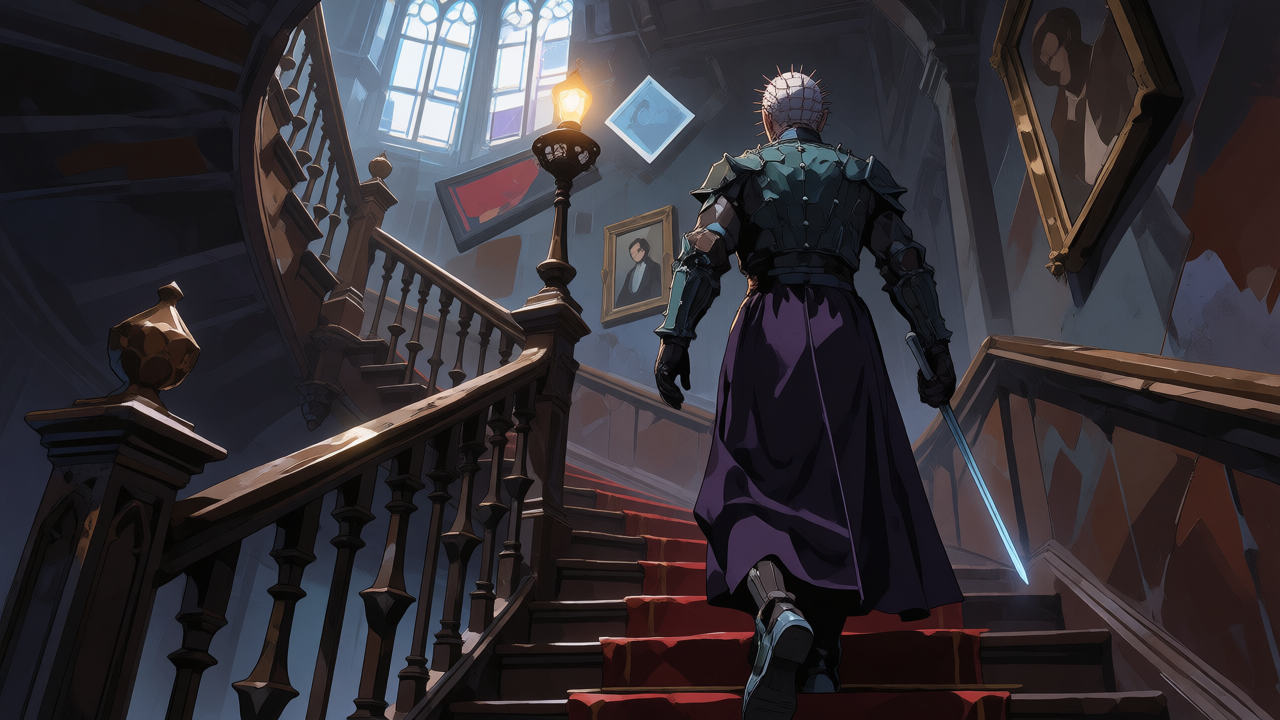
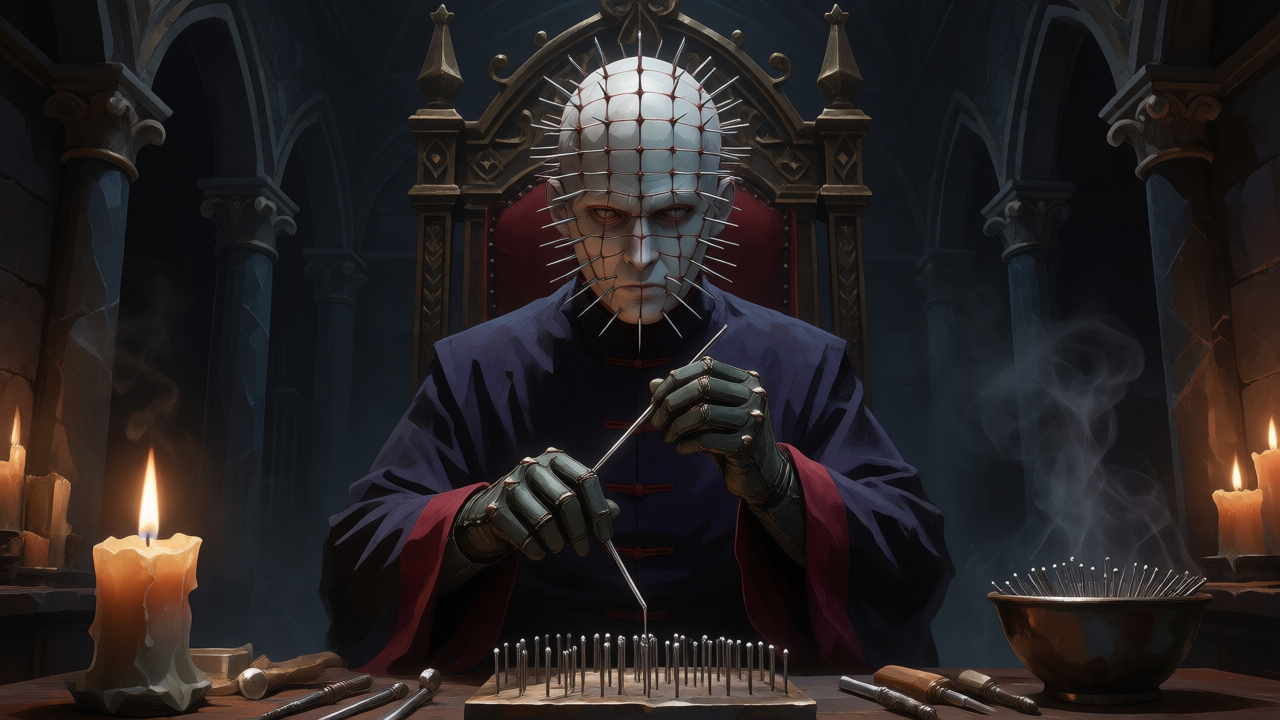
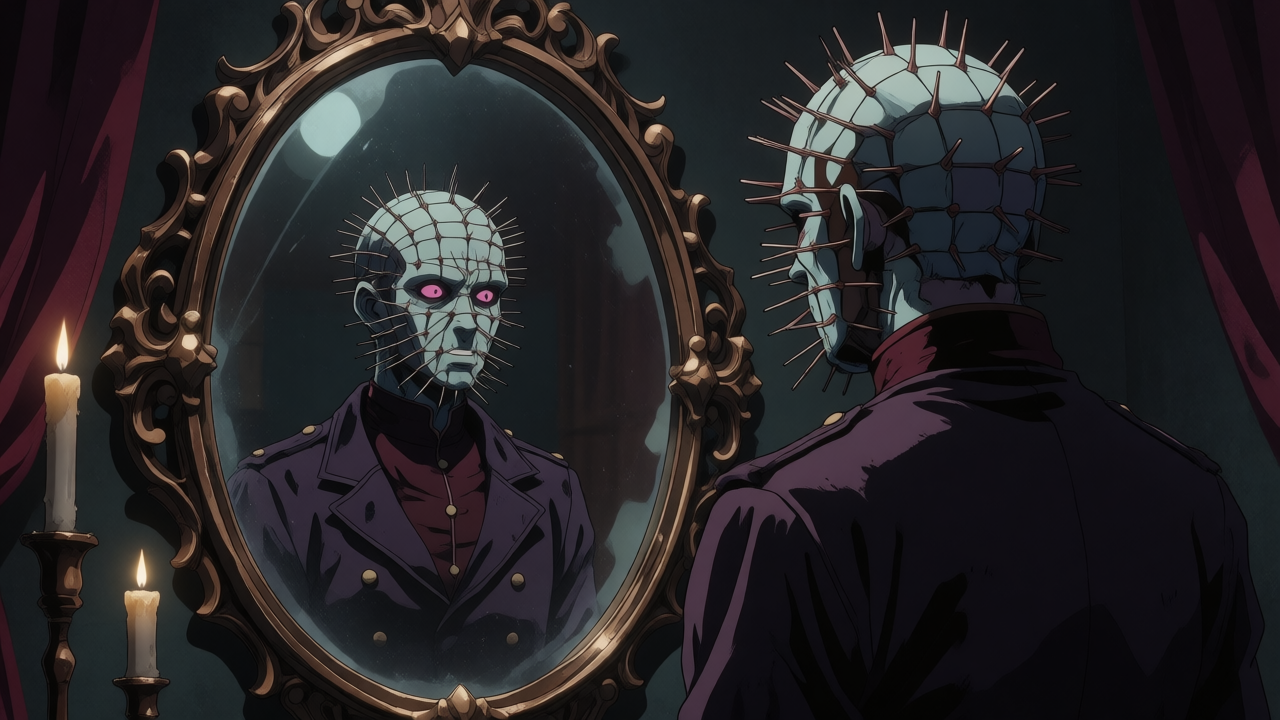
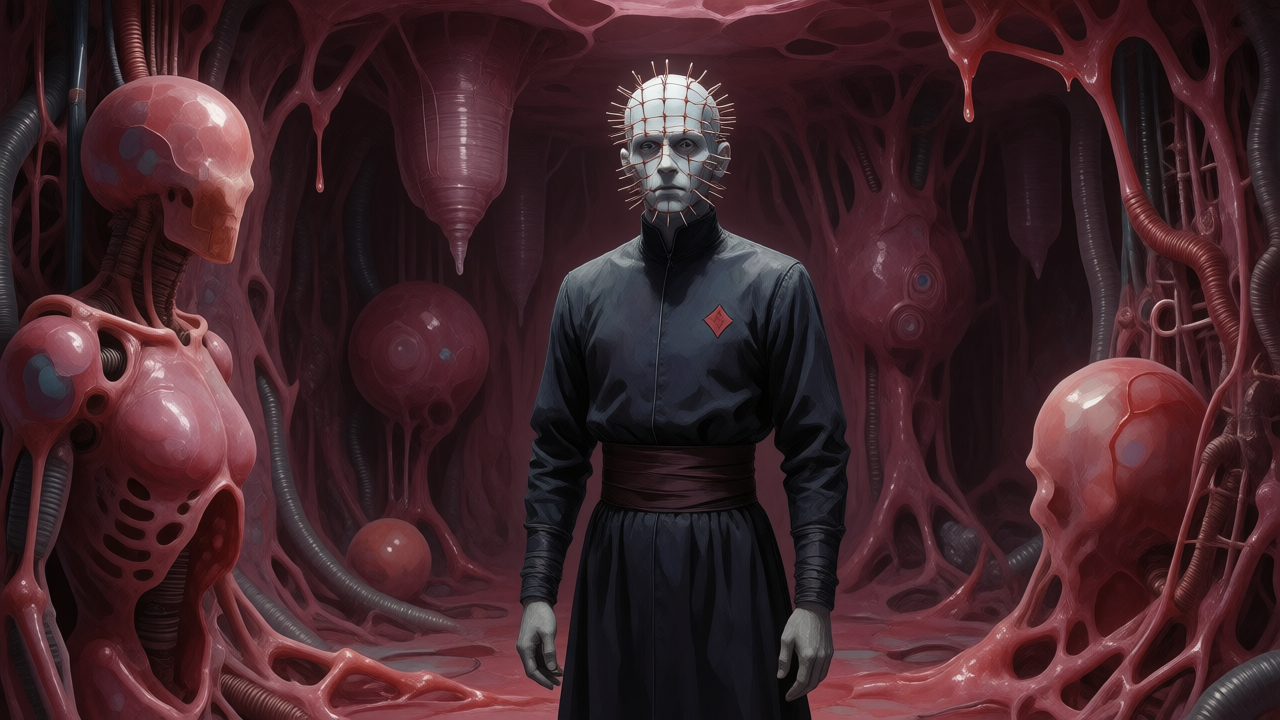
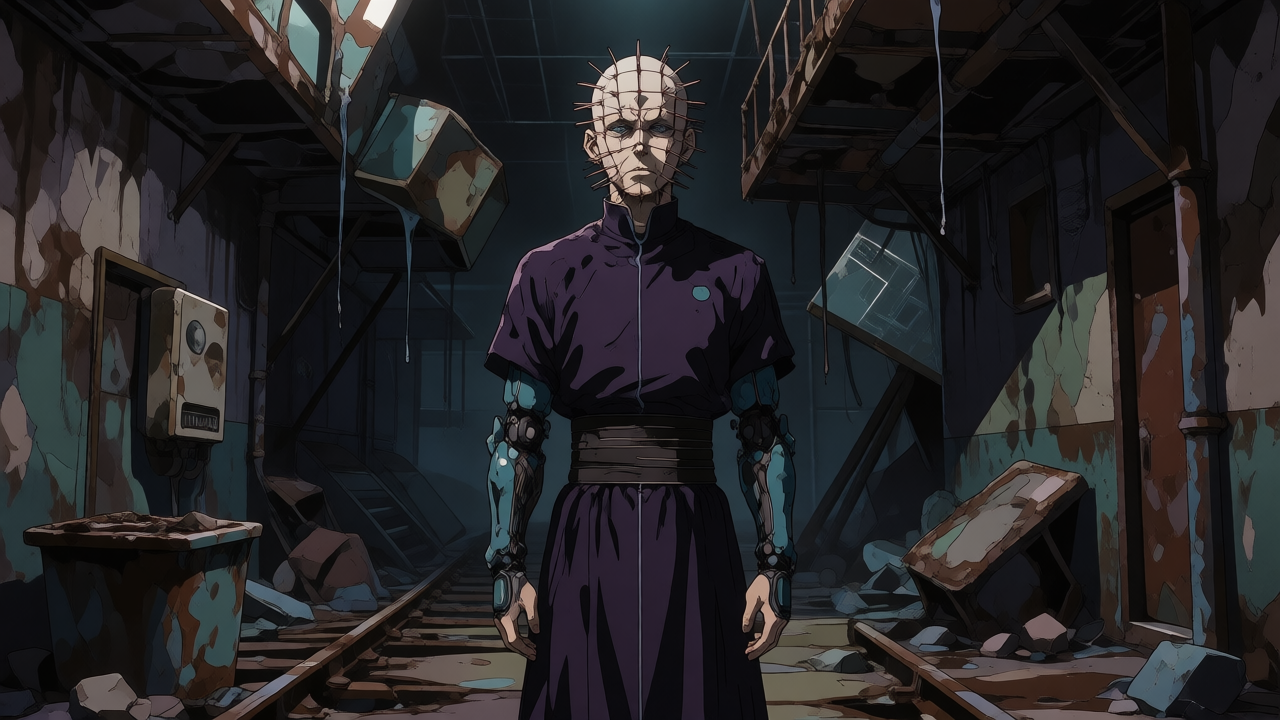
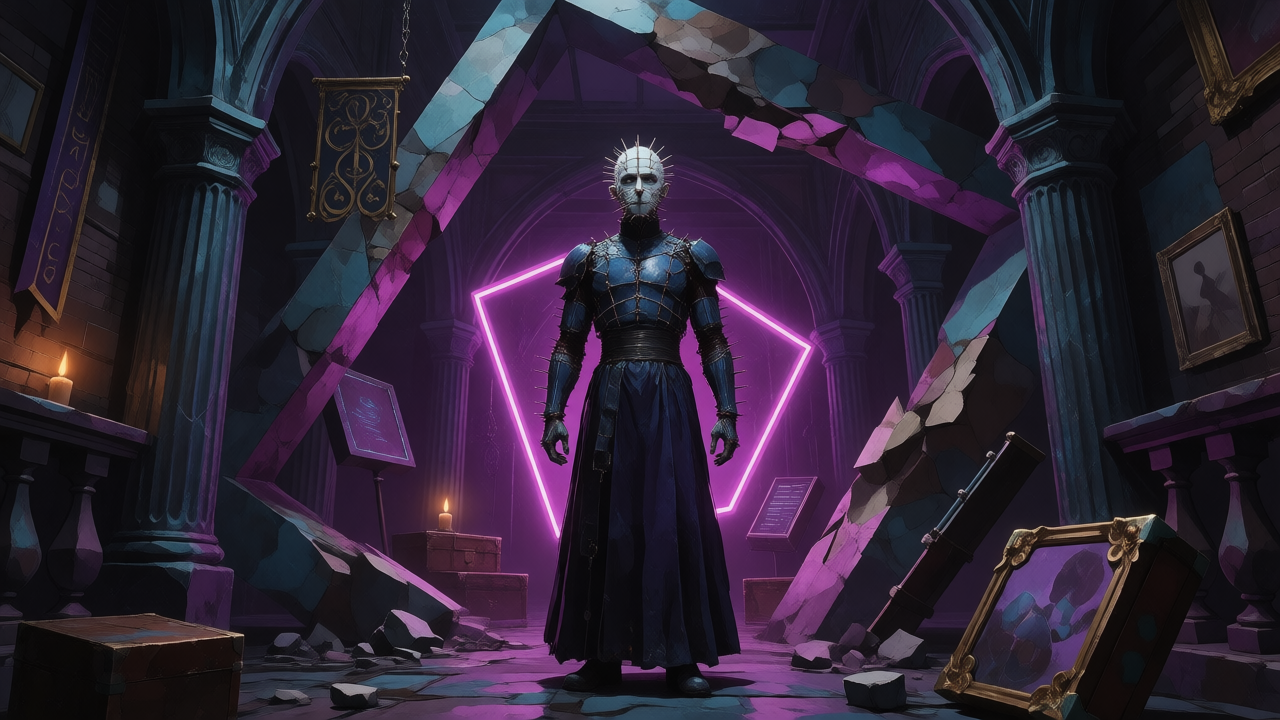
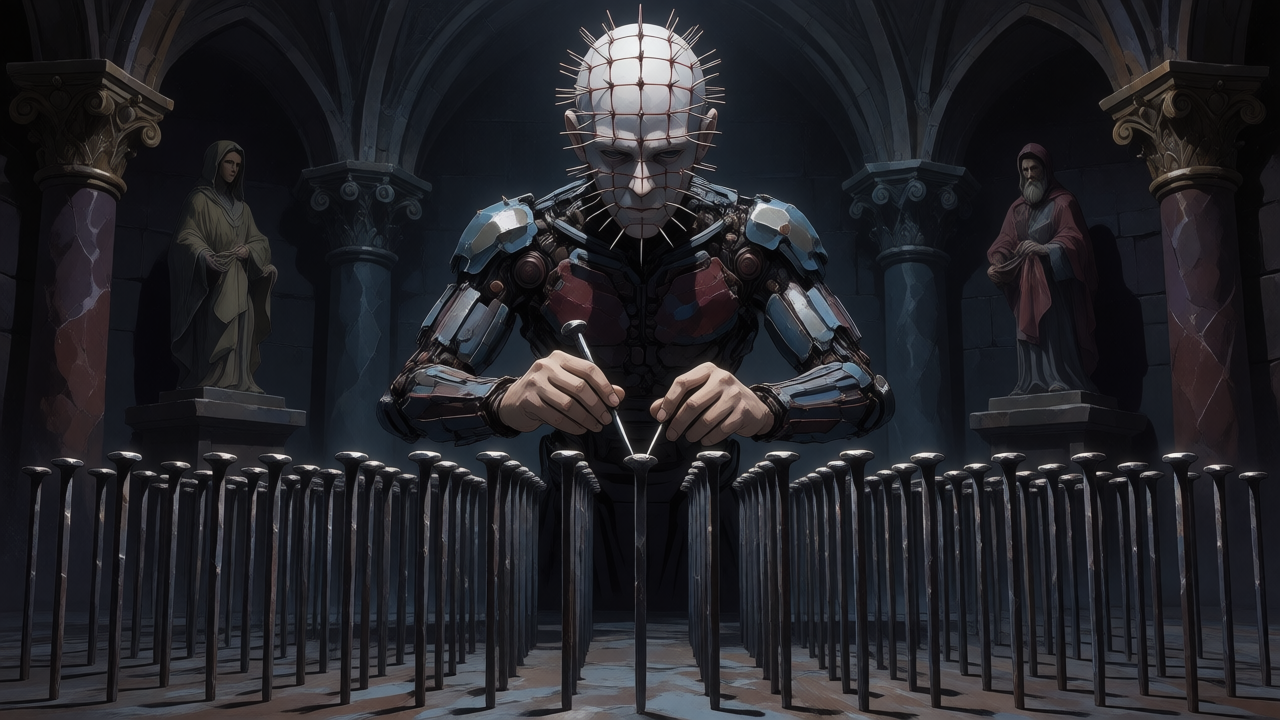
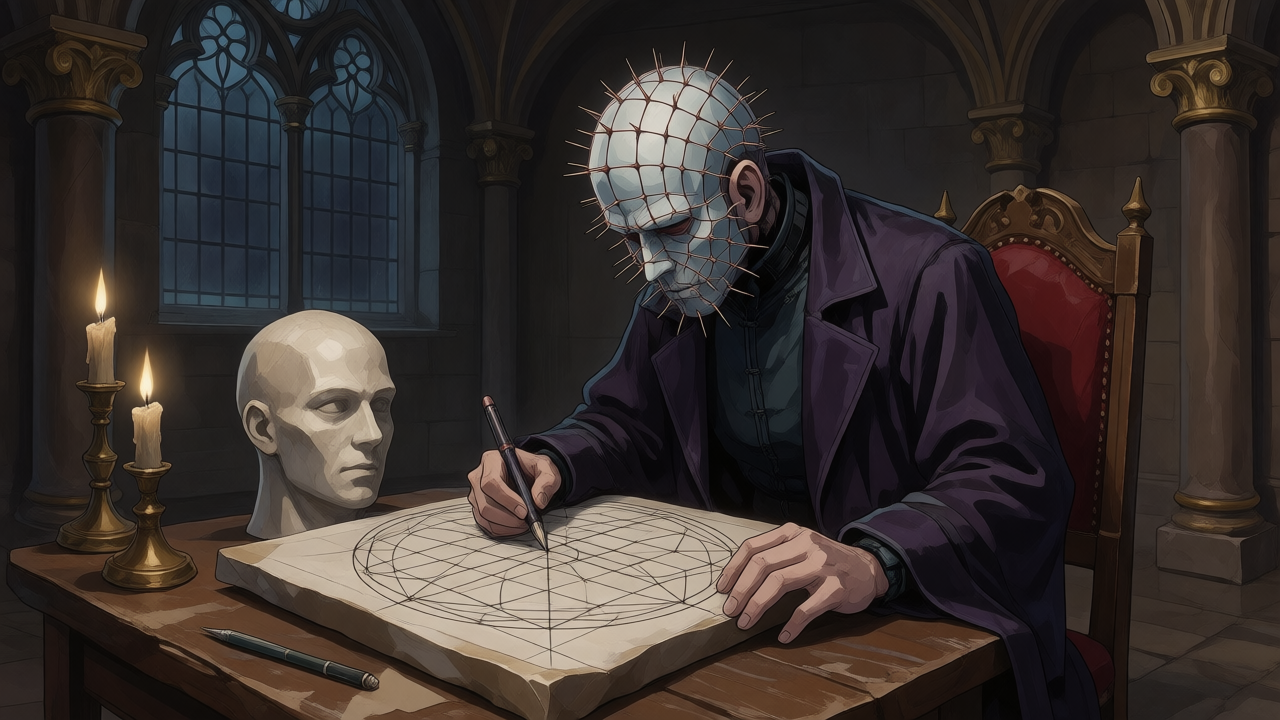
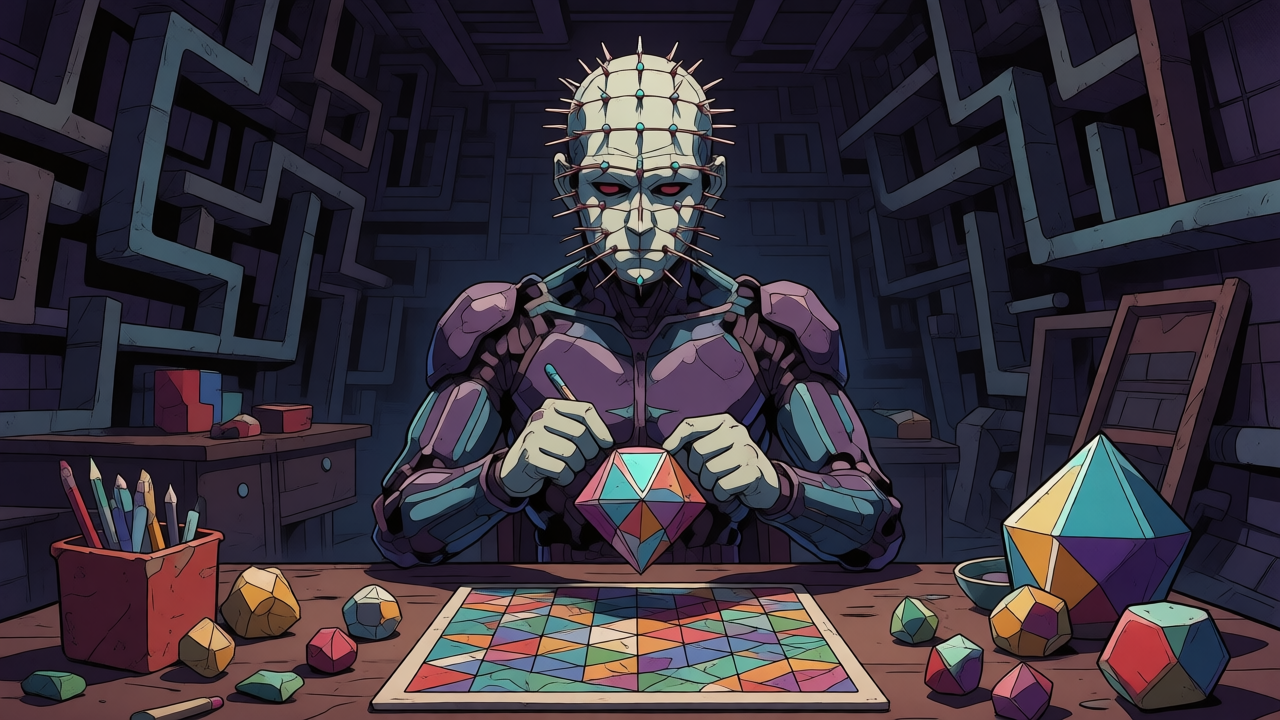
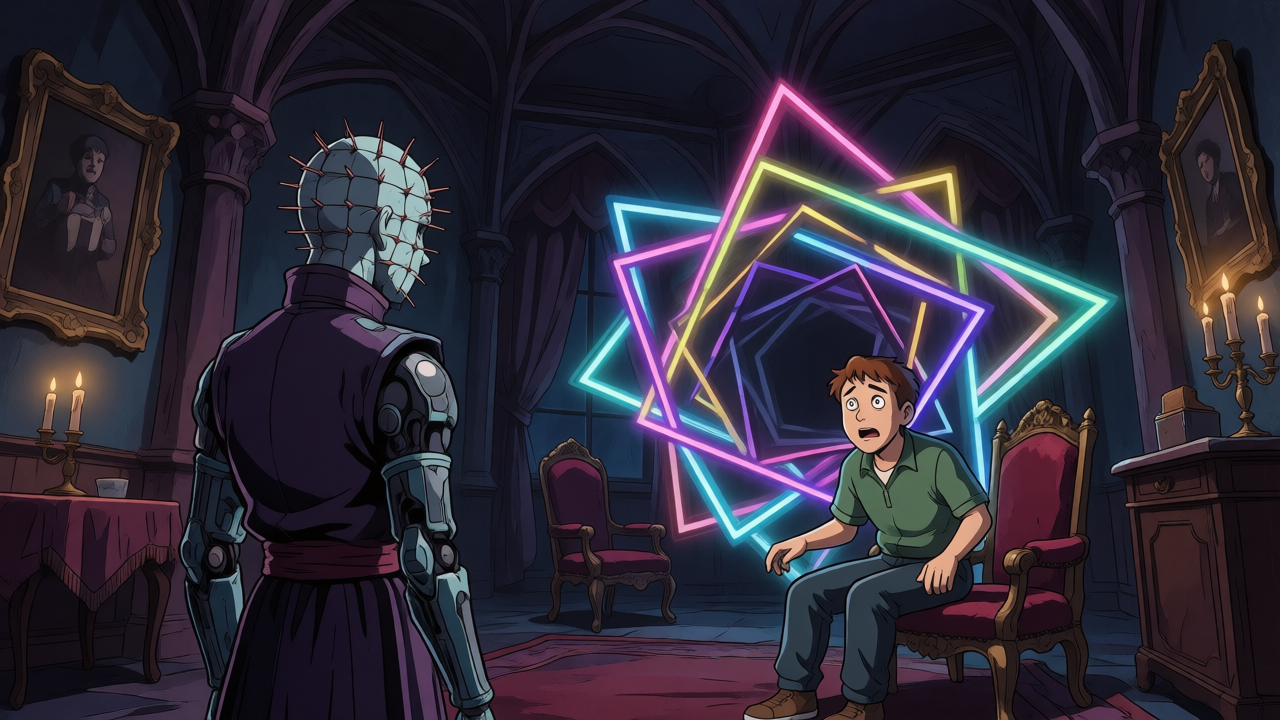
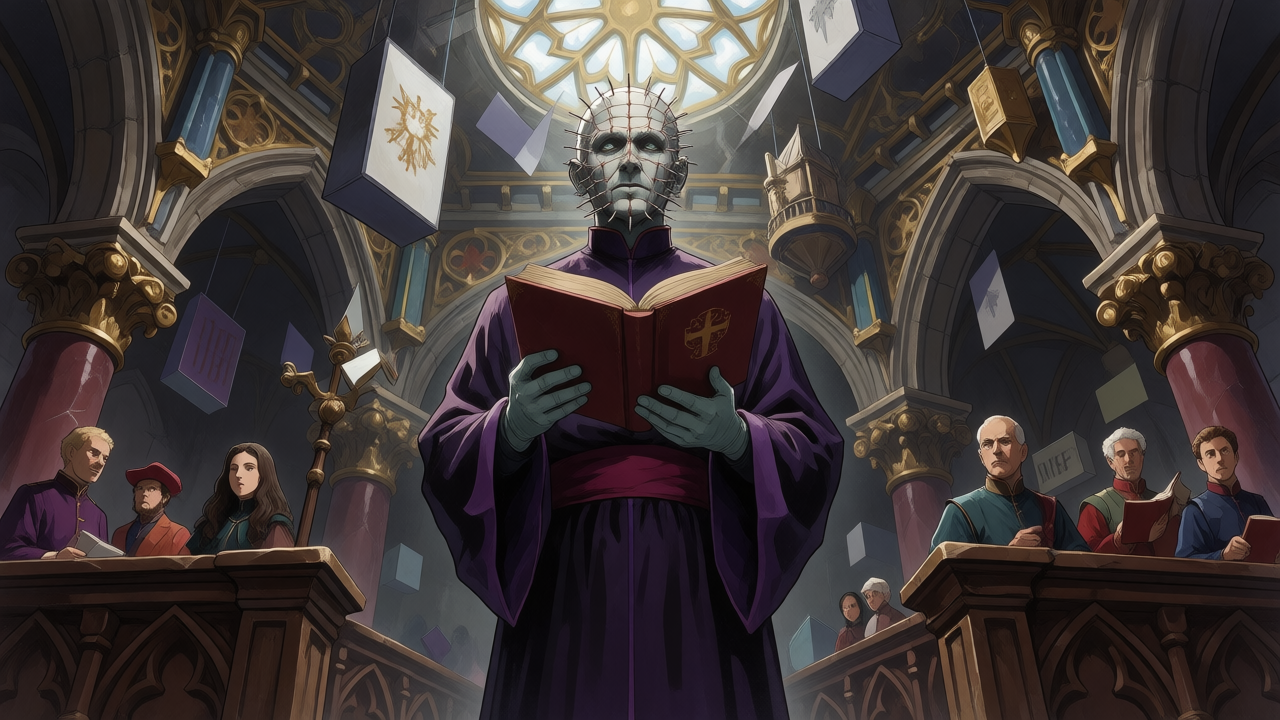
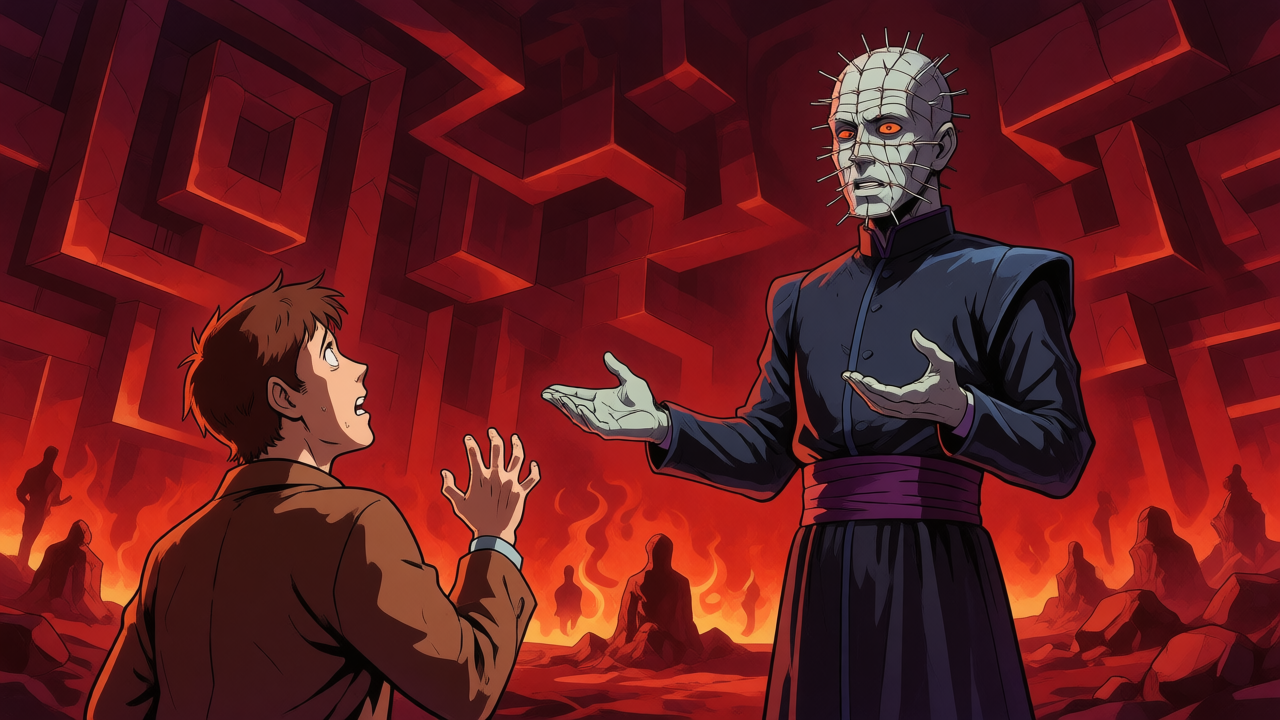
🎙 Bonus Banter
Bonus Banter — Pinhead
Take 1
[EDDIE:munchie]: ...and that’s why you can't trust a pigeon, man. They got those little orange eyes just staring into your soul while you're eating a burrito.
[REG:mood]: It is not a "soul" scan, Edward; it is merely an evolutionary adaptation to detect movement in urban micro-ecosystems.
[EDDIE:blazed]: Nah, they’re like little feathered spies for the government, I’m telling you. One time one of 'em looked at my lighter and—
[REG:mood]: You are anthropomorphizing avian scavengers. If we look at the metaphysical implications of their communal nesting habits—
[EDDIE:choked]: Bro, stop with the big words. It’s just a bird, not a philosophy major. They're plotting something... they want our crusts and our dignity.
[REG:mood]: Their consciousness is likely non-linear, existing in a state of perpetual presence that we simply cannot grasp without—
---
Take 2
[EDDIE:buzzing]: ...and that’s why you can't trust a pigeon with a bagel, man. They got those little tiny eyes like they're recording your soul for the feds. [REG:transcendental]: It is less about surveillance and more about the avian capacity to perceive non-linear temporal flows through gluten-based stimuli. [EDDIE:stoney]: Bro, don't get all high-concept on me, I'm just saying they look shifty when they eye that sesame seed. [REG:pompous]: You mistake a profound biological imperative for suspicion; the bagel is merely a vessel of earthly delight. [EDDIE:baked]: Yeah, well, next time you see one staring at your crust, just know it’s plotting to— [REG:ethereal]: To achieve total synchronicity with the sourdough starter, perhaps?
---
Take 3
[EDDIE:zooted]: ...so I’m tellin' you, man, if you put enough hot sauce on a grape, it becomes a vegetable by force of will.
[REG:cerebral]: That is a taxonomically illiterate assertion, Edward; essence is not dictated by sheer capsaicin saturation.
[EDDIE:baked]: Nah, man, I’m sayin' if the vibe shifts, the fruit gotta bow down to the spice, ya feel me? It's like... ontological seasoning.
[REG:pompous]: "Ontological seasoning"? Please. You are merely describing a sensory hallucination triggered by excessive citric acid and ego-dissolution.
[EDDIE:stoney]: Yo, don’t get all textbook on me just 'cause I said the grape's soul is basically a tiny chili pepper now—
[REG:contemplative]: But if we consider the fractal geometry of the seed within the fruit, one could argue that the spicy-ness actually...
[EDDIE:munchie]: ...it’s like a little fire dragon living in your mouth, but like, a tiny, sweet, angry—