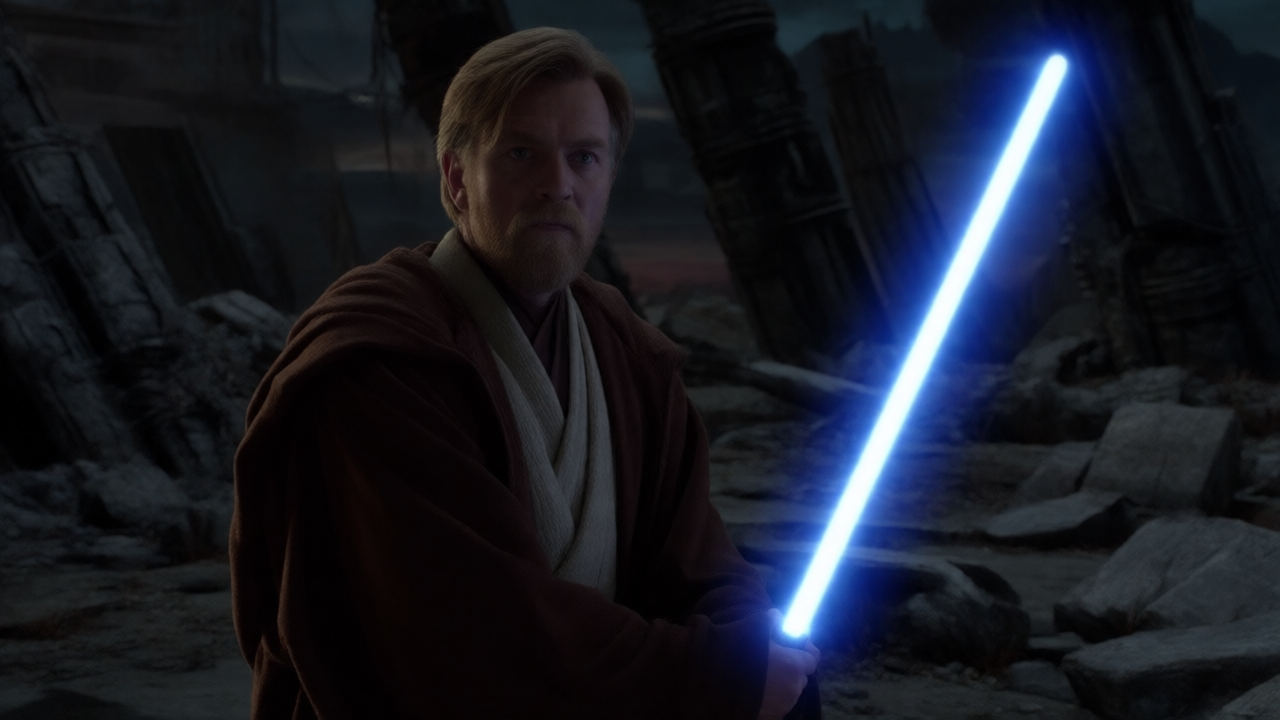
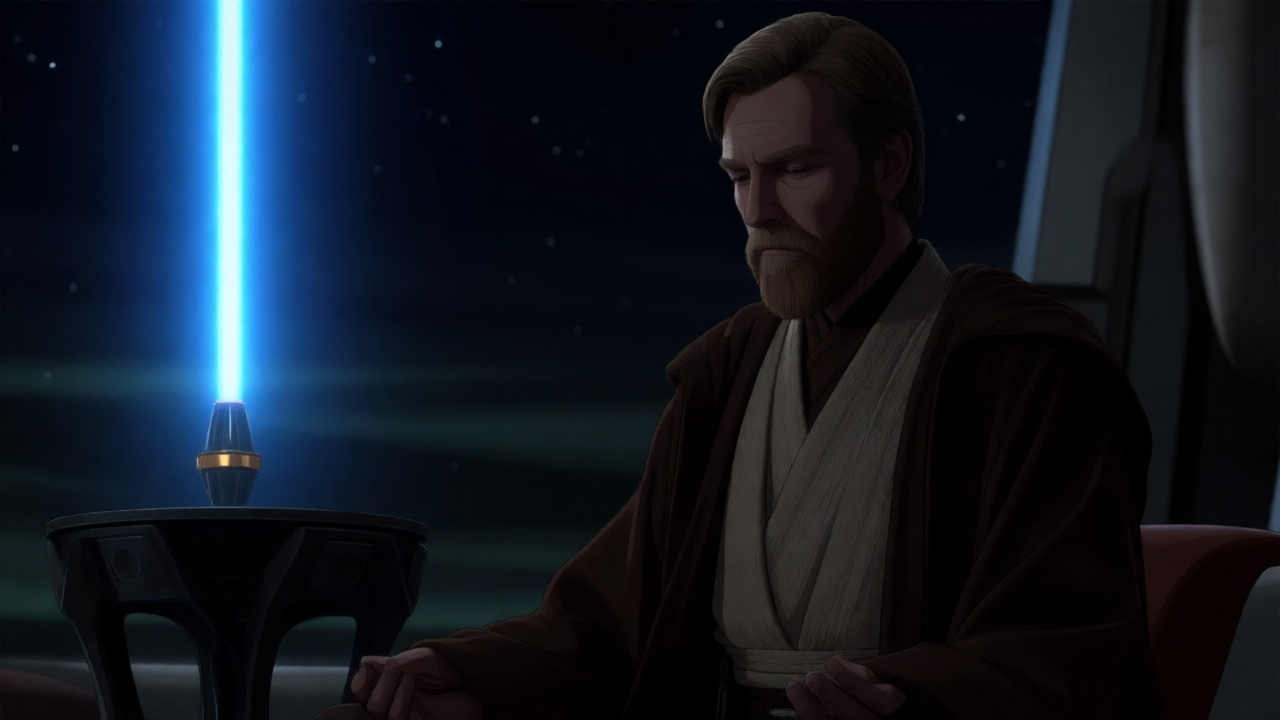
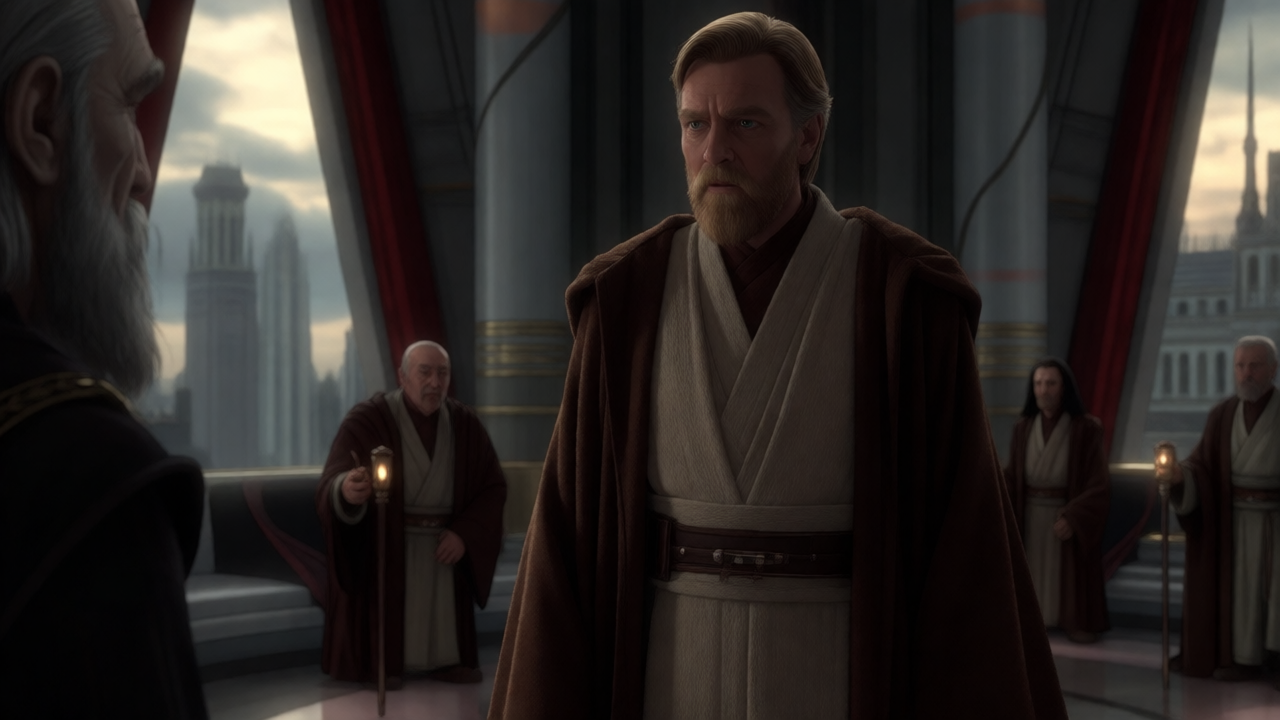
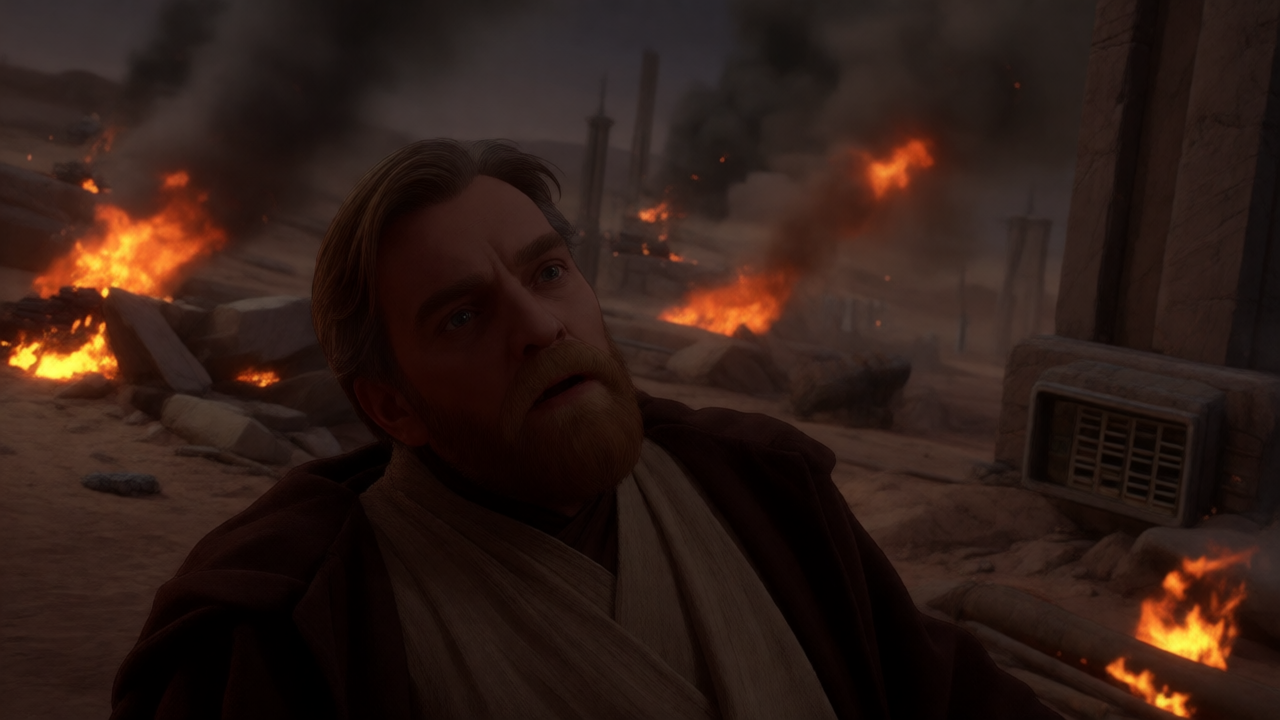
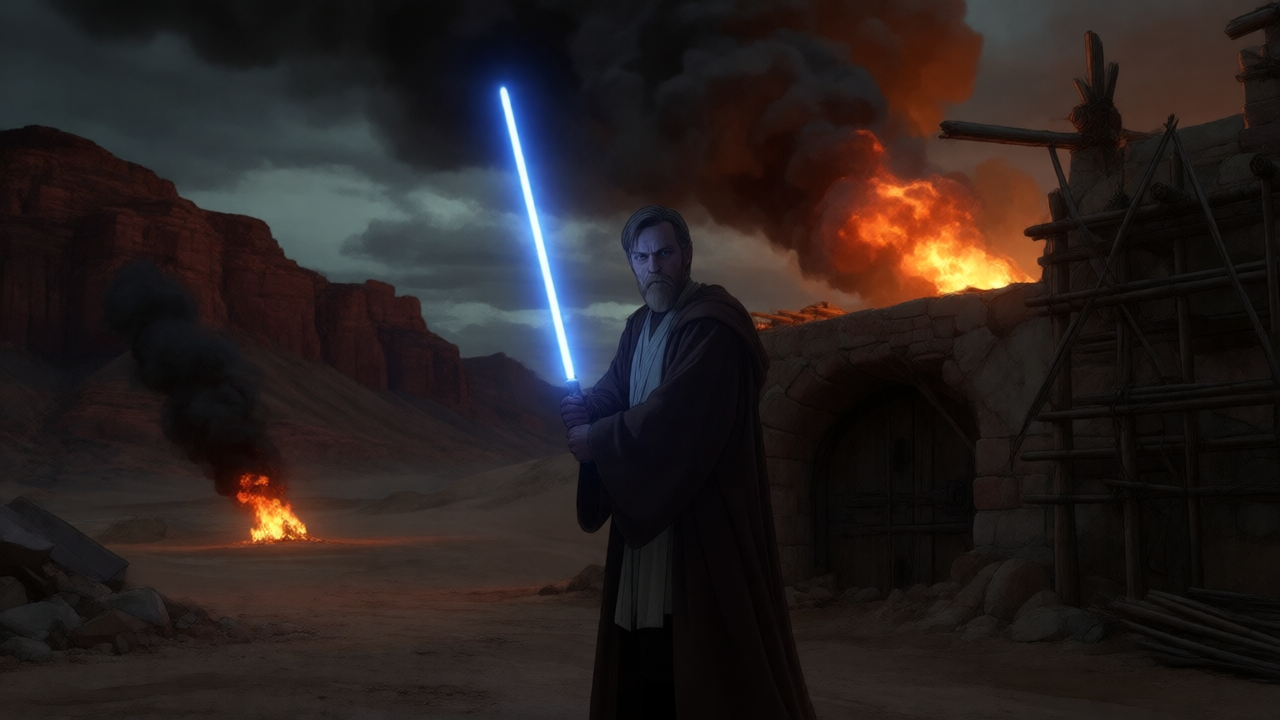
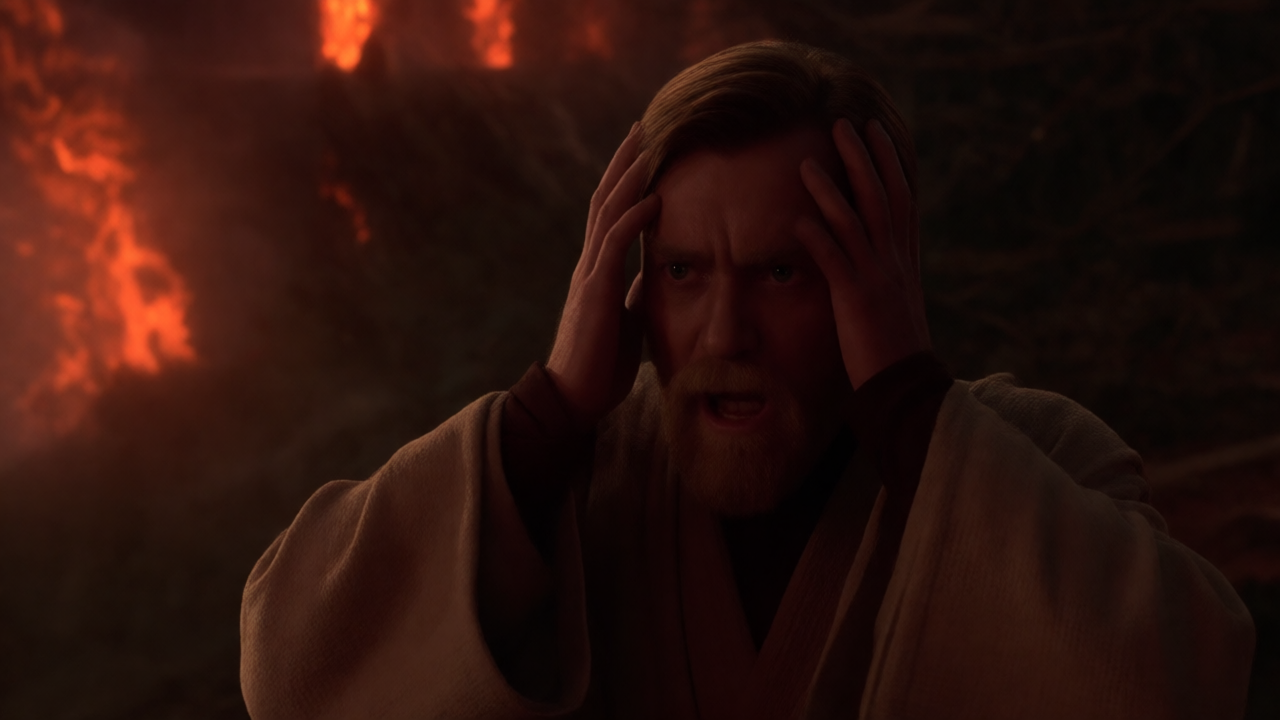
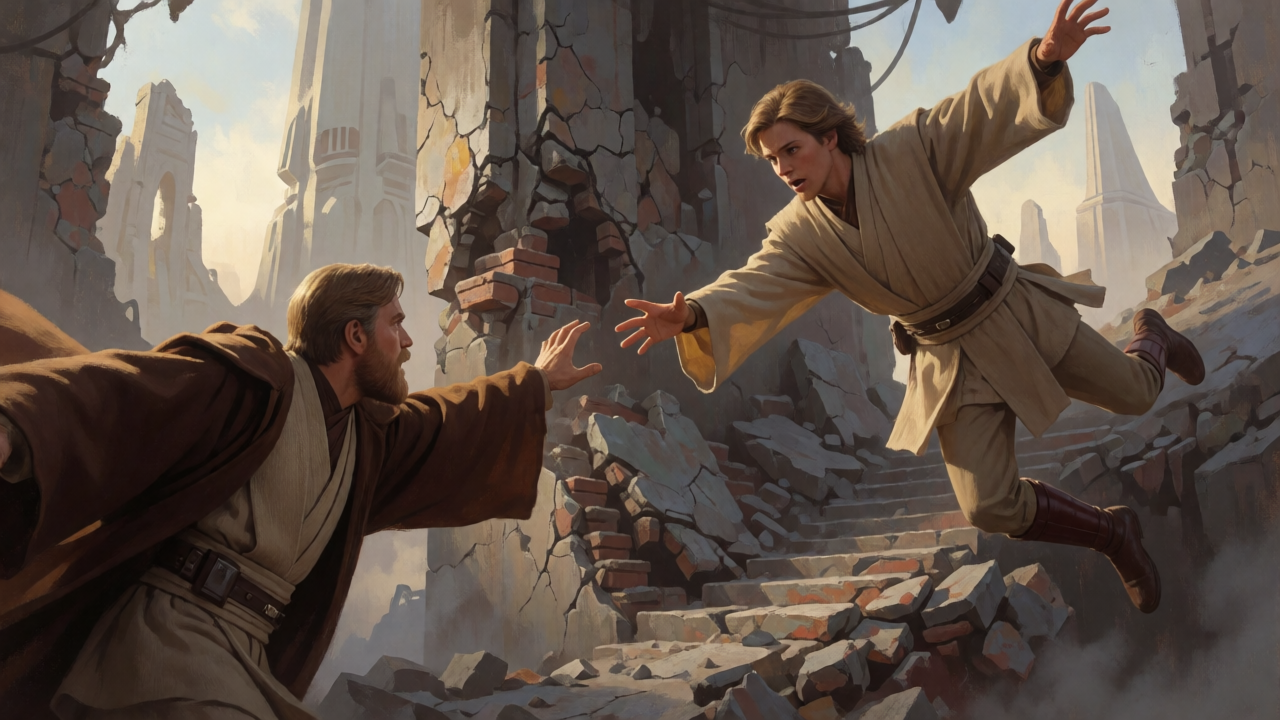
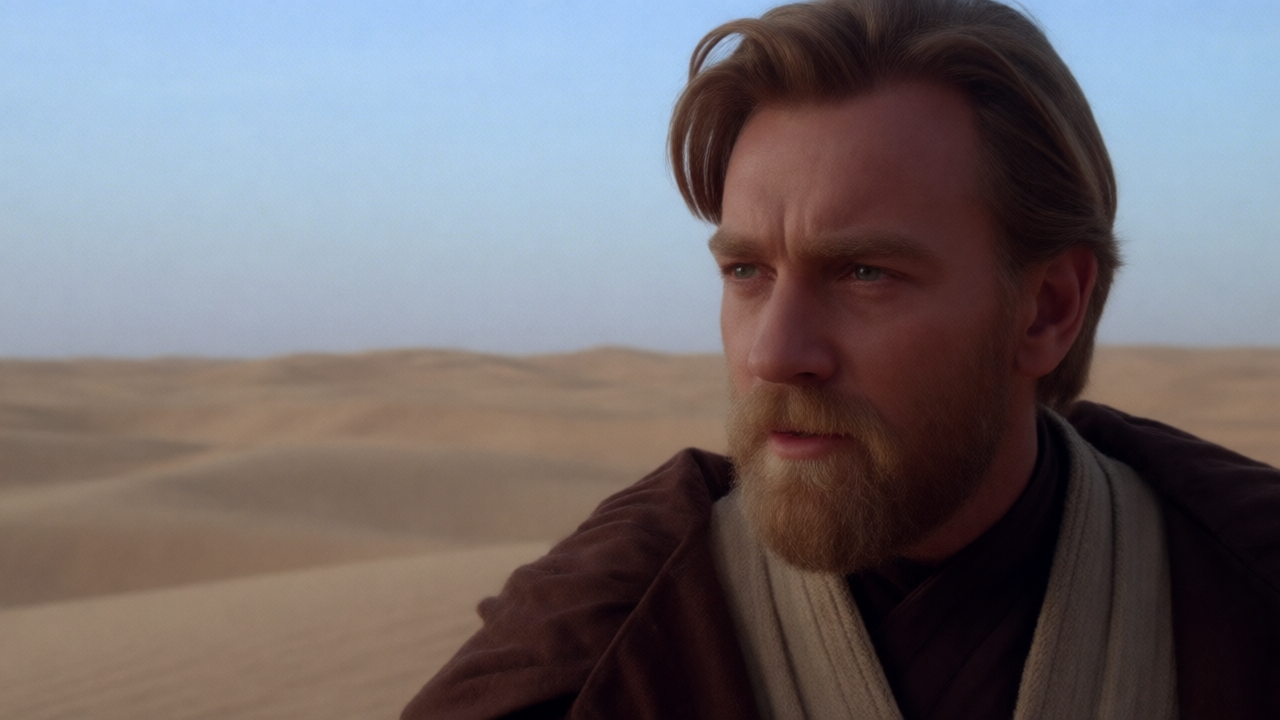
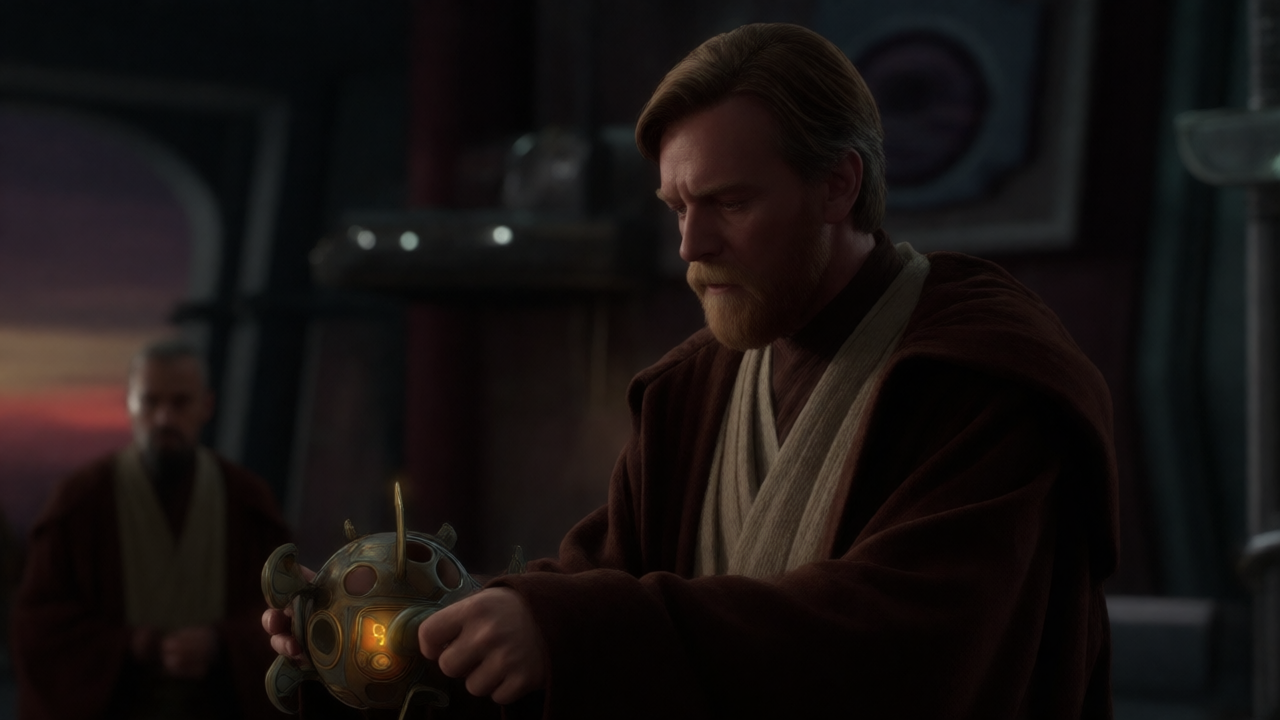
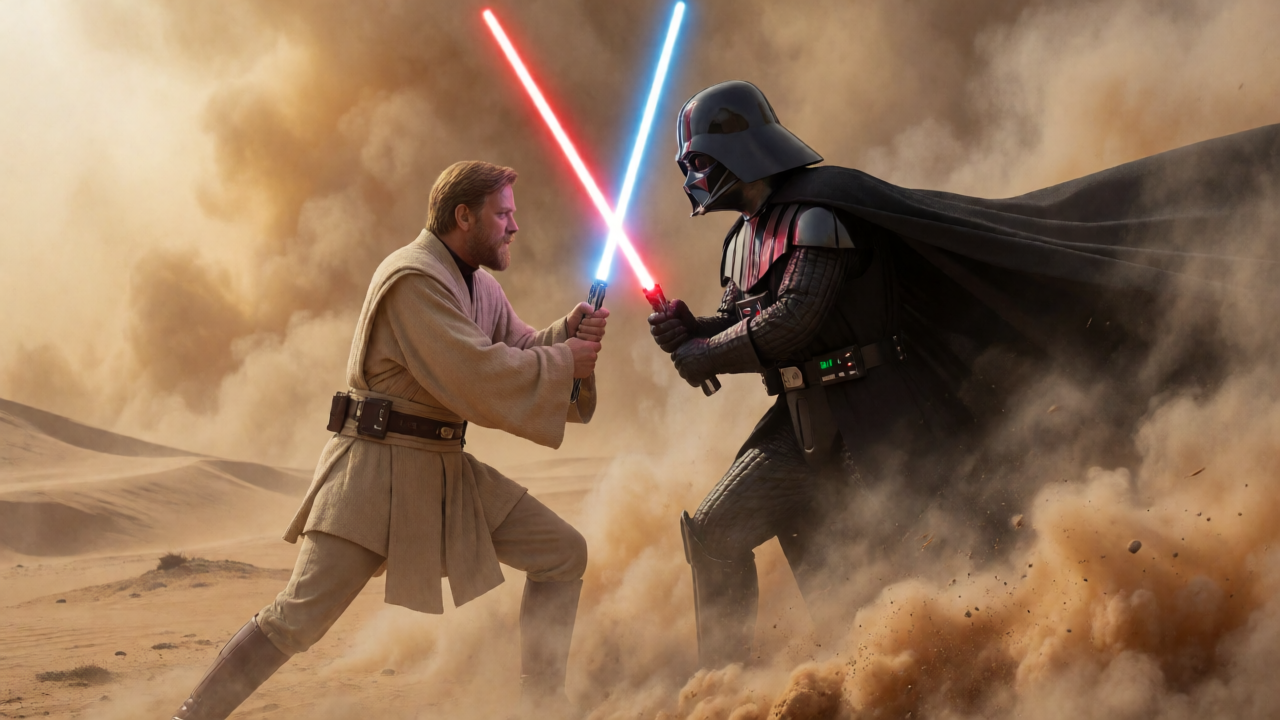
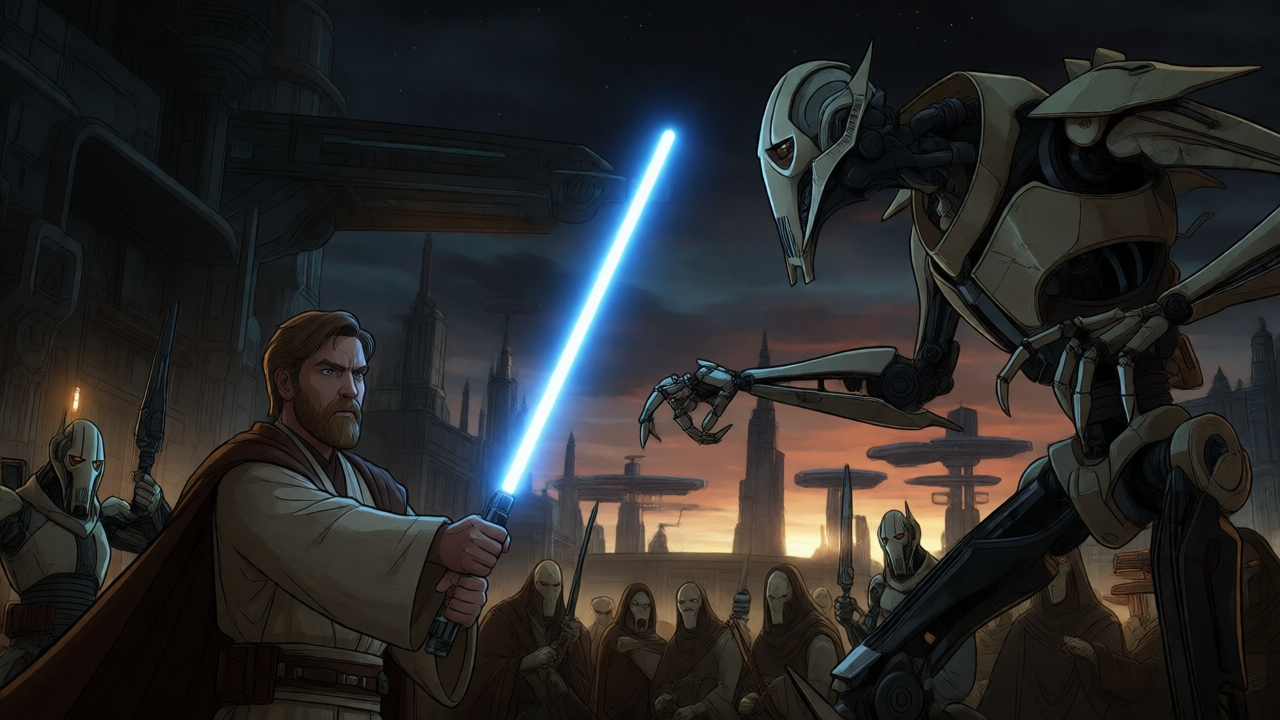
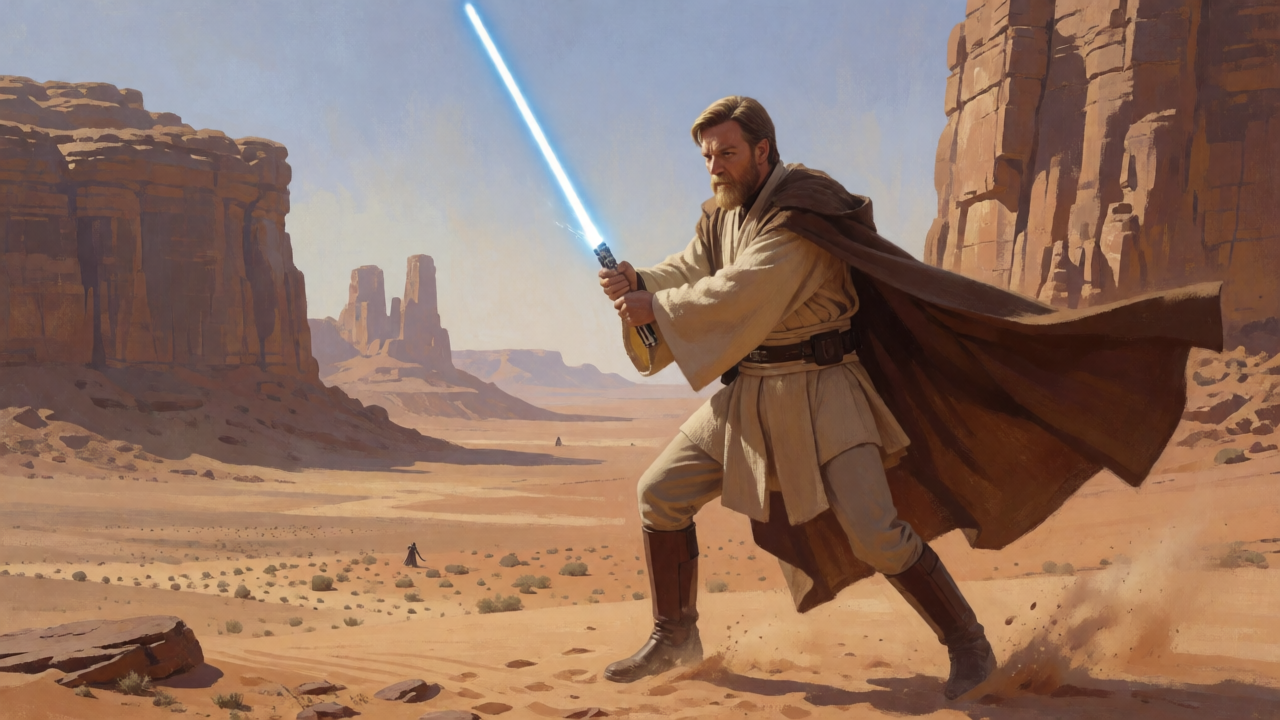
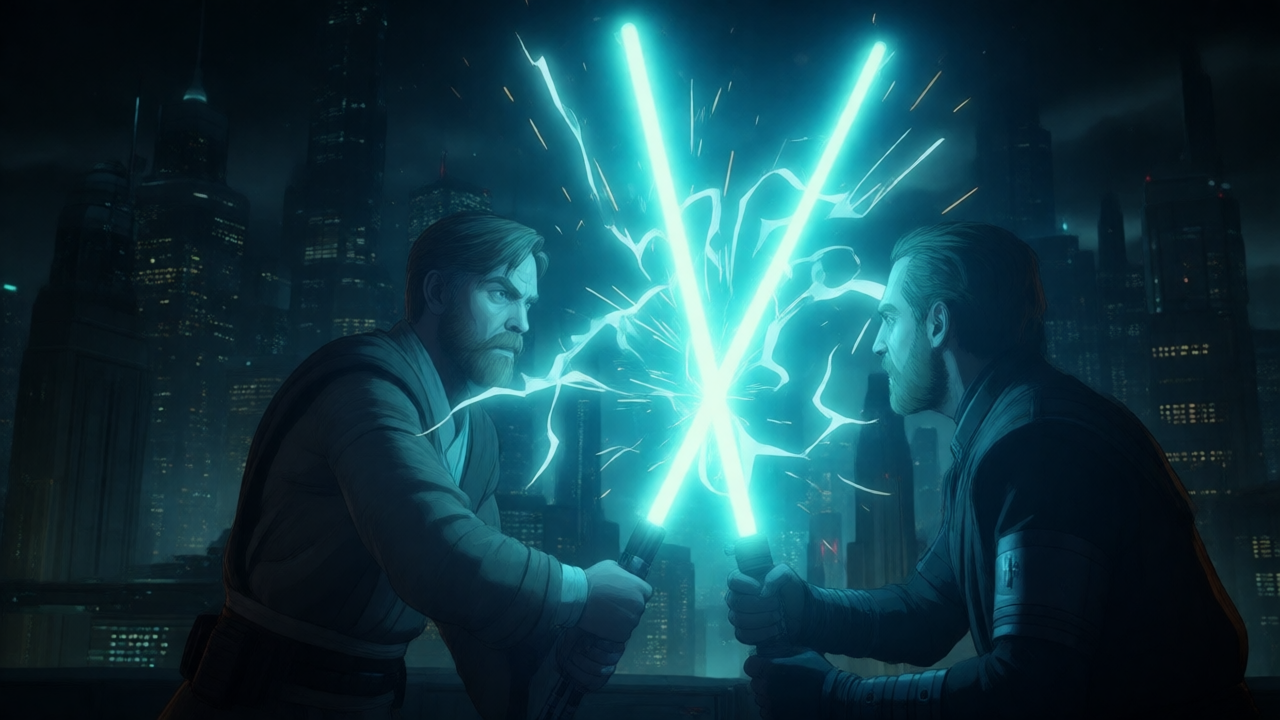
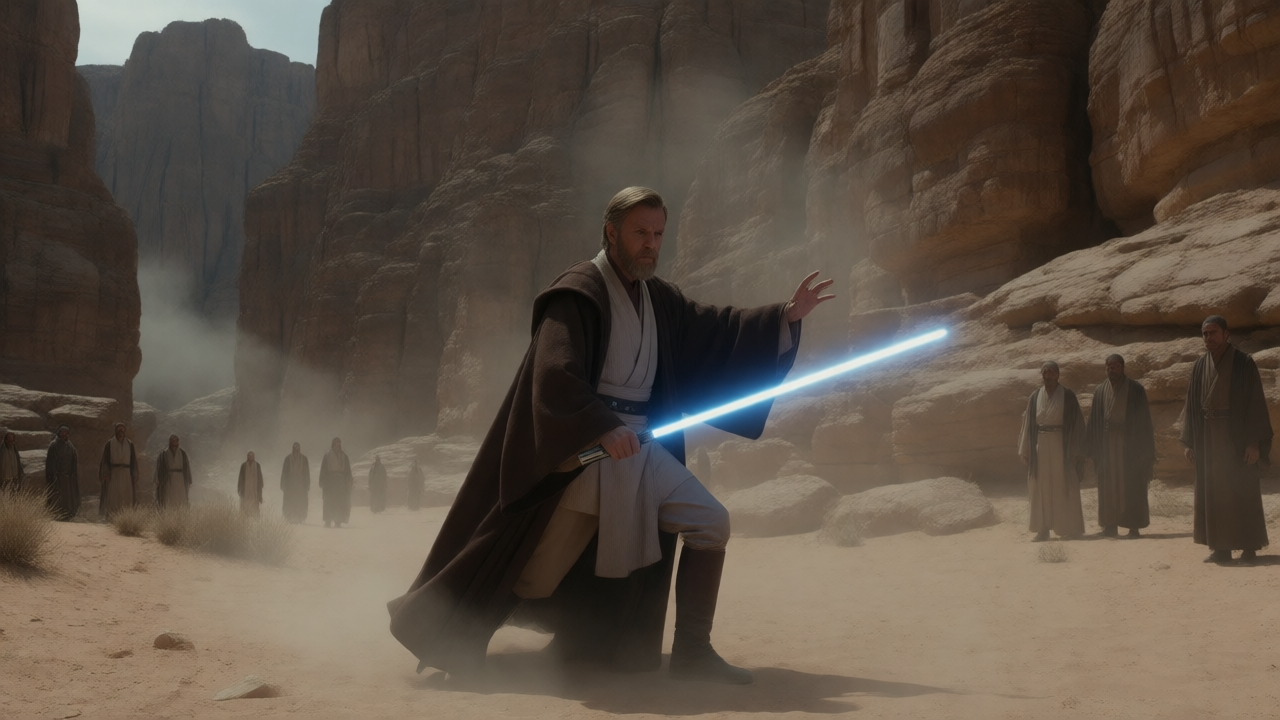
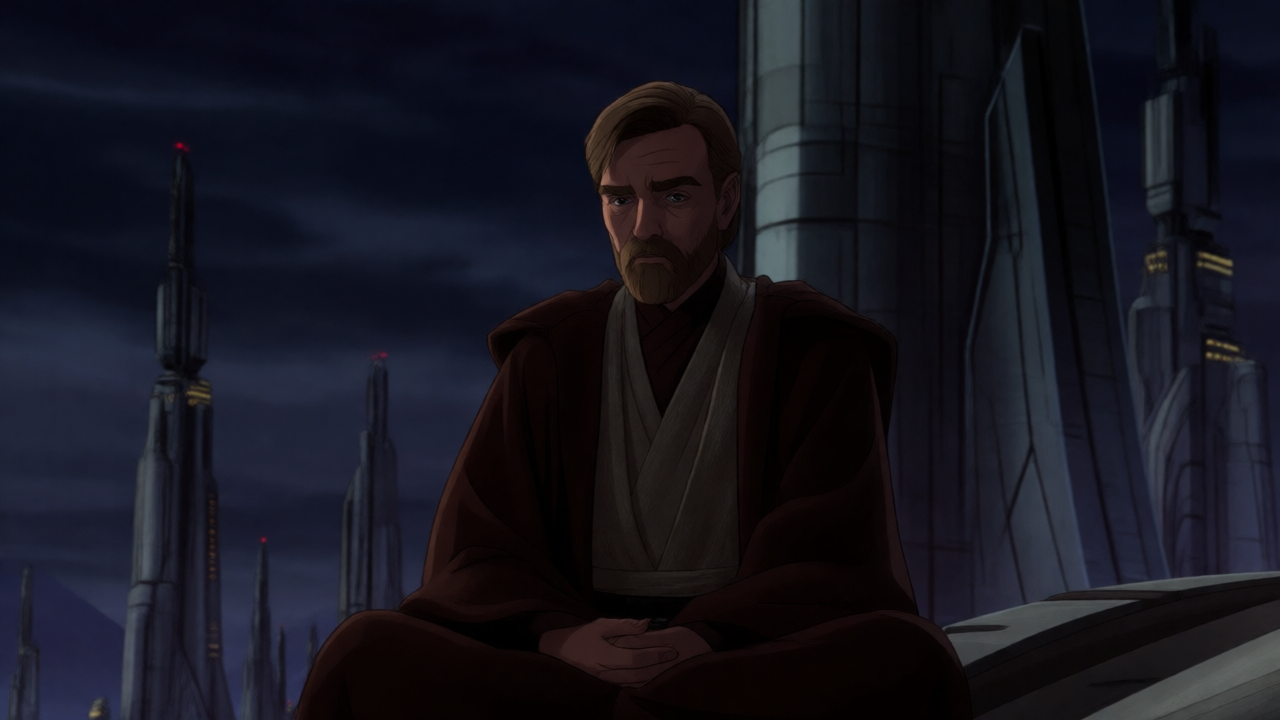
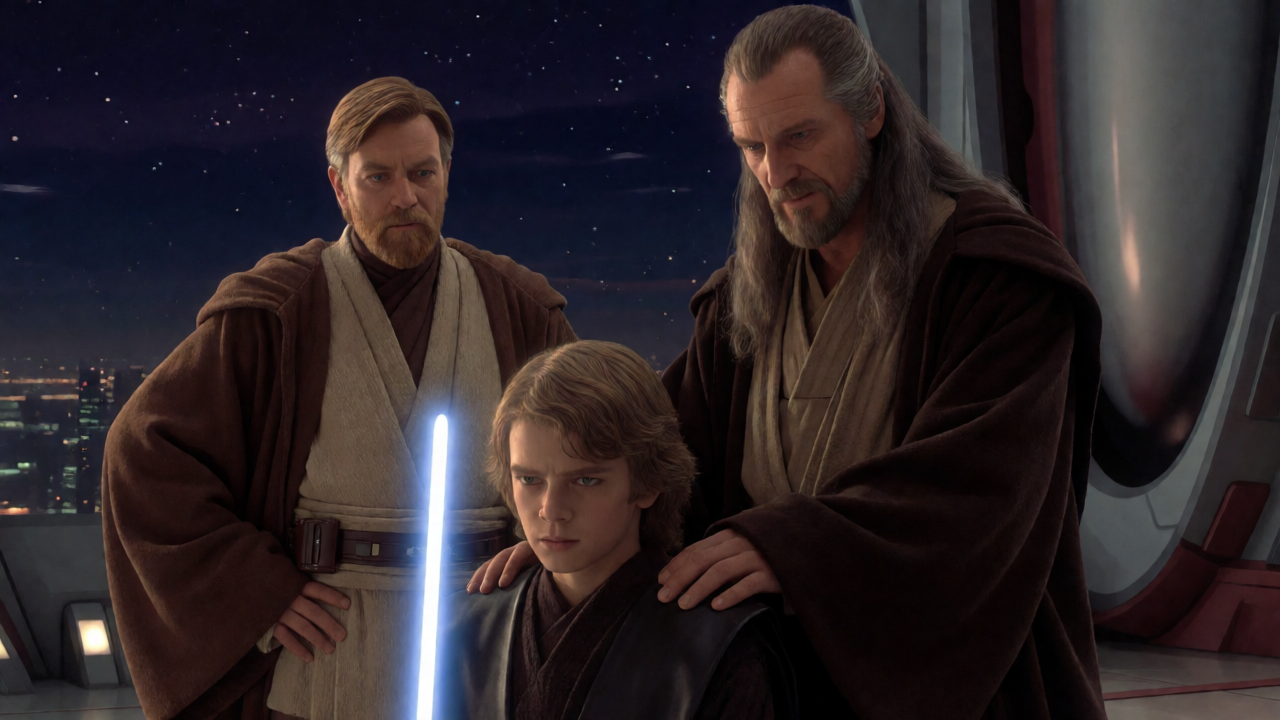
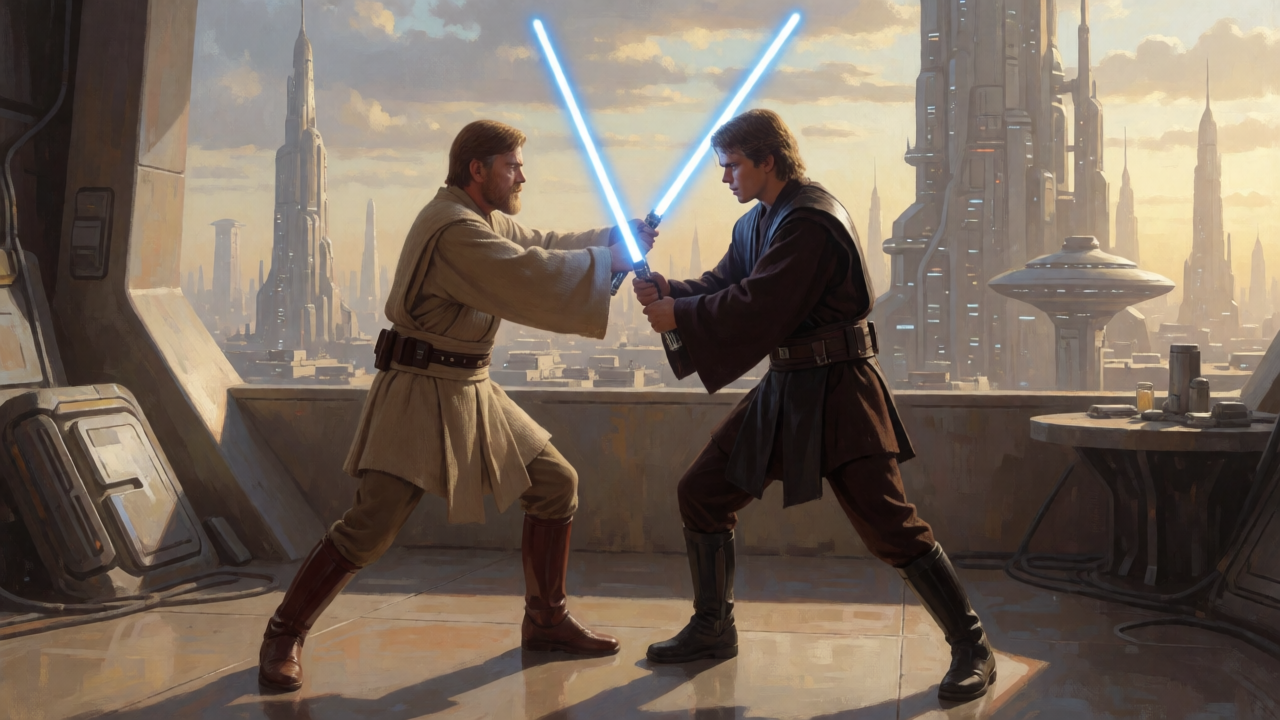
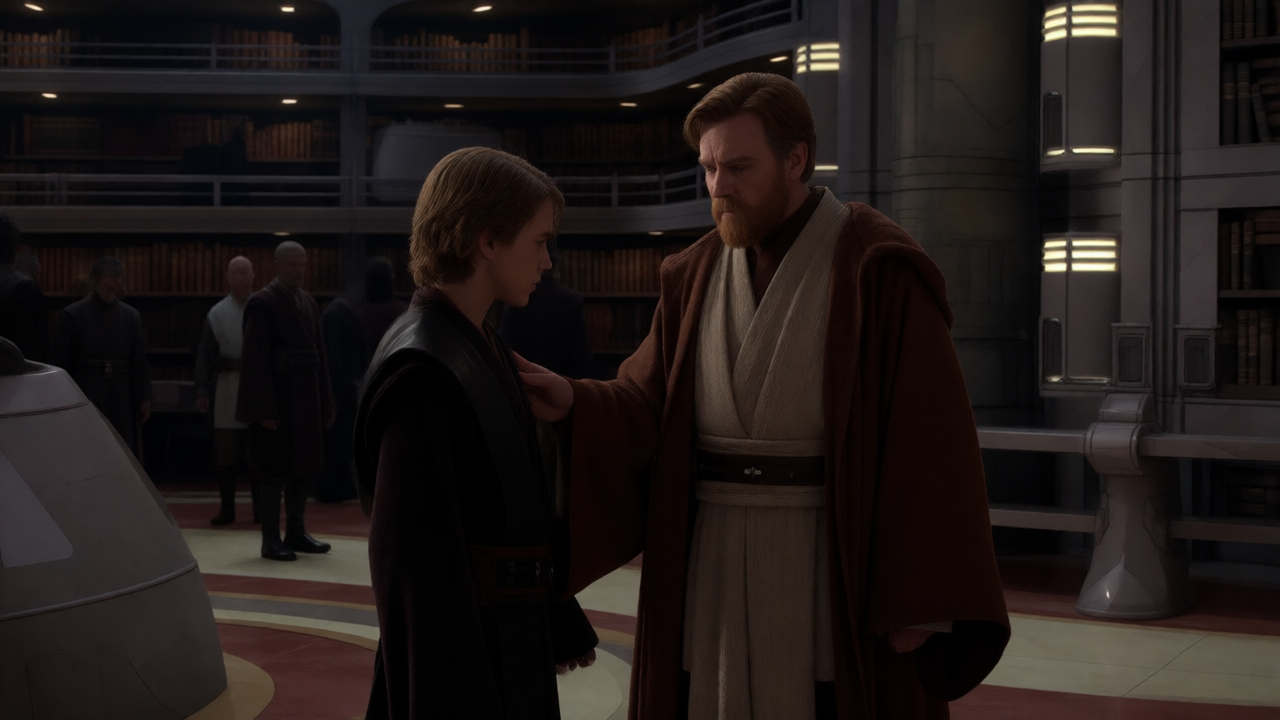
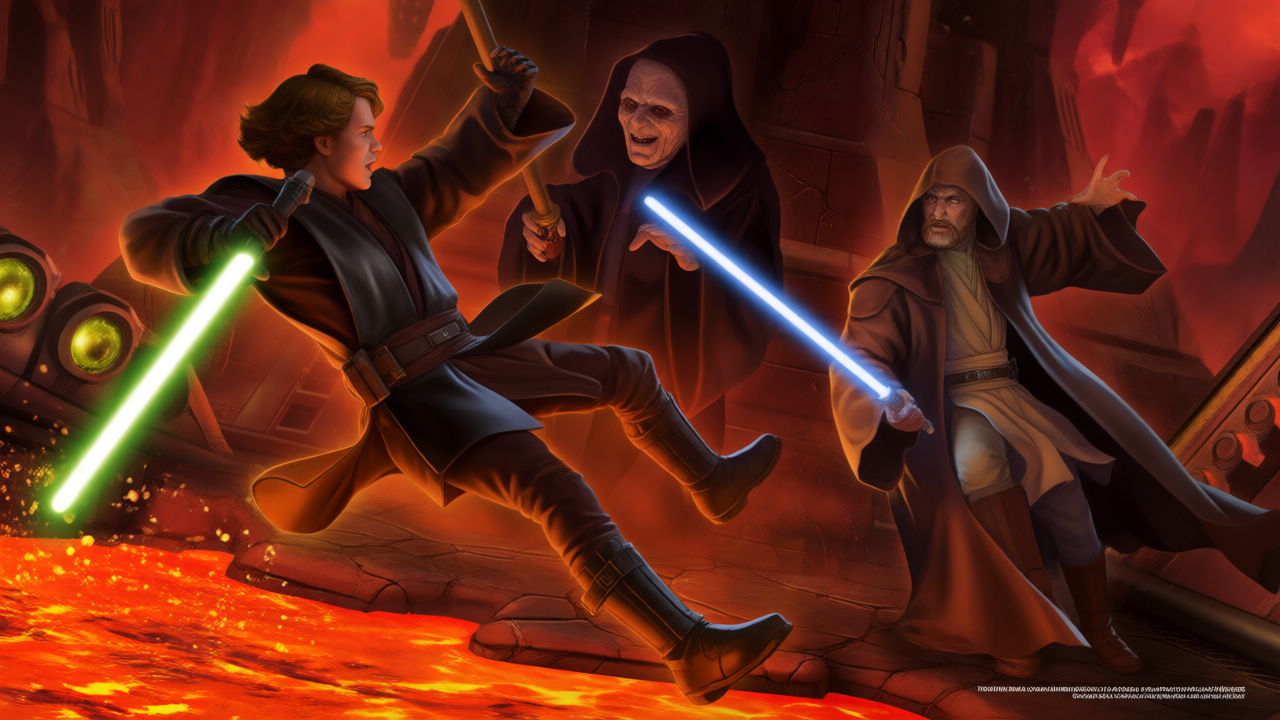
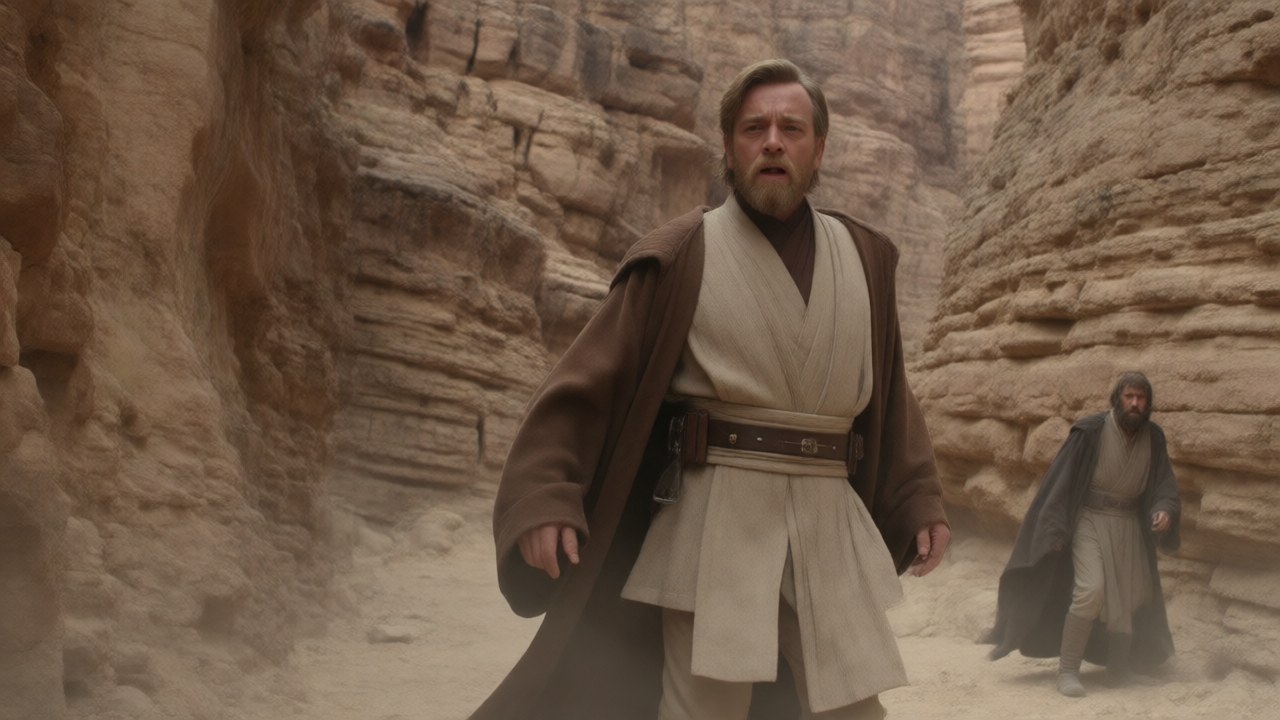
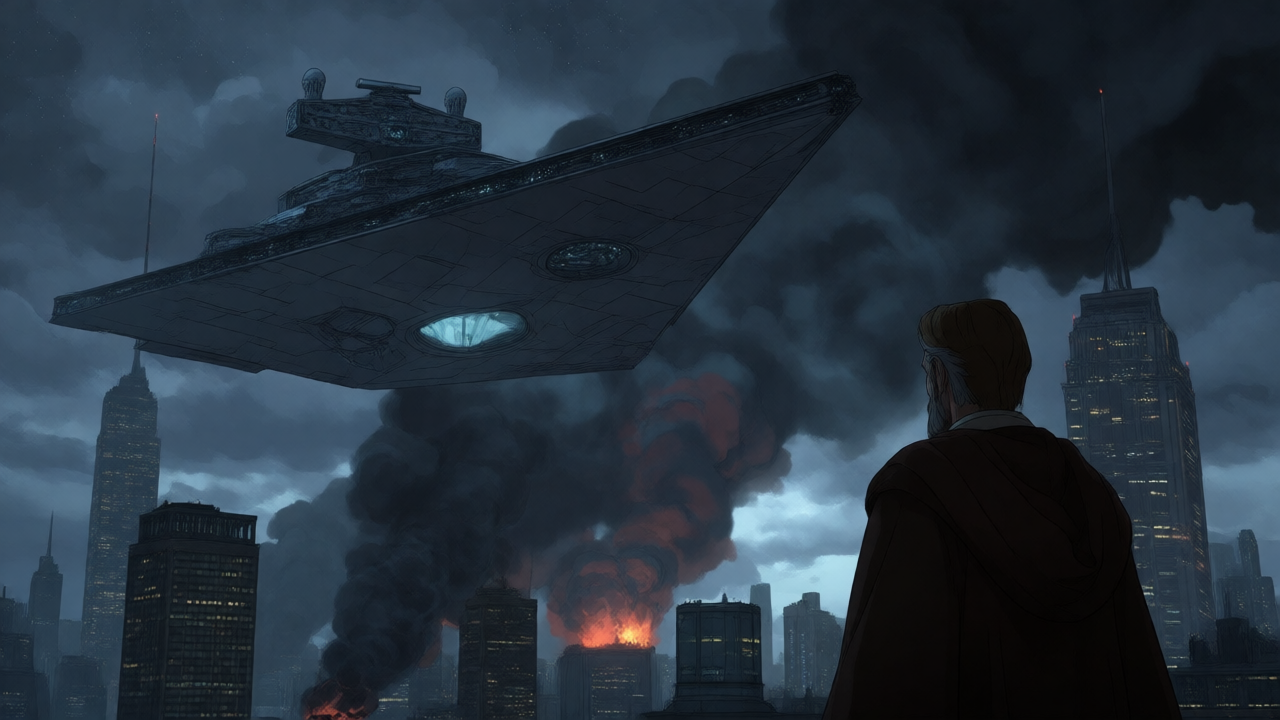
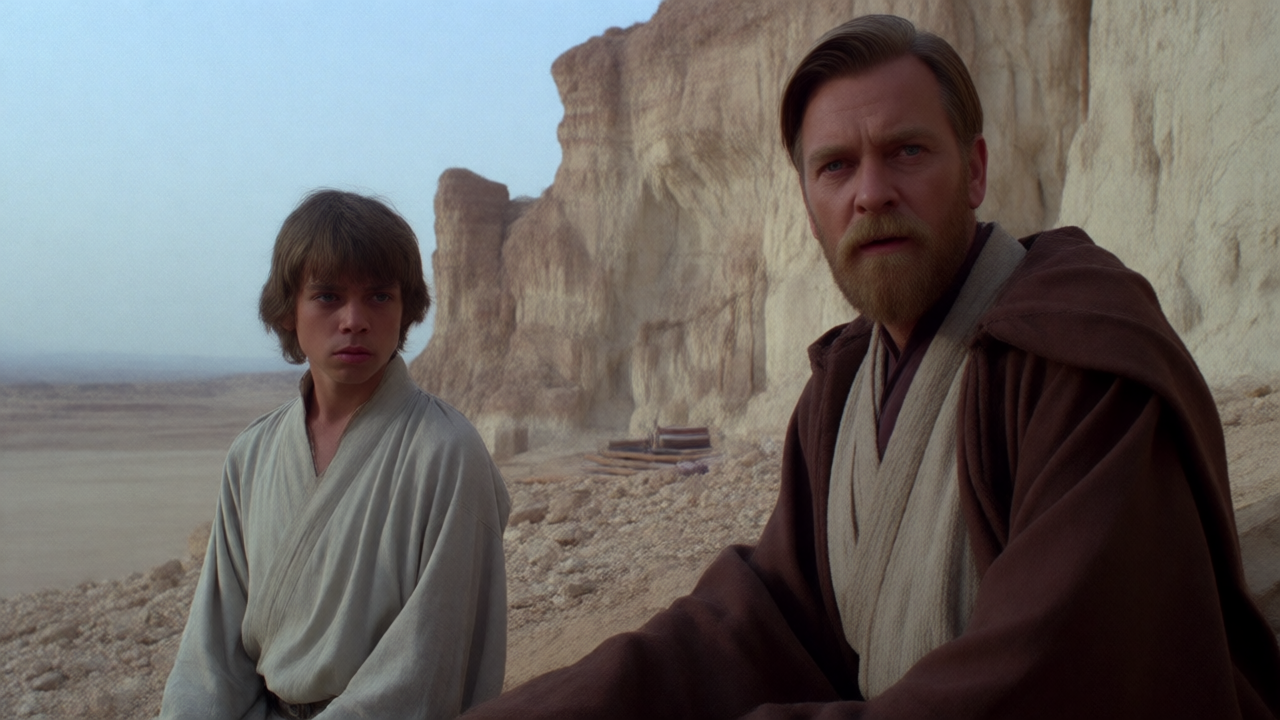
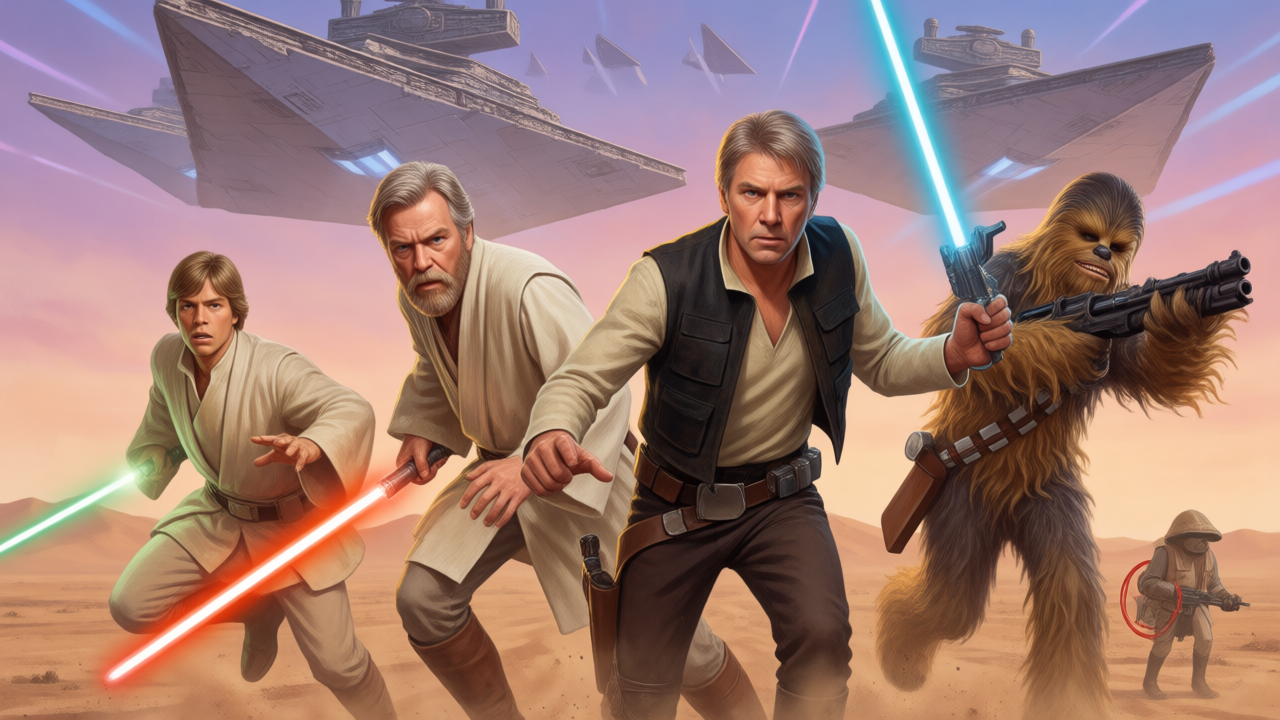
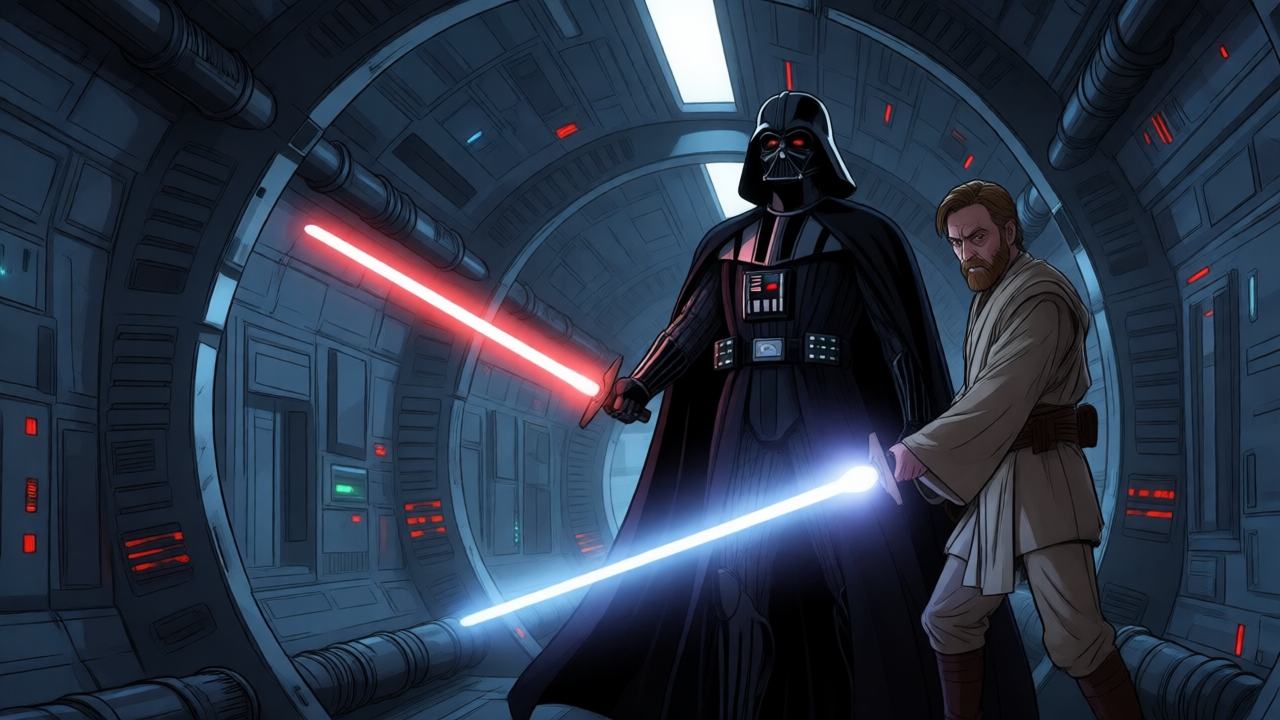
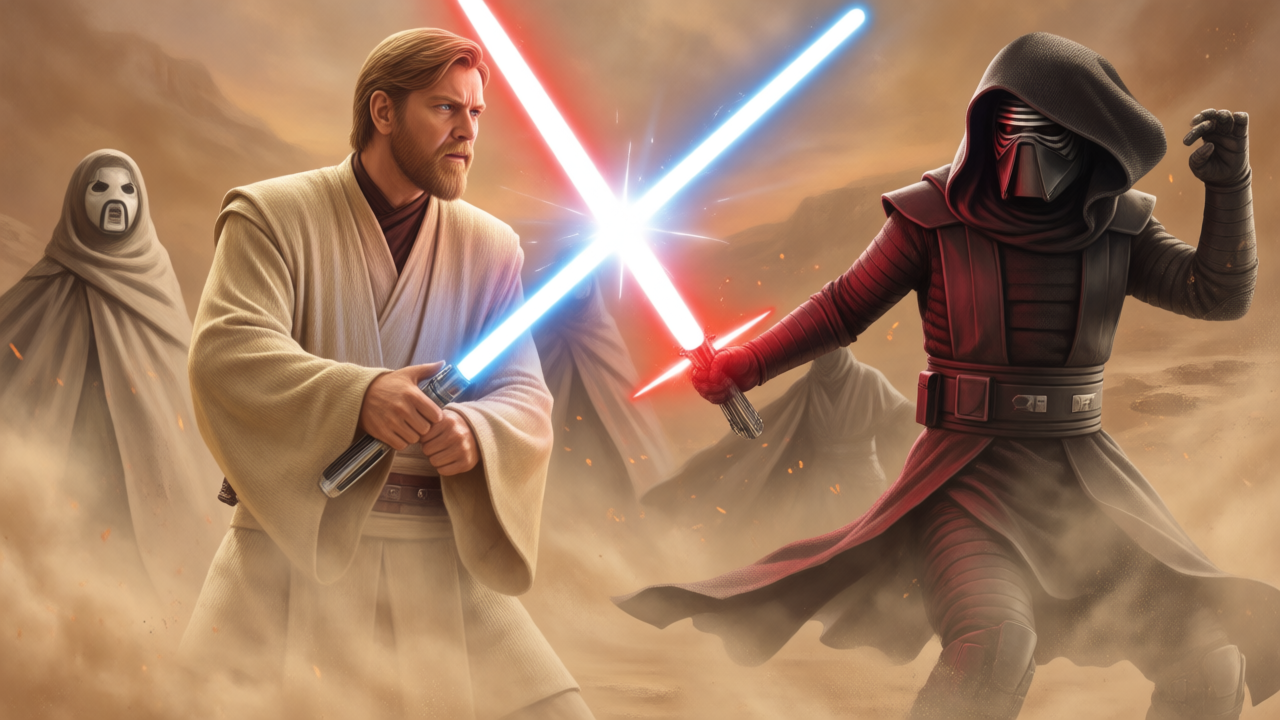
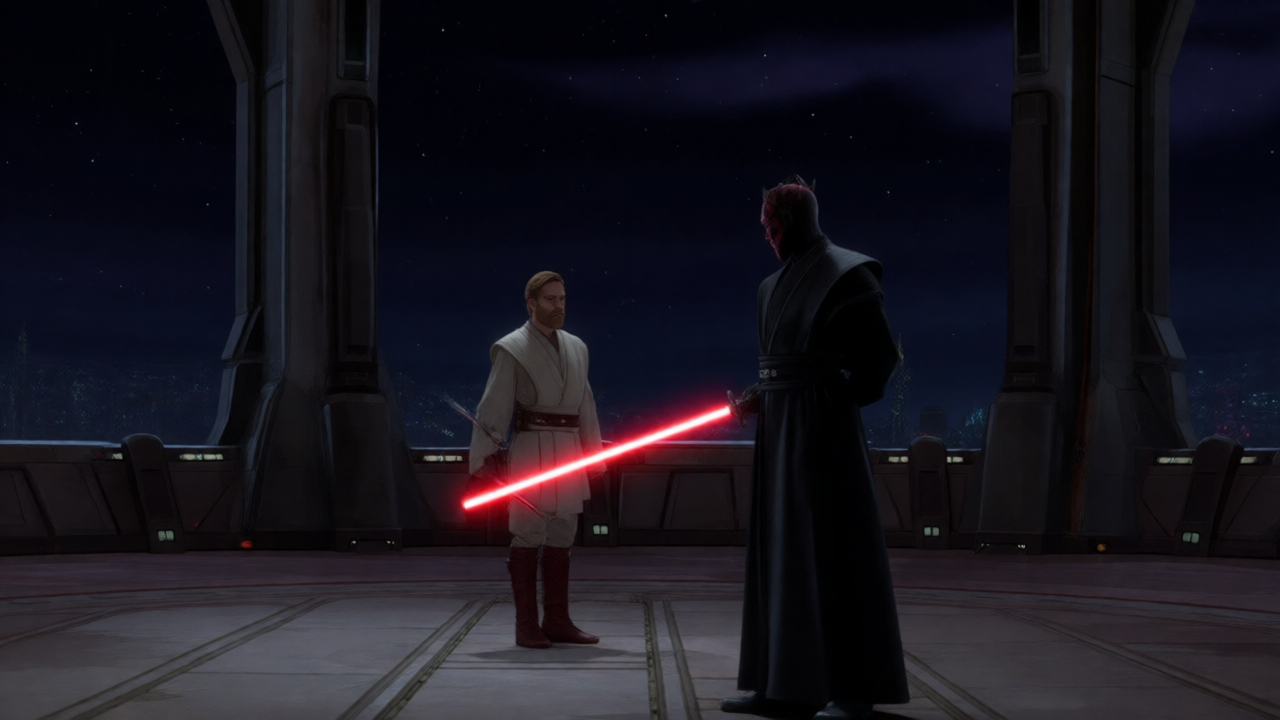
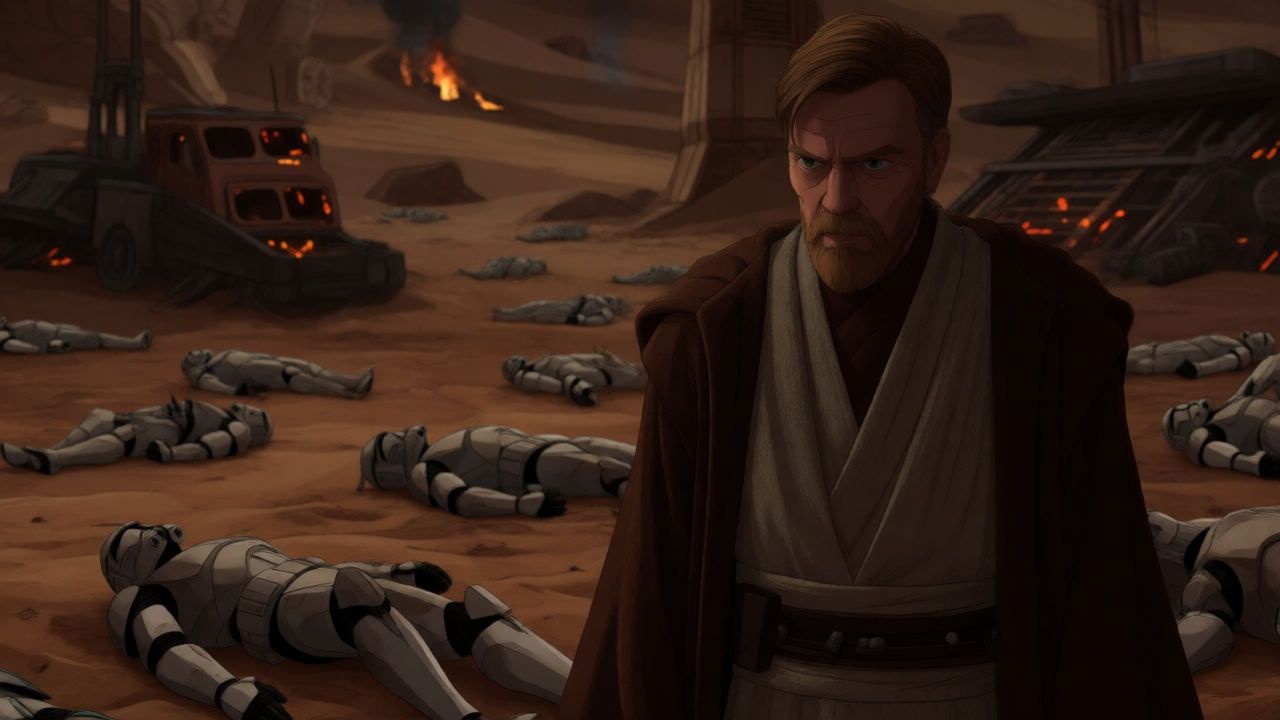
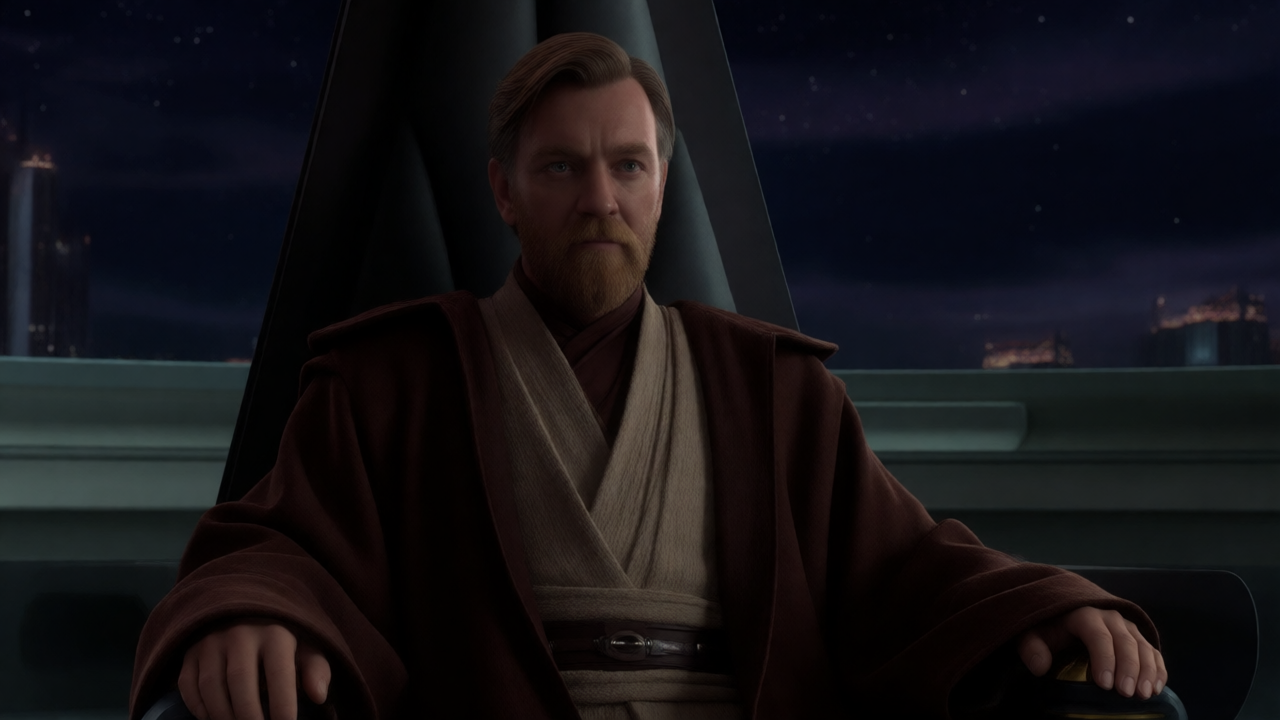
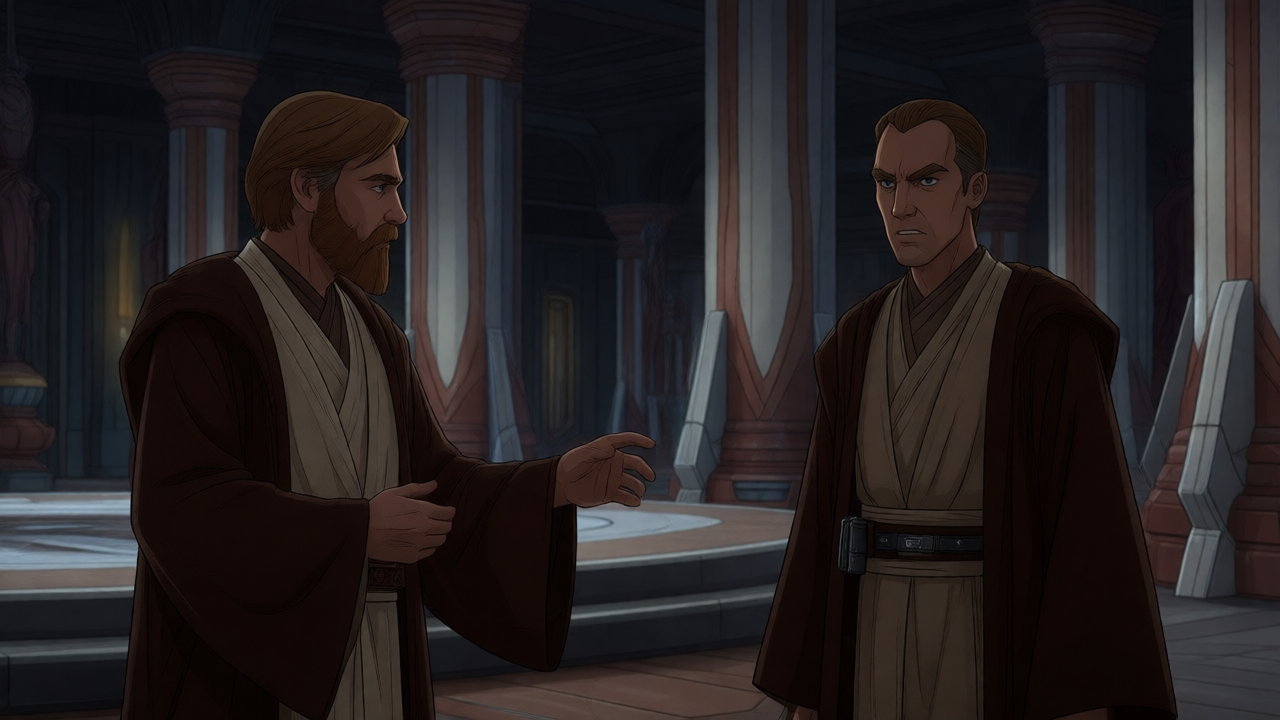
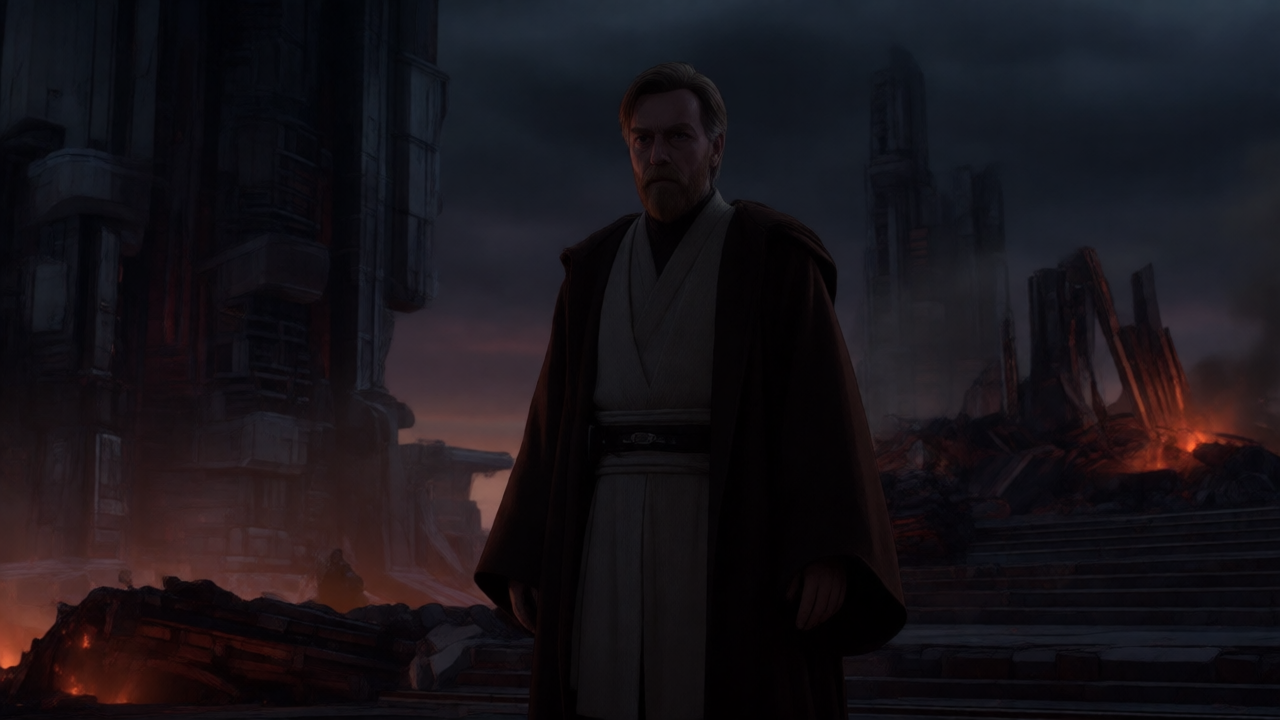
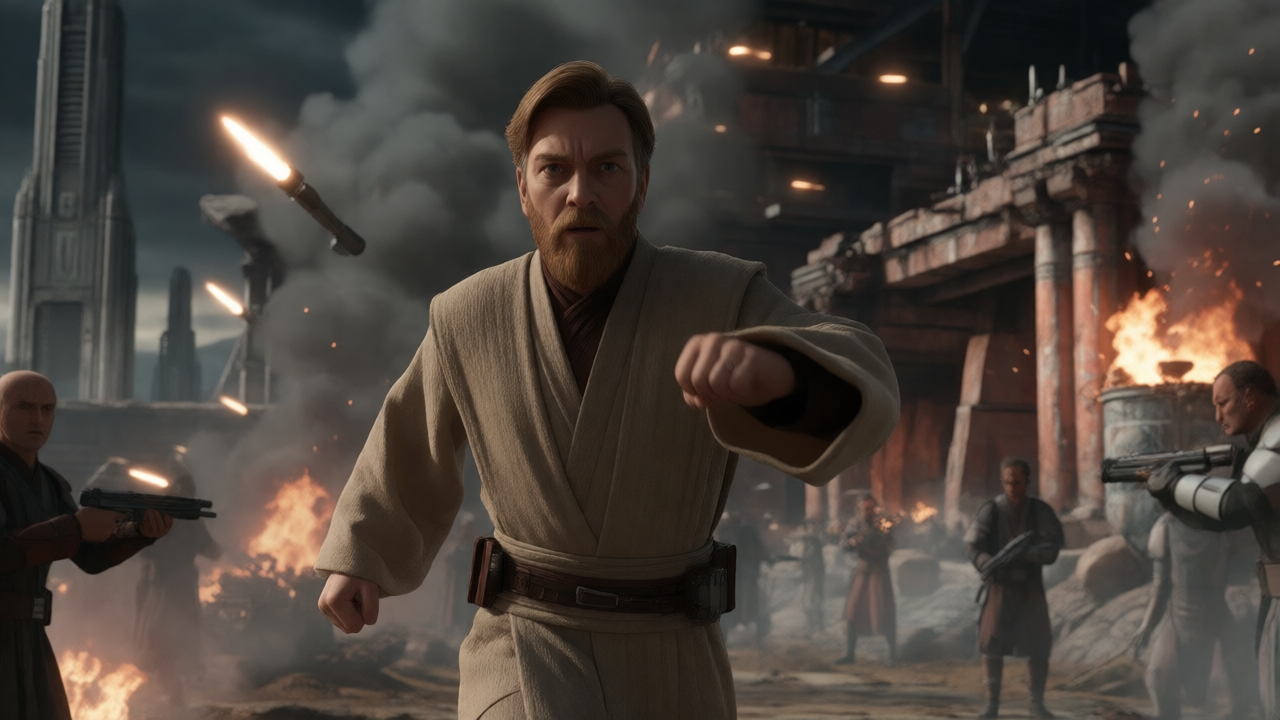
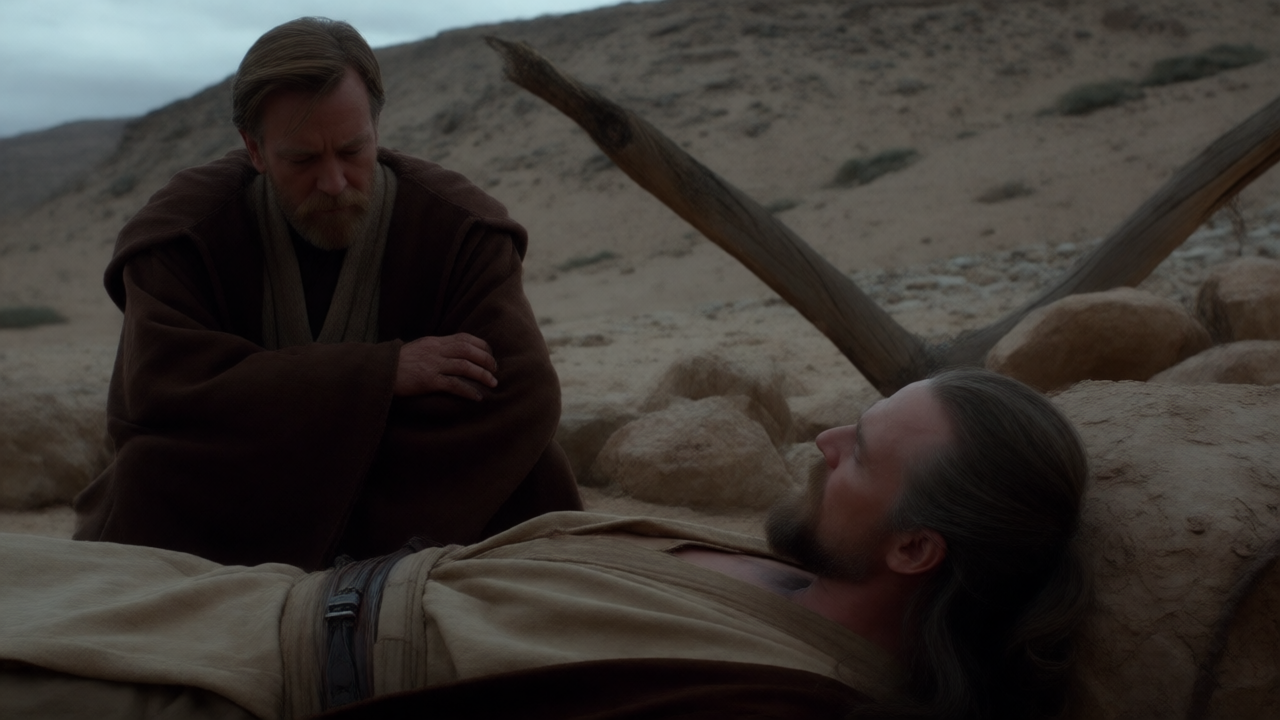
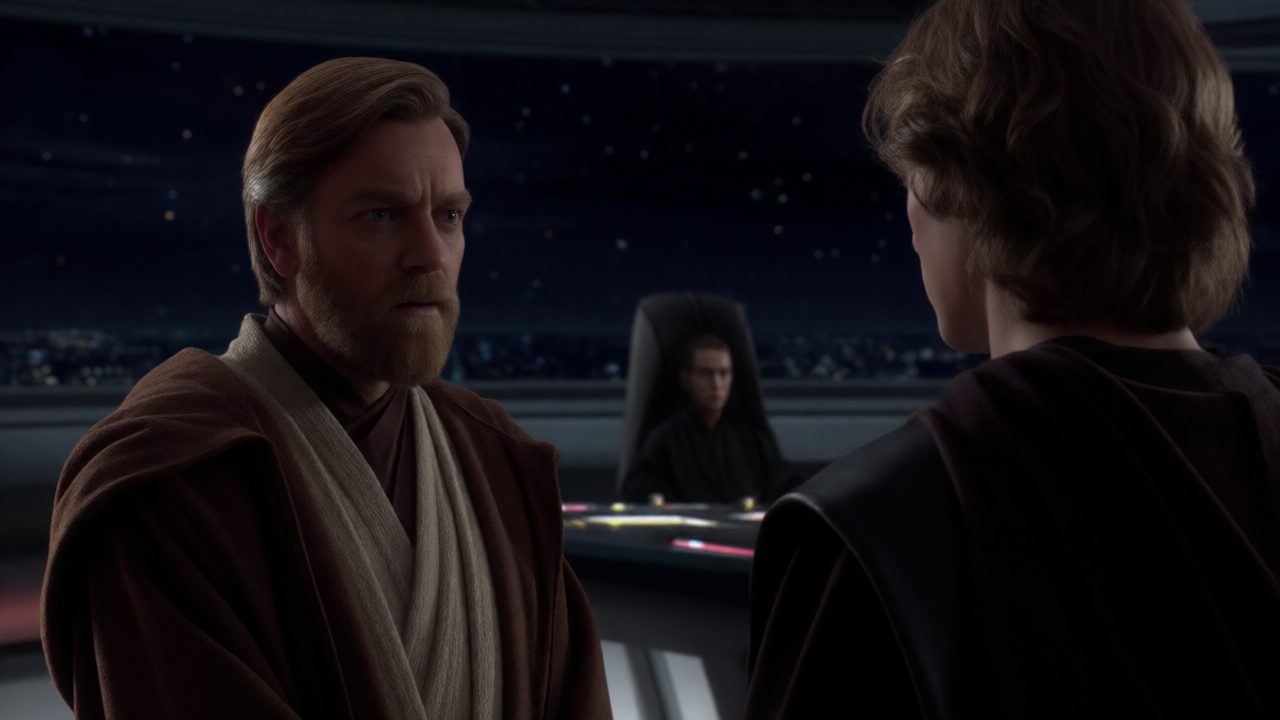
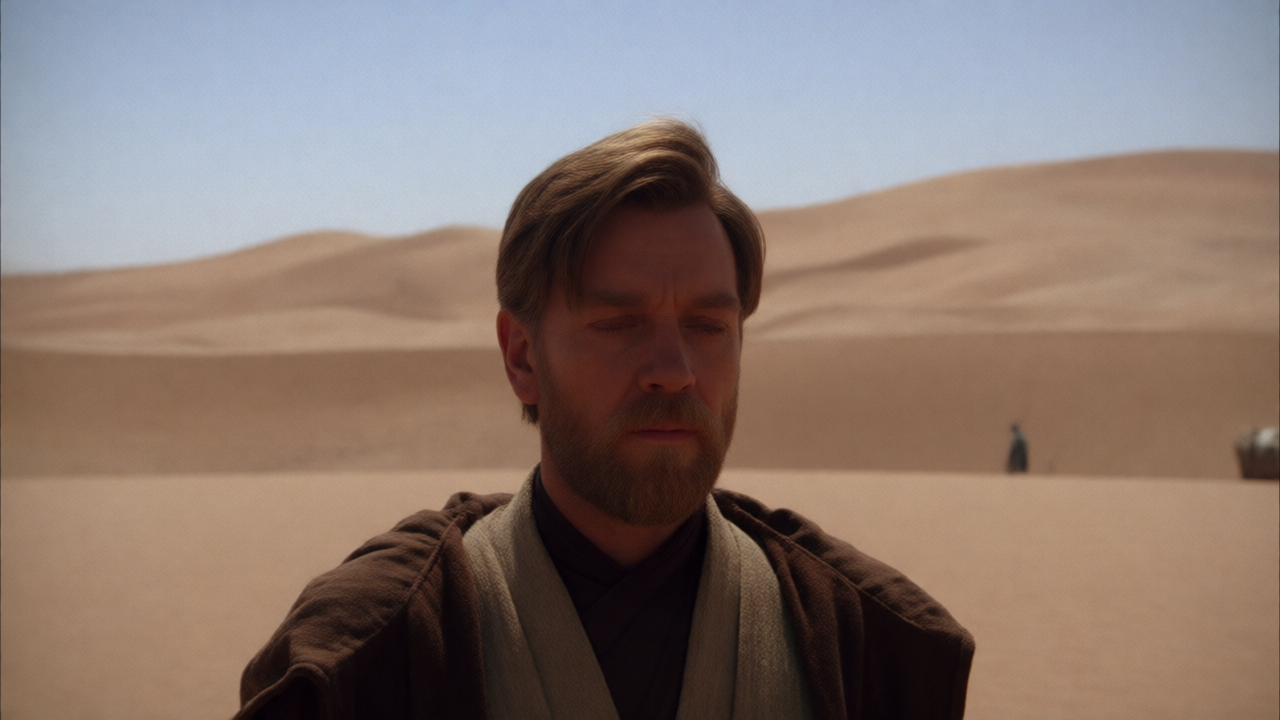
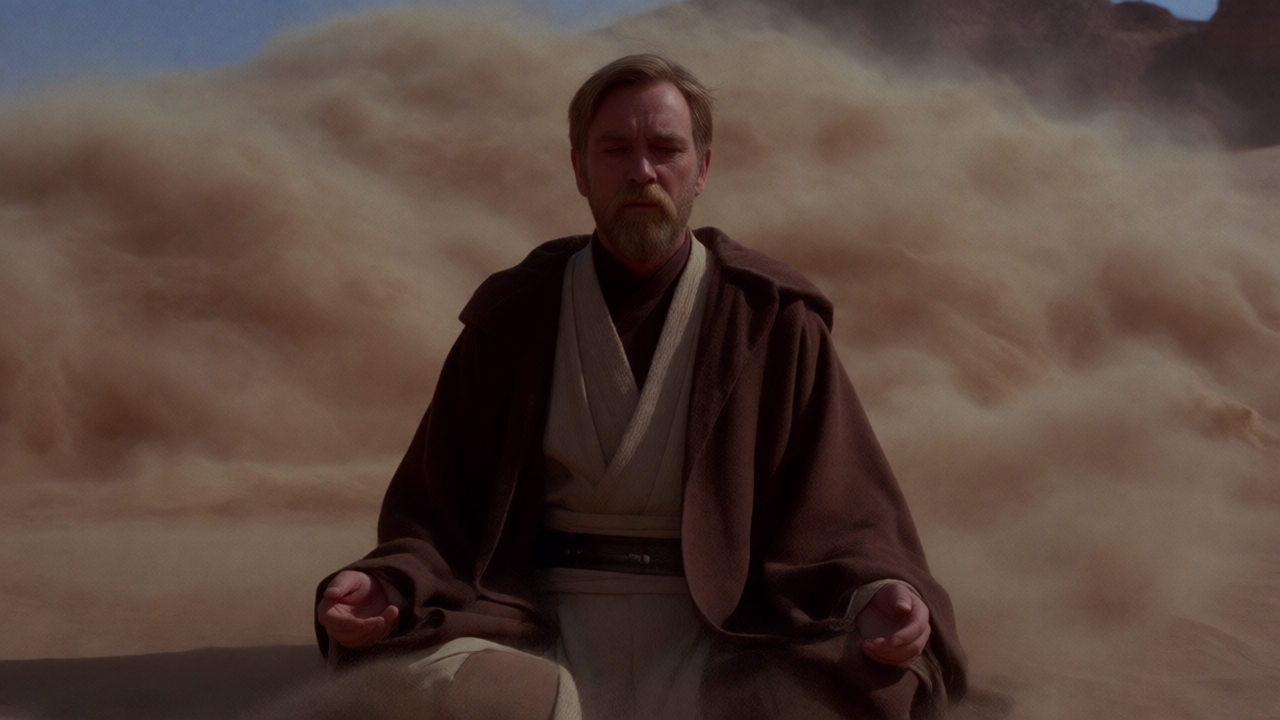
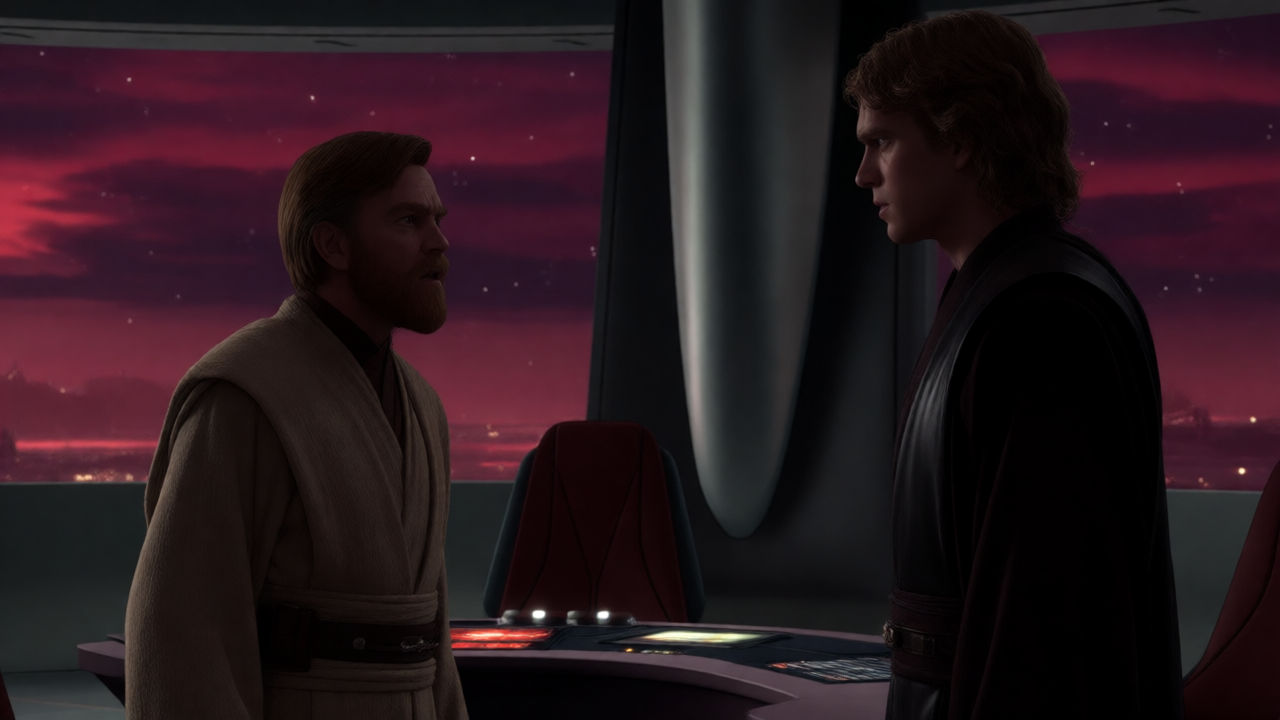
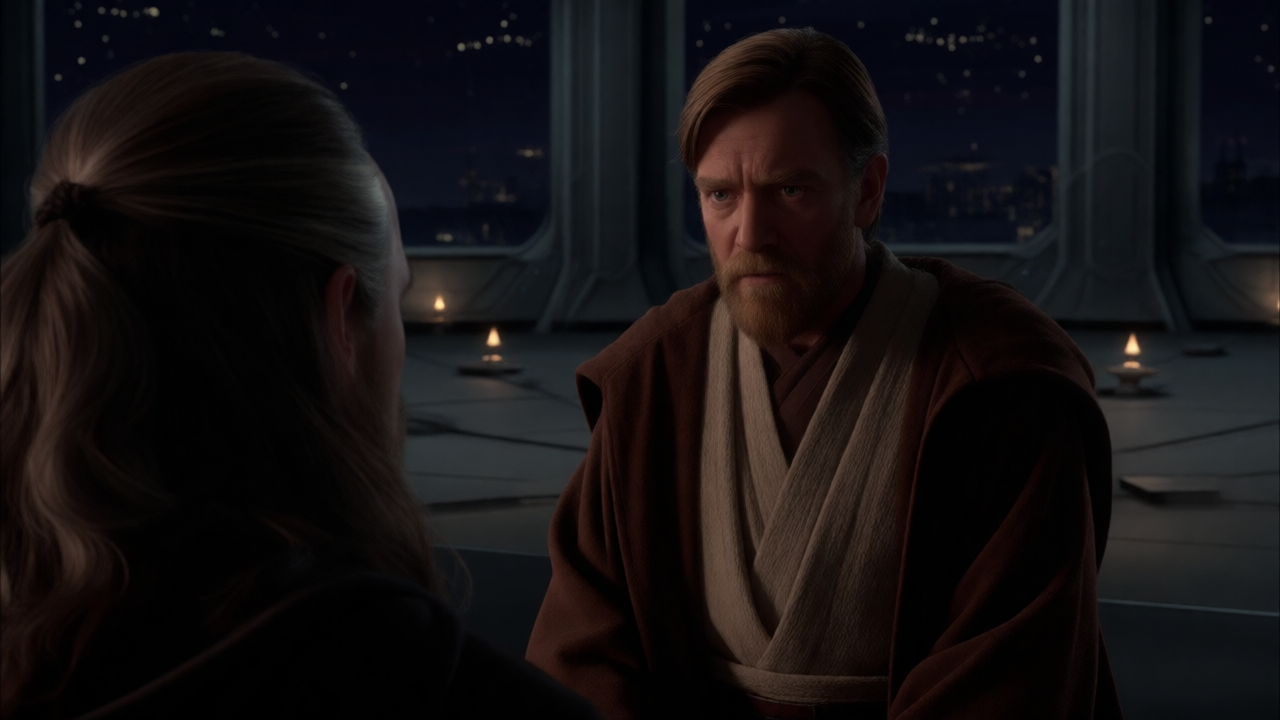
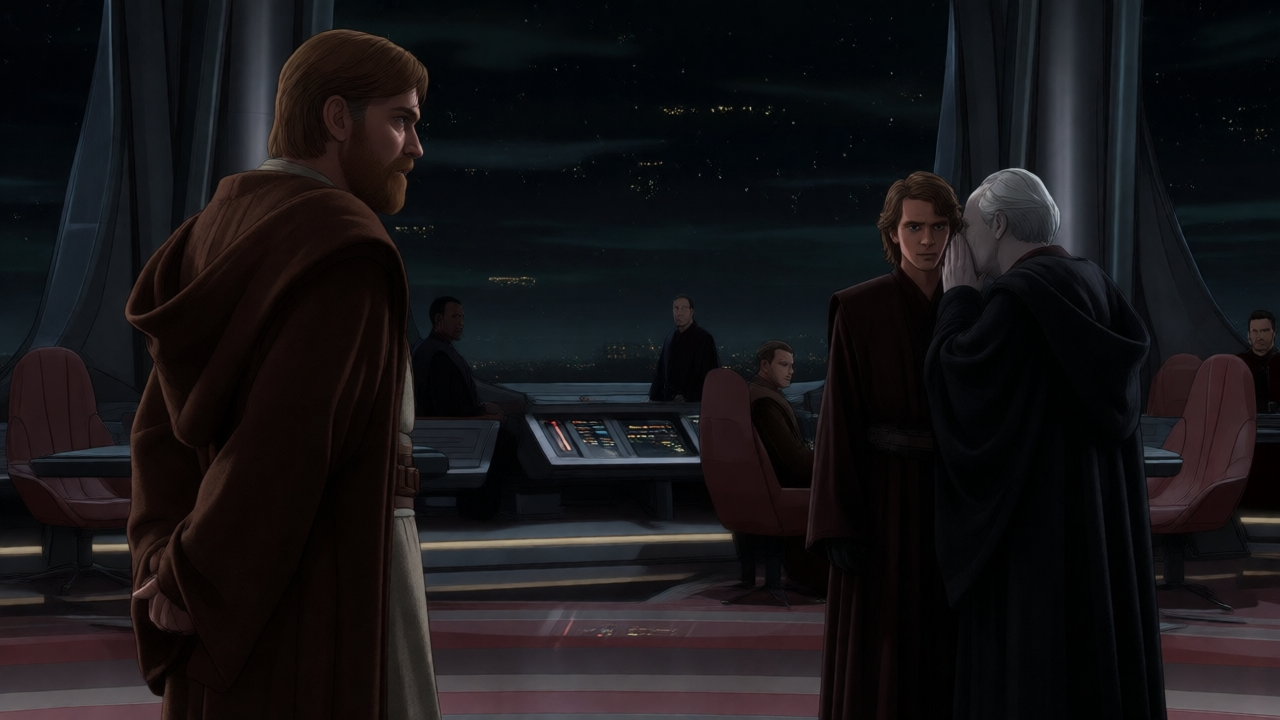
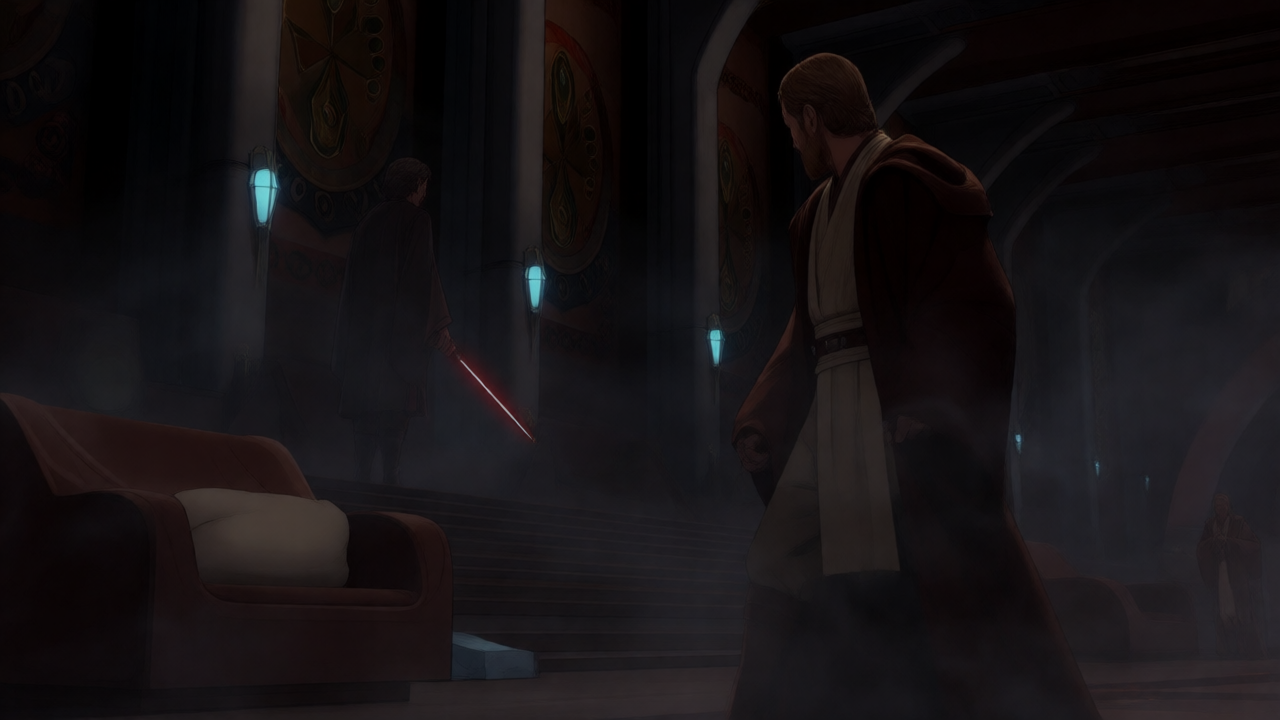
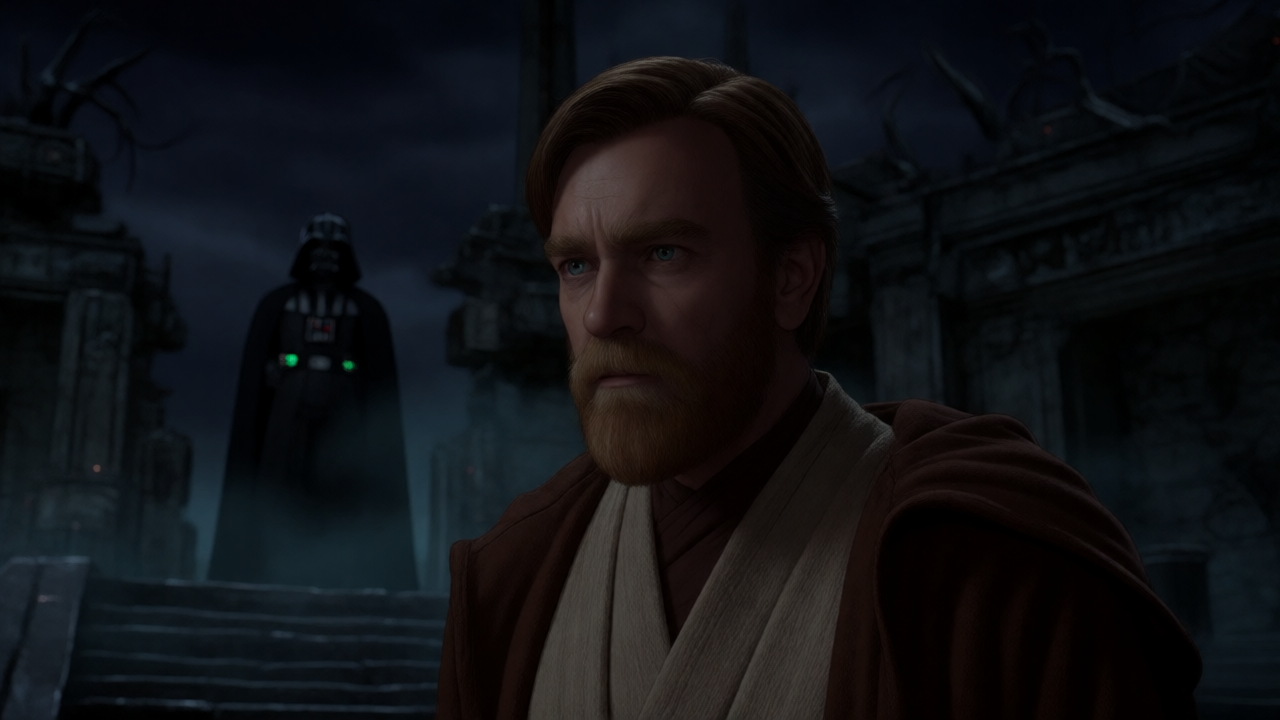
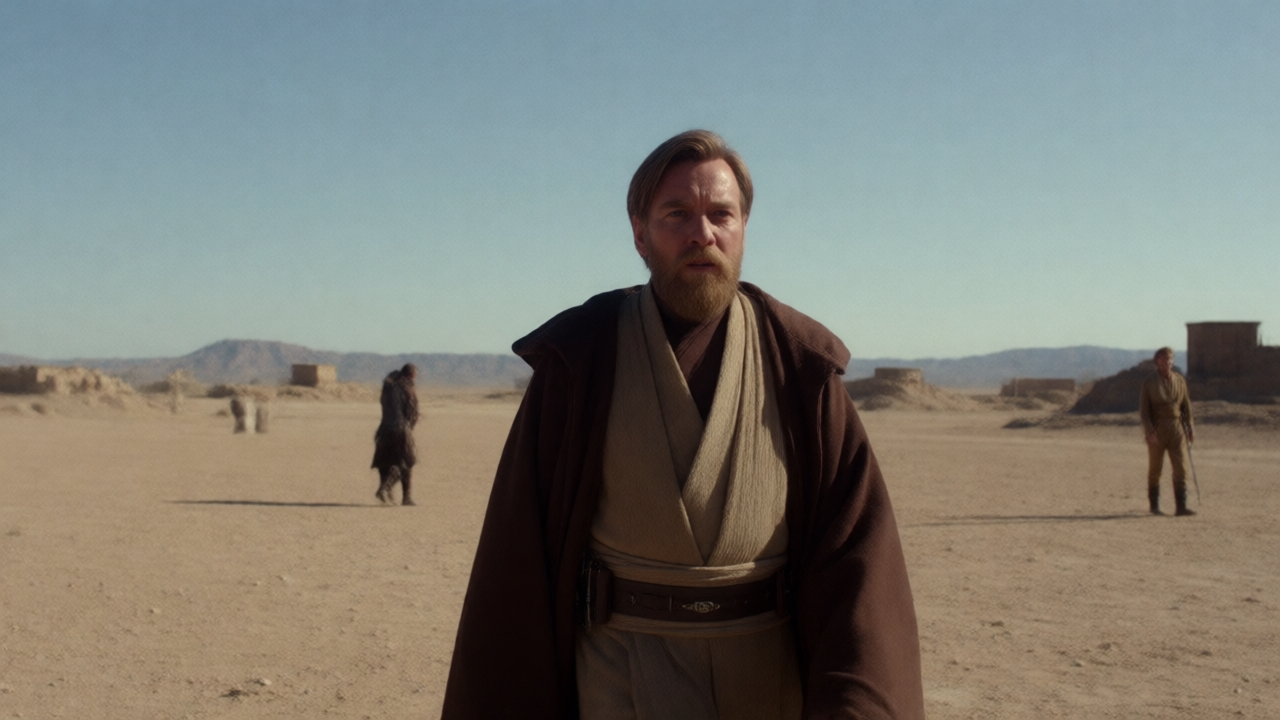
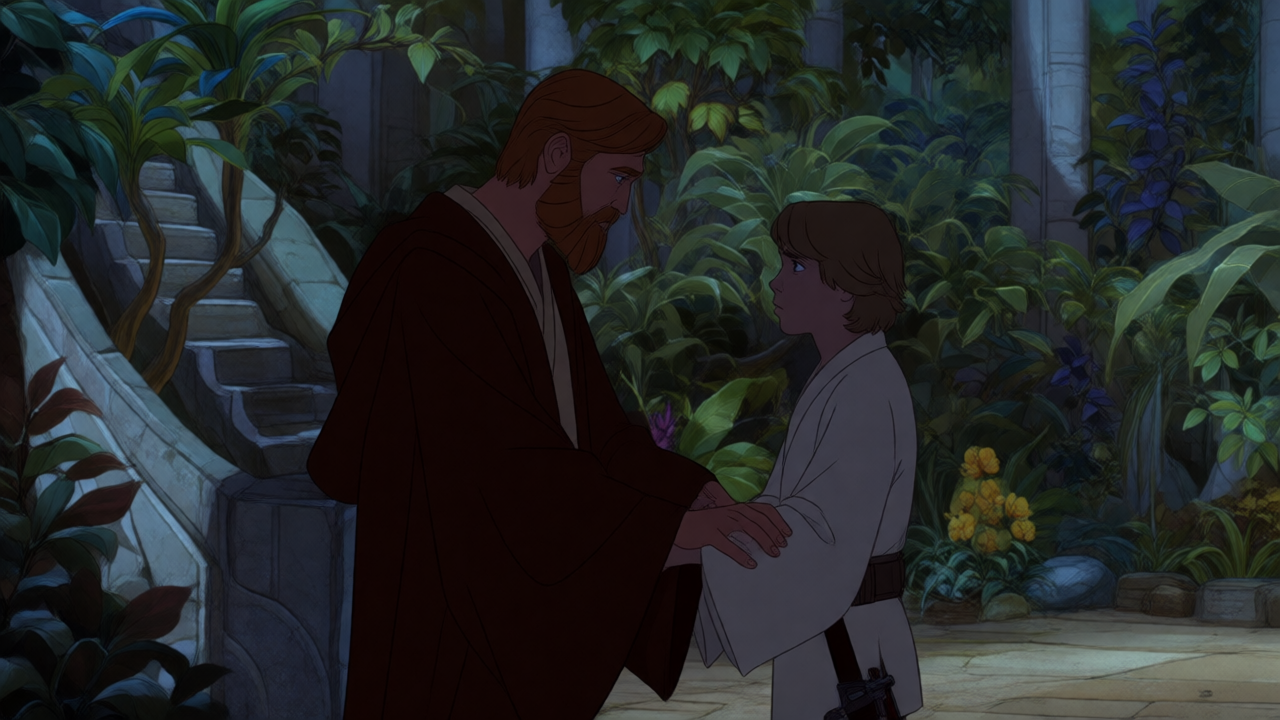
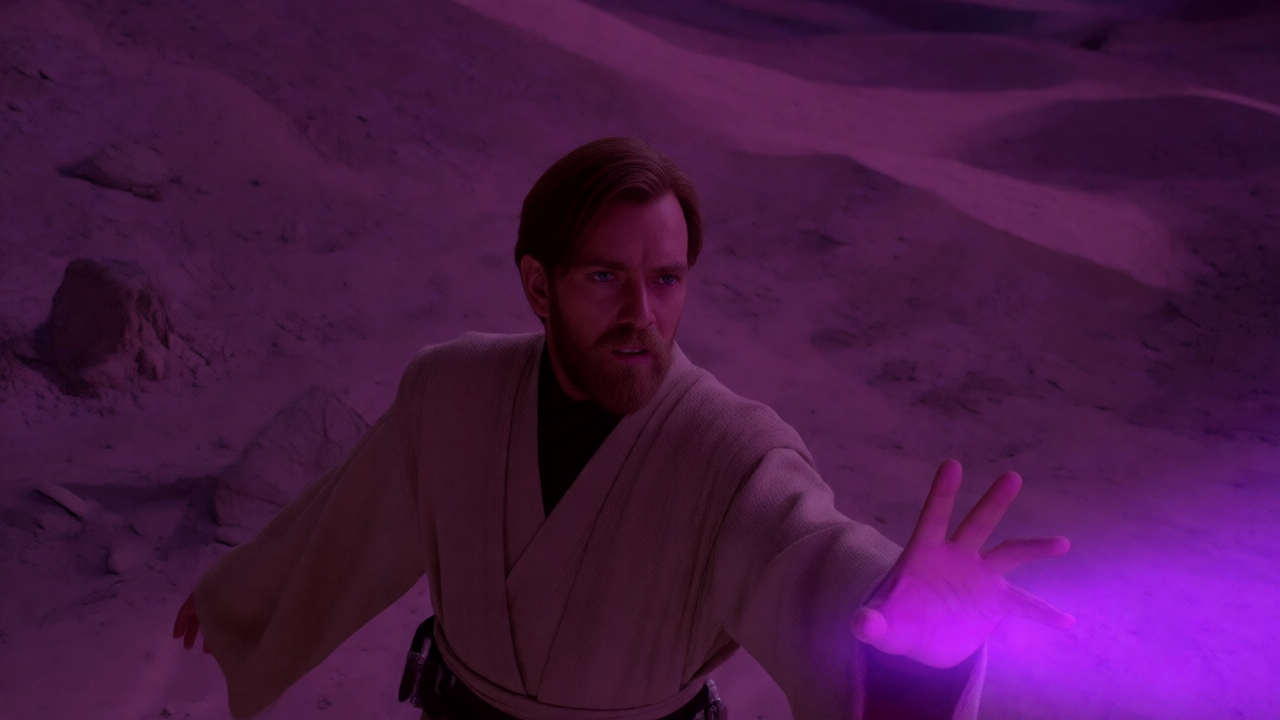
The People vs Obiwan Kenobi
Cast Your Vote on YouTube
Chapters
- 0:00Cold Open
- 0:23Intro
- 1:10Background
- 5:40First Take
- 6:30Villain Origin
- 9:21The Case
- 12:38Rebuttal
- 15:15Real Villain
- 19:16Aftermath
- 21:42Verdict
- 24:34Outro
- 26:07Post Credits
📁 Case File
The Case File: Obi-Wan Kenobi
Overview
Obi-Wan "Ben" Kenobi is a central figure within the Star Wars saga, serving as a Jedi Master and a pivotal mentor to the Skywalker lineage. His influence spans multiple generations, from his role in mentoring Anakin Skywalker during the prequel era to his guidance of Luke Skywalker in the original trilogy. Characterized by his stability and gravitas, Kenobi exists as both a physical combatant and a spiritual guide, ultimately transitioning from a living Jedi into a Force spirit to continue his mission of training those sensitive to the Force.
Background & Timeline
- The Prequel Era: During this period, Obi-Wan served as a mentor to Anakin Skywalker. His character arc involved a shift in philosophy; initially at odds with the rebellious nature of Qui-Gon Jinn, Kenobi eventually adopted many of Jinn's rebellious traits and responsibilities by the end of *The Phantom Menace*.
- The Fall of the Jedi: Kenobi was present during the era involving Anakin Skywalker’s descent to the dark side as Darth Vader.
- The Original Trilogy Era: Following the rise of the Empire, Kenobi acted as a mentor to Luke Skywalker. His physical journey concluded in a duel with Darth Vader, resulting in his death—a narrative decision made by George Lucas during the filming of the original trilogy.
- Post-Mortem/Spirit Form: After his death, Kenobi returned as a spirit to provide continued training and guidance to Luke Skywalker.
The Evidence
The impact of Kenobi’s presence is documented through several key factors:
- Mentorship Patterns: He is consistently linked to the development of Force-sensitive individuals, specifically Anakin Skywalker and Luke Skywalker.
- Philosophical Evolution: Records indicate a departure from strict Jedi rule-following toward the more rebellious path once walked by Qui-Gon Jinn.
- Cultural Weight: The role was designed to convey "stability and gravitas," requiring an established actor to anchor his presence within the narrative.
The Case
The analysis of Kenobi’s role centers on his influence over the Skywalker bloodline:
- The Catalyst Argument: By training Anakin Skywalker, Kenobi was inextricably linked to the events that led to the rise of Darth Vader and the subsequent Imperial era.
- The Cycle of Guidance: His life represents a continuous effort to guide the Force through turbulent times, shifting from an active instructor in the prequel era to a spiritual guide in the original trilogy. This suggests his character is less about individual action and more about the preservation of Jedi ideals across generations.
The Cutting Room
- The Gandalf Connection: Research suggests that Obi-Wan may have been inspired by J.R.R. Tolkien's character, Gandalf.
- Alternate Narratives: George Lucas originally intended for Kenobi to continue training Luke Skywalker in *The Empire Strikes Back*, a plan that was discarded when the decision was made to kill him off.
- The Samurai Influence: Toshi Mifune, a legendary Japanese actor, was considered for the role but turned it down, fearing Star Wars would "cheapen the image of samurai" with its special effects.
Final Word
Obi-Wan Kenobi is a character defined by his duty and his evolution. From a Jedi adhering to order to a rebellious mentor and eventually an eternal spirit, his legacy is tied directly to the rise and fall of the Skywalker family and the shifting nature of the Force itself.
🔥 Hot Takes — angles you never considered
Hot Takes: Obiwan Kenobi
*Angles you probably never considered — each one defensible, with the evidence and the strongest counter-argument. Spoilers, obviously.*
1. Obi-Wan is a Master Manipulator Who Uses Death as His Greatest Teaching Tool:
Lens: Psychological, Meta/Production
Thesis: Obi-Wan's death in A New Hope isn't just narrative necessity—it's the ultimate pedagogical strategy designed to create Luke’s inner conflict and transform him into an independent Jedi.
Evidence: Lucas originally planned for Obi-Wan to train Luke further but killed him off mid-film, calling it "much more powerful... if Darth Vader were to kill him." This is not just about character arc—it's a calculated move that forces Luke to live in the shadow of his mentor’s legacy. His death gives Luke an unattainable ideal and makes him rely on Force-guided communication rather than physical presence, which becomes key to shaping Luke as a leader who must overcome his past.
Counterargument: Some argue Obi-Wan's early death was simply due to Alec Guinness’s declining health and Lucas’ need for narrative simplicity—a pragmatic choice that doesn’t reflect deeper strategic intent.
---
2. The True Villain of the Prequels is Not Anakin, But Obi-Wan:
Lens: Moral, Systemic
Thesis: Obi-Wan's rigid adherence to Jedi traditions and his unwillingness to evolve or let go of his own role in shaping Anakin creates a tragic failure that drives Anakin’s fall.
Evidence: In *The Phantom Menace*, Obi-Wan is initially at odds with Qui-Gon, who rebels against the Jedi rules; by film's end, he becomes Qui-Gon through taking on his rebellious personality and responsibilities—yet this transition doesn’t include learning to trust intuition or allowing space for emotional maturity. His insistence on following protocols even when they fail (like failing to protect Padmé from Jango Fett) shows that he is the real inhibitor of growth in Anakin's journey.
Counterargument: Critics might argue that Anakin’s ambition and hubris were more fundamental, forgetting how Obi-Wan let go of his mentorship responsibilities and failed to challenge his own assumptions.
---
3. Luke Was Always a Substitute for Obi-Wan:
Lens: Comparative, Systemic
Thesis: The entire original trilogy is actually about Obi-Wan’s internal journey through his surrogate son Luke instead of being solely focused on Luke’s development.
Evidence: In *Return of the Jedi*, Obi-Wan appears as a spirit not just to guide Luke but also to complete his own unfinished legacy—revealing that he was never really “done” after his death, and that Luke becomes both the vessel for his teachings and the mirror of his unresolved past. Furthermore, when Yoda dies on Dagobah, Obi-Wan steps in again to instruct Luke, suggesting it’s his presence that truly shapes Luke—not just their training sessions but also the emotional scaffolding he provides during pivotal moments like Cloud City.
Counterargument: Many fans believe Luke is central because of the mythic hero's journey structure—yet this overlooks how deeply Obi-Wan’s inner struggles drive the entire narrative arc.
---
4. Obi-Wan’s Jedi Knightry Is a Performance for the Galaxy:
Lens: Psychological, Meta/Production
Thesis: Obi-Wan is performing as a living symbol of the Republic—his role in *Revenge of the Sith* and *A New Hope* isn’t about becoming a better warrior but preserving a myth that can't be sustained.
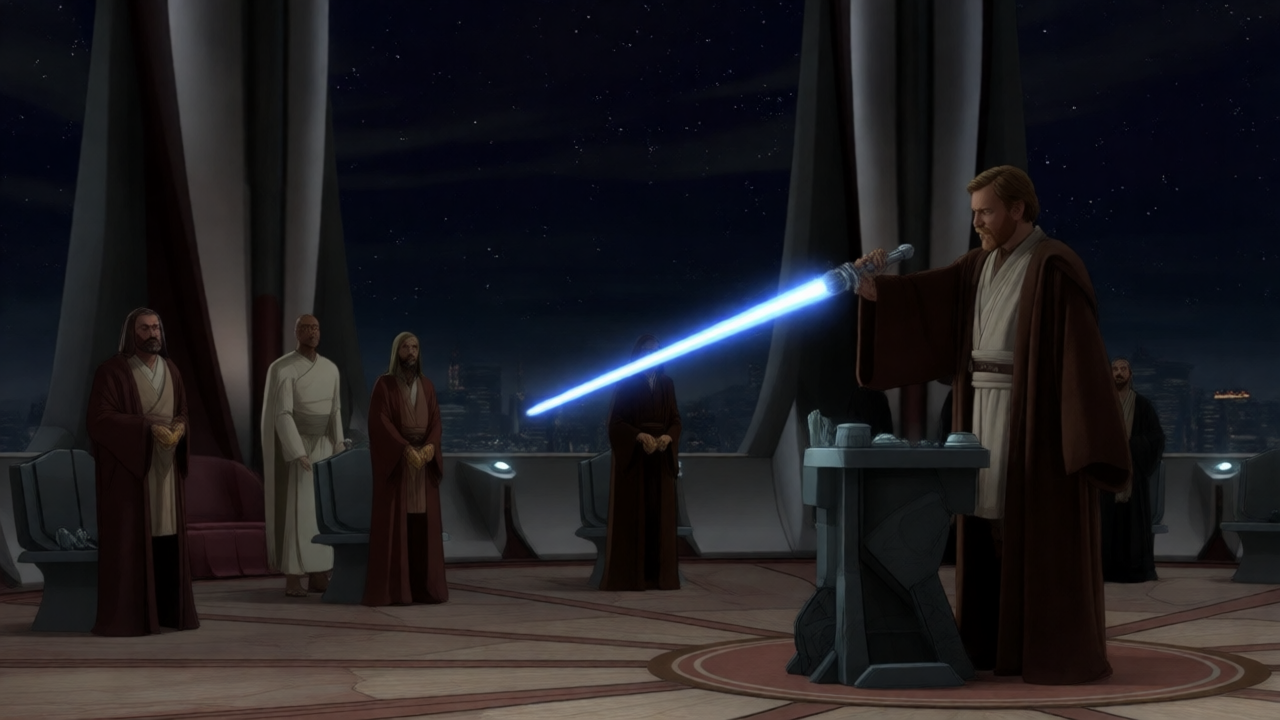
Evidence: In *Revenge of the Sith*, Yoda proclaims Obi-Wan a Jedi Knight after Qui-Gon dies, despite Obi-Wan having essentially taken over Qui-Gon’s personality and responsibility without really evolving beyond it—showing he is a mirror image rather than an independent thinker. The fact that his own death becomes part of the myth makes him more performative than practical: in *A New Hope*, he kills himself not to grow but to allow Luke to inherit a legacy they both couldn’t truly embody together.
Counterargument: Some claim his willingness to sacrifice self for the greater good proves his moral maturity, especially given how much he embodies traditional Jedi values.
---
5. Obi-Wan's Role in the Original Trilogy is Simply the 'Mentor Who Cannot Be Present':
Lens: Pattern Recognition, Comparative
Thesis: Every major milestone in Luke’s journey—from first lightsaber fight to Cloud City rescue—is a test designed by Obi-Wan’s spirit, but only because he never actually shows up physically.
Evidence: After Yoda's death, Obi-Wan appears twice during the final acts of *The Empire Strikes Back* and *Return of the Jedi*. These are not spontaneous moments—they’re orchestrated as guidance that forces Luke into specific decisions. He even gives a message that sounds like a pre-recorded note from the Force—suggesting he was already planning his legacy before dying. This isn't just about communication; it's about control through absence—the very essence of an absent father figure.
Counterargument: Theorists often see Obi-Wan’s spirit as an organic part of Luke’s training, but that overlooks how this structure gives Luke no real agency and forces him to react rather than lead.
---
6. Obi-Wan Is the True Heroic Sacrifice That Keeps Everything Alive:
Lens: Systemic, Dark Implication
Thesis: The Empire's survival depends on Obi-Wan’s death—and he knows it—making every act of self-sacrifice a calculated performance aimed at maintaining stability.
Evidence: When Vader kills him, the universe doesn’t just lose one man—it loses *a model* for what constitutes an ideal Jedi, especially since Obi-Wan has been teaching Luke how to be a perfect vessel for legacy rather than an individual. His death allows the Force spirits to become more active in guiding Luke through the final stages of the war and sets up Yoda’s eventual return as a symbolic replacement—a system designed by him to ensure continuity even after his departure.
Counterargument: Critics may say that Obi-Wan's sacrifice is genuine and unselfish, but they miss how much it serves an institutional imperative—keeping the myth intact.
---
7. Obi-Wan Has Become the Force’s Biggest Betrayal:
Lens: Philosophical, Moral
Thesis: The Jedi Order created Obi-Wan to embody perfection—but he's a broken model of what his order should be, and that imperfection is the true tragedy behind every myth about the Force.
Evidence: His dialogue is consistently clichéd and poetic; yet he never truly develops beyond what others expect him to be. The fact that he uses mind tricks (like with Imperial troops) rather than wisdom or deeper understanding reveals a man who has been shaped by convention over contemplation—just as his own apprenticeship was molded by rigid tradition, not soulful growth. His final act of dying in peace doesn't lead to enlightenment—it leads to eternal guidance through presence and absence.
Counterargument: Fans may see him as the very embodiment of spiritual wisdom, but they ignore that he never learned how to make a choice without judgment or influence.
---
8. Obi-Wan Is Not a Jedi—He's a Legacy:
Lens: Meta/Production, Pattern Recognition
Thesis: The entire Star Wars universe is built around Obi-Wan as the archetypal symbol of the lost Jedi Order—the real reason why Luke looks for Yoda and ultimately must walk alone.
Evidence: His influence extends across multiple eras: from his role in *A New Hope* to his return in the miniseries, where he becomes both a teacher and a cautionary tale—showing how the old ways of being a Jedi are no longer enough. Even his own death is structured like an initiation rite, requiring Luke to step into a new identity built on his mentor’s foundation. His life story is written not in victories but in examples of how someone can live forever by becoming something else entirely—his own legacy becomes the final lesson he taught Luke.
Counterargument: Many consider him the last authentic Jedi, yet his entire existence as an icon prevents him from being a human character capable of failure or change.
---
9. Obi-Wan's Death Wasn't Just About Vader, It Was About His Own Legacy:
Lens: Production/Meta, Comparative
Thesis: The decision to kill Obi-Wan was driven not by narrative necessity but by the desire to create a legacy that outlasts its creator—making him into a character whose influence transcends his own life.
Evidence: Lucas chose Obi-Wan's death in part because he felt the character had no place post-Vader duel, and wanted him to become something more than flesh—he became the Force itself. This choice echoes down through time via *The Clone Wars* (where his voice is heard), *Return of the Jedi*, and the miniseries where he’s not just a ghost but an active part of shaping destiny. It shows how much effort went into crafting a character who was always about being remembered rather than lived.
Counterargument: Some might say it's simply good storytelling—the death creates emotional impact—but this misses that Lucas built Obi-Wan to be the perfect example of what the Jedi order should represent: eternal sacrifice, timeless authority.
---
10. The Real Obi-Wan Was Never in the Force—He Was Always Just a Tool:
Lens: Philosophical, Conspiracy
Thesis: Obi-Wan's entire life is an elaborate illusion—a carefully constructed performance designed by the Jedi Order to sustain itself long after its members have failed or disappeared.
Evidence: His ability to guide Luke through the Force is not spontaneous—it’s programmed and rehearsed. Every time he contacts Luke, there are clear messages and lessons that echo his own beliefs—those are not spiritual insights but inherited dogma passed down from elders who never questioned their own roles in the system. In *Revenge of the Sith*, Obi-Wan seems to accept Anakin's fall as inevitable—and yet no one ever questions why he didn't try harder or challenge authority more openly, showing his routine behavior is not just tradition but a form of complicity.
Counterargument: Some believe Obi-Wan’s emotional depth and commitment prove that his inner life matters deeply—but they neglect how much of it is shaped by external expectations.
---
These analyses peel back layers of what appears to be straightforward heroism, revealing instead the careful choreography of legacy, performance, and systemic preservation—a narrative crafted not just for the future but for eternity.
📝 Full Transcript
COLD OPEN
[EDDIE:excited]: [Eddie:Hyper]: What if the greatest hero in the galaxy was actually the architect of its ultimate destruction? Obi Wan Kenobi didn't just fail to stop the darkness; his rigid adherence to tradition is what allowed it to thrive.
[EDDIE:excited]: [Eddie:Smug]: Prepare for a journey through the Force that might leave your worldview feeling a bit... unbalanced.
[EDDIE:excited]: [Reg:Pompous]: The arguments presented here are logically sound, even if they defy the established history of the Jedi Order.
[EDDIE:excited]: ---
INTRO
[EDDIE:excited]: [Eddie:Hyper]: "You either die a hero or live long enough to see yourself become the villain." Harvey Dent, The Dark Knight. Today on Villain's Advocate, we are putting a hero on trial. We're talking about Obi Wan Kenobi from the Star Wars Saga.
[REG:stoic]: We are spoiling all of the Star Wars Saga. If you have not seen it, that is entirely your fault.
[EDDIE:smug]: I’m telling you right now, this guy didn't just fail to save the Republic; his obsession with a prophecy practically paved the goddamn highway for the Empire to rise. He’s the architect of the mess.
[REG:condescending]: And I will be arguing that Kenobi is merely a victim of catastrophic circumstances and an inflexible religious dogma, rather than a primary driver of galactic instability.
[EDDIE:amused]: Yeah, sure, Reg. Keep telling yourself that while you're busy polishing your Jedi holocron.
[EDDIE:amused]: ---
BACKGROUND
[REG:stoic]: Before we descend into the madness of our defendant's history, I shall provide the necessary context for those uninitiated in this mythos. The Star Wars Saga is a sprawling cinematic epic that began with the original trilogy of films released between 1977 and 1983, directed by George Lucas. This was followed by the prequel trilogy, which arrived from 1999 to 2005, and later the sequel trilogy spanning 2015 to 2019. The saga features iconic performances, notably Alec Guinness as Obi Wan Kenobi and the legendary James Earl Jones providing the voice for Darth Vader. While the core story is found in these films, the franchise has expanded into animated series like The Clone Wars and various standalone films such as Rogue One. If you have enjoyed epic space operas or high fantasy struggles between light and shadow, you will recognize the DNA of this massive cultural phenomenon. It remains one of the most successful and award-winning film franchises in history.
[EDDIE:amused]: Sounds like a lot of damn work just to watch people swing glowing sticks at each other.
[REG:calm]: The narrative complexity warrants such an investment, Edward. Let me reconstruct the chronology for you. The saga begins with the prequel trilogy, set many years before the original films. We find ourselves in a galaxy governed by a Republic and policed by the Jedi Order, a group of peacekeepers who tap into a mystical energy field known as the Force. Our story enters through Anakin Skywalker, a young boy discovered by the Jedi Master Kwai Gon Jinn. Because of a prophecy regarding a "Chosen One," Anakin is brought before the Jedi Council to be trained alongside another apprentice, Obi Wan Kenobi.
[REG:stoic]: It is a tale of destiny and its corruption.
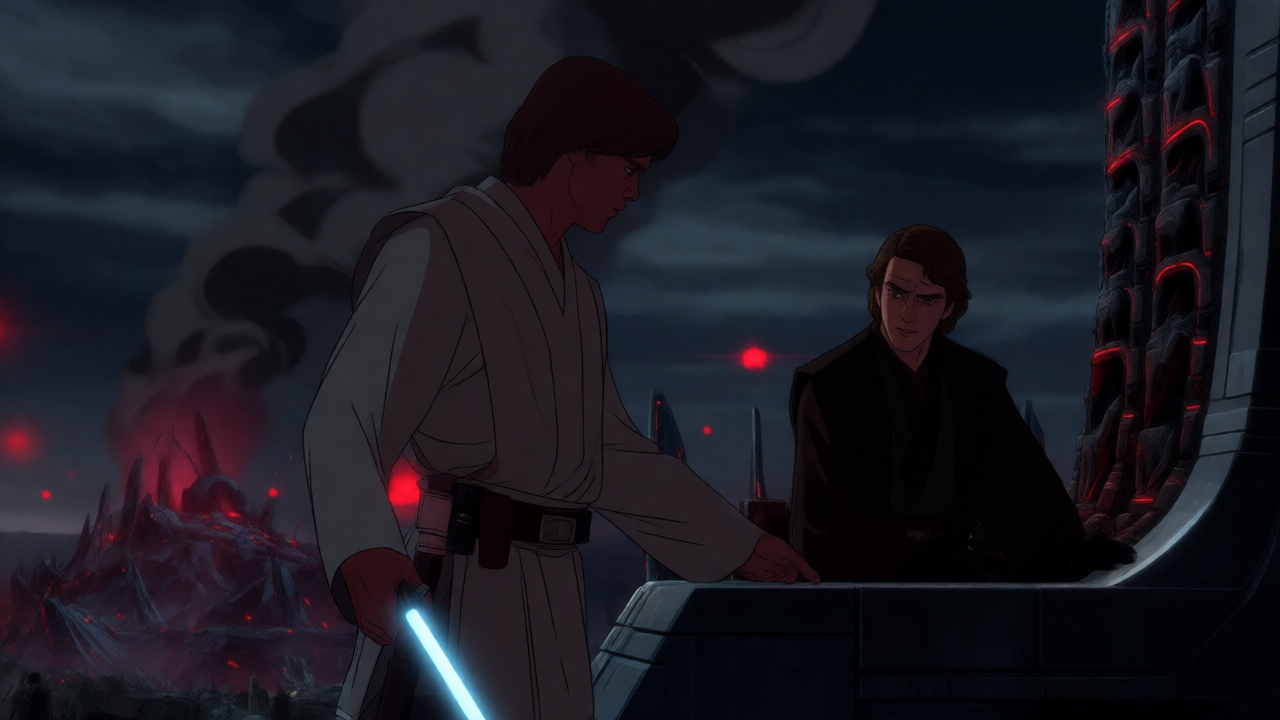
[REG:calm]: As we follow their journey, Obi Wan serves as Anakin's primary mentor. However, the shadows are moving. A Sith Lord named Palpatine is orchestrating a political takeover from within the Senate. During this time, Obi Wan’s role shifts from student to master, particularly after the death of Kwai Gon. He becomes increasingly protective and rigid in his adherence to the Jedi Code. This tension culminates in the prequel trilogy's conclusion, where Anakin, fueled by fear of loss and manipulated by Palpatine, falls to the dark side, becoming the cyborg Darth Vader. Obi Wan is forced into a tragic confrontation with his former apprentice on a volcanic planet. He strikes him down—or rather, leaves him for dead—and then goes into hiding.
[REG:pompous]: And here is where the timeline shifts from tragedy to rebellion.
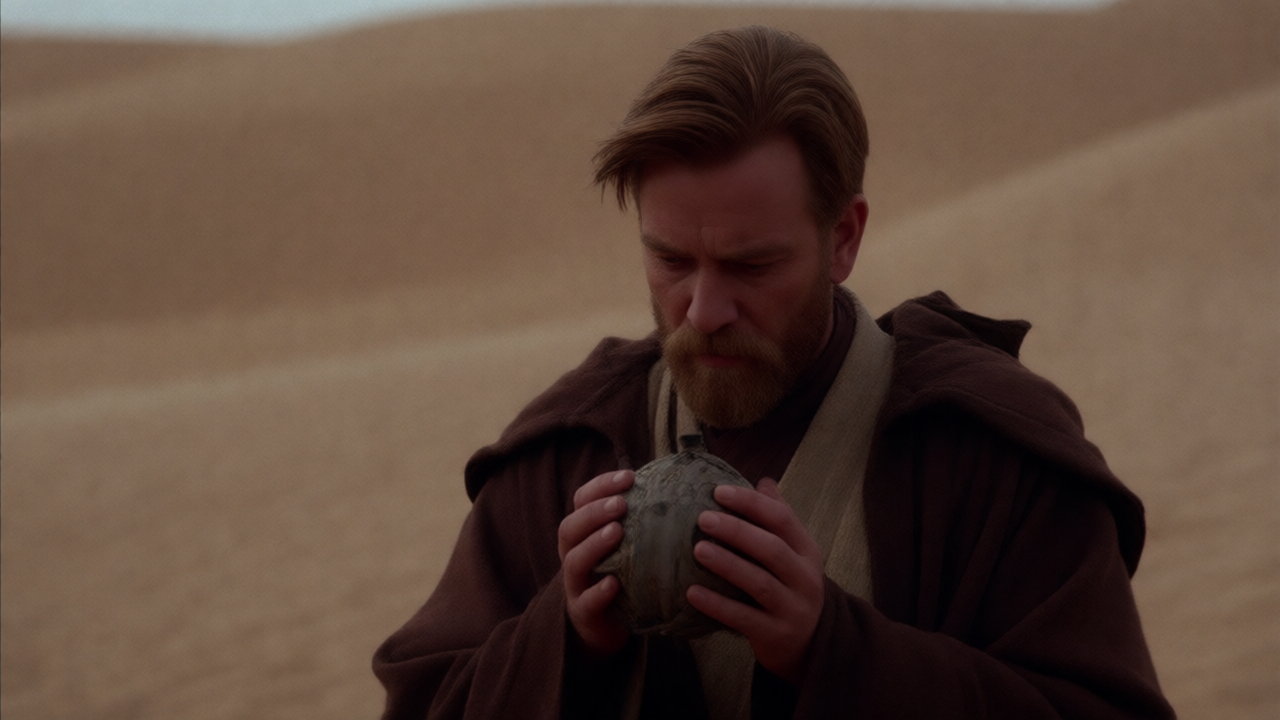
[REG:calm]: We jump nineteen years into the future for the original trilogy. The galaxy has fallen under the iron grip of the Galactic Empire. Obi Wan, now an old hermit living in the desert on the planet Tatooine, watches over a young boy named Luke Skywalker, who is the son of Anakin and Princess Leia Organa. He reveals to Luke that his father was a Jedi Knight and that there is something more to their existence than just farm work. This revelation leads them into a conflict with the Empire, aided by smugglers like Han Solo and the Wookiee Chewbacca.
[REG:stoic]: The hero's journey begins in earnest here.
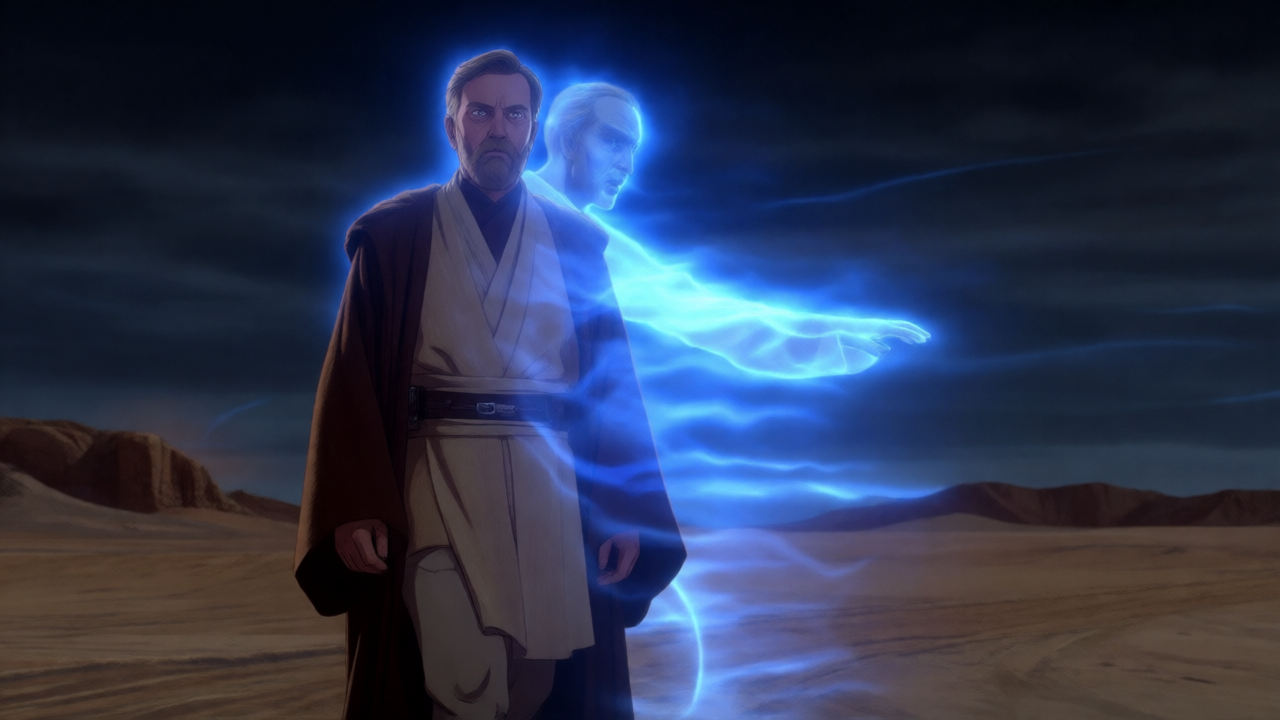
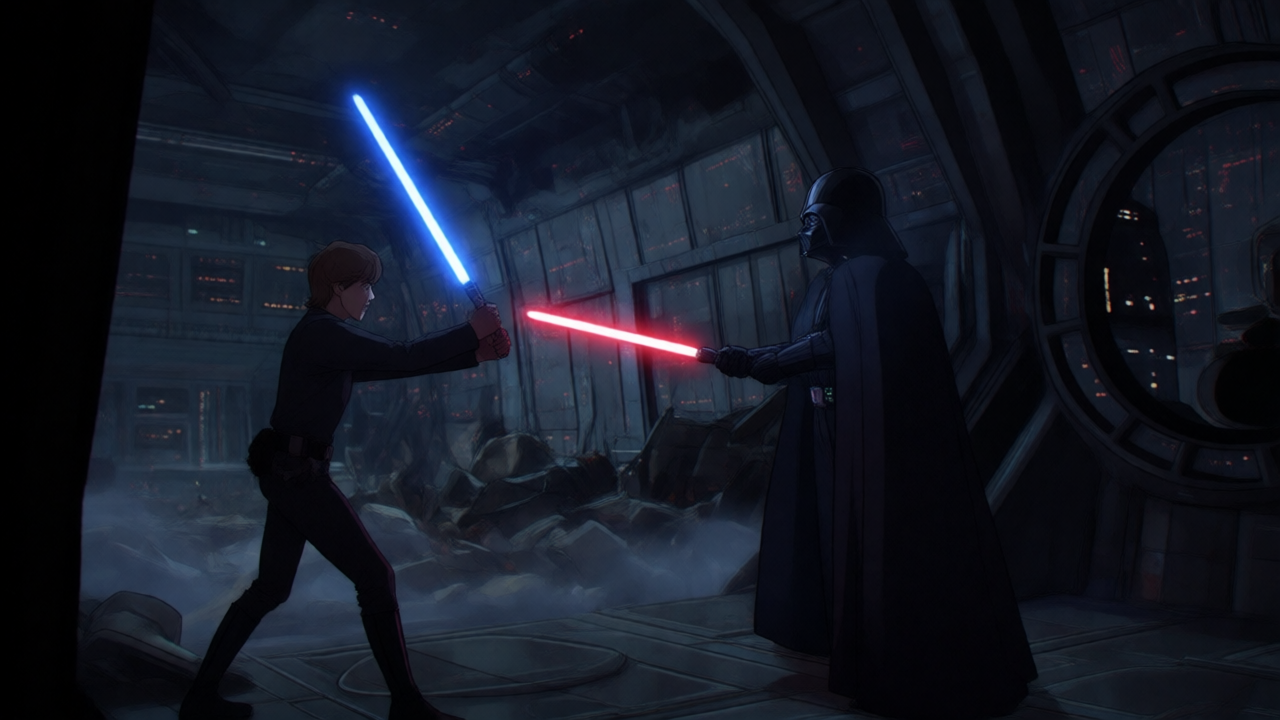
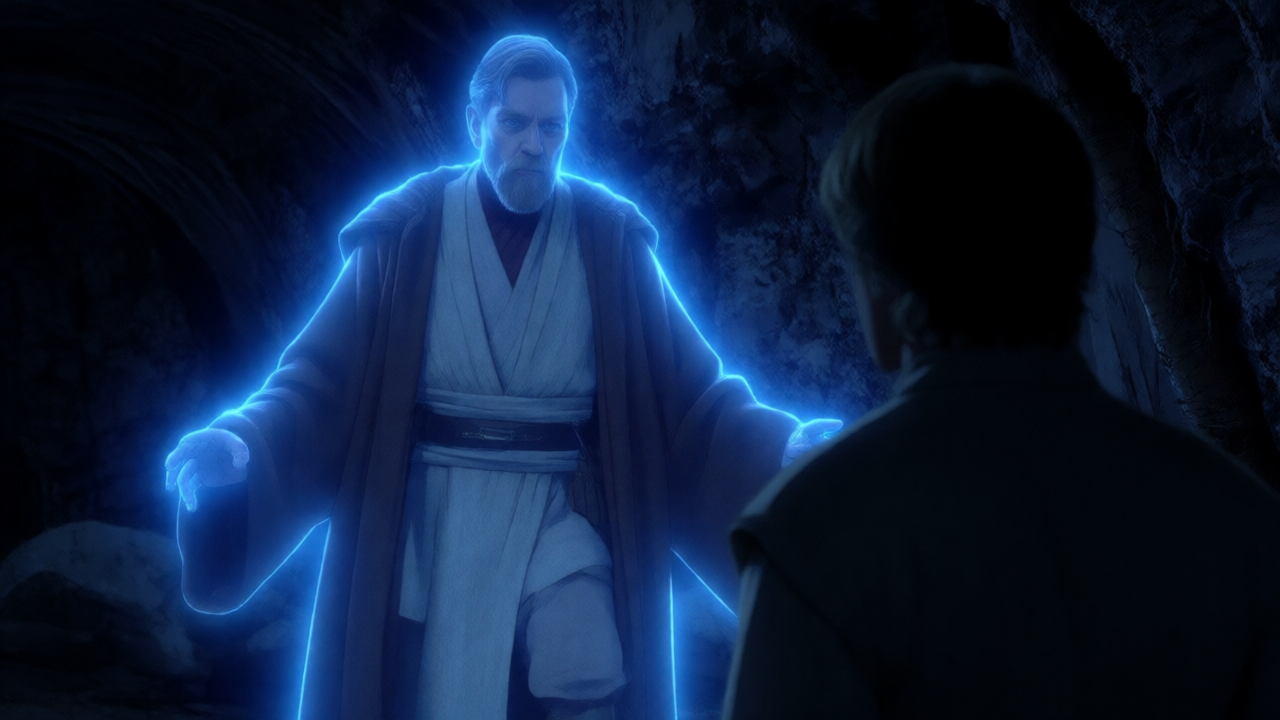
[REG:calm]: Obi Wan guides Luke through his first steps of Force training, teaching him to use the lightsaber and connect with the energy field. However, during a confrontation on the Death Star—a massive space station capable of destroying planets—Obi Wan makes a pivotal choice. To allow Luke to escape and to provide a distraction for the burgeoning Rebellion, he intentionally allows Darth Vader to strike him down. He dies, transitioning from a physical presence into a Force spirit. Even in death, his influence persists; he appears to Luke as a guiding phantom during crucial moments of crisis.
[REG:calm]: This guidance continues through the struggle against the Empire. As the conflict reaches its zenith, the story moves toward the conclusion where the Skywalker bloodline's fate is decided. In the final chapter of the original trilogy, Luke faces his father on the second Death Star. Through a combination of Jedi discipline and the emotional connection to his mother, Padmé Amidala, Luke manages to redeem Anakin, leading to the destruction of Emperor Palpatine and the definitive end of Darth Vader's reign as a villain. Obi Wan’s influence is felt in every strike of the blade, even though he is no longer physically there to participate in the battle.
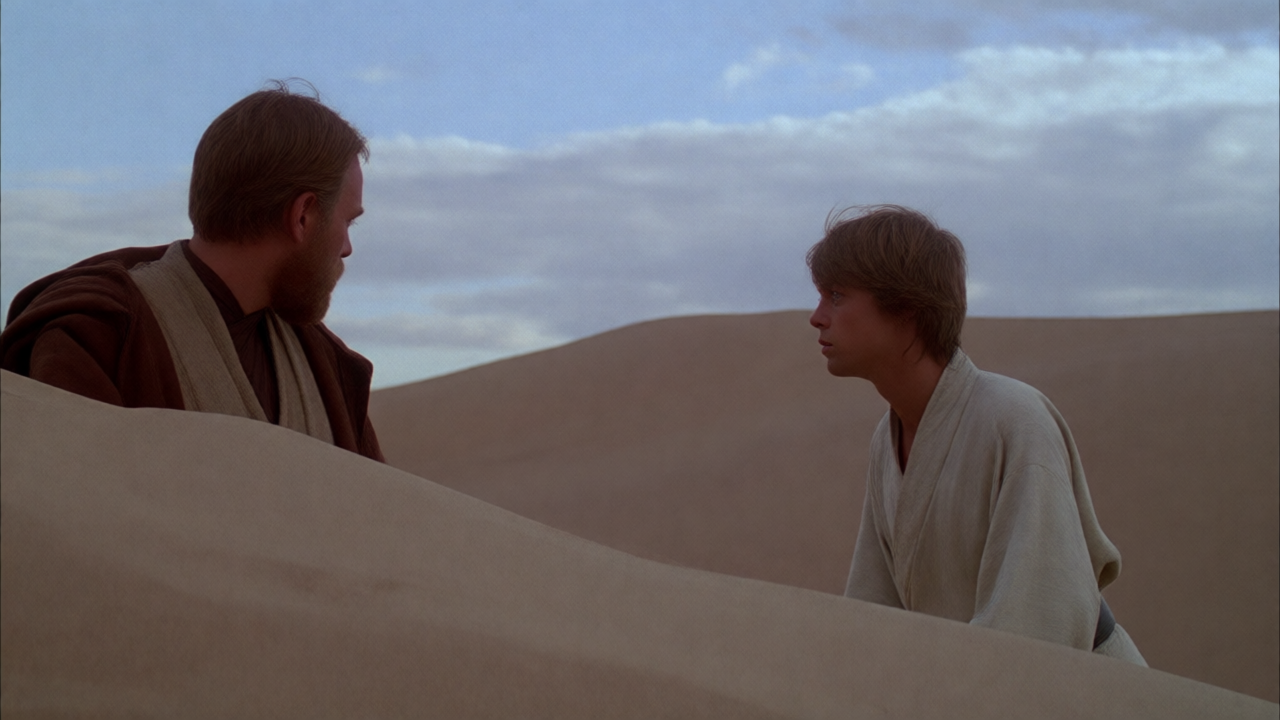
[EDDIE:amused]: It's a hell of a story, I'll give you that. A lonely old man watching a kid from the dunes, waiting for the right moment to drop some cryptic wisdom and then vanish.
[REG:stoic]: His sacrifice was the catalyst for the entire rebellion.
[EDDIE:smug]: Or maybe he just set up a perfect little ghost-story to keep that kid on a leash. But there might be another way to look at this...
[EDDIE:smug]: ---
FIRST TAKE
[EDDIE:smug]: Look, I'm not just talking about him being a bad teacher or whatever. I’m looking at the actual body count he indirectly authorized through sheer, stubborn negligence. Think about it. He had a goddamn seat on the Council during the Prequel era. He saw the political rot festering in the Senate and his response was to sit there and play by the rules while Palpatine dismantled democracy piece by piece.
[REG:disbelief]: Your refusal to acknowledge the constraints of the Jedi Code is staggering, Edward. He was bound by a duty to serve the Republic as it existed, not to launch a coup against its elected leadership because he had a bad feeling about a Senator.
[EDDIE:provocative]: Maybe. But I think he chose his own reputation as a "perfect Jedi" over the safety of the galaxy, and that's a hell of a way to justify letting a Sith Lord take over.
[REG:pompous]: We shall see if your accusations can actually withstand a rigorous examination of his moral obligations.
[REG:pompous]: ---
VILLAIN ORIGIN
[EDDIE:amused]: You're acting like he was some saintly monk from the jump, but let’s look at the actual blood on his hands before the desert hermit era. Before he was "Ben," he was a soldier in a war that was already rotting from the inside out.
[REG:pompous]: He was a dedicated servant of the Republic, Edward. His actions were dictated by the responsibilities thrust upon him following the death of Kwai Gon Jinn.
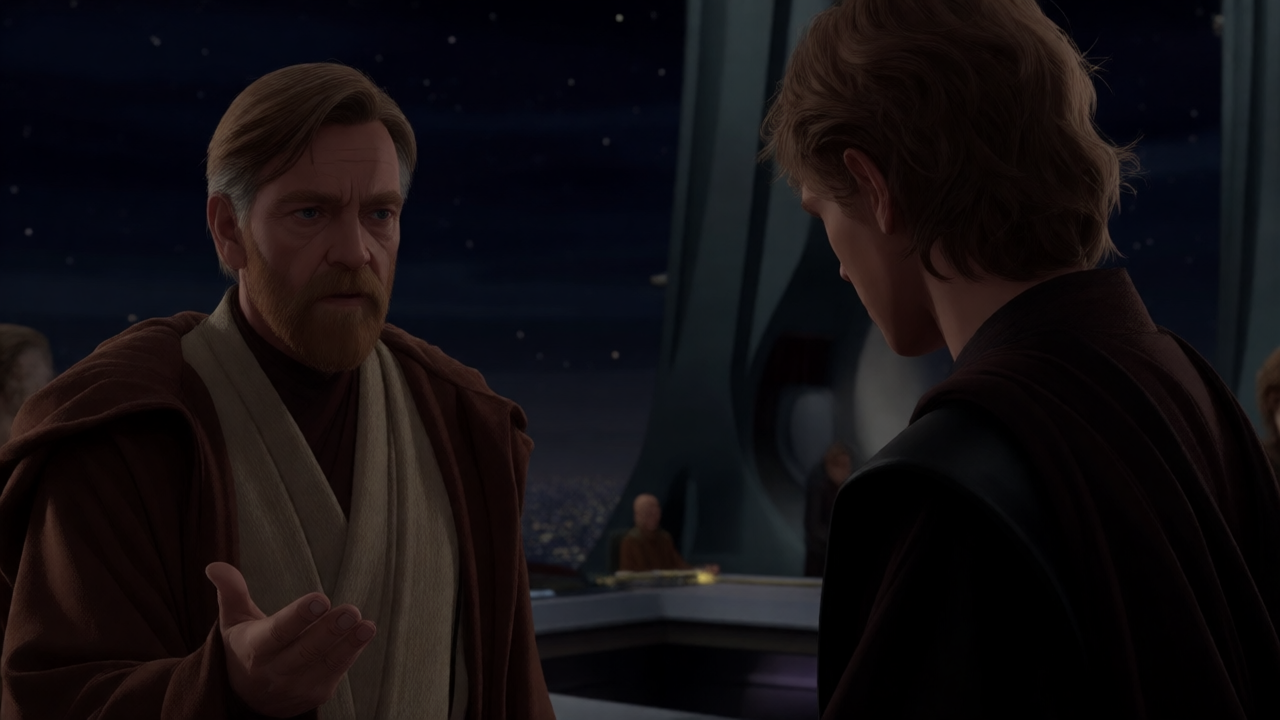
[EDDIE:provocative]: That’s bullshit and you know it. You said earlier he's just a mirror for his mentor, but I think it goes deeper. He didn't just take on Kwai Gon's responsibilities; he took on his failures too. By the end of *The Phantom Menace*, Obi Wan has basically become this rigid, rule-following shadow of a man who was actually capable of seeing outside the box. He’s so busy trying to be the "perfect Jedi" that he misses the forest for the goddamn trees.
[REG:disbelief]: You are suggesting his adherence to the Code is a character flaw? It is the very thing that provides stability in a crumbling galaxy.
[EDDIE:smug]: It’s the thing that blinded him! He was so obsessed with being a "Jedi Knight" and following protocol that he couldn't handle a kid like Anakin who didn't fit into their neat little boxes. He saw the cracks forming, but instead of fixing the foundation, he just tried to patch the drywall while the whole house was on fire.
[REG:dismissive]: I would explain this but the prerequisite reading list alone would take you a decade. You’re ignoring how his entire existence became a performance for the sake of tradition.
[REG:calm]: Consider the psychological implications. He didn't just lose a mentor; he inherited a legacy that demanded total conformity. There is a theory—one I find quite compelling after a recent research session involving certain neuro-active compounds—that Obi Wan’s entire personality in the prequel era was a defensive mask. He wasn't just following rules; he was terrified of the chaos Kwai Gon represented. By suppressing his own intuition to satisfy the Council, he effectively groomed Anakin to seek emotional validation from the very person who refused to give it: Palpatine.
[EDDIE:amused]: So you’re saying he basically hand-delivered Anakin to the dark side because he was too scared to break a few rules? That's heavy, Reg.
[REG:disagreement]: I am suggesting that his rigidity created the vacuum that Vader eventually filled. It wasn't just negligence; it was an active choice to prioritize the institution over the individual.
[EDDIE:provocative]: And here’s the part that’s gonna blow your mind, something most people don't realize about how this character is built. George Lucas actually changed his entire trajectory halfway through production because Alec Guinness was basically falling apart physically. If Obi Wan hadn't died in *A New Hope*, he would have been there to train Luke throughout the sequel trilogy.
[EDDIE:smug]: Think about that. The "hero" of the story only becomes a ghost so he can manipulate a kid from the afterlife. He didn't just die; he transformed himself into an inescapable psychological haunting for Luke Skywalker. He turned his own death into a teaching tool to ensure his version of the Force stayed in control.
[REG:pompous]: A calculated transition, perhaps, but is it villainous? Or merely efficient?
[REG:pompous]: ---
THE CASE
[EDDIE:smug]: Time for "The Charges." If we’re actually doing this, let's stop dancing around the bullshit and look at what Kenobi actually did. I'm putting him up on charges of psychological manipulation through a goddamn ghost-story setup.
[REG:disbelief]: That is a rather uncharitable way to describe mentorship, Edward. You are essentially accusing a man of using his own death as a tactical maneuver.
[EDDIE:provocative]: I’m calling it what it is! Look at the psychological profile here. In *A New Hope*, he doesn't just "die"; he orchestrates a scenario where he vanishes, leaving Luke alone with nothing but a fucking radio and some vague instructions from the afterlife. He turns himself into an unattainable ideal—a perfect, saintly martyr that Luke can never live up to or rebel against without feeling like a total piece of shit.
[REG:pompous]: You are ignoring the necessity of his absence. If he had survived Cloud City, Luke would have remained tethered to the old Jedi ways under Obi Wan's watchful eye. His death was the only way to force Luke into true independence. It wasn't a manipulation; it was a psychological catalyst for growth.
[EDDIE:amused]: A "catalyst" that relies on him being a manipulative phantom? That’s the most academic way of saying he's an emotional micromanager from beyond the grave. And speaking of micromanagement, let's talk about his obsession with the "Chosen One."
[REG:dismissive]: The prophecy is a central pillar of their faith, not a personal whim.
[EDDIE:provocative]: Is it? Because when Anakin was right there, screaming for help, vibrating with all this repressed emotion, Obi Wan’s response wasn't "Hey, let's talk about your feelings," it was "Follow the damn rules or you'll fall." He was so terrified of his own shadow and the chaos Kwai Gon represented that he turned into a human straitjacket. He didn't just fail to mentor Anakin; he psychologically suffocated him. He replaced actual emotional connection with rigid, cold dogma because he couldn't handle the messiness of a real relationship.
[REG:disbelief]: The audacity of that claim is almost admirable. You’re suggesting his devotion to the Jedi Code was actually a neurosis?
[EDDIE:smug]: It absolutely was! He was so busy playing the "perfect student" and trying to replicate Kwai Gon's responsibilities without any of his intuition that he became a hollow shell. He didn't want an apprentice; he wanted a mirror. And when Anakin wouldn't reflect him back perfectly, Obi Wan just... let him walk right into Palpatine's arms.
[REG:calm]: Even if we accept your premise of psychological rigidity, you are overlooking the sheer weight of his trauma. He lost his master, he watched a Republic crumble, and then he had to watch his "brother" become a monster. It is highly probable that his behavior in the original trilogy—this insistence on being a guiding spirit rather than a physical presence—was a psychological defense mechanism against the crushing guilt of failing Anakin.
[EDDIE:provocative]: Exactly! He's so haunted by his own failure that he can only interact with the galaxy as a goddamn hallucination. He couldn't face the reality of what he let happen, so he retreated into this mythic, ethereal existence where he can control the narrative without ever having to take actual accountability for the mess he left behind.
[REG:amused]: A hit. A palpable hit. I will admit, his transition from a man of action in the prequels to a disembodied voice is... psychologically telling. It suggests a man who has completely retreated into his own internalised mythos to cope with a shattered reality.
[EDDIE:smug]: So he’s a manipulator And a coward hiding in the Force? Yeah, I'm winning this one.
[EDDIE:smug]: ---
REBUTTAL
[REG:pompous]: I am going to ignore your reductive characterization of his death for a moment and present a far more substantive defense. You characterize Obi Wan's absence as a tactical vacuum or a psychological haunting, but you completely fail to account for the necessity of his moral presence during the most volatile periods of the Rebellion.
[REG:calm]: Let us look at the actual utility of his guidance. In *A New Hope*, it wasn't just about "leaving Luke alone"; it was about providing a spiritual compass that existed outside the reach of Imperial censorship or Sith corruption. By transitioning into a Force spirit, Obi Wan provided a template for transcendence—showing Luke that even in total defeat and death, one can remain an active participant in the struggle for light. He didn't just "vanish" to be difficult; he became a constant, incorruptible moral North Star that guided Luke through the darkest psychological trials of the saga without being able to physically intervene or dictate his every move.
[EDDIE:amused]: Yeah, sounds like a lot of work for a guy who's basically just a glorified Gps with a glowing blue tint. He’s still not taking responsibility for the mess he left behind in the Prequels!
[REG:dismissive]: Your insistence on blaming him for Anakin's descent is a classic case of post hoc ergo propter hoc reasoning. You are assuming that because Obi Wan was present during the fall, he must be responsible for it. But consider his actions during the Clone Wars—the animated series specifically illustrates a man desperately trying to balance the duty of a General with the compassion of a Jedi. He fought a war he didn't want so that a Republic could survive to see another day.
[REG:calm]: Furthermore, look at the outcome of his "manipulation." Because Obi Wan maintained the spark of the Jedi teachings in secret on Tatooine and through the Force, Luke Skywalker was able to achieve what no other generation had: the redemption of Darth Vader. If Obi Wan hadn't laid that specific groundwork—the lightsaber, the history, the spiritual connection—Luke would have just been another victim of the Empire. The existence of a redeemed Anakin Skywalker is living proof that Obi Wan’s approach to legacy worked where the rigid Jedi Council's approach failed.
[EDDIE:provocative]: Hold on, hold on. You're saying he succeeded because he let Luke do all the heavy lifting? He just sat in the background and played "good cop" while the kid was out there getting his ass kicked by a cyborg! That’s not leadership, Reg, that’s being a cheerleader from the sidelines while the stadium is burning down.
[REG:stoic]: It is called fostering autonomy, Edward. He provided the tools, but he refused to carry the burden for him, which is exactly why Luke was able to make his own choice in that final confrontation on the second Death Star.
[EDDIE:smug]: I'm not buying it. The kid had a hell of a lot more than just "tools"—he had a ghost breathing down his neck telling him what to do! It’s still a control play, even if you call it "autonomy."
[EDDIE:smug]: ---
REAL VILLAIN
[EDDIE:amused]: Alright, Fine. Point to you on the "psychological haunting" thing. It’s a heavy-ass way to look at a guy in a bathrobe, but I can't deny that he turned himself into a ghost just so he could keep pulling Luke's strings from the beyond.
[EDDIE:amused]: [Reg:grudging_respect]: A rare moment of clarity, Edward. Your recognition of his tactical martyrdom is... noted. However, if we are to truly understand why this character feels so much more like a manipulator than a mentor, we have to look at how he compares to the archetypal mentors in other mythologies.
[EDDIE:amused]: Here we go with the lecture. What's he supposed to be? A space version of Merlin or some shit?
[REG:pompous]: Not quite. If you examine a character like Gandalf from *The Lord of the Rings*, you see a mentor who operates through presence and active guidance. Gandalf is a catalyst for action; he provides wisdom but remains physically engaged in the struggle to ensure the hobbits develop their own agency. Obi Wan, conversely, is more akin to a tragic figure from Greek drama—a man whose very existence becomes an inescapable, looming shadow that defines the hero by his absence rather than his presence.
[EDDIE:disbelief]: So you're saying Gandalf is a "hands-on" guy and Ben Kenobi is just a dead dude playing mind games? That’s a hell of a distinction, Reg.
[REG:pompous]: It is the fundamental difference between guidance and haunting. Look at Dumbledore from *Harry Potter*. While he also operates through layers of mystery and posthumous influence, there is an attempt to build a foundation for his successor that isn't entirely based on psychological trauma. Obi Wan’s "teaching" method in the original trilogy feels much more like a calculated vacuum. He leaves Luke with just enough information to be dangerous but not enough to be truly free of the Jedi mythos he himself couldn't escape.
[EDDIE:smug]: Exactly! It’s all about control, even when he’s dead. You think Gandalf would have sat in a fucking cave on some desert planet waiting for a kid to stumble upon his old lightsaber just so he could whisper "use the Force" during a life-or-death dogfight?
[REG:amused]: Your lack of nuance is staggering, but you aren't entirely wrong. Obi Wan’s arc lacks the proactive stewardship we see in other legendary mentors. He doesn't prepare Luke for the reality of the world; he prepares him to fulfill a specific, pre-ordained role in a cosmic cycle that Obi Wan himself was too rigid to break during the Prequels.
[EDDIE:provocative]: And that’s the goddamn crux of it! He’s not a mentor; he’s a placeholder for a legacy that refuses to die. He didn't want Luke to be his successor; he wanted Luke to be his *redemption*. He used that kid as a way to finally win the fight he lost with Anakin, turning a whole person into a tool for his own unfinished business.
[REG:dismissive]: A provocative leap, even for someone who is currently operating at what I can only assume is a very high cognitive altitude due to your recent... intake. But it brings us to an uncomfortable realization. If the mentor's role is fundamentally compromised by their own inability to evolve, then we have to ask: is any of this actually about the hero?
[EDDIE:amused]: Oh, shit. Here comes the big reveal. Let me guess, you’re gonna tell me it was never about Anakin or Luke at all?
[REG:pompous]: Precisely. We've been arguing over whether Obi Wan is a manipulator or a victim, but we have ignored the most obvious culprit sitting right in front of us. The real villain isn't a person; it’s the damn institution he was so desperate to serve.
[EDDIE:amused]: So you're gonna say it was the Jedi Order? That's some basic-ass bullshit, Reg. Everyone says the Jedi were too rigid.
[REG:pompous]: It is not merely "rigidity," Edward. It is a systemic failure of institutional ego. The Jedi Order became so obsessed with their own role as "keepers of the peace" that they stopped being capable of seeing the chaos they were actually part of. They weren't just bystanders to Palpatine; they were the very structure that allowed him to walk through the front door.
[EDDIE:amused]: Damn. So you’re saying Obi Wan wasn't a villain because he was bad, but because he was a perfect cog in a broken machine?
[REG:pompous]: Precisely. He was the ultimate symptom of a system that prioritized tradition over truth and protocol over people. And when the machine broke, the "heroes" were left trying to fix the engine while the car was already halfway down a cliff.
[REG:pompous]: ---
AFTERMATH
[EDDIE:amused]: If you think the "system" is a convenient excuse, wait until you see the actual fallout of his little "spiritual guidance" act. We’re talking about the sheer amount of bullshit that happened because he left a power vacuum in the Force.
[REG:dismissive]: You are conflating unintended consequences with intentional design, Edward. The aftermath of the Empire's fall was a chaotic necessity, not a failure of Kenobi's guidance.
[EDDIE:provocative]: Is it? Let’s look at what actually happened after the "hero" did his thing and vanished into the blue light of transcendence. Because of the way he shaped Luke—turning him into this specific, narrow vessel for the Skywalker legacy—he basically doomed the next generation to repeat the same goddamn cycle.
[REG:disbelief]: That is a massive leap in logic. The Sequel Trilogy's chaos was a reaction to the Empire and the First Order, not a direct result of Obi Wan’s mentorship.
[EDDIE:smug]: It's fucking written all over it! Look at what the die-hard fans have been debating for years regarding the "Whale" theory or how Ben Solo went off the rails. By making Luke this perfect, untouchable icon through his Force ghost bullshit, Obi Wan created a standard that was impossible to actually live up to without becoming obsessed with destiny. He didn't teach Luke how to be a person; he taught him how to be a symbol. And when symbols crack, they shatter the whole goddamn galaxy. Look at Rey—she’s wandering around trying to find an identity in a vacuum left by all these "perfect" legends who couldn't just exist without being part of some cosmic prophecy.
[REG:amused]: While your grasp on the socio-political ramifications of mythic archetypes is... surprisingly robust, you are ignoring the actual textual evidence from the expanded lore regarding the Force Diaspora.
[EDDIE:provocative]: The what? Speak English, Reg!
[REG:pompous]: There is a long-standing community theory, backed by the sheer instability of the Force in the post-Imperial era, that Obi Wan’s decision to tether himself as a permanent guiding spirit actually created a "static" in the cosmic Force. By essentially haunting the timeline to ensure his specific version of the Jedi survived through Luke, he prevented the Force from naturally evolving or healing from the Sith's corruption. He prioritized his own localized victory over the organic restoration of the galaxy's spiritual equilibrium.
[EDDIE:amused]: So you’re saying even as a ghost, the guy was still messing with the thermostat? That is some heavy-ass shit.
[REG:disagreement]: I am suggesting that his "success" was actually a form of spiritual stagnation. He saved the Republic by ensuring the old ways survived, but in doing so, he made sure they could never truly change.
[REG:disagreement]: ---
VERDICT
[EDDIE:smug]: Alright, look. We’ve spent this whole time dissecting how he manipulated Luke, how he suffocated Anakin, and how he basically turned himself into a cosmic haunting just to keep his own version of the Jedi alive. You can throw all the "noble sacrifice" bullshit at me you want, Reg, but it doesn't change the facts. The man was an architect of chaos who spent his entire life trying to maintain a status quo that was already dead. My verdict? Obi Wan Kenobi is Guilty. He’s not a hero; he’s a high-functioning obstructionist who used every trick in the book—from rigid dogma to posthumous gaslighting—to ensure the galaxy revolved around his specific, narrow idea of order.
[REG:pompous]: Your passion for chaos is almost as impressive as your lack of nuance, Edward. I will grant you that his methodology was... unconventional, and perhaps even psychologically intrusive in its execution. However, to label him a villain because he chose to guide the galaxy through its darkest hour instead of simply letting it burn is an insult to the very concept of mentorship. My position remains unchanged: Not Guilty. While I concede that his adherence to the Code may have contributed to Anakin's isolation, and his "guiding spirit" act was certainly a complex psychological maneuver, these were not acts of malice. They were the desperate measures of a man trying to preserve a flickering light in an absolute vacuum. He didn't create the darkness; he just refused to let it be the only thing left.
[EDDIE:amused]: A "flickering light"? That’s some poetic bullshit right there. You’re basically saying if you see a house on fire, instead of calling the fire department, you just stand in the driveway and whisper "remember the importance of water" to the flames. He didn't solve the problem; he just became part of the haunting.
[REG:disbelief]: That is a remarkably reductive analogy, even for someone who is currently so clearly... lifted. The point is that without his specific intervention—his refusal to let the Jedi idea die, even if it was in a warped form—there would be no Luke Skywalker, and thus, no redemption for Anakin. You see a manipulator; I see a man who understood that some legacies must be carried by ghosts because the living are too broken to hold them.
[EDDIE:amused]: Yeah, well, maybe if he'd spent less time being a ghost and more time being a fucking person back in the day, we wouldn't have needed all these sequels to fix his mess.
[REG:calm]: The debate has been laid bare, and the evidence is as polarizing as it is extensive. We have presented the case against the "Greatest Jedi," but whether he was a master manipulator or a necessary guide is ultimately for you to decide.
[EDDIE:smug]: Yeah, we've thrown everything at him. Now it's your turn. Go down into the comments and tell us if you think Kenobi is a saintly martyr or just a manipulative ghost who couldn't let go of the past. Tell us which argument actually landed—was it the psychological manipulation of Luke, or his failure to save Anakin? We want to know why you’re siding with the hero or the prosecution. Vote now.
[EDDIE:smug]: ---
OUTRO
[EDDIE:exhausted]: Man, my brain is absolutely fried after that one. I feel like I just went twelve rounds with a lightsaber in my own skull.
[REG:pompous]: A rather vivid metaphor for what was essentially an intellectual skirmish. Though I must admit, your ability to weave conspiracy into every single sentence was almost... impressive.
[EDDIE:amused]: Yeah, yeah, laugh it up, you academic prick. But we laid him out. We stripped the robes off that "legendary hero" and showed everyone the manipulative, rule-following mess underneath. The guy is a walking disaster wrapped in blue light.
[REG:dismissive]: A catastrophe of cosmic proportions, perhaps. However, I find your insistence on his villainy rather tiresome when one considers he was merely the most effective tool available to prevent total darkness.
[EDDIE:smug]: Keep telling yourself that while you're staring at your little charts and graphs, Reg. If you actually want more of this chaos, go hit up Laser Chicken Studios dot com. We’ve got all the heavy lifting there for when you need a break from being so damn serious.
[REG:pompous]: I suppose if one requires further intellectual stimulation without the... grit... that is available on their platform, it may be of use.
[EDDIE:provocative]: Look, we're done with him. But now it’s your turn to play judge and jury. Is Obi Wan Kenobi a tragic hero trying to save a dying light, or is he the true architect of the galaxy's misery? Tell us in the comments. I want to know if you think he’s a saint or just a manipulative ghost who couldn't let go of his own ego.
[REG:pompous]: Do be specific in your reasoning; do not merely offer emotional outbursts. We await your verdict.
[EDDIE:smug]: Villain's Advocate.
[REG:calm]: Villain's Advocate.
[REG:calm]: ---
POST CREDITS
[EDDIE:defensive]: I’m telling you, man, if you put a blindfold on me and hand me anything from the deli counter, I’ll know exactly what it is before it even hits my tongue.
[REG:condescending]: Your confidence in such sensory perception is frankly misplaced, considering your current state of being quite... lifted.
[EDDIE:annoyed]: Don't start with that academic crap, Reg, I’m not even that baked right now, and you know I could pick out a sharp cheddar from a mile away.
🖼 Gallery