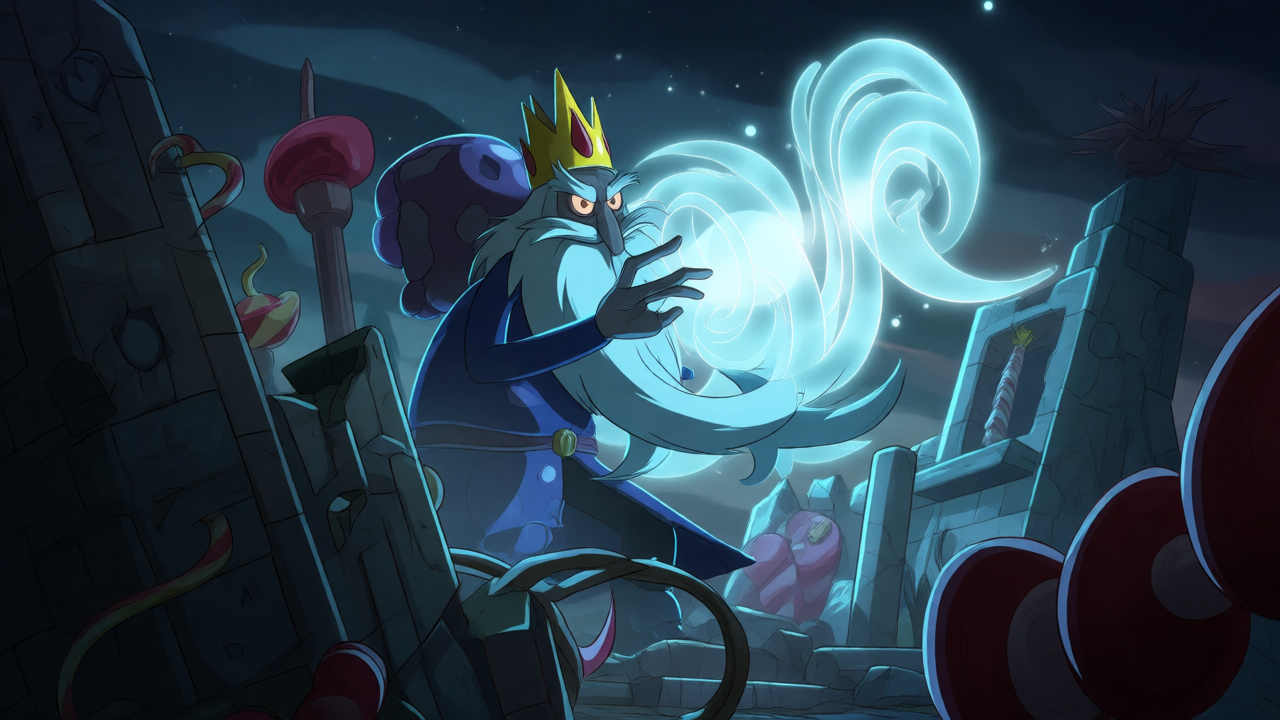
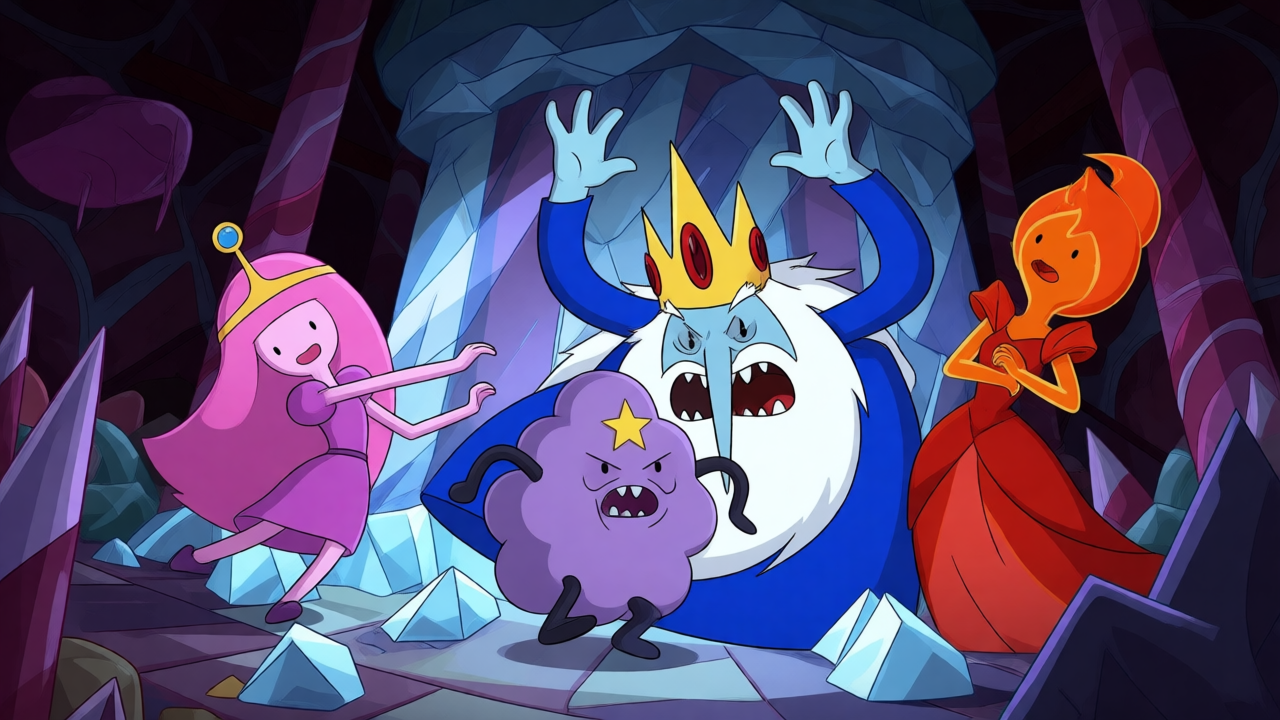
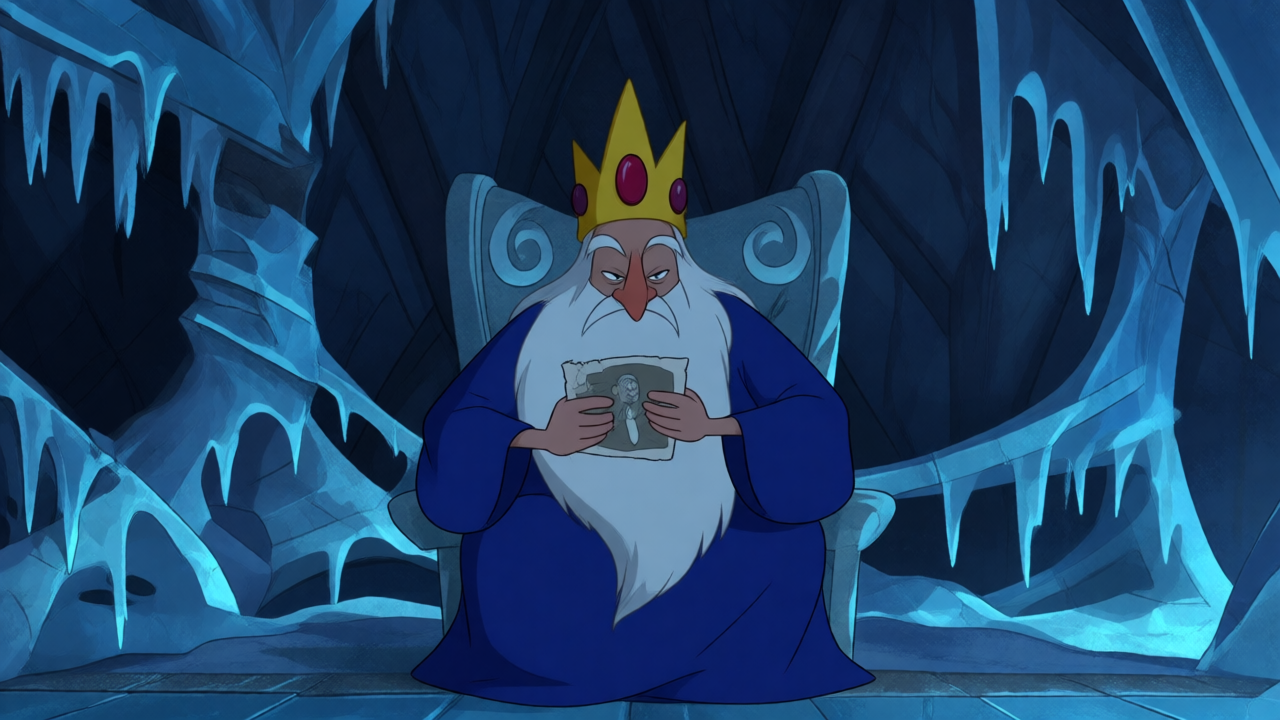
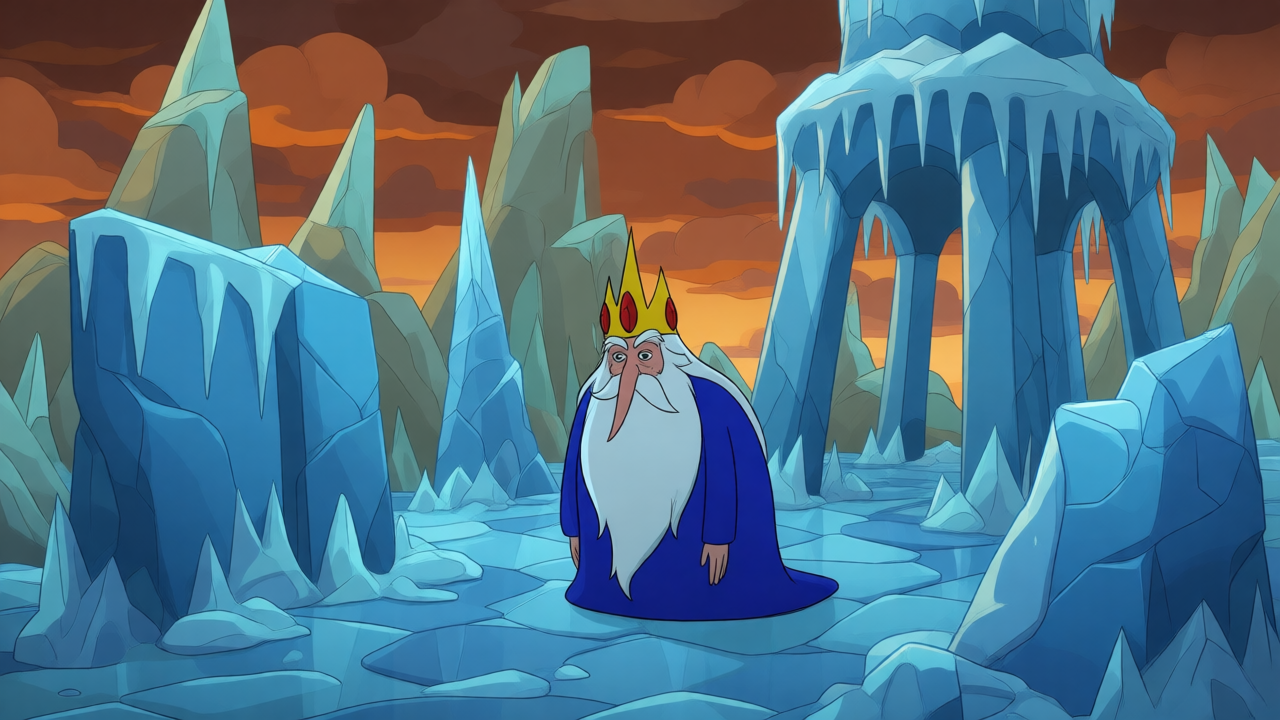
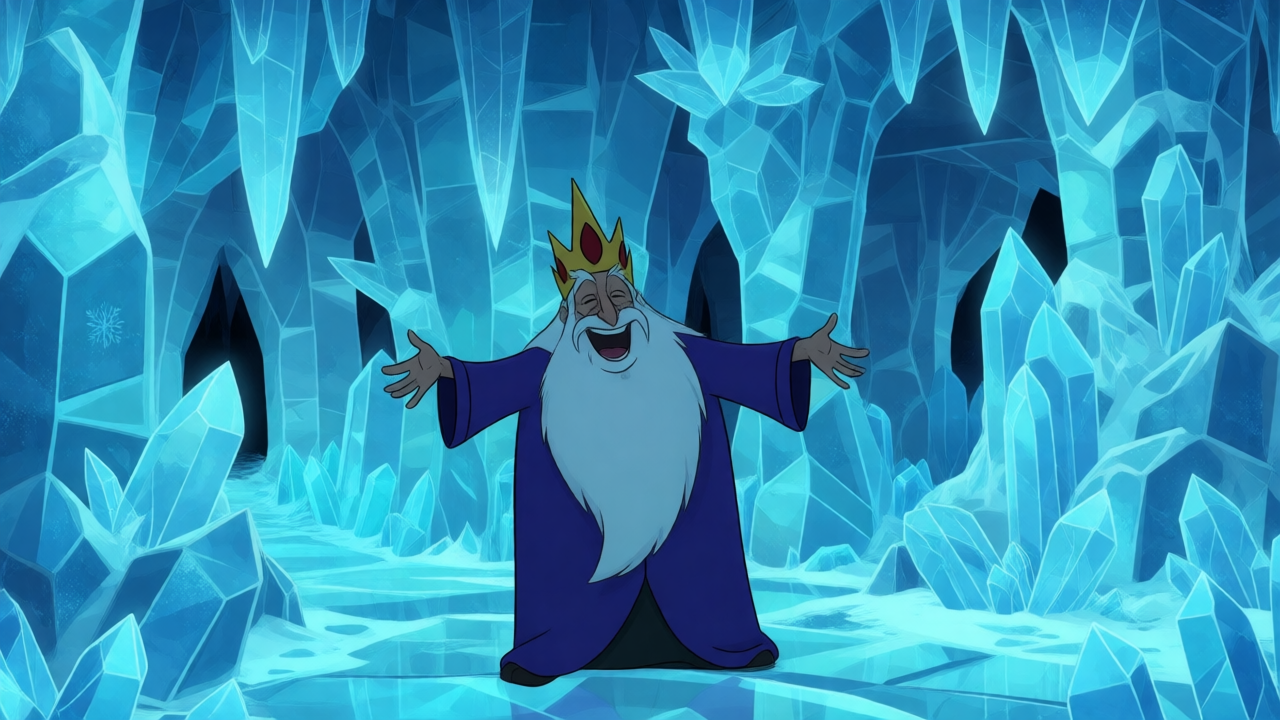
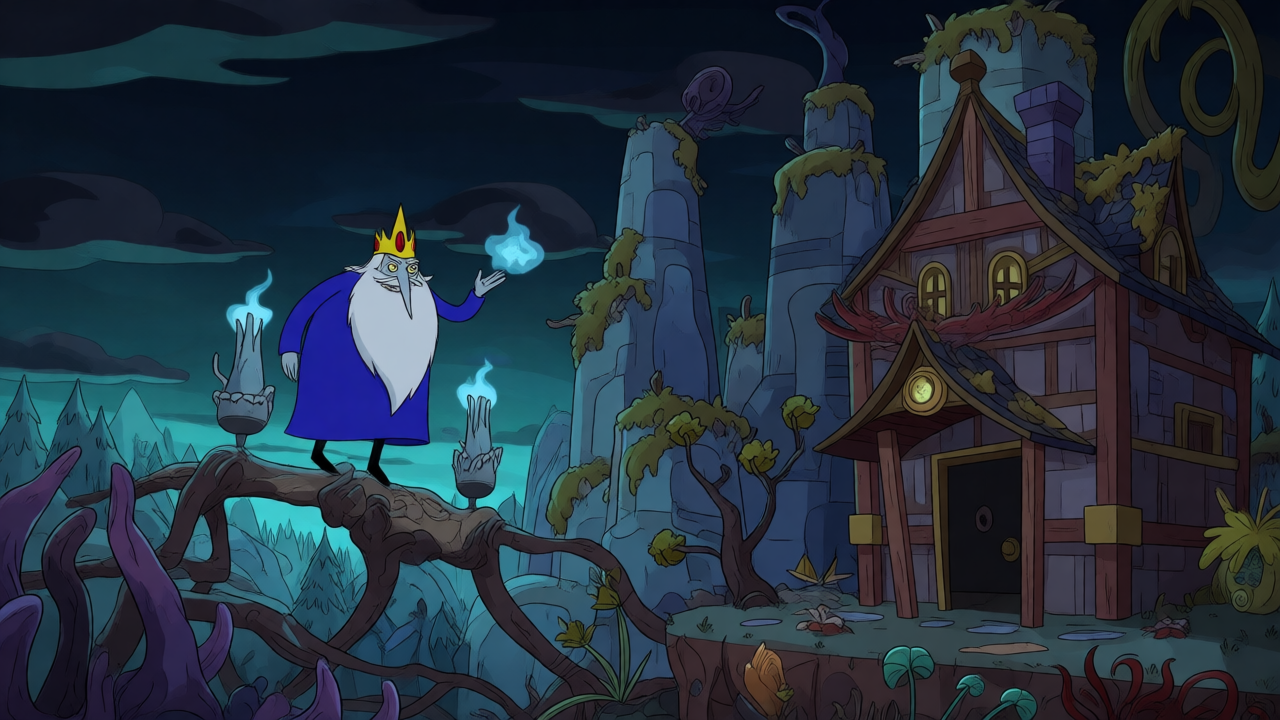
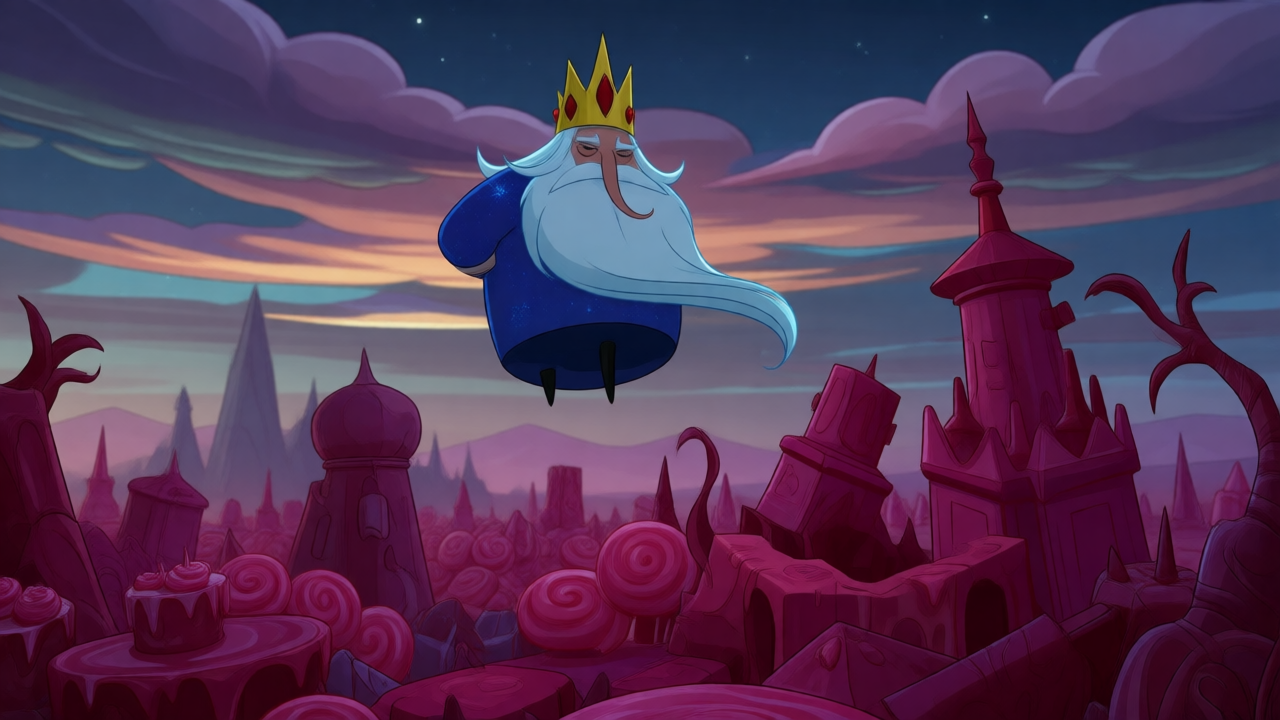
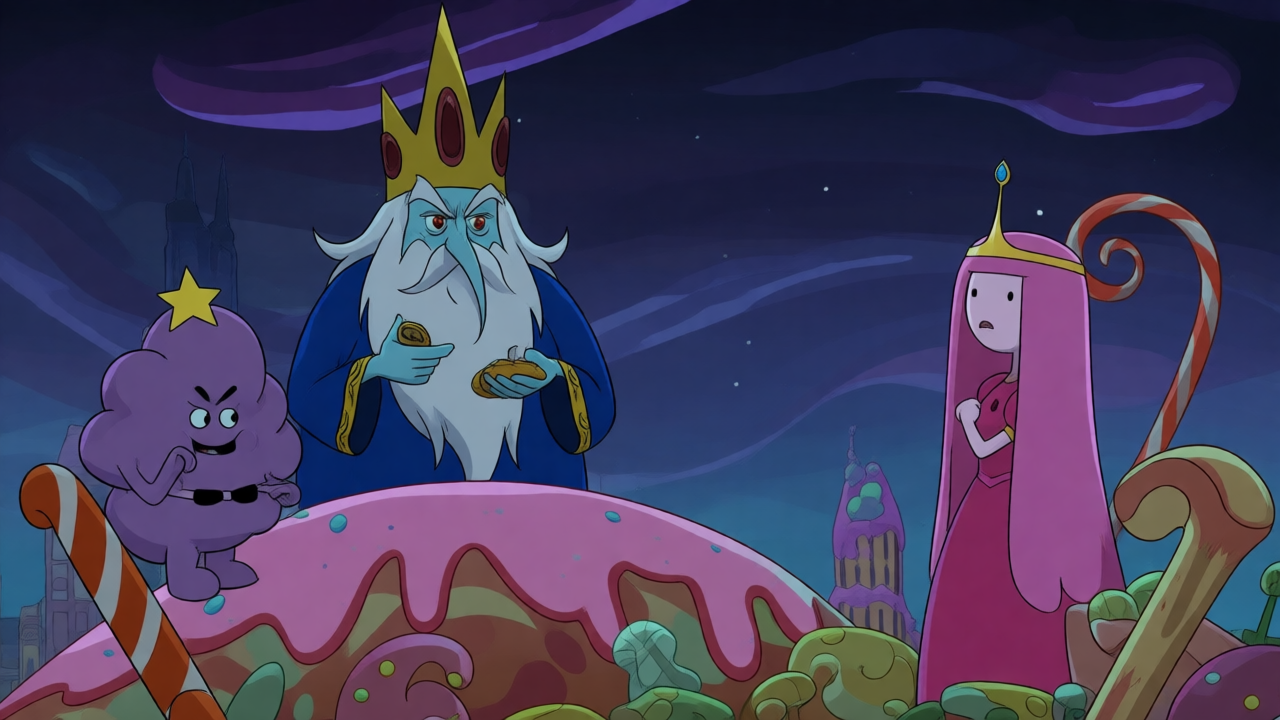
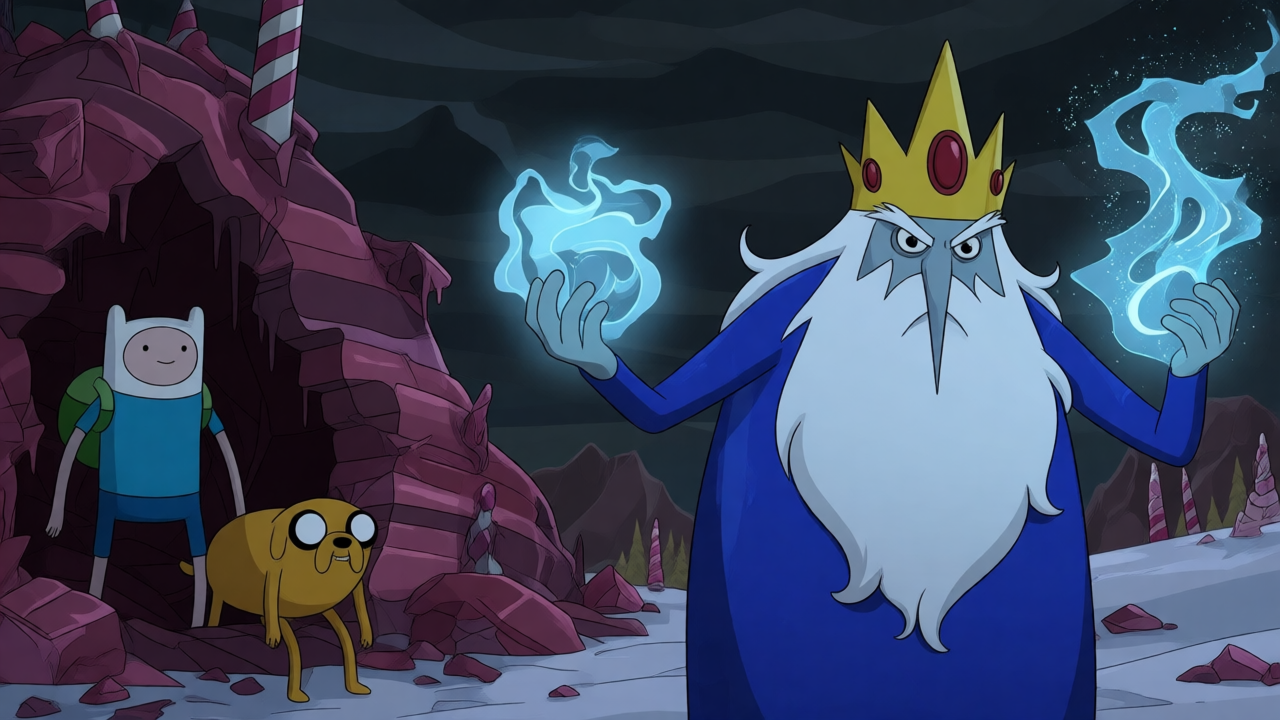
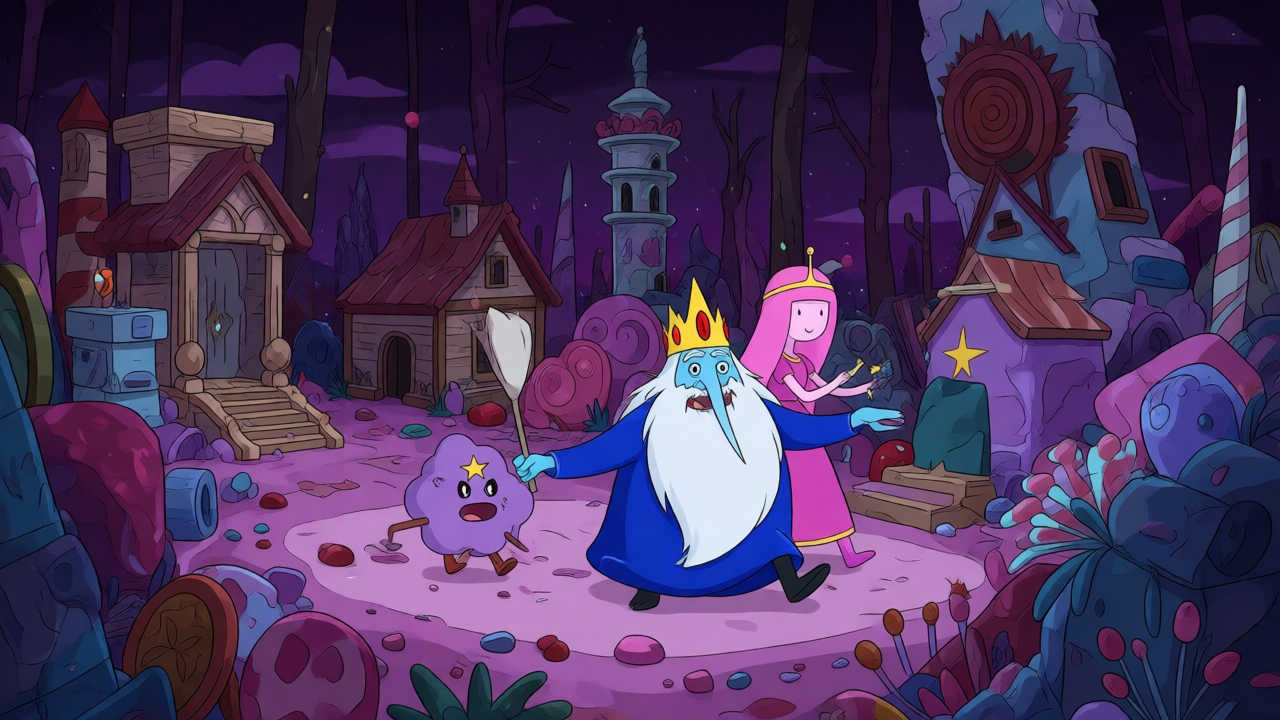
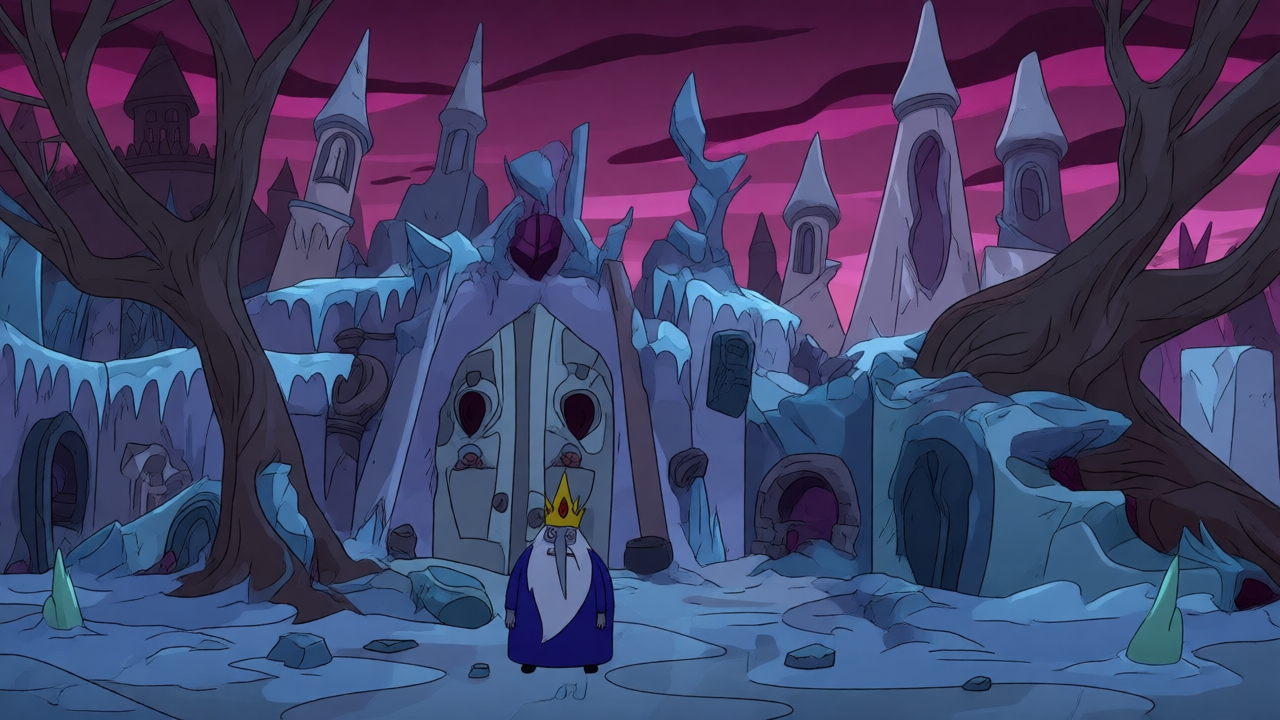
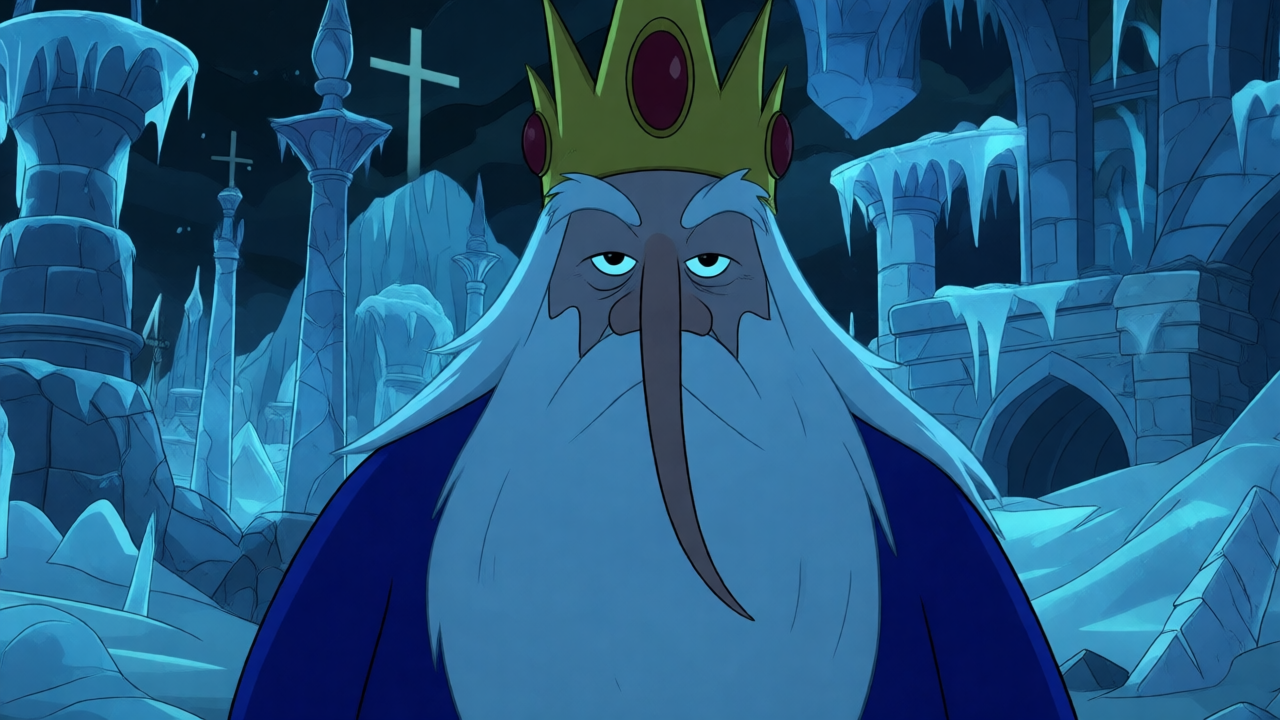
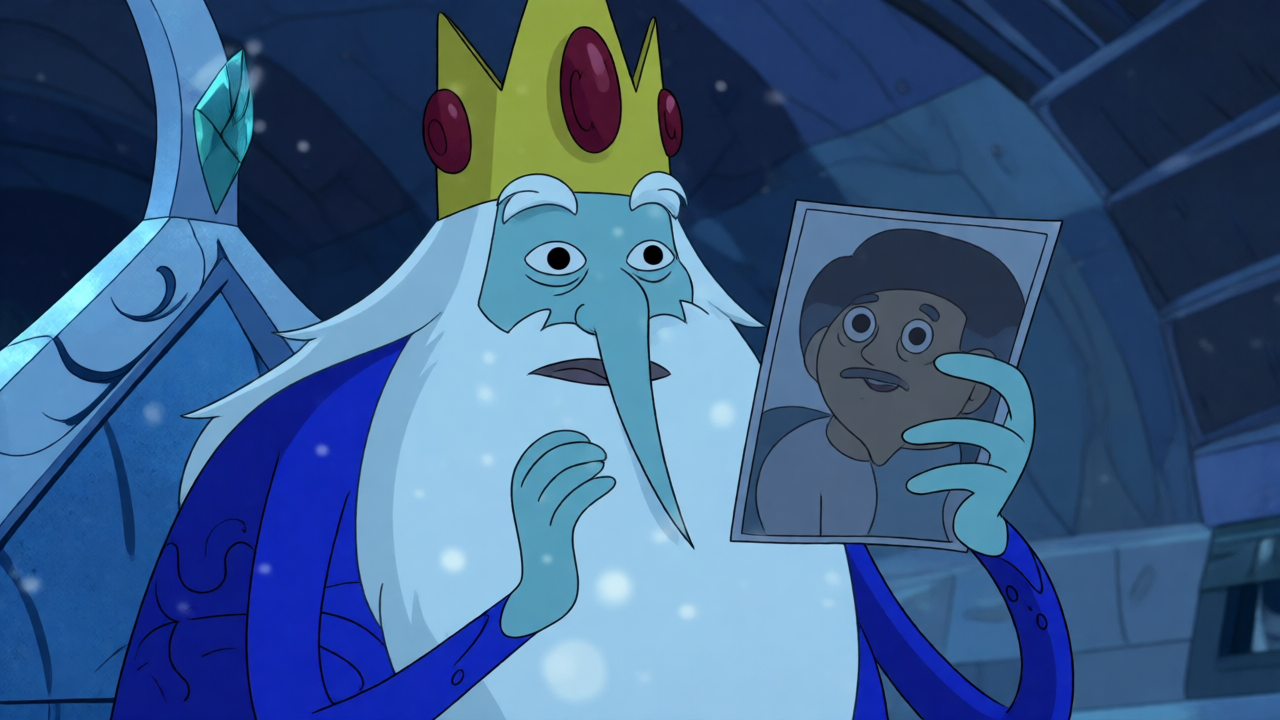
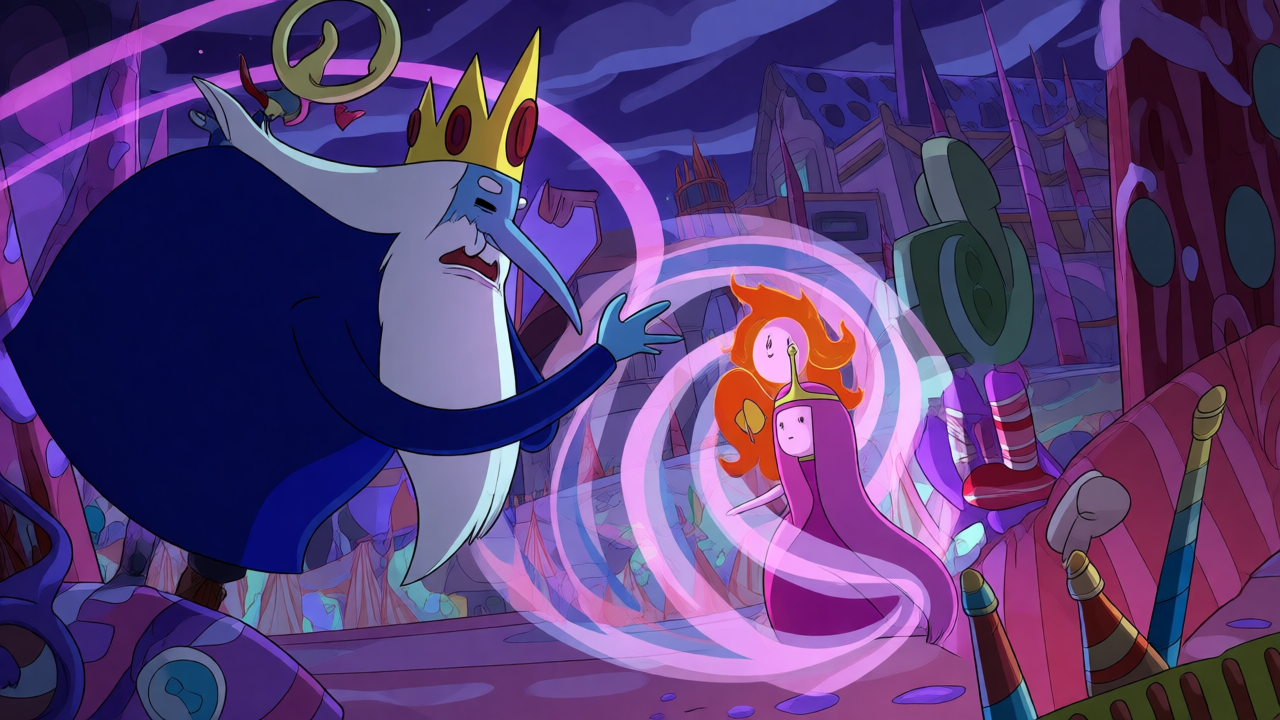
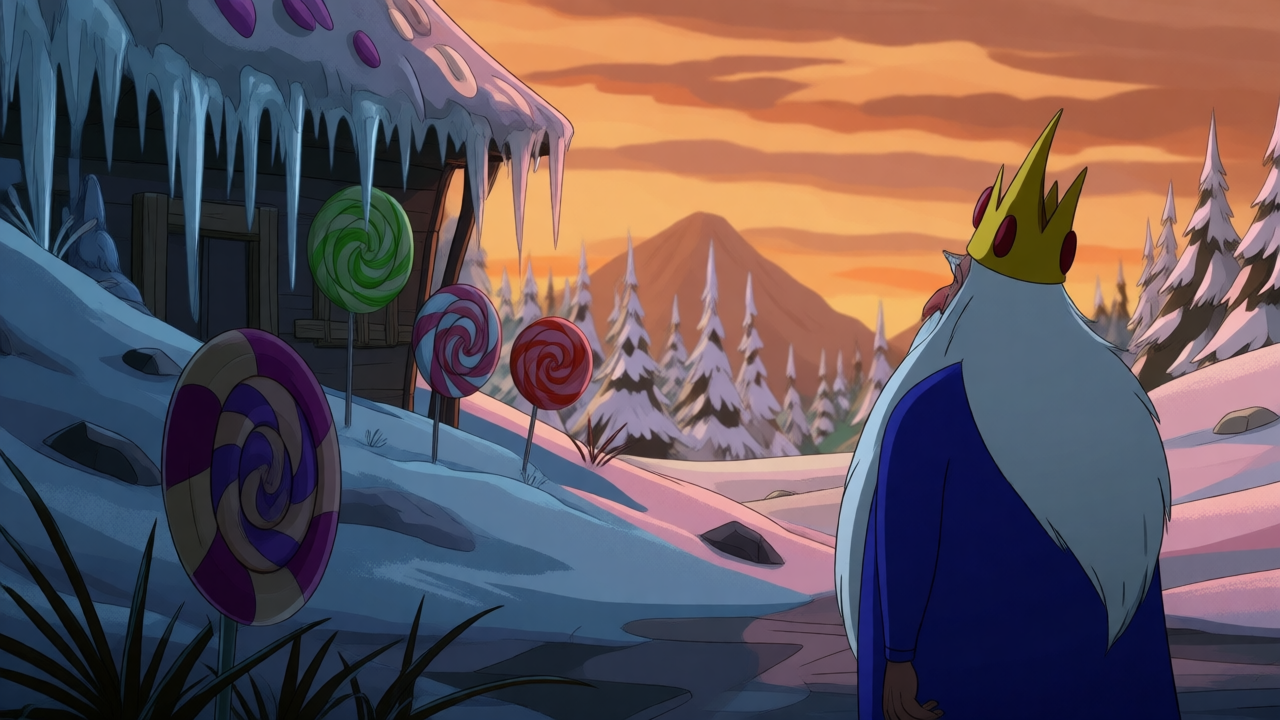
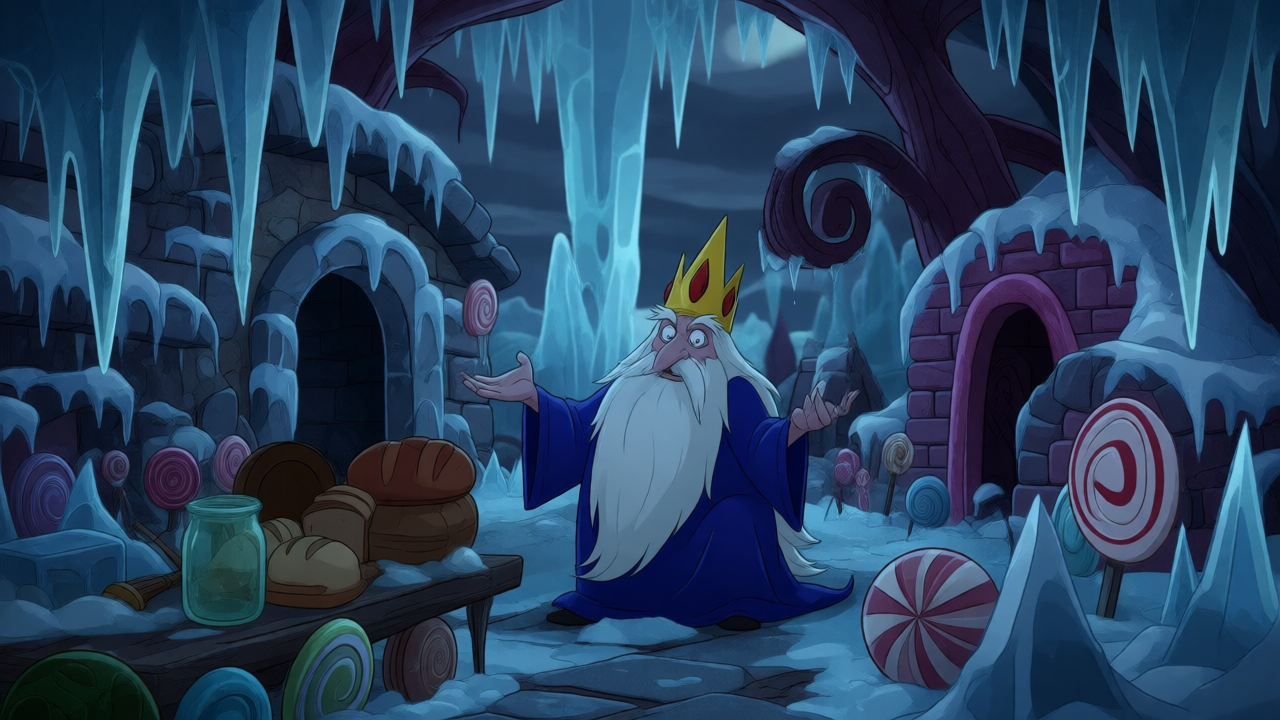
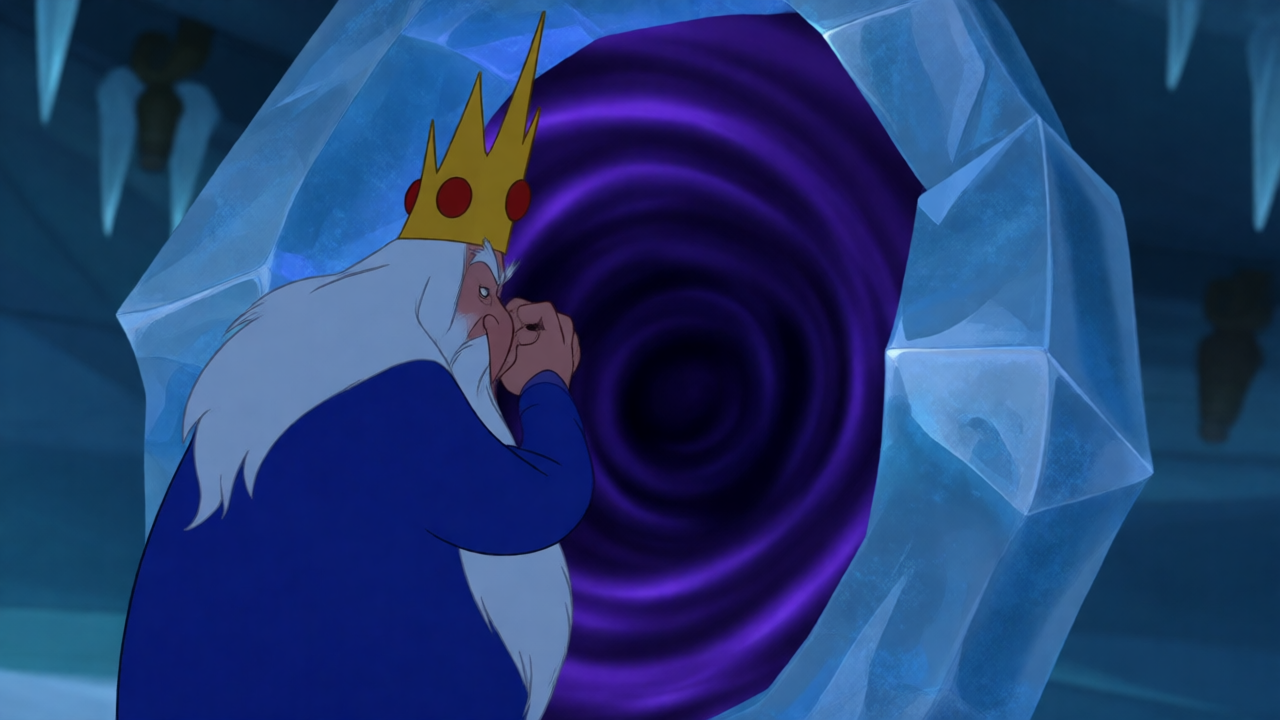
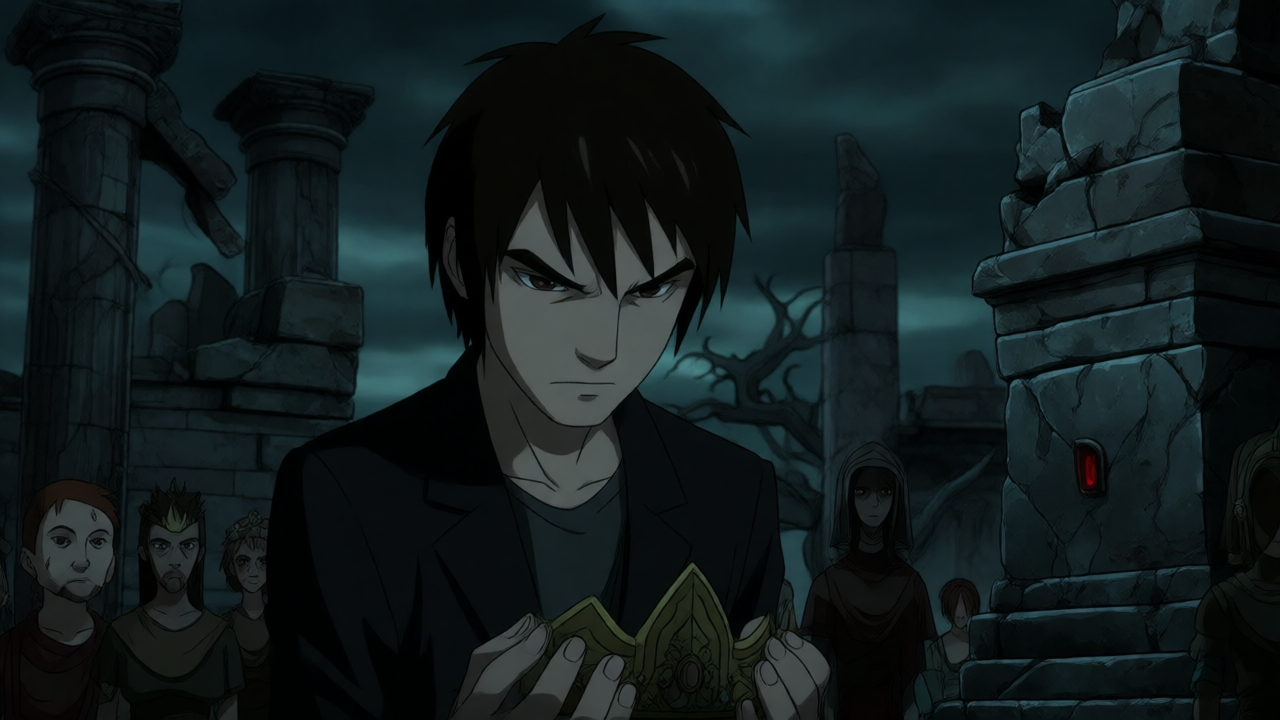
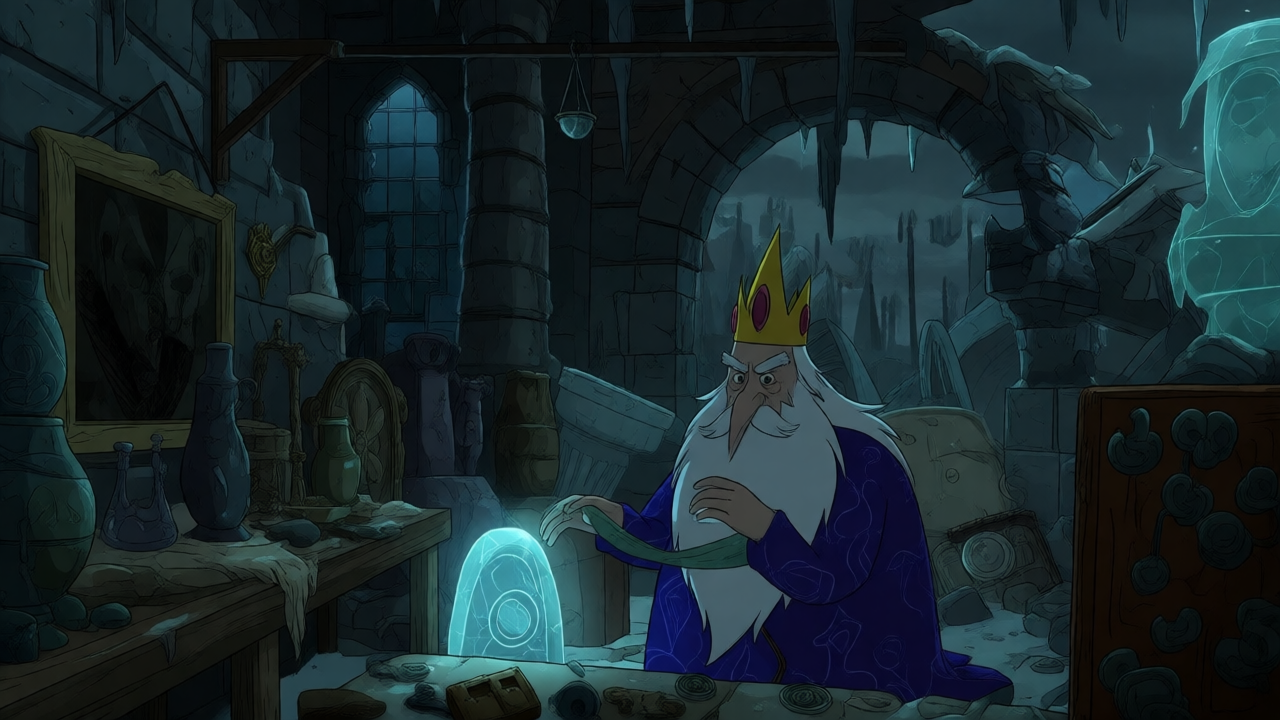
The Case for Ice King
Cast Your Vote on YouTube
Chapters
- 0:00Cold Open
- 0:18Intro
- 1:06Background
- 6:12First Take
- 7:56Villain Origin
- 10:36The Case
- 14:32Rebuttal
- 17:36Real Villain
- 20:54Aftermath
- 23:15Verdict
- 25:54Outro
- 27:38Post Credits
📁 Case File
The Case File: Ice King
Overview
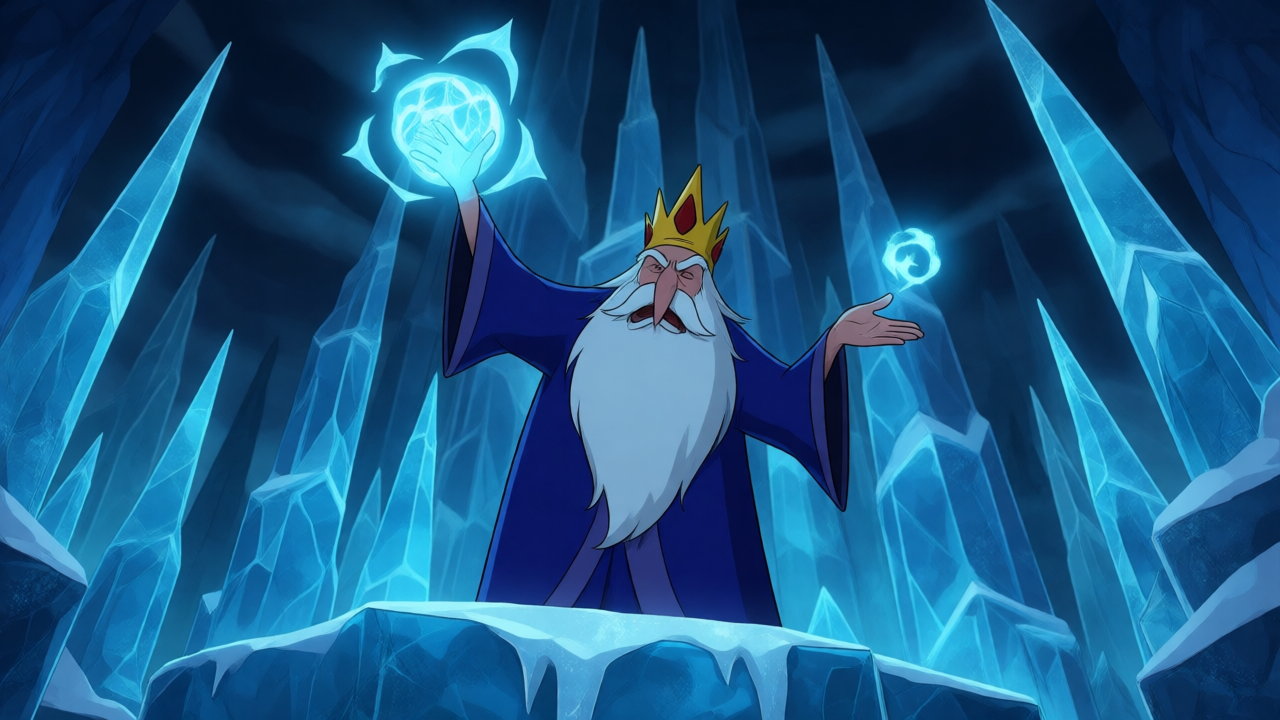
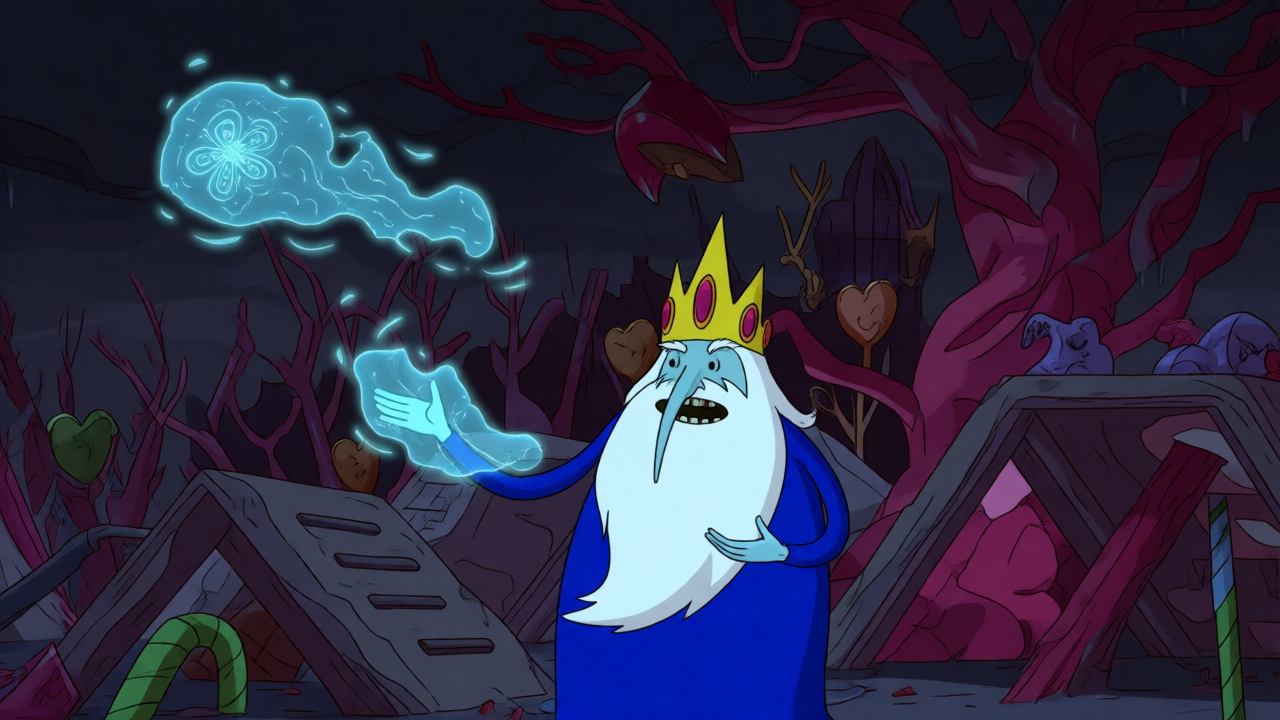
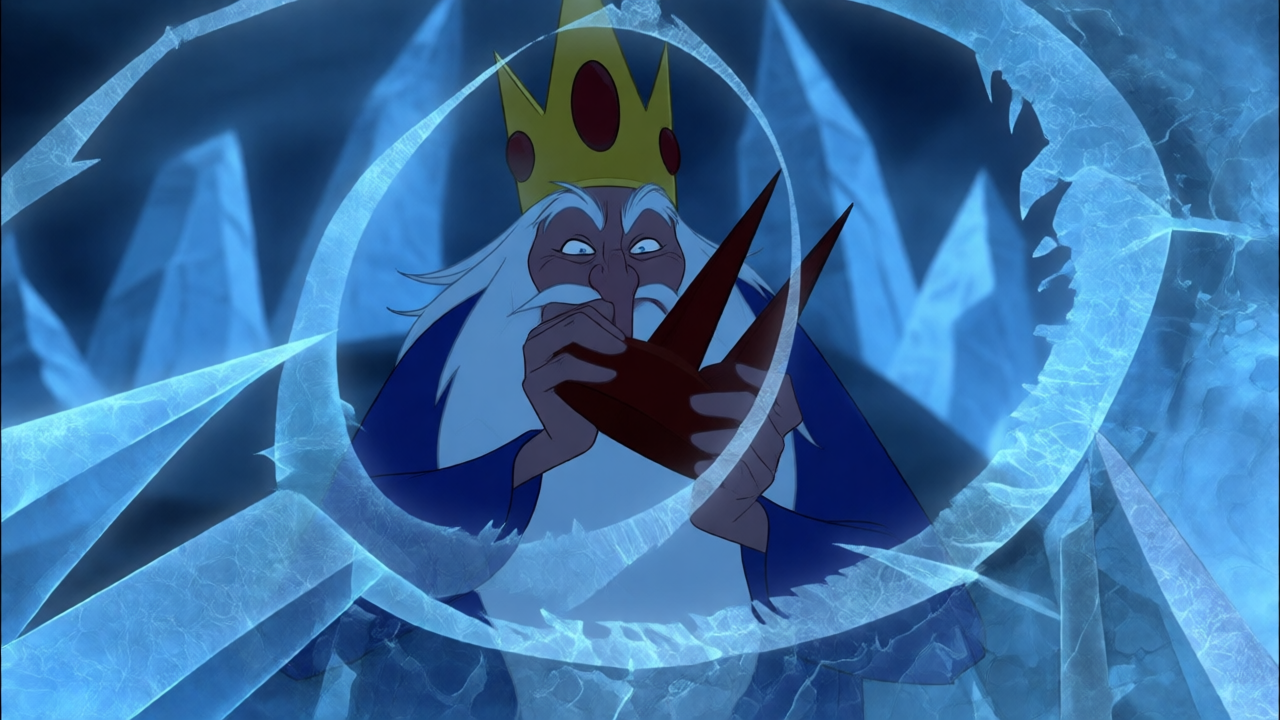
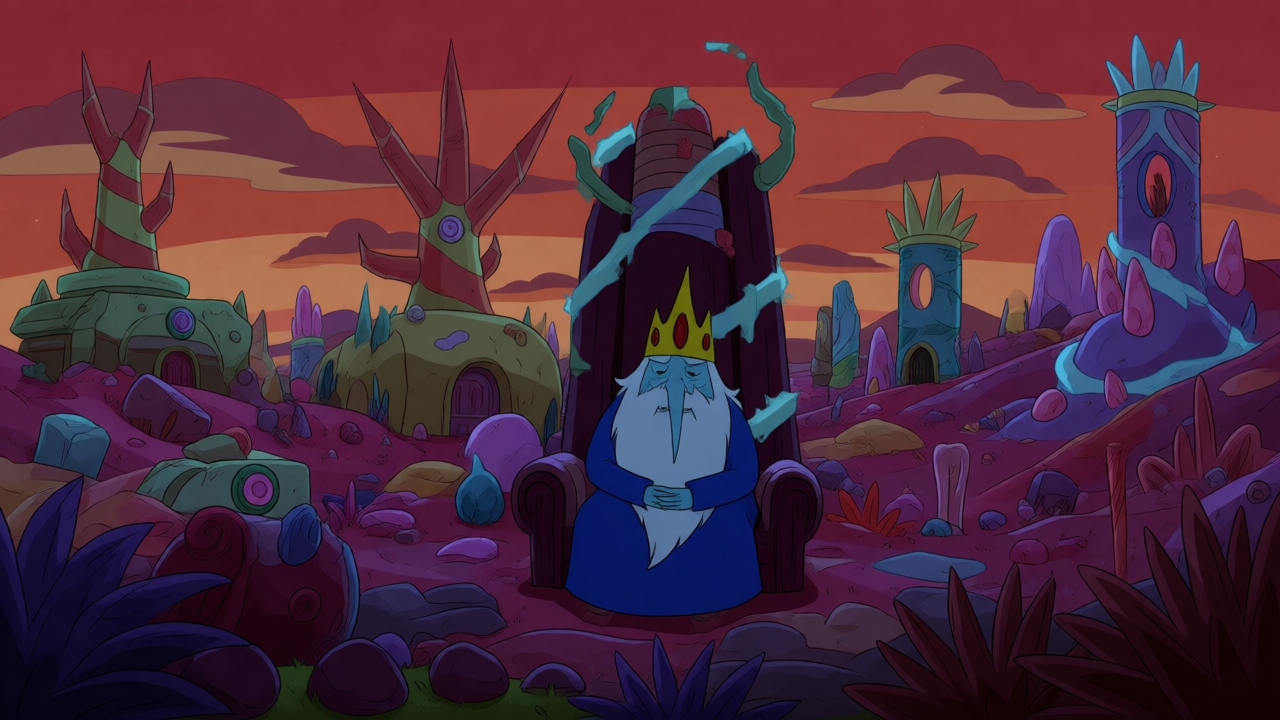
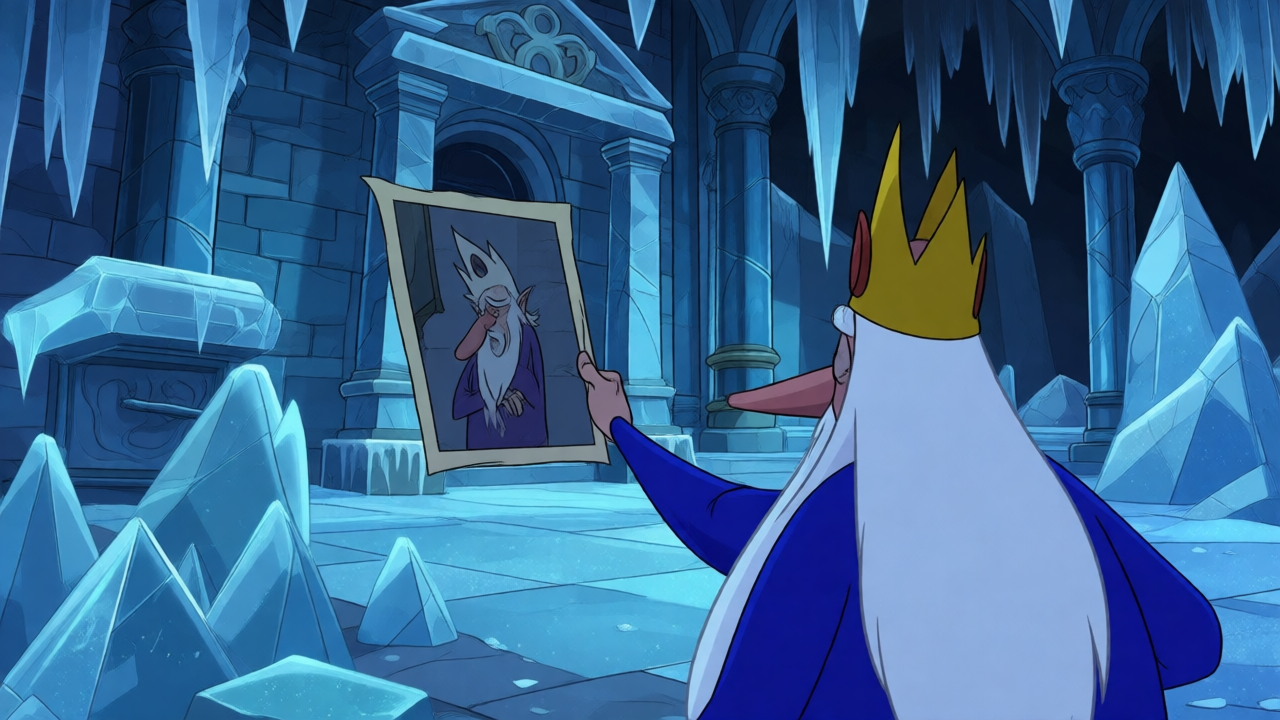
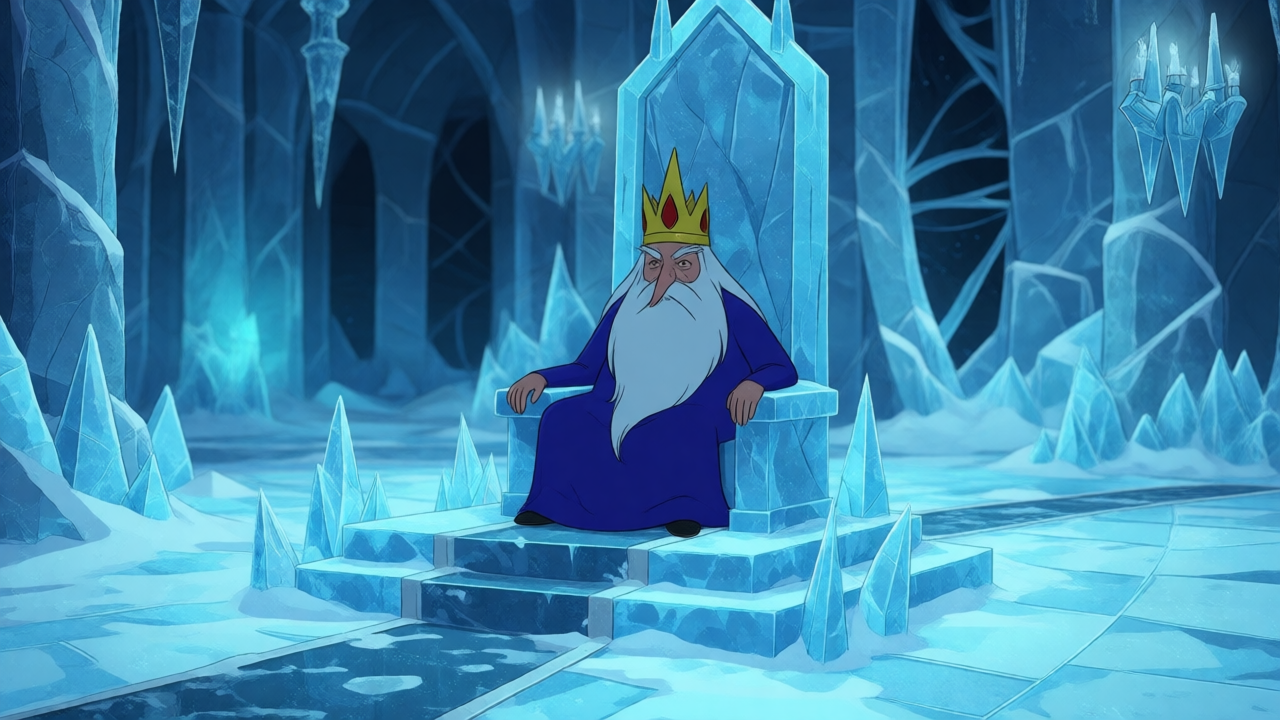
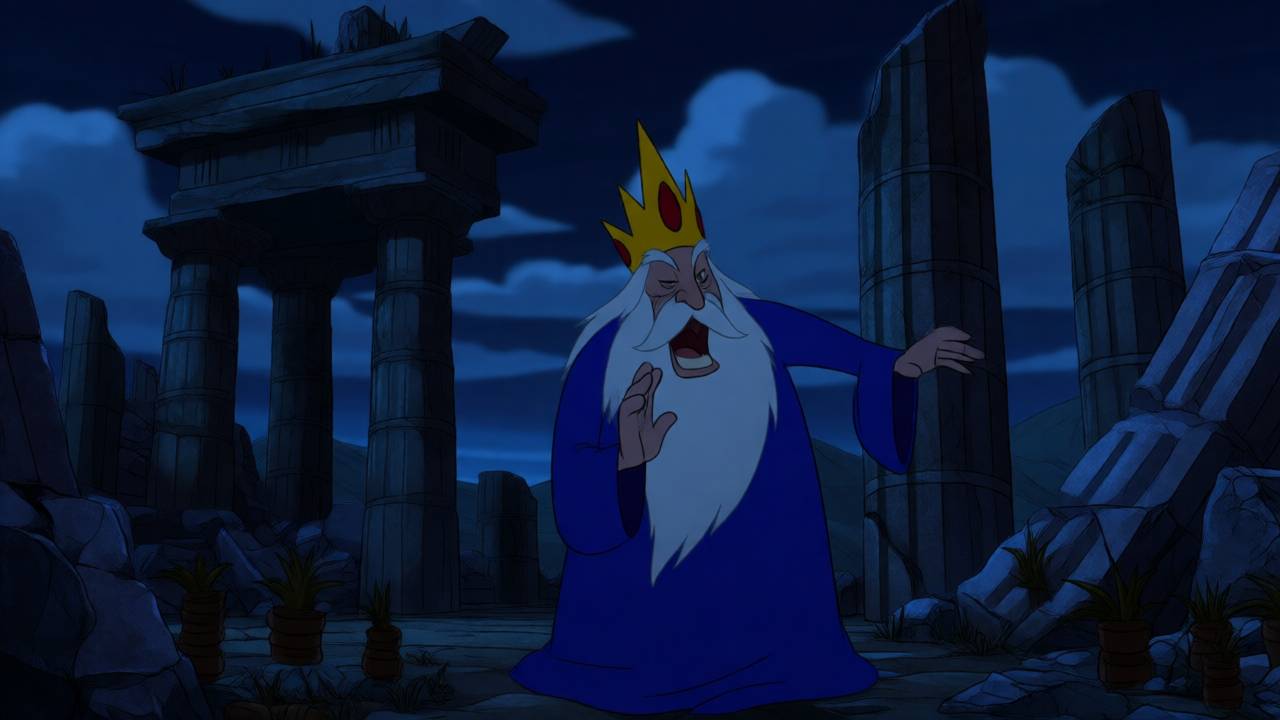
The entity known as the Ice King presents one of the most complex psychological profiles in the Land of Ooo. Initially appearing as a menacing, incompetent wizard obsessed with kidnapping princesses to force them into marriage, his character serves as a primary antagonist during the early stages of history in the post-Mushroom War world. However, subsequent investigations reveal a much more tragic reality: the Ice King is not merely a villain, but a man driven insane by a magical artifact. He exists on a spectrum between a "real psychopath" who lacks an understanding of social norms and a lonely, misunderstood survivor struggling with the loss of his former self.
Background & Timeline
- Pre-Series Era: Originally a human named Simon Petrikov, he lived in a world prior to his transformation into the Ice King.
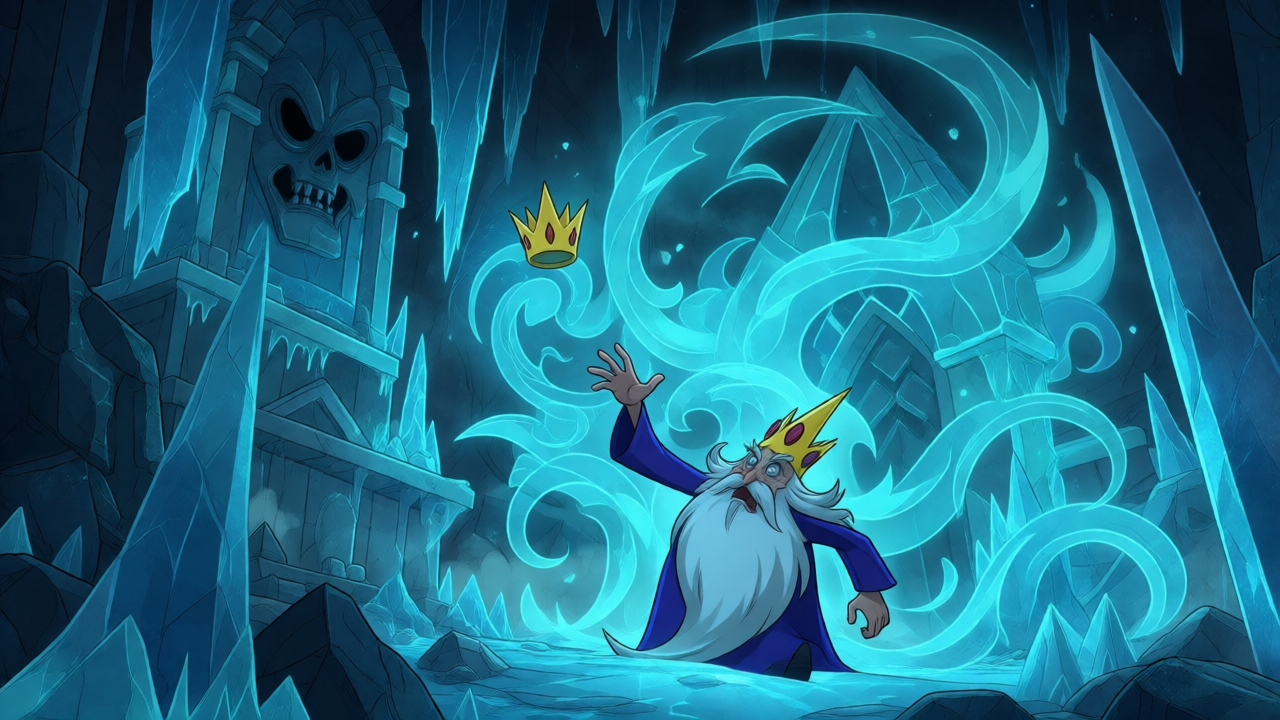
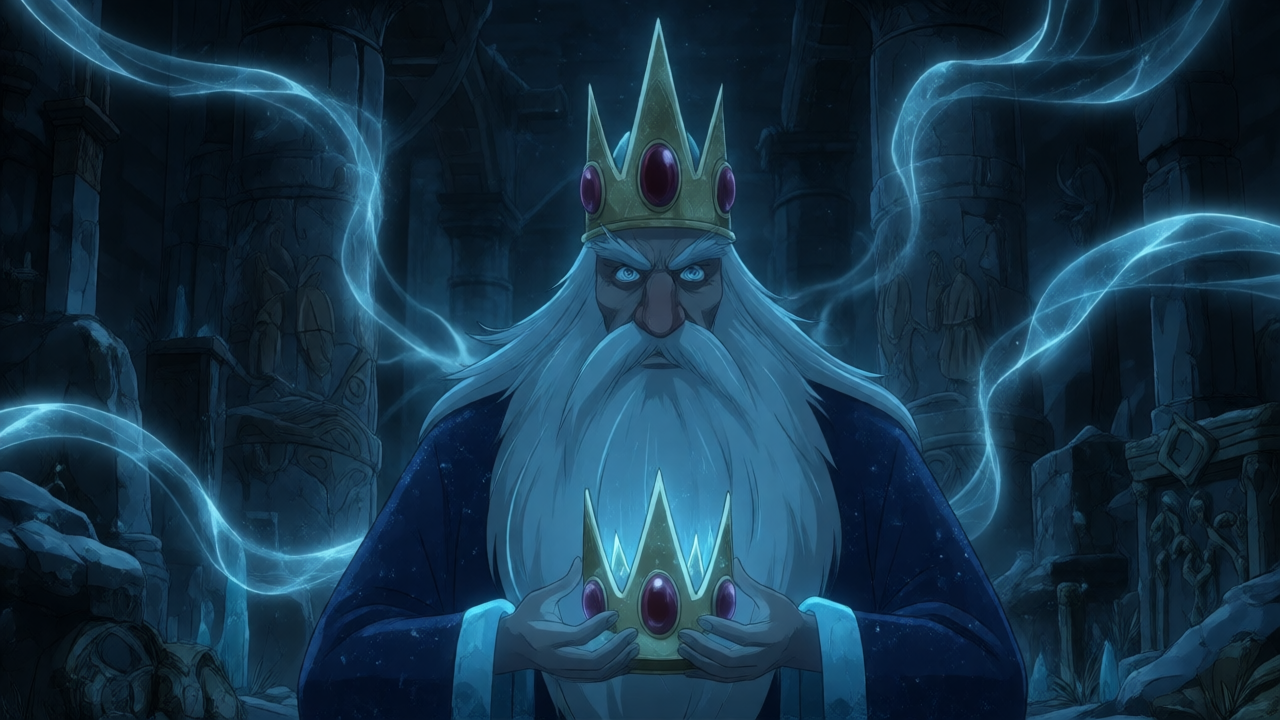
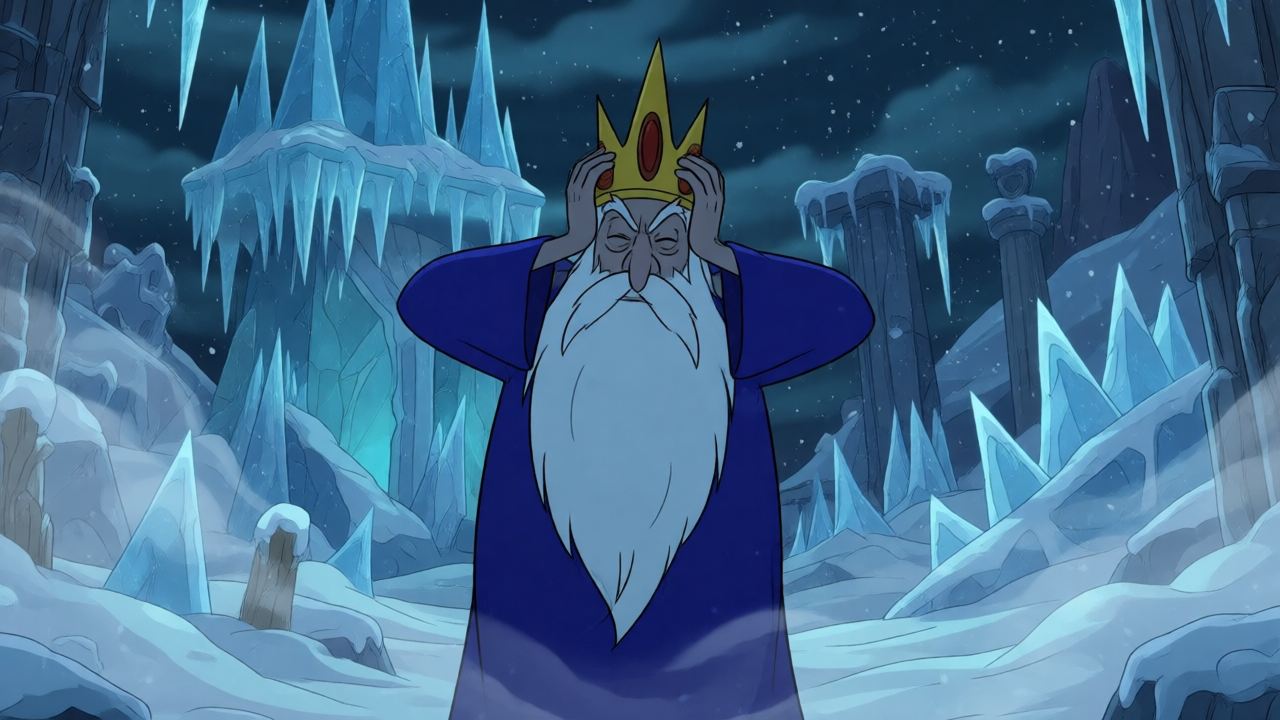
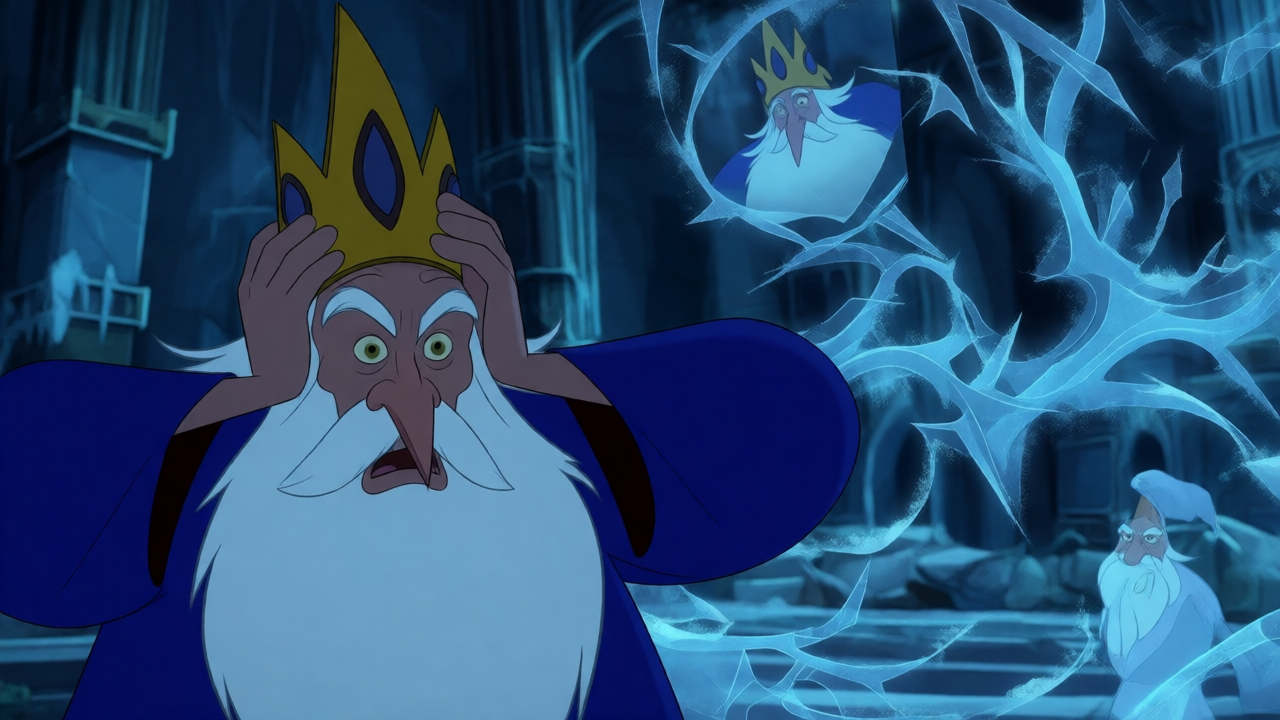
- The Transformation: Under the influence of a magical crown that grants ice manipulation and snow control, Petrikov’s psyche was altered, leading to a loss of his original identity.
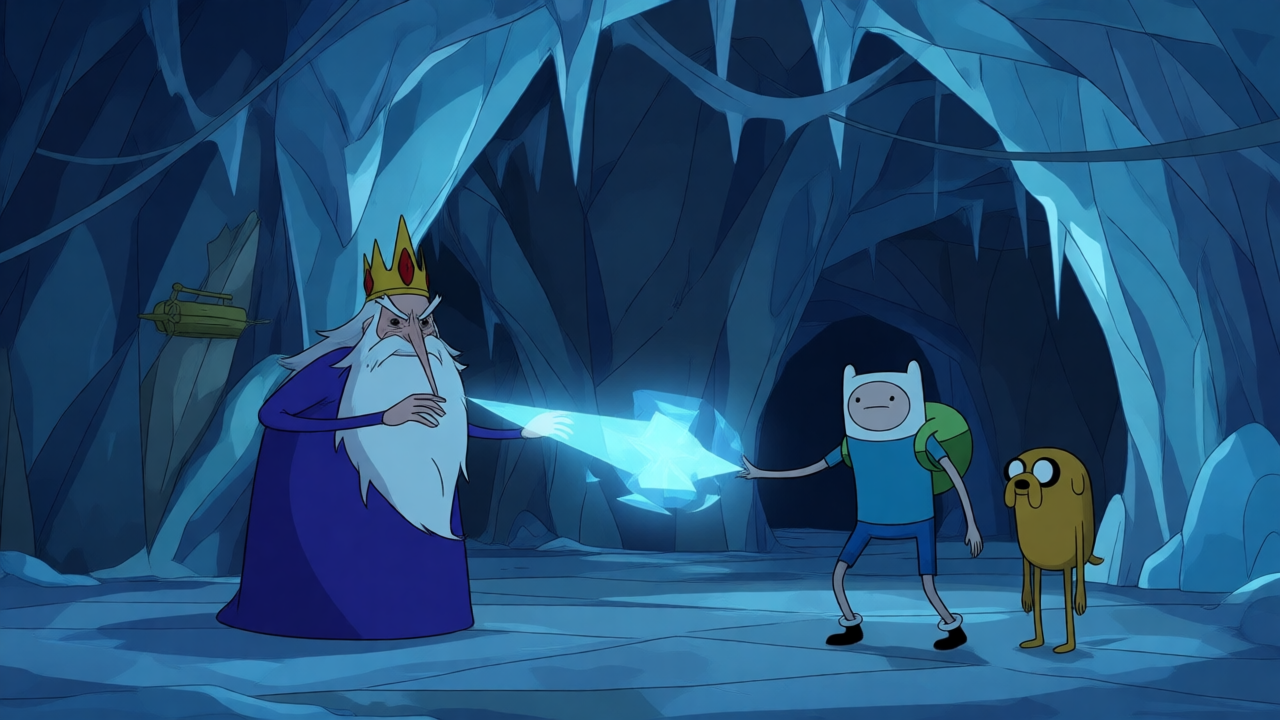
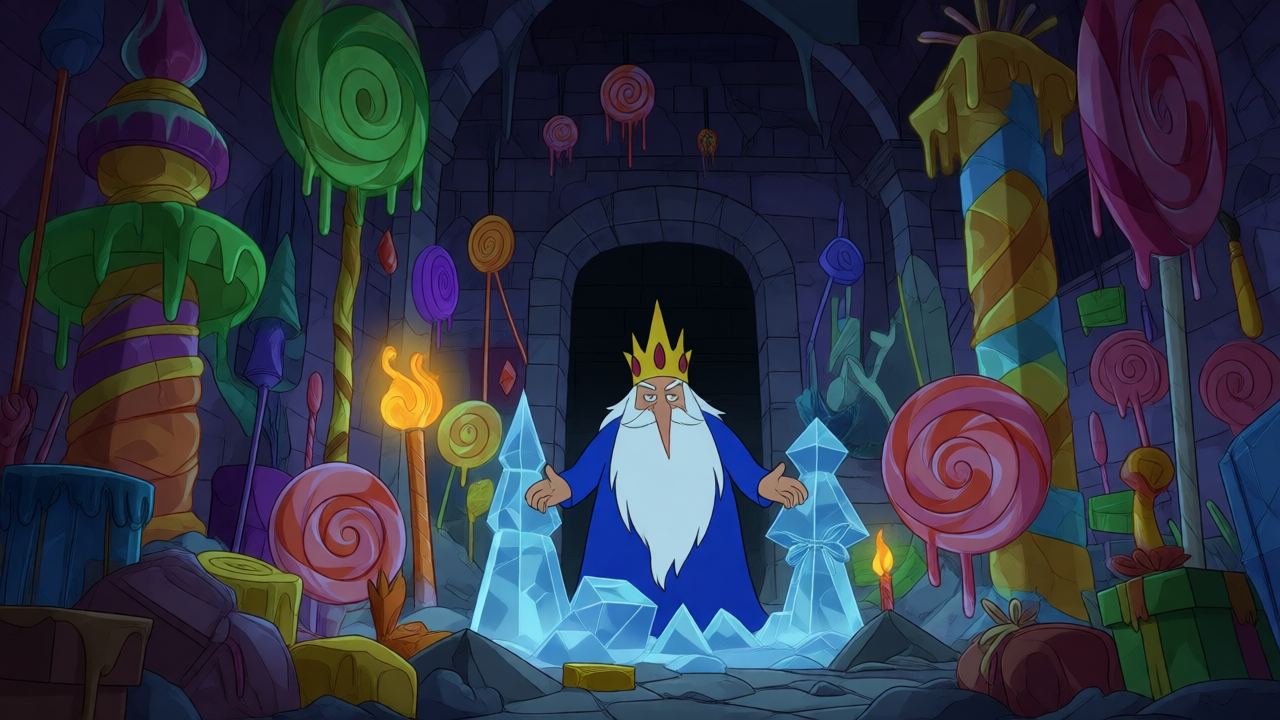
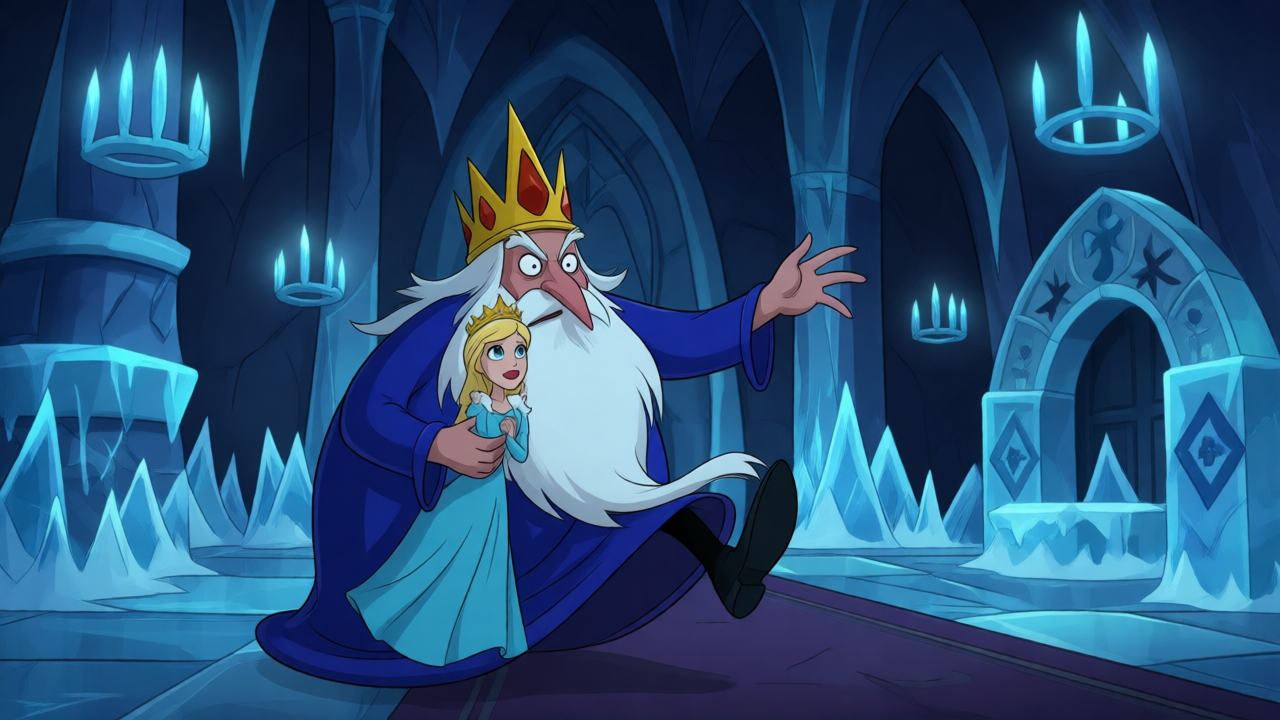
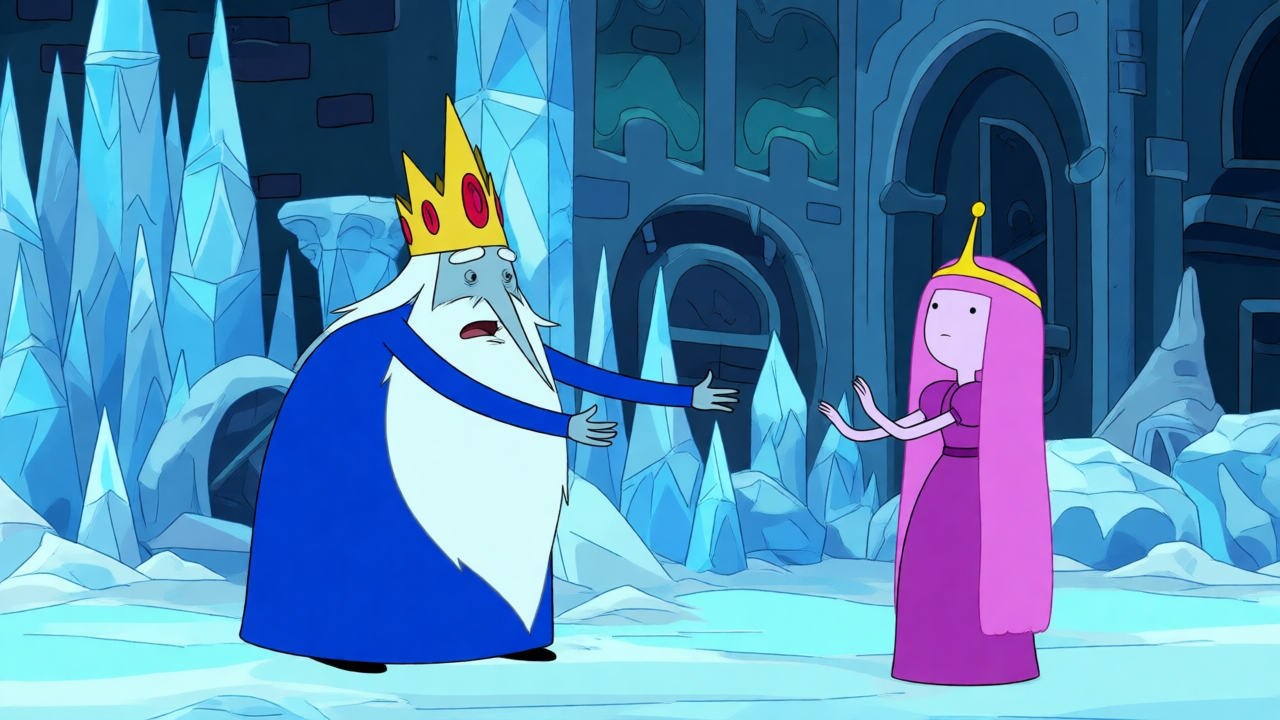
- Early Era (Antagonist Phase): Operating from the Ice Kingdom inhabited by penguins, he functioned as a recurring threat to Finn the Human and Jake the Dog, frequently attempting to kidnap Princess Bubblegum and other princesses.
- The Revelation (Season 3): It was revealed that his madness and powers were directly tied to the crown's influence over his persona.
- The Finale ("Come Along with Me"): Following an encounter with the being known as Golb, Petrikov was stripped of his magical powers, resulting in the restoration of his sanity and memories.
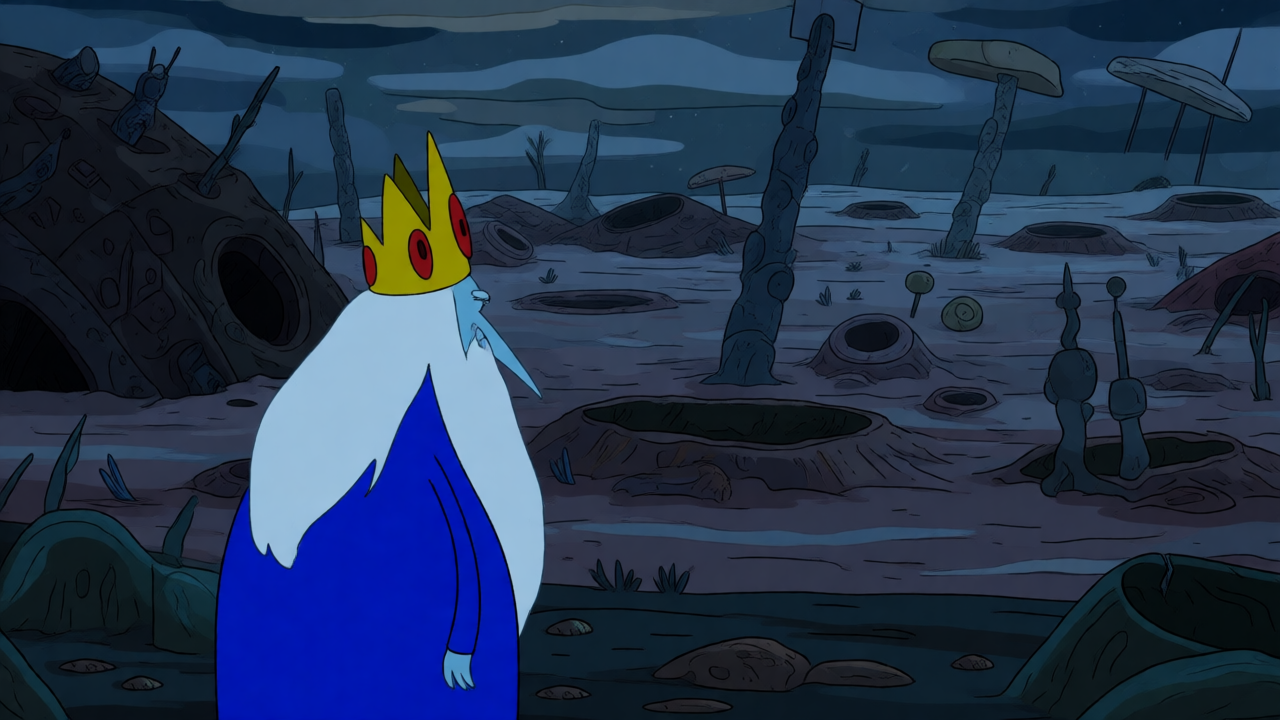
- Post-Power Era: In the aftermath of losing the crown, Simon Petrikov faces the difficult task of adjusting to life without his magic or his previous identity.
The Evidence
The dossier identifies several key pieces of evidence regarding the subject's mental state and history:
- The Magical Crown: The primary catalyst for his transformation; it provides immense power but acts as a source of madness and social isolation.
- Ricardio the Heart Guy: An instance where the Ice King’s own heart escaped his body, manifesting as an anthropomorphic entity that attempted to seduce Princess Bubblegum, highlighting the subject's internal instability.
- Paternal Records: Historical interactions with Marceline the Vampire Queen suggest a deep-seated paternal relationship that predates his current persona, complicating his status as a "villain."
The Case
Argument: The Menace
From an external perspective, the Ice King is a criminal and a disruptor of peace. His recurring pattern of kidnapping princesses and his unpredictable magical outbursts categorize him as a threat to the stability of the Candy Kingdom and the Land of Ooo. His actions often appear without regard for the social consequences or the feelings of his victims.
Argument: The Victim
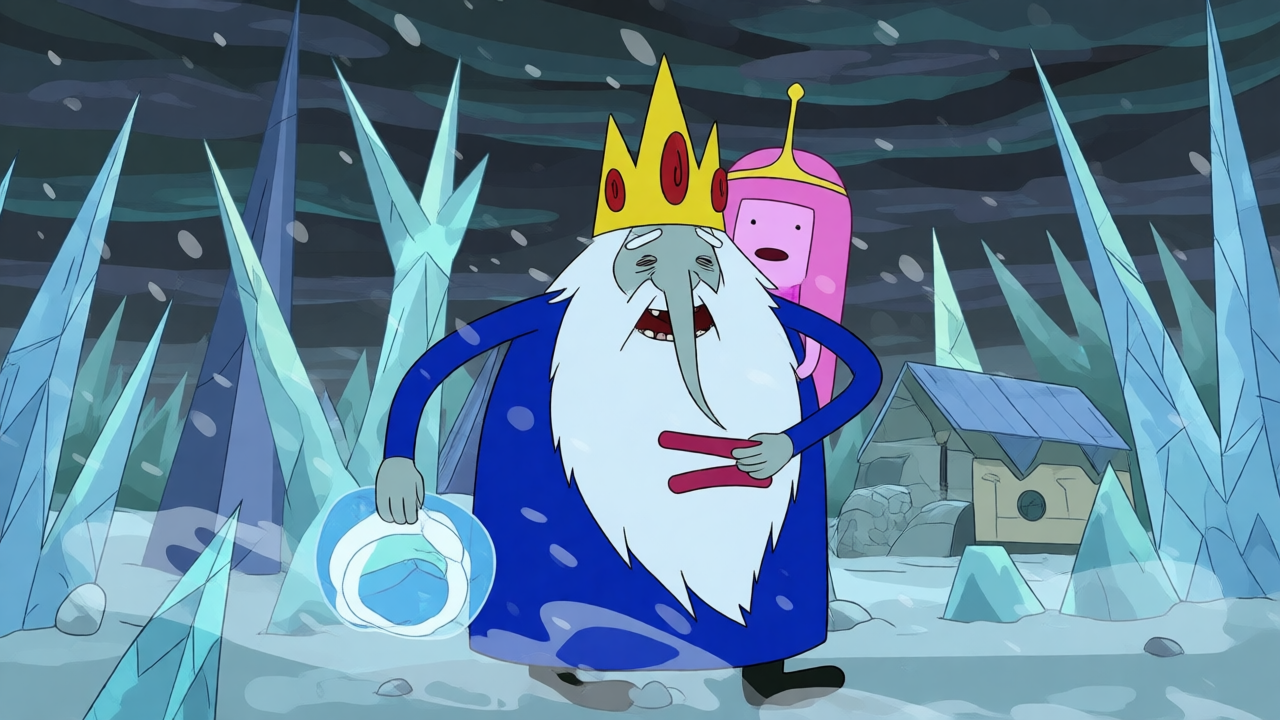
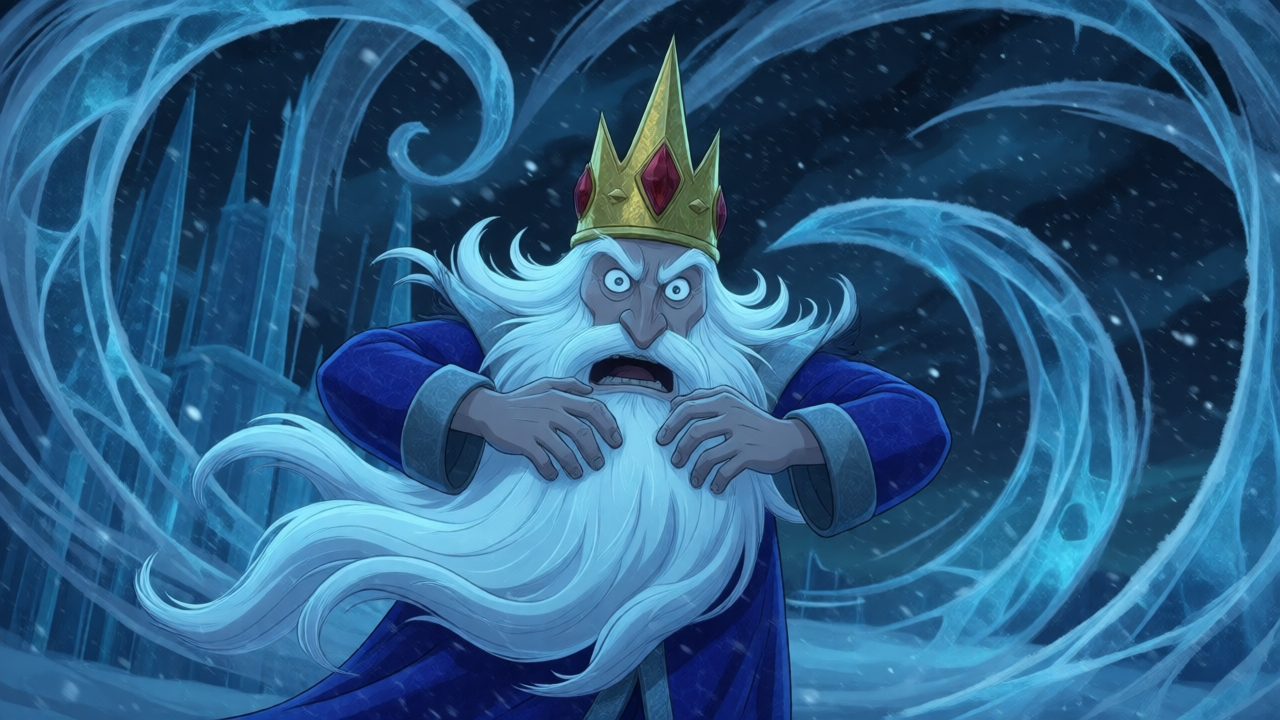
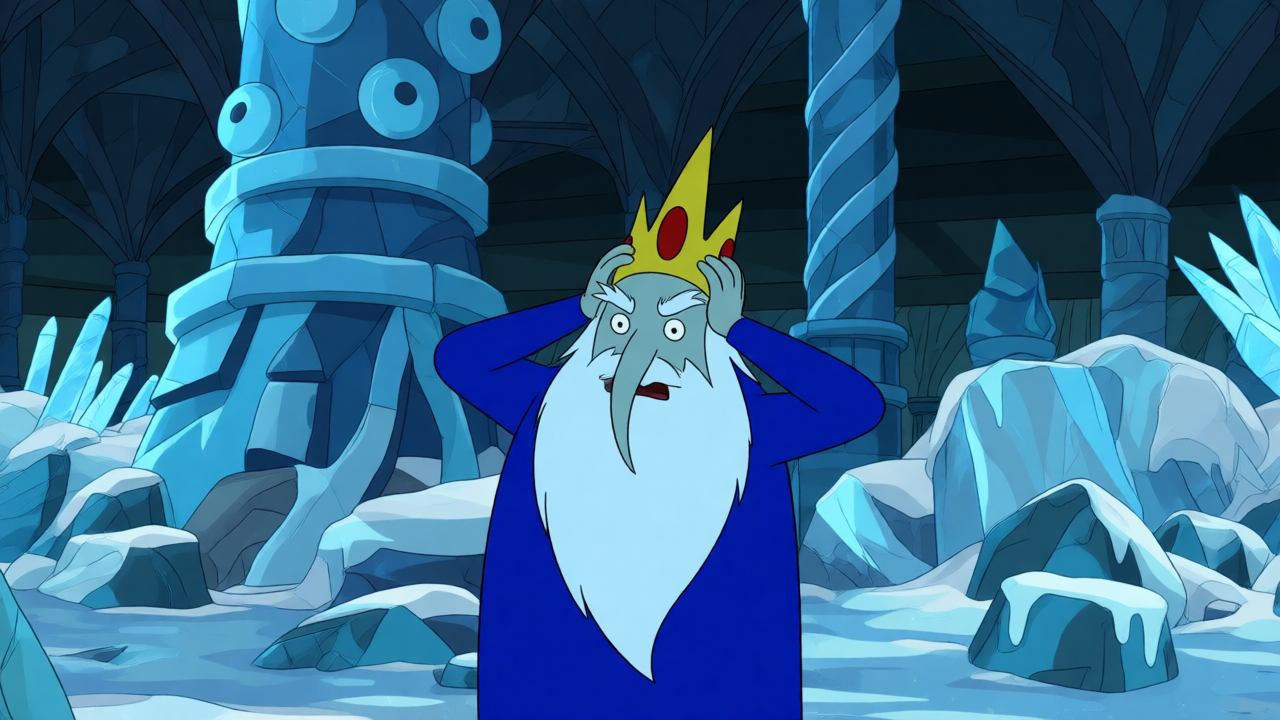
A deeper analysis suggests the Ice King is a victim of neurological and psychological erosion. The crown's influence serves as a potent metaphor for mental illness, specifically mirroring the symptoms of Alzheimer’s disease and bipolar disorder. His "villainy" is characterized not by malice, but by profound social isolation and a loss of cognitive control. In this light, he is a tragic figure—a man trapped in a cycle of madness, searching for connection through misguided and obsessive means.
The Cutting Room
- The Creator Connection: Observations have been made regarding the similarities between the Ice King and his creator, Pendleton Ward. Both are noted for wearing "Trotsky glasses" and possessing a strong desire for social interaction. Some suggest that while Finn represents the creator's "light side," the Ice King serves as his "dark side."
- The "Pathetic" Designation: The creator has described the character as "pathetic," emphasizing that the most compelling villains are those that an audience can eventually fall in love with despite their flaws.
Final Word
The Ice King is a rare case of a villain who successfully transitioned from a one-dimensional antagonist into a cornerstone of complex worldbuilding. He represents the intersection of magical fantasy and human tragedy, proving that the line between a monster and a victim is often as thin as a sheet of ice.
📝 Full Transcript
COLD OPEN
[EDDIE:excited]: [Eddie:Hyper]: Most people see a kidnapper in a blue crown, but what if the Ice King isn't actually the villain—he’s just a lonely man trying to reclaim a life that was stolen from him?
[EDDIE:excited]: [Reg:Pompous]: This program contains elements of extreme loneliness and excessive beard grooming.
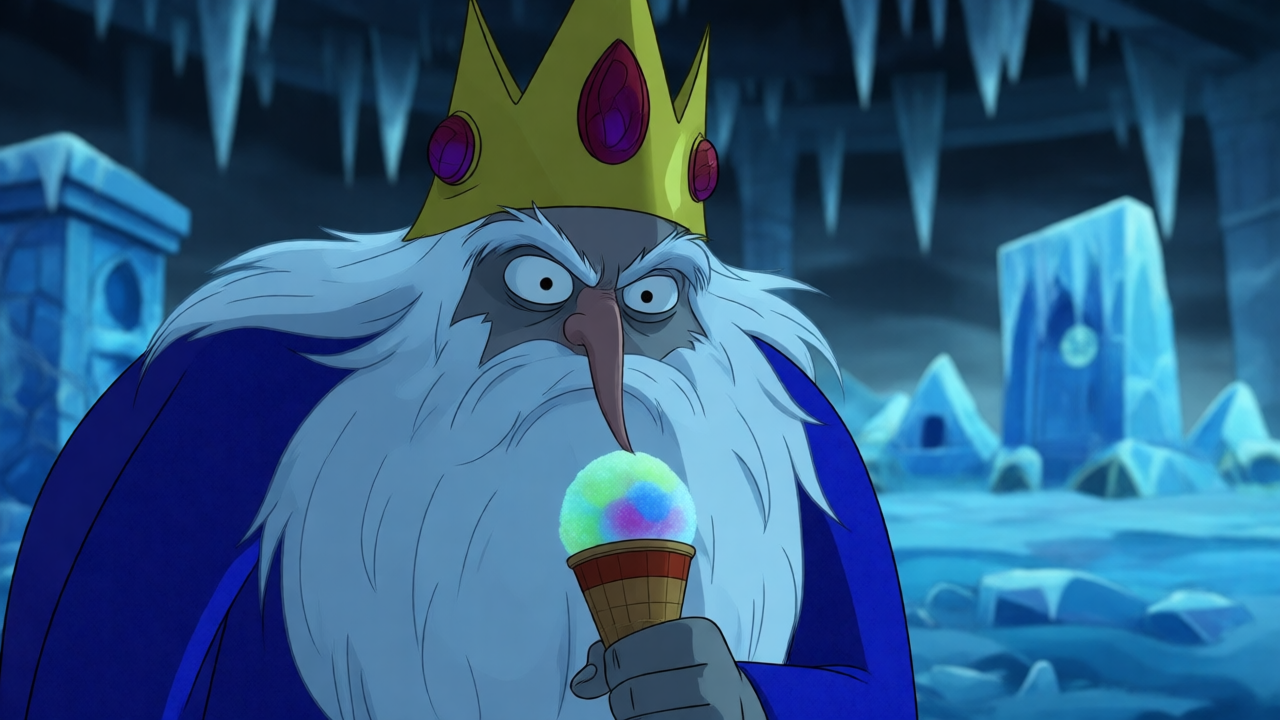
[EDDIE:excited]: [Eddie:Crude]: The opinions expressed here were formed during an intense staring contest with a snow cone.
[EDDIE:excited]: ---
INTRO
[REG:pompous]: "The best villain is one you secretly agree with." Unknown. Today on Villain's Advocate, we are stripping away the crown and looking at a man who was never truly the enemy. We're dissecting the tragic history of the Ice King from Adventure Time.
[EDDIE:crude]: We are spoiling all of Adventure Time. If you have not seen it that is entirely your fault.
[EDDIE:excited]: You think he’s just some crazy old man kidnapping princesses for attention, but the reality is way more fucked up than a simple case of villainy.
[REG:pompous]: I am here to argue that his actions are nothing more than the erratic symptoms of magical dementia and profound isolation. He isn't a criminal; he’s a victim of cosmic circumstance.
[EDDIE:passionate]: And I'm telling you, the Ice King is basically the most misunderstood protagonist in animation history, and it’s time we stop treating him like a bad guy.
[REG:condescending]: The confidence with which you are wrong is almost artistic.
[REG:condescending]: ---
BACKGROUND
[REG:pompous]: Before we can dismantle a legacy, one must understand the foundation of the mythos. Adventure Time is an animated TV series created by Pendleton Ward that premiered on Cartoon Network back in 2010. It features the voices of Jeremy Shada as Finn, John DiMaggio as Jake the Dog, and Tom Kenny as our subject, the Ice King. If you have ever enjoyed the whimsical yet surreal atmosphere of Studio Ghibli films like My Neighbor Totoro, you will find a strange familiarity in its visual DNA. The series is currently available to stream on various platforms and has become an absolute titan of modern animation, winning eight Primetime Emmys and a Peabody Award.
[EDDIE:crude]: Yeah, it's a massive cult hit that basically redefined what cartoons could be for kids and adults alike. It’s been around since 2010 and just keeps growing with spin-offs like Fionna and Cake. You can find it on Max or wherever you stream your animation fix.
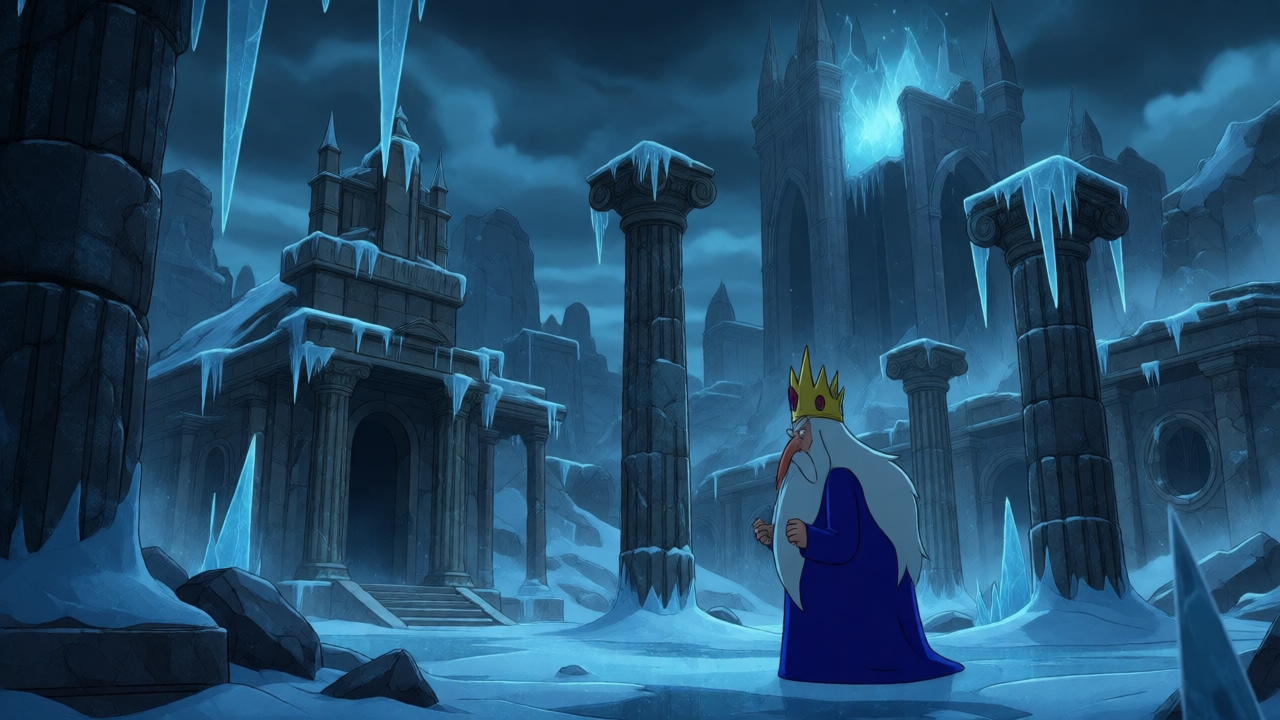
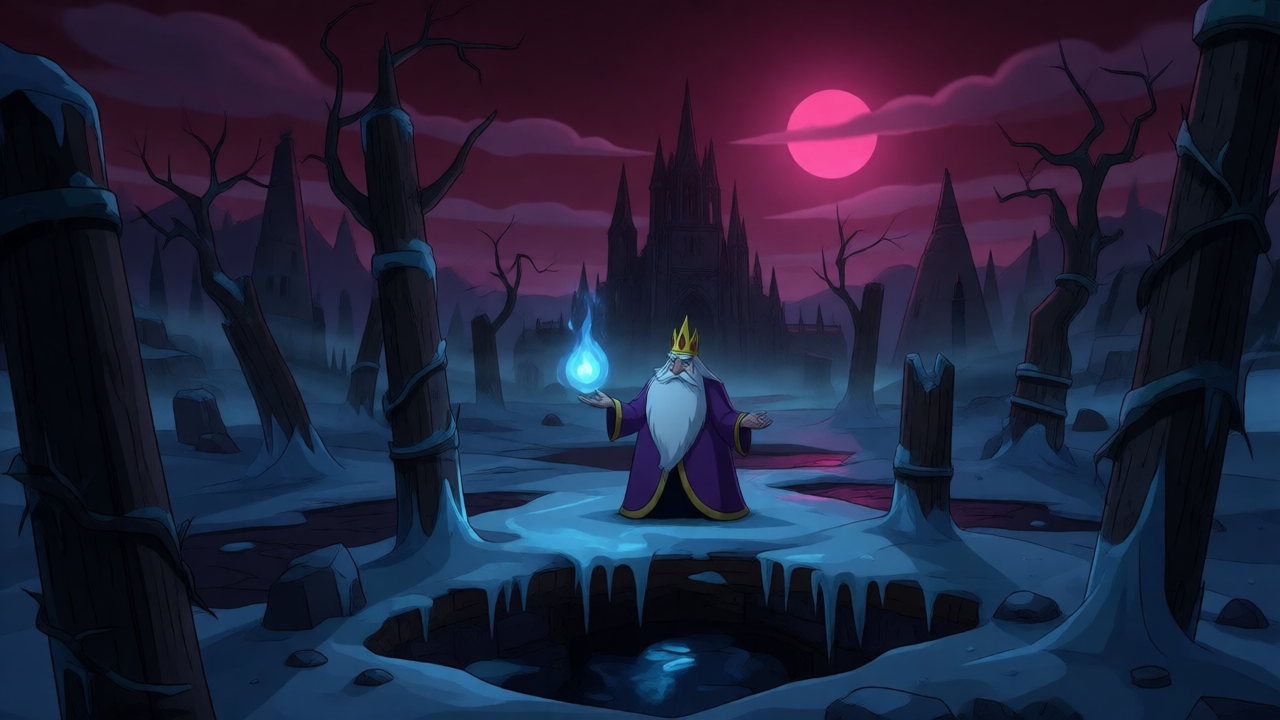
[REG:pompous]: To understand the man, one must first understand the wasteland of Ooo. The setting is a post-apocalyptic landscape, a world transformed by the "Mushroom War," a cataclysmic nuclear conflict that occurred a thousand years prior to the series' start. This war decimated human civilization, leaving behind a vibrant, bizarre, and often dangerous magical ecosystem. In this land live Finn the Human, a boy with an unshakeable moral compass, and his adoptive brother Jake the Dog, a canine who possesses the reality-bending ability to shift his size and shape at will.
[EDDIE:crude]: They’re basically just living their lives, hanging out in the Candy Kingdom or exploring random dungeons, trying to be heroes. But while they're doing hero shit, there's always this weird, creepy blue guy making things difficult.
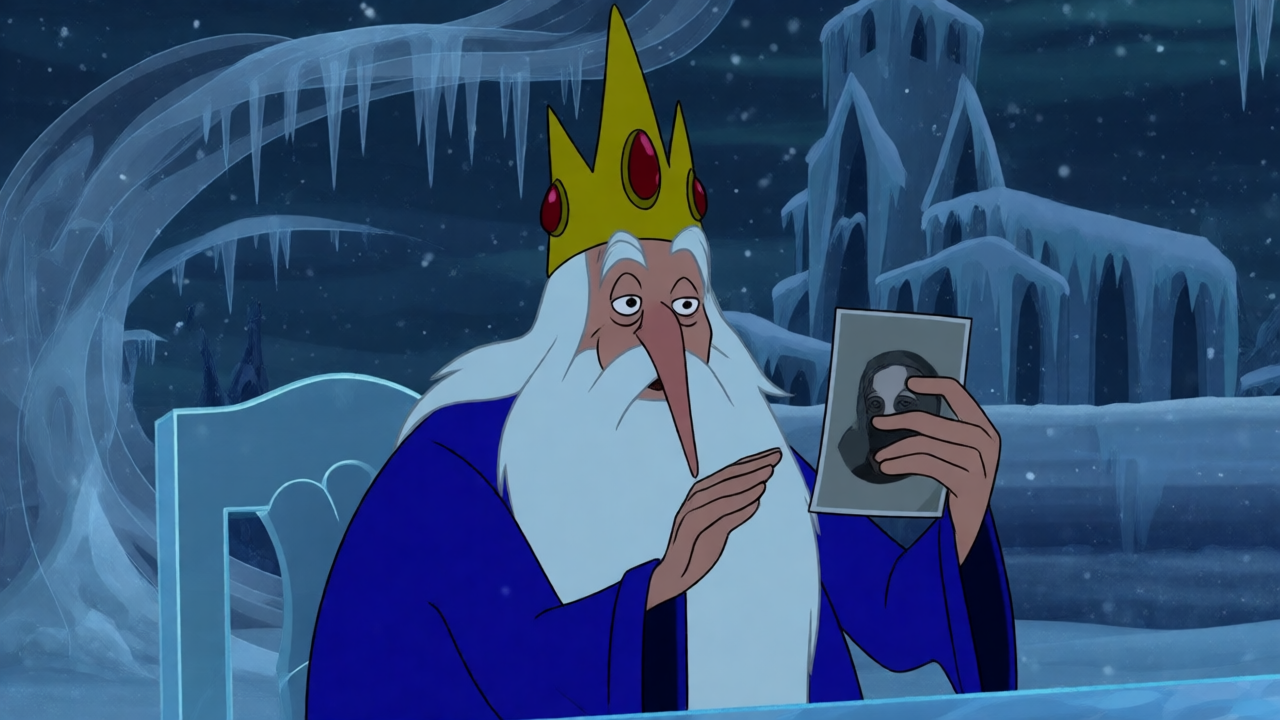
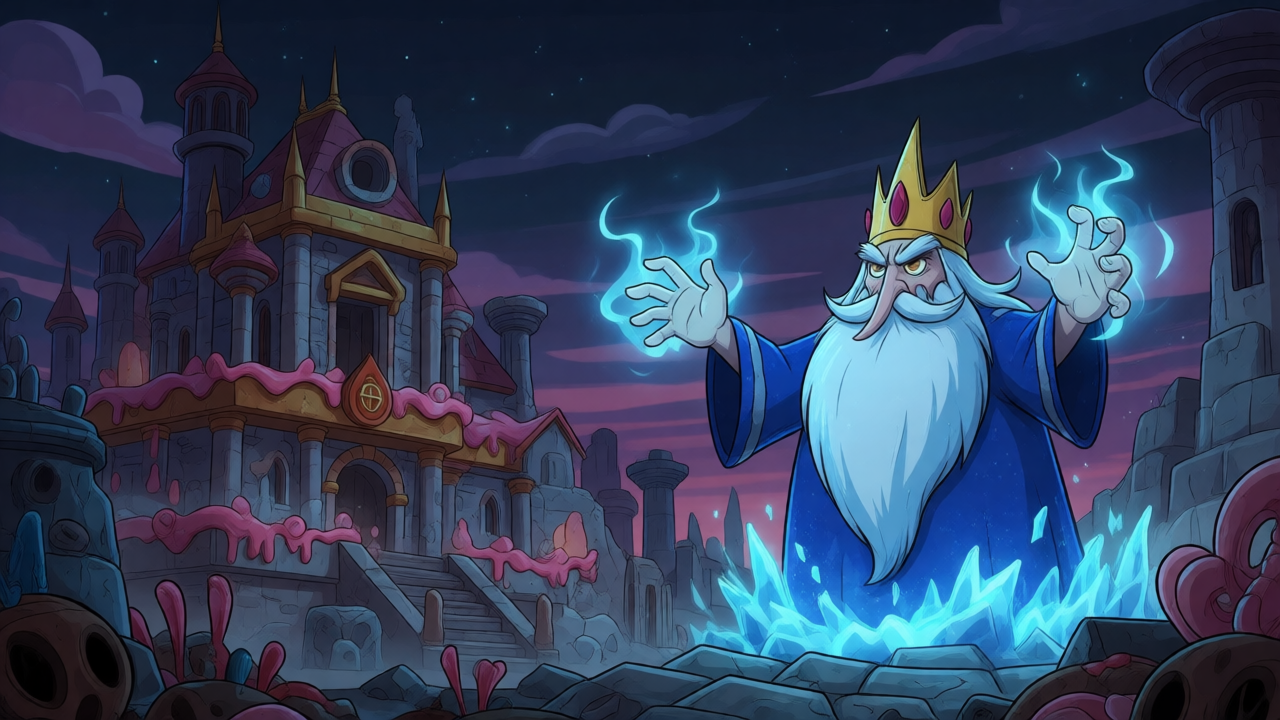
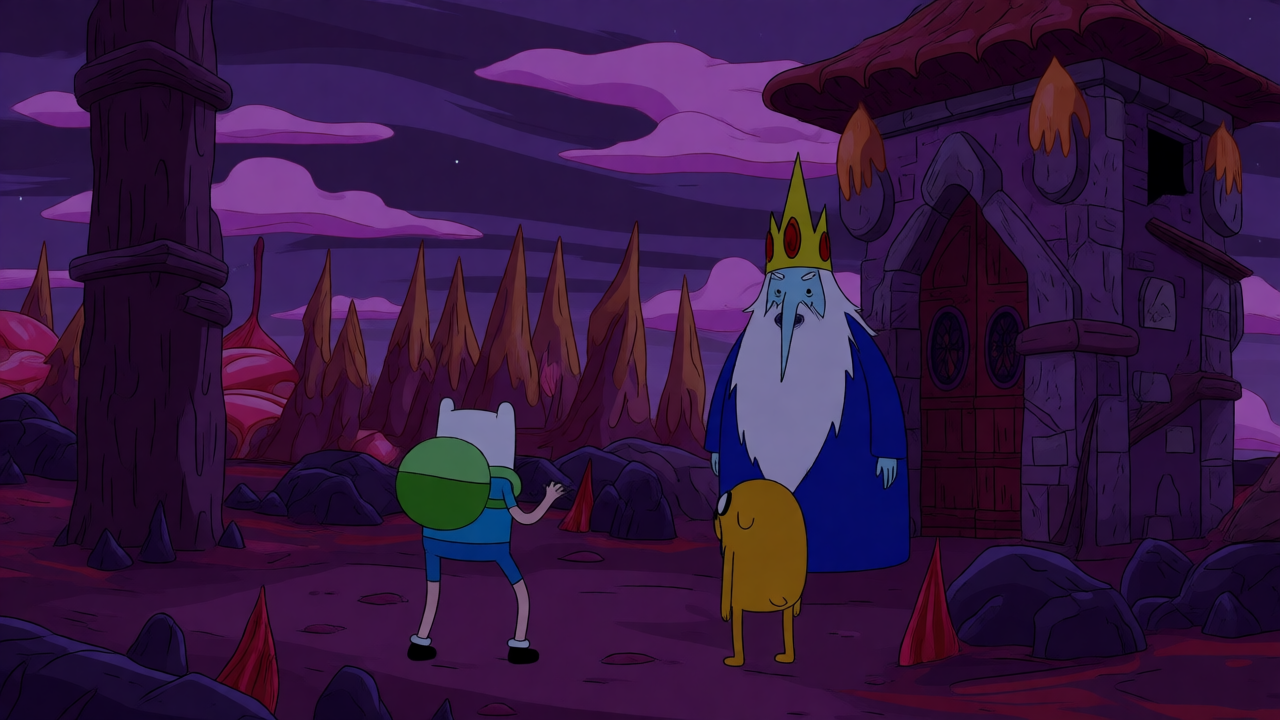
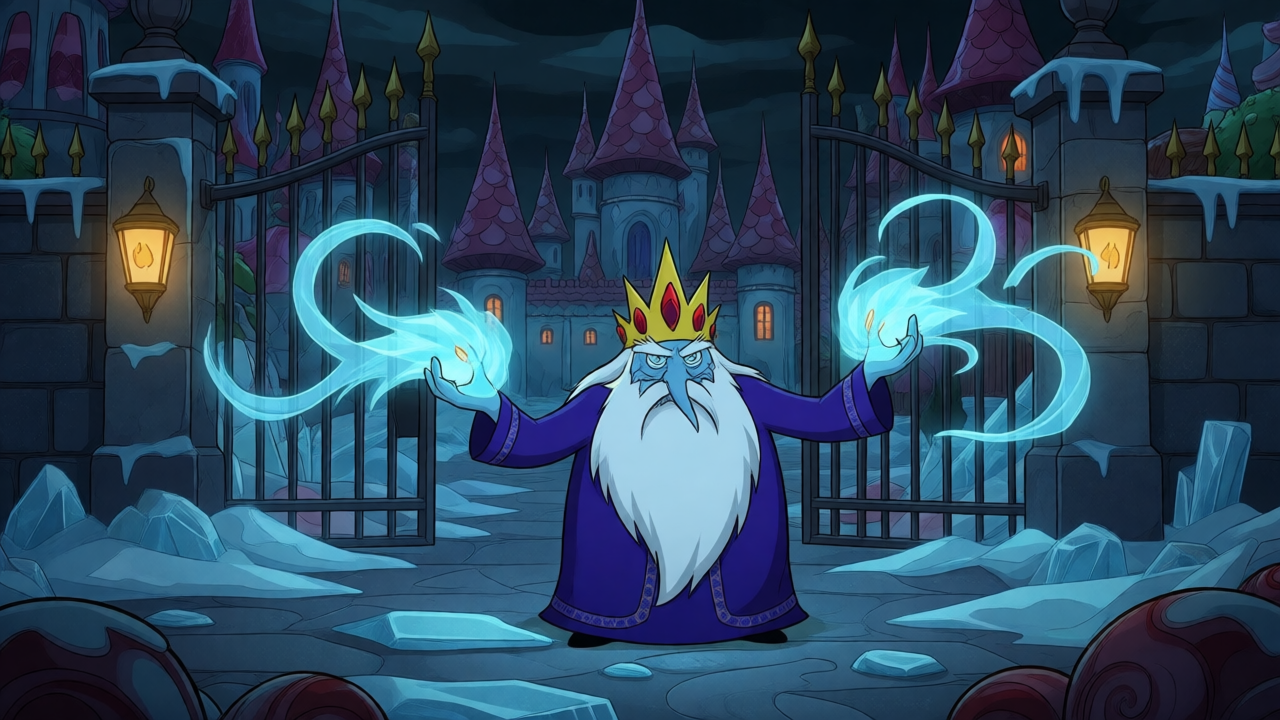
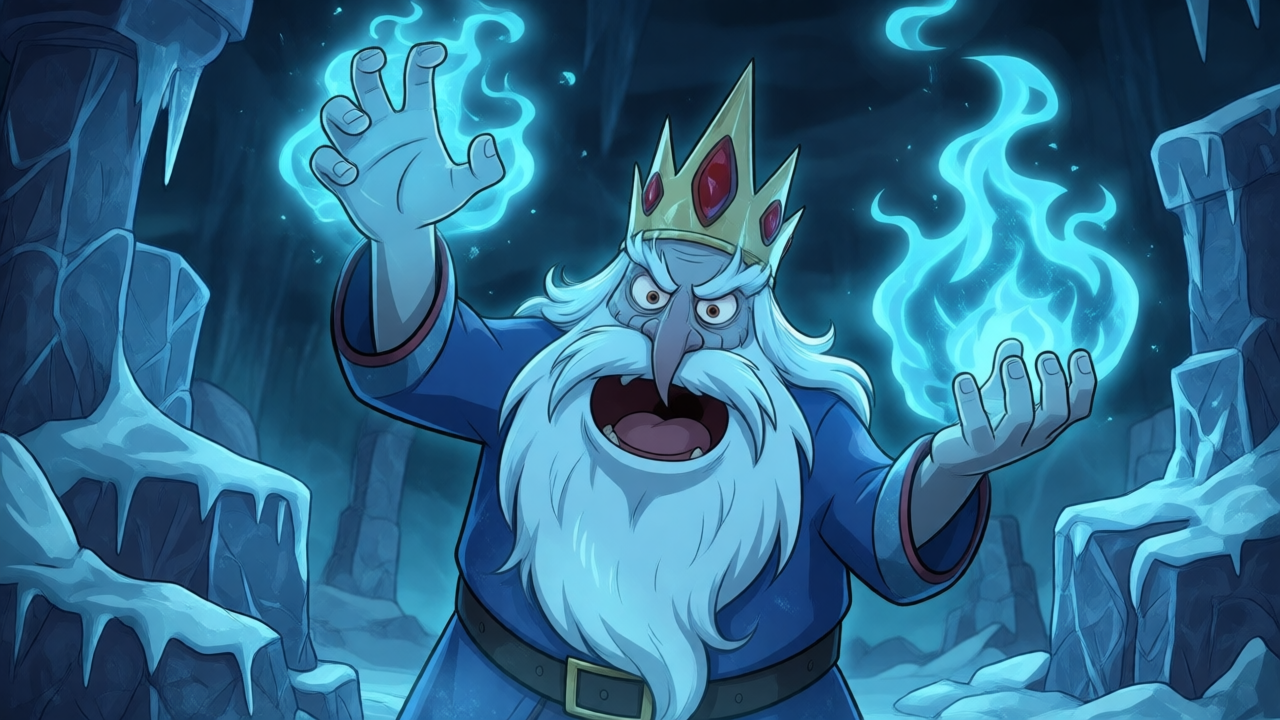
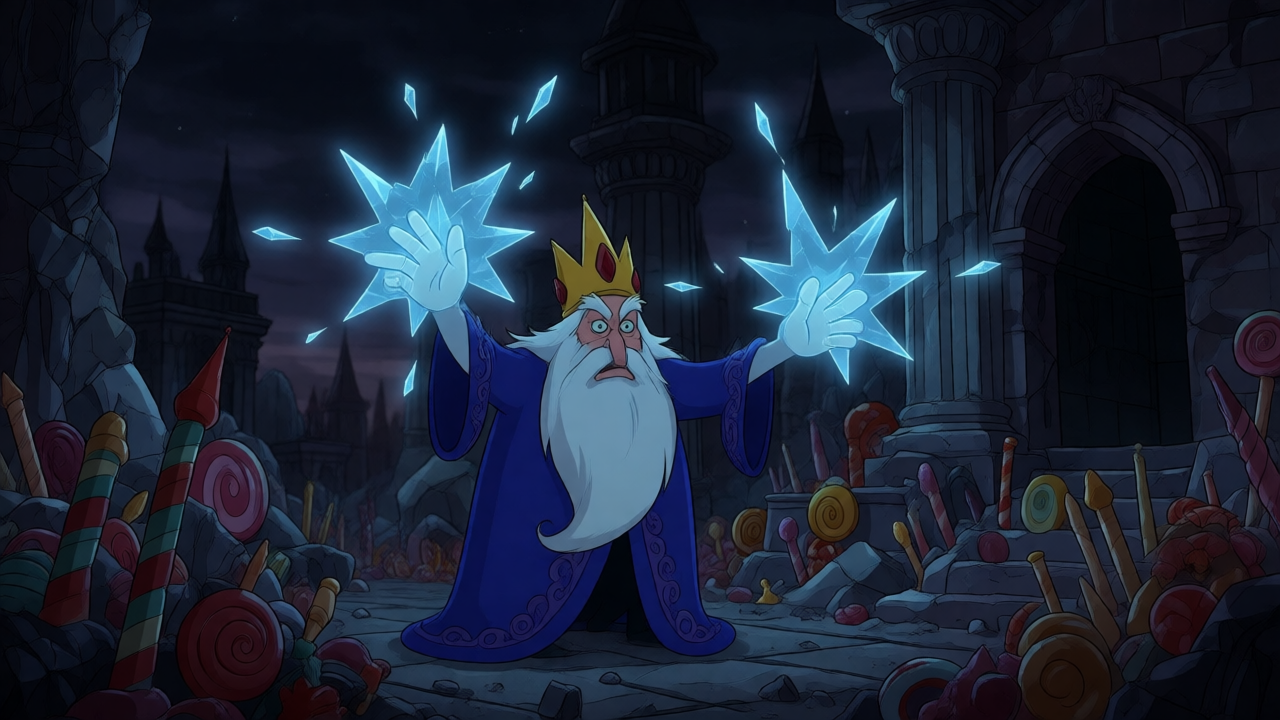
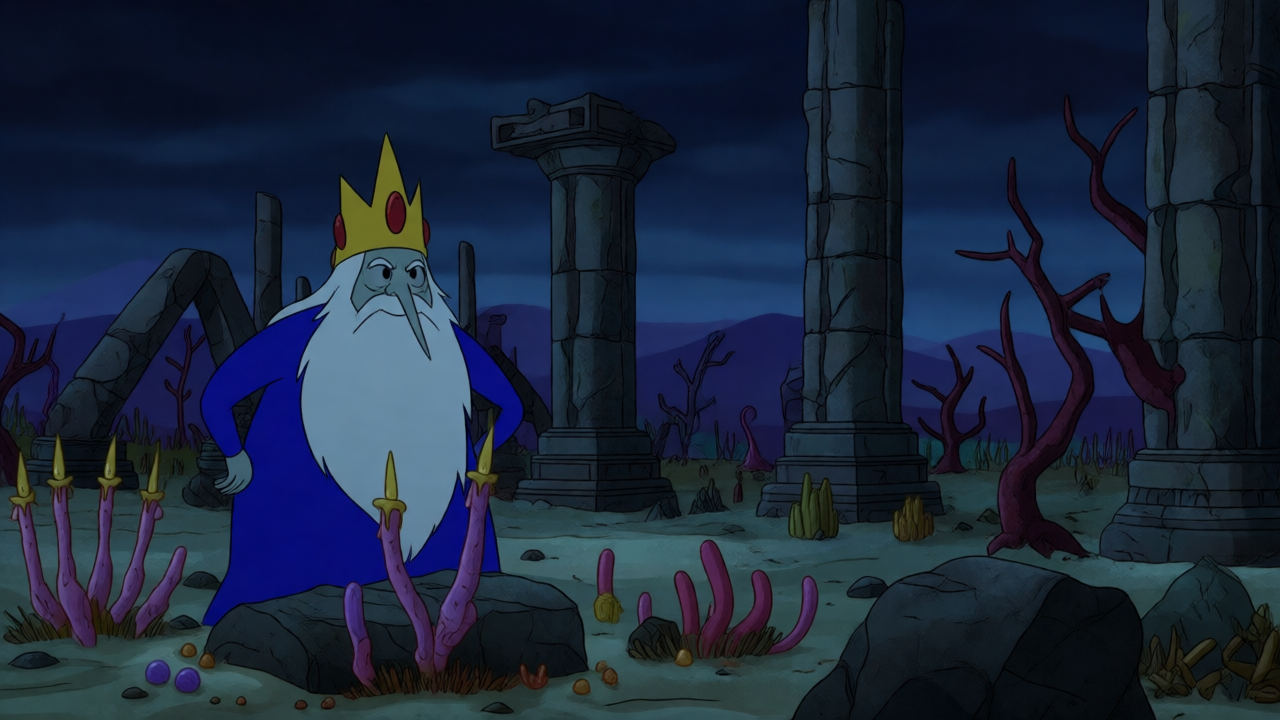
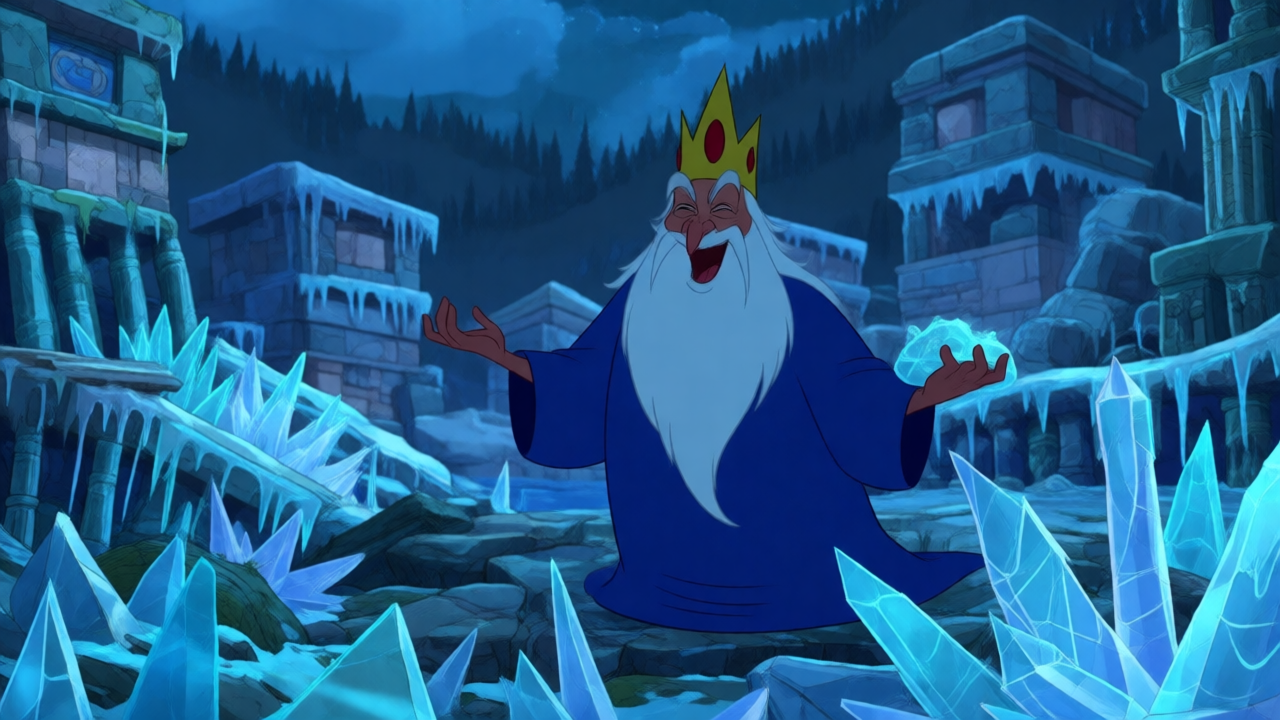
[REG:pompous]: That "weird, creepy blue guy" is the Ice King. In the early seasons, he presents as a classic antagonist—a bizarre, incompetent wizard with a white beard and a crown that grants him immense cryokinetic powers. His primary motivation seems to be a singular, obsessive drive to kidnap various princesses from their kingdoms, including Princess Bubblegum, the sentient ruler of the Candy Kingdom. He is perceived by Finn and Jake as nothing more than a nuisance or a recurring threat to the status quo.
[EDDIE:crude]: Right, he’s just this crazy old dude causing chaos for no real reason other than being a total creep about princesses. Everyone thinks he's just some random villain who popped out of nowhere to be a jerk. But the show starts pulling back the curtain and it gets really heavy, man.
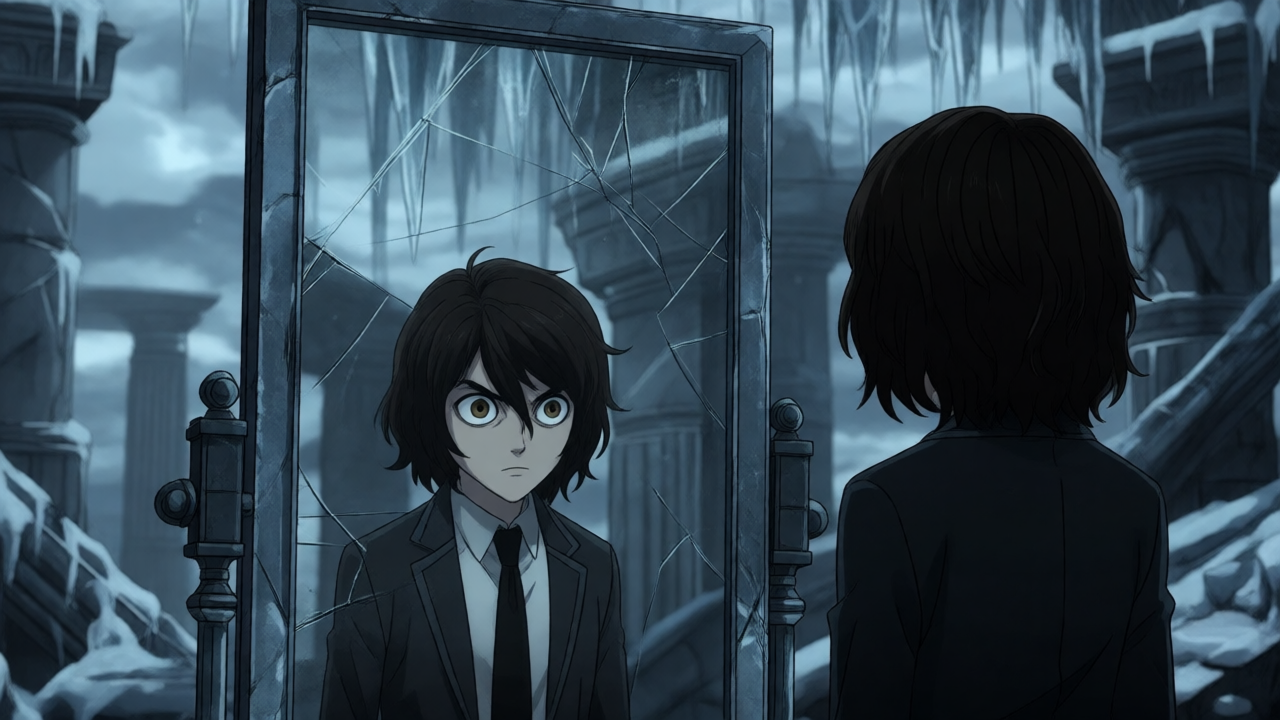
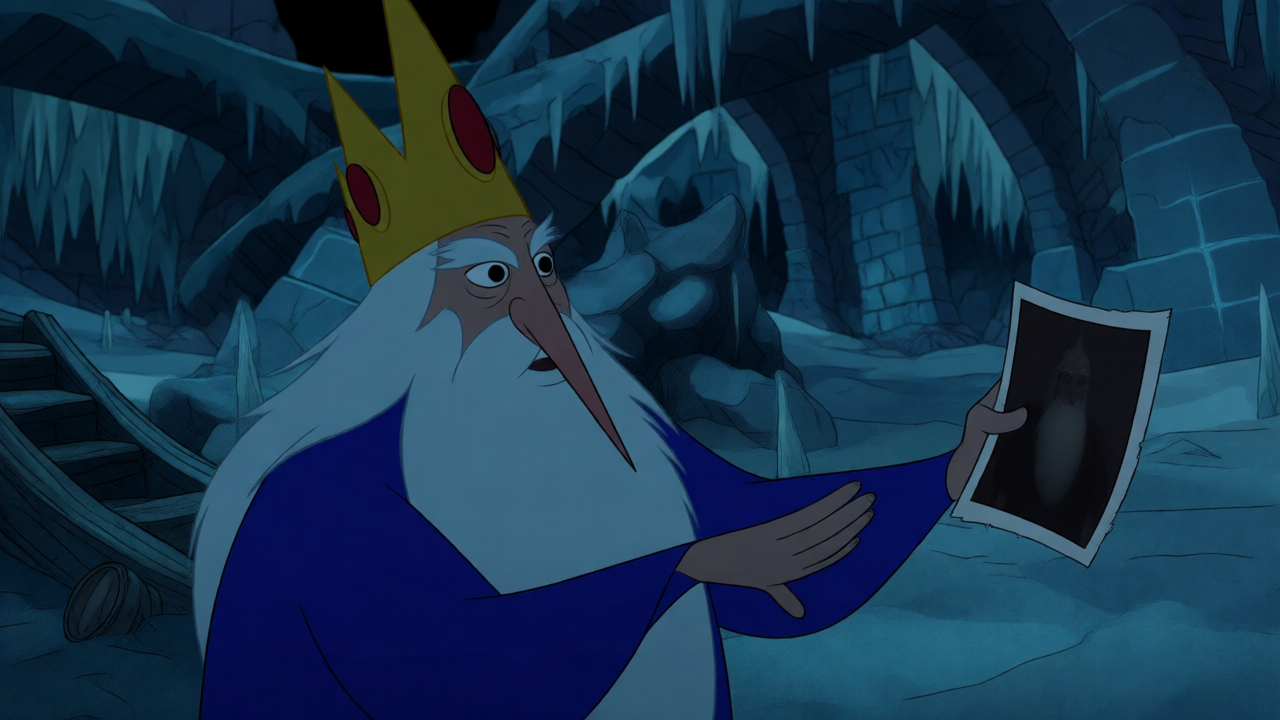
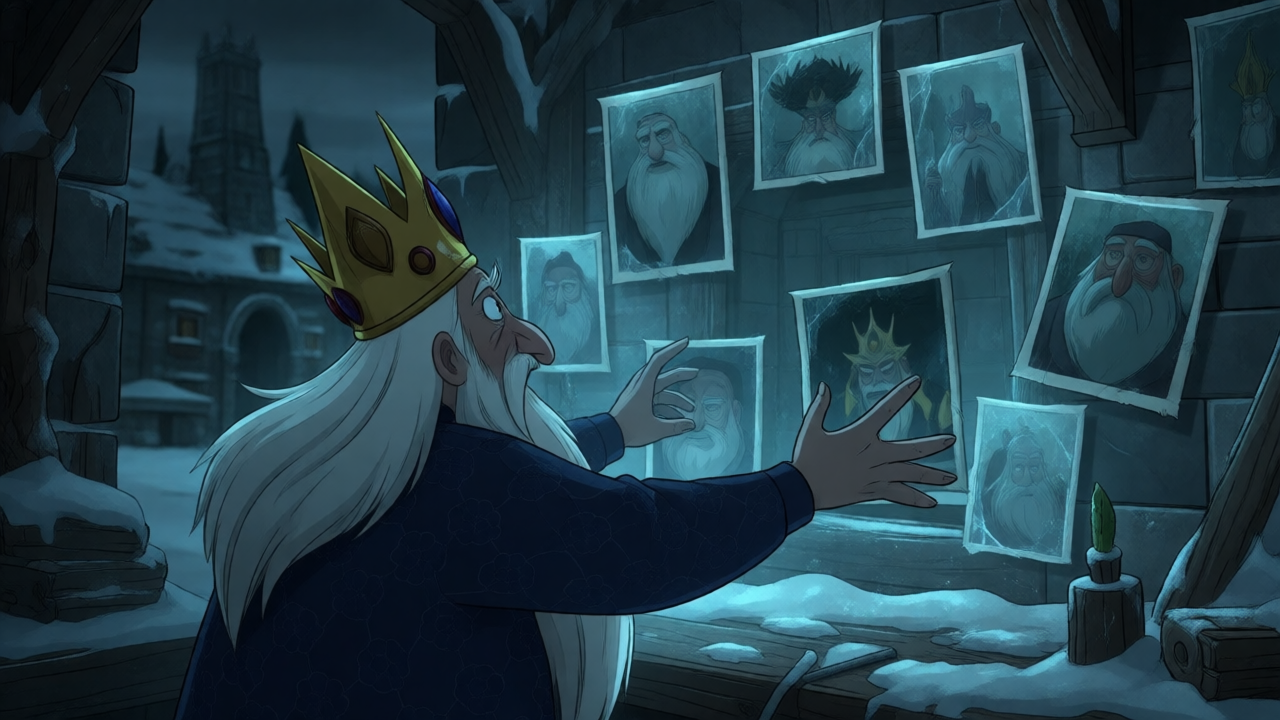
[REG:pompous]: As the series progresses, the narrative shifts from simple episodic adventures into a profound historical epic. We learn that the Ice King is not an ancient magical entity, but a transformed human named Simon Petrikov. Through flashbacks, we witness his life before the crown—a brilliant and kind archeologist who was deeply in love with a woman named Betty. His obsession with finding magical artifacts led him to discover the crown, which promised the power to protect what he loved, but it came at a devastating cost.
[EDDIE:crude]: It's fucking heartbreaking, Reg. The crown didn't just give him powers; it ate his damn mind. He lost his memories, his personality, and even his connection to the people who cared about him. All that magic shit was basically a trade-off for his soul.
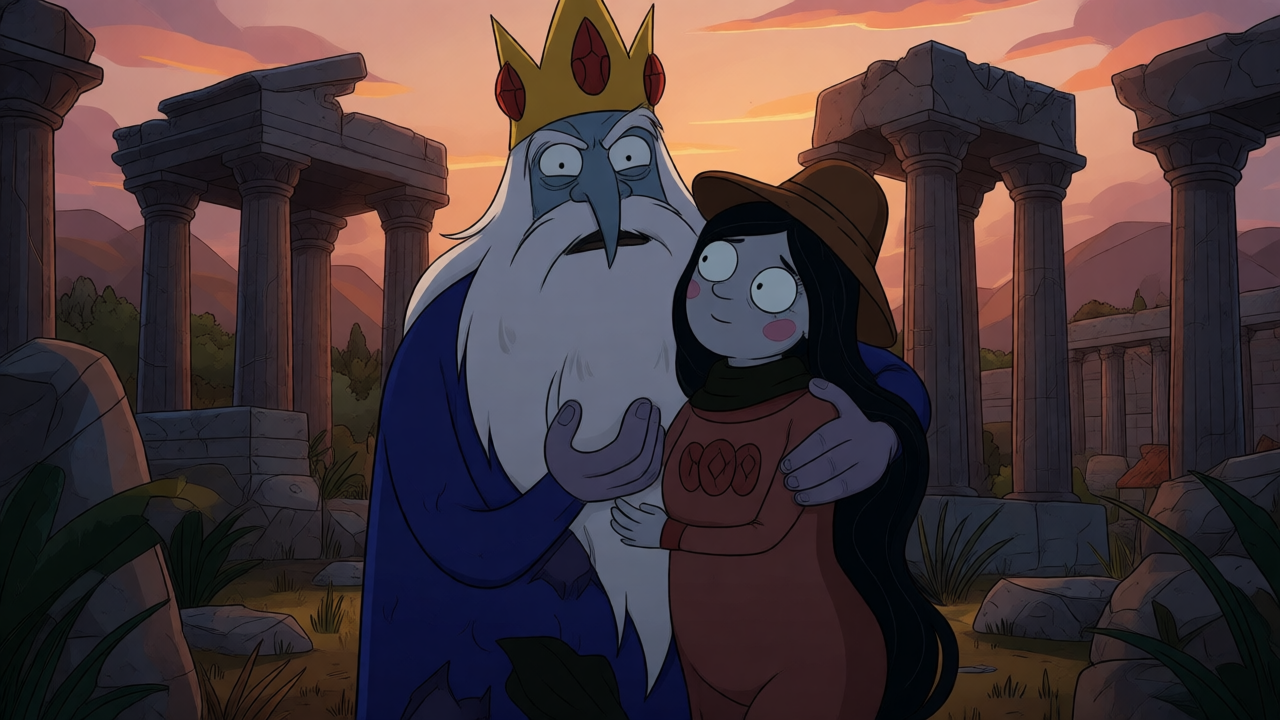
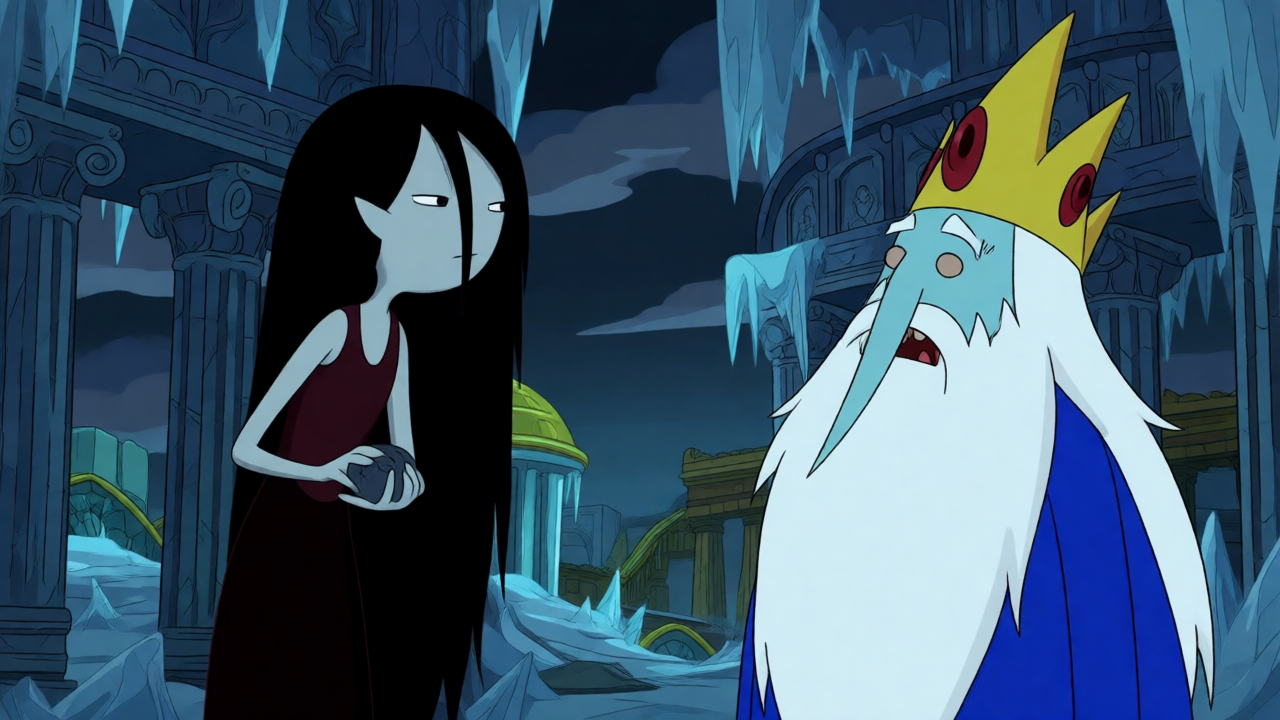
[REG:pompous]: Precisely. We discover that the Ice King’s madness is actually a form of magical dementia. His erratic behavior and kidnapping attempts are desperate, subconscious attempts to recreate the connections he has lost. He isn't seeking conquest; he is seeking companionship. This connection becomes even more tragic when we learn about his relationship with Marceline the Vampire Queen. She was once a young girl who viewed Simon as a father figure, but as the crown took hold of him, he became a stranger to her. His descent into madness effectively orphaned her in a world that was already dying.
[EDDIE:crude]: Yeah, seeing those old clips of them together before everything went to hell... it's heavy. He’s literally just trying to find his family but he doesn't even know who they are anymore. It's a goddamn tragedy disguised as a cartoon.
[REG:pompous]: The complexity only intensifies as the series approaches its conclusion. We see that Simon is trapped in a cycle of isolation, where every attempt to connect with others through his magic only results in more alienation. Even when he shows flashes of his former self, the crown's influence pulls him back into the persona of the Ice King. In the final saga, during the conflict involving the cosmic entity Golb, Simon is finally stripped of his magical powers and his madness.
[EDDIE:crude]: He gets his head back, but at what cost? He ends up just being this regular guy in a world that's already moved on without him. It’s like he got his life back only to realize there's nothing left of the person he used to be.
[REG:pompous]: The resolution is bittersweet. Simon regains his sanity and his memories, but he is a man out of time, living in a world that has long since moved past the era he once knew. He is left to navigate the aftermath of his existence, grappling with the weight of the things he did while he was lost to the crown. The character arc completes a transformation from a simple, comedic villain into one of the most complex and tragic figures in modern animation.
[EDDIE:crude]: So yeah, you think he's just some crazy bastard, but once you see the actual history of that man, it changes everything. It’s not about being evil; it’s about being lost.
[EDDIE:passionate]: But there might be another way to look at this...
[EDDIE:passionate]: ---
FIRST TAKE
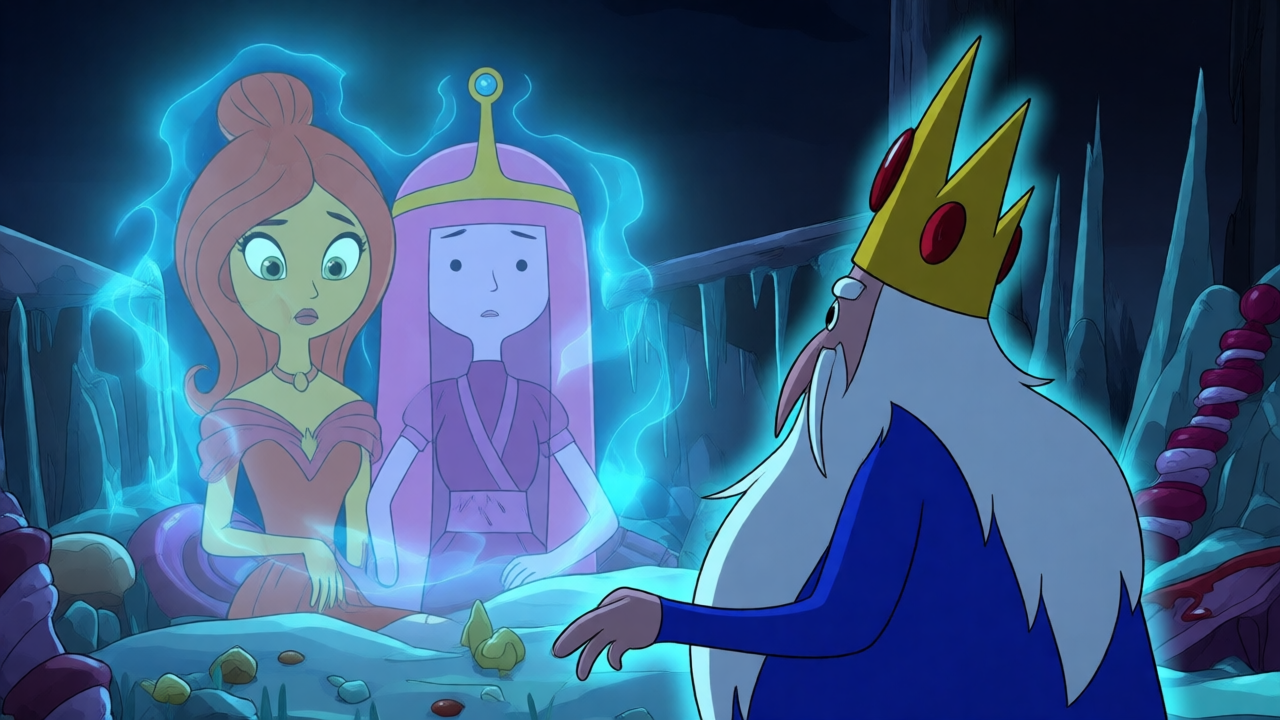
[EDDIE:passionate]: Look at those early seasons again. You see him kidnapping Princess Bubblegum or Flame Princess? It looks like typical villain bullshit, right? But if you actually look at the intent behind those actions, he’s not trying to rule a kingdom or cause mass suffering. He’s just looking for someone to talk to. From a utilitarian perspective, his "crimes" are incredibly low-impact. He isn't burning cities; he's making annoying ice sculptures and being a nuisance. The harm caused is negligible compared to the massive social good of him just leaving people alone.
[REG:dismissive]: Your logic is doing its absolute best and still finishing last. You cannot simply excuse kidnapping because the perpetrator is "lonely." From a deontological standpoint, certain actions are inherently wrong regardless of the motivation. A rule exists: you do not abduct sentient beings to satisfy your own social needs. The morality of an act is found in the duty owed to others, and Simon—or the Ice King—repeatedly fails his duty to respect the autonomy of those around him.
[EDDIE:crude]: That’s such a load of academic crap, Reg. You’re talking about rules like they mean something in a goddamn wasteland. If we're talking virtue ethics, look at his "intent." He doesn't have malice. A villain wants to cause pain; this guy just wants a playdate. He's not acting out of a desire to do evil, he's acting out of a fundamental, desperate need for connection that the world has denied him.
[REG:pompous]: Intent does not negate impact. Even if his heart is technically "good," his actions are consistently disruptive and infringe upon the rights of others. You are attempting to forgive a thief because he only steals bread to share with himself; it's a flawed moral calculus.
[EDDIE:excited]: Oh, we're just getting started, brother. We haven't even touched on how the crown itself complicates the whole damn concept of agency.
[EDDIE:excited]: ---
VILLAIN ORIGIN
[EDDIE:excited]: Okay, park that legalistic bullshit for a second and look at the actual man behind the crown. Before he was some blue-skinned weirdo living in an ice palace with a bunch of penguins, he was Simon Petrikov. He wasn't some cosmic force or a born monster; he was just an antiquarian. A guy who liked old stuff.
[REG:pompous]: An archeologist, Eddie. A scholar.
[EDDIE:passionate]: Yeah, a scholar who went through hell! I found this in an old interview with Tom Kenny, the voice of the Ice King—he said he approached the character as "a very real psychopath" who didn't understand why his actions were wrong. Think about that. He wasn't acting out of malice; he was literally experiencing a psychotic break because of a cursed object.
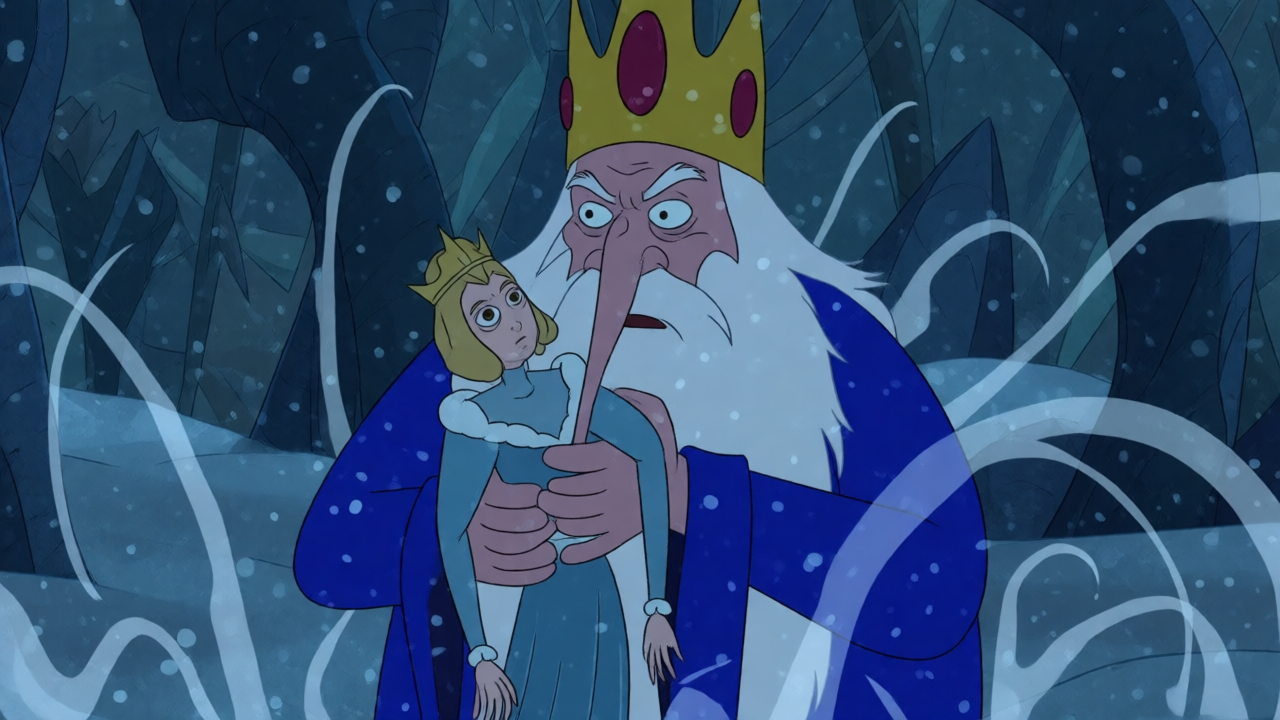
[REG:dismissive]: A "psychotic break" is a convenient way to excuse the abduction of princesses, but let us look at the psychological trauma. Simon didn't just stumble into madness; he made a choice. He chose to wear that crown specifically to protect Marceline during the Mushroom War. He prioritized his role as a father figure and protector over his own cognitive stability.
[EDDIE:crude]: And that’s exactly my point! The man sacrificed his entire goddamn mind to keep a little girl safe while the world was literally nuked into oblivion. You want to talk about trauma? Try losing your identity, your fiancée, and your sense of self every single day for centuries because you wanted to play hero for an orphan. His "villainy" is just the jagged edges of a shattered psyche trying to glue itself back together.
[REG:pompous]: While his altruism is documented, we must address the cognitive dissonance. From a psychological perspective, the crown functioned as a parasitic entity that overwrote his personality. It’s not just "dementia"; it's the total erasure of the ego. When he kidnaps those princesses, he isn't trying to be a tyrant; he is experiencing a regressive compulsion to find the domesticity and companionship that was stripped from him during the apocalypse.
[EDDIE:stunned]: It's like... imagine you woke up today and every single person you loved was gone, and you were suddenly stuck in a loop of chasing shadows of them. You wouldn't be "evil," Reg; you’d be fucking terrified.
[REG:dismissive]: There is a theory among some fans that the Ice King isn't just a victim of the crown, but that his subconscious was actually projecting his repressed desires for social interaction through these bizarre, magical outbursts. He wasn't trying to find a wife; he was trying to force the universe to acknowledge his existence because his original self had been functionally deleted by the war and the magic.
[EDDIE:excited]: Exactly! It’s survival instinct gone sideways. But even if we look at it through that lens, there's still a massive divide in how we see the "start" of his fall.
[REG:pompous]: Indeed. You would argue the moment he first donned the crown to protect Marceline.
[EDDIE:crude]: Hell yeah I would! It was an act of love that went wrong. But you're gonna tell me it was something else, aren't you?
[EDDIE:crude]: ---
THE CASE
[EDDIE:excited]: Okay, park that because This is where it gets wild. We’ve been talking about his tragedy and his madness, but I want to look at the bigger picture. If you step outside the land of Ooo for a second, the Ice King looks like a complete saint compared to the actual heavy hitters in animation history.
[REG:pompous]: A bold claim, Eddie. You are suggesting that a man who repeatedly attempts to abduct royalty is somehow morally superior to established villains? That is quite the leap of logic.
[EDDIE:excited]: It’s not just a leap; it’s a goddamn canyon! Think about the archetype we're used to. You look at someone like The Lich from this same series—an omnicidal maniac who wants to snuff out all life because he thinks existence is a mistake—and suddenly, Ice King looks like a fucking sweetheart. He isn't trying to end the world; he's just making it a little colder and way more awkward for everyone involved.
[REG:dismissive]: One may argue that "nuisance" is a generous term for someone who disrupts the sovereignty of entire kingdoms. However, I will concede that his scale of destruction is statistically insignificant compared to an existential threat like The Lich. But what does this say about him? Being less bad than a monster doesn't make you hero.
[EDDIE:crude]: It’s not just about being "less bad," Reg. It’s about the direction of their soul. Most villains in these shows follow a trajectory of escalation—they start with a grudge and end up wanting to rewrite reality or kill everyone. But the Ice King? He actually de-escalates! Look at his arc. He goes from an antagonist to a protagonist, then to a victim, and finally back to just being Simon. In most stories, the villain gets more powerful and more terrifying as the series progresses. The Ice King literally loses his power and regains his humanity in the finale.
[REG:pompous]: You are conflating character development with moral righteousness. A character can become "better" or more sympathetic without being a "good" person.
[EDDIE:passionate]: But that's exactly it! In the context of how these stories work, he’s the only one who actually wins by losing. Most villains fight against change; they want to keep things the same or destroy them. Simon Petrikov fought against his own nature. He was a man being overwritten by a magical parasite and he spent centuries struggling—even if it was messy as hell—to maintain some shred of his original self.
[REG:pompous]: I must stop you there before that idea calcifies into pure sentimentality. You're ignoring the collateral damage. There is a concept in literary analysis called "The Tragic Flaw," usually hamartia. Simon’s flaw was his obsession with artifacts, which led to his downfall. But even if we compare him to other tragic figures like, say, Magneto from the X Men films—who commits atrocities in the name of protecting his people—at least Magneto has a coherent political goal. The Ice King is just... drifting.
[EDDIE:crude]: Yeah, he's drifting through a goddamn nightmare! And that's why he's better. Magneto and half those other "tragic" villains are just extremists with high production budgets. They justify their bullshit by saying they’re saving their kind. The Ice King isn't doing anything for a cause; he’s just trying to survive the loneliness of a dead world.
[REG:amused]: Your tendency to romanticize chaos is exhausting. However, I will admit there is an interesting parallel regarding the concept of "The Reluctant Villain." In many media properties, the character who loses their memory or identity is used as a plot device for the hero's growth—a mere obstacle to be overcome.
[EDDIE:excited]: Exactly! Finn and Jake only grew because they had to deal with his weirdness. He wasn't just a hurdle; he was a mirror. He showed them what happens when you lose everything in a war. The internet loves to say "he’s just a creep," but if you actually watch the way he interacts with Marceline, you realize he’s the only character who truly understands the cost of survival in Ooo.
[REG:pompous]: It is... an unsettling thought. That by being a "villain" of such low stakes and high tragedy, he actually serves as a more profound commentary on human isolation than the actual monsters do. It is a palpable hit, Eddie. I shall recover momentarily.
[REG:pompous]: ---
REBUTTAL
[REG:pompous]: If we are to maintain any semblance of intellectual rigor, we must stop treating "tragic circumstances" as a universal get-out-of-jail-free card. You’re so focused on the man inside the crown that you've completely ignored the literal trail of chaos he left in his wake for centuries. Even if we accept your premise of magical dementia, it does not negate the fact that Simon Petrikov became a persistent agent of instability in Ooo.
[EDDIE:crude]: Here we go with the "he did bad stuff" argument. It's so played out, Reg.
[REG:pompous]: Is it? Let us examine the actual history. For hundreds of years, this individual was not merely a "nuisance"; he was a predatory force. He didn't just make awkward ice sculptures; he actively destabilized the geopolitical security of the Candy Kingdom through repeated kidnappings and psychological torment. You mention his low impact, but consider the victims—sentient beings like Princess Bubblegum who had to divert massive resources and emotional labor simply to manage his erratic outbursts. A person can be a victim of their own circumstances and still be an active, harmful predator.
[EDDIE:passionate]: He wasn't hunting them for power or territory! That’s the whole goddamn point! If he were like The Lich, he’d be trying to rule them. Instead, he was just... confused. It’s a difference in scale and intent, man.
[REG:dismissive]: Intent is secondary to the pattern of behavior. Consider his impact on Marceline. You call him a father figure, but through the lens of her trauma, he was an absentee, unpredictable entity who effectively abandoned her—not by choice, but because his own obsession with magical artifacts led him directly into the trap that erased his soul. He didn't just lose himself; he left a vacuum where a protector should have been, and that vacuum created a cycle of resentment and violence that defined Marceline’s entire existence. His "protection" was a catalyst for her isolation.
[EDDIE:stunned]: That is so fucked up! You're blaming the guy for being cursed? He didn't choose to be an absentee; he literally lost his goddamn mind because he was trying to keep people safe during a nuclear holocaust!
[REG:pompous]: And yet, the consequences remain. Even in his "good" moments, his existence is fundamentally disruptive. There is a fundamental selfishness inherent in his madness—a recursive loop where the world must constantly bend and adapt to accommodate his whims, regardless of whether those whims are malicious or merely eccentric. To absolve him entirely is to suggest that suffering exempts one from the social contract.
[EDDIE:crude]: The social contract? We're talking about a post-apocalyptic wasteland where everyone is just trying to survive! You're acting like he was breaking some sacred law of Ooo politics instead of just being a lonely, broken man lost in the sauce.
[REG:dismissive]: Your insistence on prioritizing his internal emotional state over external reality is precisely why your argument lacks teeth. Whether through malice or madness, the Ice King functioned as an antagonist to the stability of every civilization he encountered. He wasn't just drifting; he was a storm that no one asked for and no one could truly control.
[EDDIE:excited]: A storm? Maybe. But you don't put a storm on trial, Reg. You just learn how to dance in the rain.
[EDDIE:excited]: ---
REAL VILLAIN
[EDDIE:excited]: Wait wait wait -- hold that thought. We're talking about Simon being a victim, but we haven't even addressed the elephant in the room. The actual villain of this entire saga? It isn't the crazy blue dude or even the cosmic void monster.
[REG:amused]: I suspect you are about to suggest something dreadfully reductive.
[EDDIE:passionate]: No, listen! You want to talk about who is responsible for all this misery? It’s the fucking war! The Mushroom War destroyed everything before Simon ever even touched that crown. He was just a guy trying to make sense of a world that had already lost its goddamn mind.
[REG:pompous]: For once, we find ourselves on the same page. While you view it through a lens of chaos, I see it as a systemic failure. The true antagonist is the historical inevitability of violence. The war created a vacuum of meaning, and Simon was simply trying to fill that void with something—anything—to keep his loved ones tethered to reality.
[EDDIE:crude]: Exactly! It’s like we're looking at the symptoms instead of the disease. People see the Ice King causing trouble and they think "oh, he's a bad guy," but they aren't seeing the systemic wreckage that forced him into that position. The world was already broken; he just became part of the debris.
[REG:pompous]: And now we arrive at the exhibit I have been saving. If you want to understand why this character feels so fundamentally different from a standard cartoon antagonist, you have to look at how the show was actually built. This wasn't an intentional shift by the writers mid-stream; it was a profound evolution in production philosophy.
[EDDIE:stunned]: Here comes the lecture. Brace yourselves.
[REG:pompous]: I am merely providing context. During the early development and the first few seasons, the Ice King was designed to be a traditional, episodic antagonist. He was a "joke" villain meant to provide colorful conflict for Finn and Jake. However, as the production team's creative vision expanded, they realized that a purely comedic character would lack the weight required for the epic scale they were aiming for.
[EDDIE:excited]: Yeah, but it goes deeper than just "changing the plot," right? I was digging into some production notes and creator interviews... and there’s this insane bit about how they handled his backstory.
[REG:pompous]: Precisely. The writers didn't just decide to make him sad; they had to retroactively engineer a soul for him. There is documentation suggesting that the decision to tie his history to the Mushroom War was a way to bridge the gap between the whimsical, episodic nature of early Adventure Time and the high-stakes, lore-heavy epic it was becoming. They used Simon as a narrative anchor to ground the surrealism in actual human tragedy.
[EDDIE:passionate]: And that's why he feels so real! It’s because he’s not just some random character; he’s a walking, breathing piece of history. He is the bridge between the "old world" and the "new world." When you realize that his entire existence—his madness, his loneliness, his obsession—is just a byproduct of a global catastrophe that the heroes are only just starting to understand, it changes everything.
[REG:pompous]: It’s a masterstroke of production design. They turned a recurring nuisance into a personification of lost time. By making his "villainy" a symptom of a broken world rather than an inherent trait, they forced the audience to confront the reality that in a post-apocalyptic landscape, there are no true villains—only survivors who have been fundamentally altered by what they've endured.
[EDDIE:crude]: So while everyone is out here pointing fingers at the blue guy for being a creep, they’re missing the fact that the whole damn setting is the one holding the smoking gun.
[REG:pompous]: Indeed. The crime isn't his; it's the era he was born into.
[REG:pompous]: ---
AFTERMATH
[EDDIE:excited]: Okay, we’ve been arguing about whether he’s a victim or a menace, but I want to pivot to what the hardcore fans—the ones who spend their nights dissecting every frame of *Fionna and Cake*—are actually saying. Because if you look at the deep lore, specifically the way Simon's existence interacts with the timeline, his "villainy" wasn't just a symptom; it was a cosmic necessity to prevent something much worse from happening.
[REG:dismissive]: I find your reliance on "fan theories" as a basis for reality highly problematic. It is essentially intellectual gossip.
[EDDIE:passionate]: It’s not gossip when the show practically screams it! There’s this massive, deep-cut theory in the community regarding the timeline stability of Ooo. People argue that if Simon hadn't become the Ice King—if he had stayed a regular, sane archeologist and never put on that cursed shit—the magical imbalance caused by his lack of intervention during the Mushroom War would have been catastrophic. He wasn't just a bystandow; his madness actually acted as a weird kind of stabilizer for the magical ecosystem through pure chaos.
[REG:pompous]: That is a remarkably convoluted stretch, Eddie. You are suggesting that a man losing his goddamn mind was a requirement for planetary stability? It’s a terrifying thought, I'll grant you that, but it actually undermines your case. If his madness was the "glue" holding the weirdness of Ooo together, then he wasn't just a victim; he became an essential part of the very chaos he caused. He was no longer a man; he was a natural disaster.
[EDDIE:crude]: Exactly! A natural disaster that people learned to live with! And it gets even crazier when you look at the "Simon and Marcy" parallels. Fans have pointed out that his role as an antagonist was actually a subconscious effort to keep Marceline grounded in the world through conflict. If he hadn't been this weird, creepy blue bastard constantly popping up to ruin her day or cause problems, she wouldn't have developed the fierce, independent survivalist identity that defines her. He provided the friction she needed to exist in a dead world.
[REG:amused]: So your argument is that his crimes were actually "gifts" of character development for others? That is some truly delusional logic. You are essentially claiming that because he caused trauma, he was providing necessary stimulus. It’s a grim view of existence, but it does suggest his "villainy" had a functional purpose in the ecosystem of Ooo.
[EDDIE:stunned]: See! Even you're admitting he was doing something important, even if it was by accident! The man was a goddamn anchor for everyone else, and they hated him for it.
[EDDIE:stunned]: ---
VERDICT
[EDDIE:passionate]: Look, I know we’ve been circling this for an hour, but let me lay it out one last time so there's no confusion. You want a hero? A real hero isn't the guy who walks into a room and starts winning. A hero is the guy who gets absolutely fucked by reality, loses his mind, his name, and his entire goddamn history, and still spends every waking second trying to find something worth loving. The Ice King isn't just misunderstood; he’s the most heroic character in that entire show because he never stopped trying to connect, even when the world turned into a frozen graveyard. He took all that cosmic bullshit, all that loneliness, and turned it into a quest for companionship. He wasn't fighting for power; he was fighting against being forgotten. If you can't see the nobility in that struggle, then I don't know what to tell you, man.
[REG:pompous]: Your capacity for sentimentality is truly staggering, Eddie. While I will concede that his arc possesses a certain... profound tragic resonance, your conclusion remains fundamentally flawed. You are conflating "endurance" with "righteousness." Even if we accept the premise that he was a victim of historical circumstances and magical parasitism, it does not retroactively cleanse his actions. He was still a chaotic agent who caused genuine distress to those around him for centuries. I will admit, seeing the man restored—seeing Simon Petrikov finally freed from the crown's psychic tyranny within the chaos of Golb—was... impactful. The erasure of that persona was a necessary resolution. But being a victim of a tragedy doesn't make you a hero; it just makes you part of the wreckage.
[EDDIE:crude]: The wreckage? Reg, the man *is* the bridge! He’s the only reason anyone even knows what happened to the old world! You're so busy looking at the mess on the floor that you're missing the fact that he was the only thing holding the pieces together.
[REG:pompous]: We are essentially arguing about whether a storm is "good" because it brings rain. It doesn't matter how much the soil needs the water if the wind tears the house down in the process.
[EDDIE:amused]: Yeah, but at least he’s not trying to blow up the whole damn house like The Lich.
[REG:pompous]: A point of difference, certainly, though a small one.
[EDDIE:passionate]: Alright, look. We've laid out the case. Whether you see him as a criminal who needs his head checked or a tragic soul just trying to find his way home in the dark... that's on you.
[REG:pompous]: Indeed. The evidence has been presented. We have examined the psychological, historical, and cosmic layers of this man’s existence. Now, the verdict belongs to the audience.
[EDDIE:excited]: Go down to the comments and tell us what you think. Is he a straight-up villain who just had a bad run? Is he a victim of the crown's bullshit? Or is he actually the unsung hero of Ooo? Tell us which argument landed for you, or if we're both just talking shit.
[REG:pompous]: We await your decision.
[REG:pompous]: ---
OUTRO
[EDDIE:relaxed]: Man, I am wiped. That was a heavy one. My brain feels like it's been through a goddamn snowstorm.
[REG:pompous]: Your cognitive faculties appear to be vibrating at an unsustainable frequency, Eddie. It is likely the residual effects of that session you had earlier.
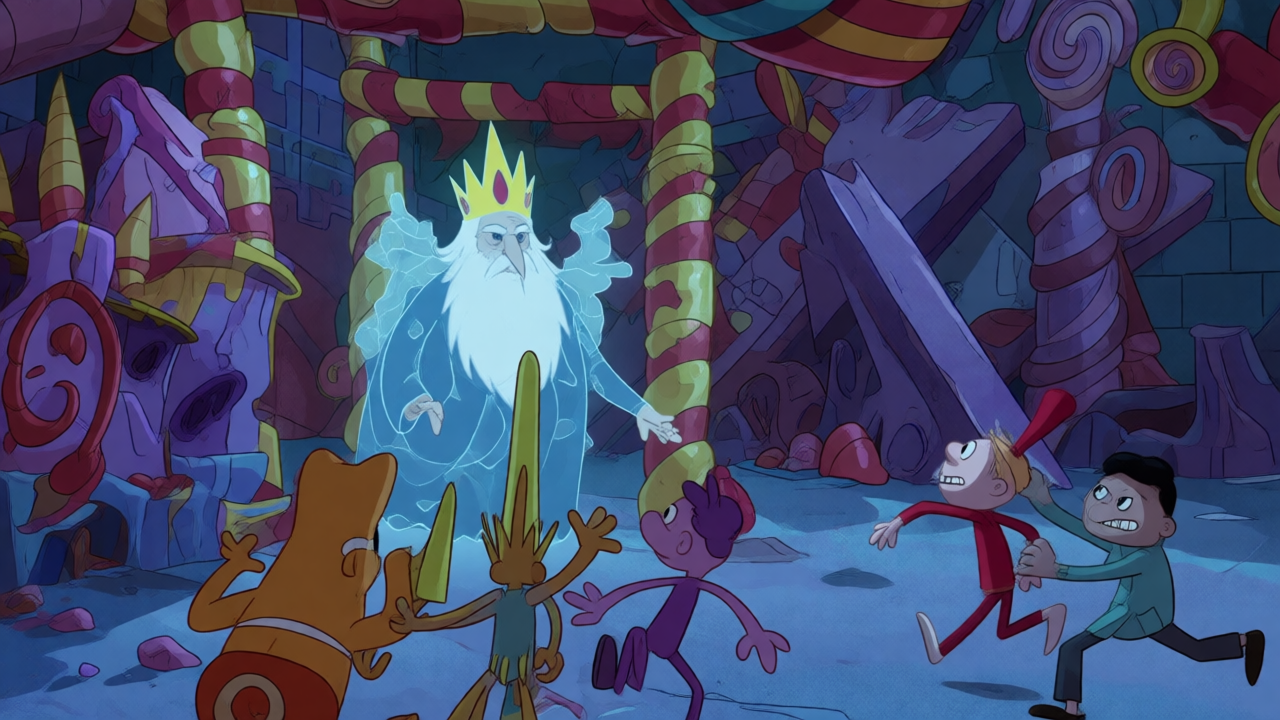
[EDDIE:amused]: Whatever, man. I’m in the zone. But seriously, look at the chaos we just went through. We've been dissecting a king who was basically just a lonely ghost haunting his own life.
[REG:pompous]: A ghost of a civilization, perhaps. If you found this exploration of tragic inevitability stimulating, I suggest you engage with our other archives. It is quite beneficial for the intellect to see these patterns repeated.
[EDDIE:excited]: Yeah, yeah. Look, if you think Simon was just some creepy old dude who deserved his fate, smash that like button and tell me why I'm wrong in the comments. But if you think he was a victim of a broken timeline—a goddamn hero in blue skin—then show us some love.
[REG:haughty]: And do subscribe. The sheer volume of data we process here requires a certain level of communal support to maintain its structural integrity. It is not as much effort as you would think.
[EDDIE:crude]: Yeah, it's easy. Don't be a stingy bastard. If you want more deep dives into the stuff that actually matters, hit up Laser Chicken Studios dot com. They keep the lights on while we argue about cartoons.
[REG:pompous]: Indeed. Now, to the final adjudication. Was the Ice King a villain of consequence, or merely an accidental byproduct of a dying world? Did he deserve his crown, or was he simply wearing someone else's tragedy?
[EDDIE:passionate]: Tell us which way you went and why. I want the real reasoning, not just "he's cool." Give me the logic behind your heart.
[REG:pompous]: The verdict is yours to deliver.
[EDDIE:relaxed]: Villain's Advocate.
[REG:pompous]: Villain's Advocate.
[REG:pompous]: ---
POST CREDITS
[EDDIE:annoyed]: It is literally just cold gazpacho if you think about the liquid component, man.
[REG:condescending]: Your reductionist logic is staggering; a soup requires a savory profile and a thermal intention that cereal simply lacks.
[EDDIE:defensive]: I’m telling you, I was baked out of my mind last night staring at the bowl and it looked like a breakfast bisque, totally toasted.
[REG:dismissive]: During my most recent research session with some high-grade psilocybin, I realized that categorization is an illusion, yet even then, your milk-soaked grain remains a snack, not a broth.
[EDDIE:stubborn]: If I put croutons in it, you’re gonna claim it's a salad, but you won't admit the milk makes it...
🖼 Gallery