The People vs Goku
Cast Your Vote on YouTube
Chapters
- 0:00Cold Open
- 0:16Intro
- 0:52Background
- 4:06First Take
- 5:47Villain Origin
- 8:24The Case
- 12:31Rebuttal
- 15:05Real Villain
- 18:36Aftermath
- 20:52Verdict
- 23:19Outro
- 24:51Post Credits
📁 Case File
The Case File: Goku
Overview
In the landscape of high-stakes combat and cosmic evolution, few figures loom as large—or as transformational—as Goku. While often viewed through the lens of a hero, an analysis of his trajectory reveals a character defined by relentless escalation, biological adaptation, and a singular obsession with martial perfection. From his origins on Earth to the devastating battles on Planet Namek, Goku's existence is marked by a constant state of "becoming," driven by a primal need to surpass every obstacle placed in his path.
Background & Timeline
Goku’s history is one of escalating conflict and rapid biological shifts:
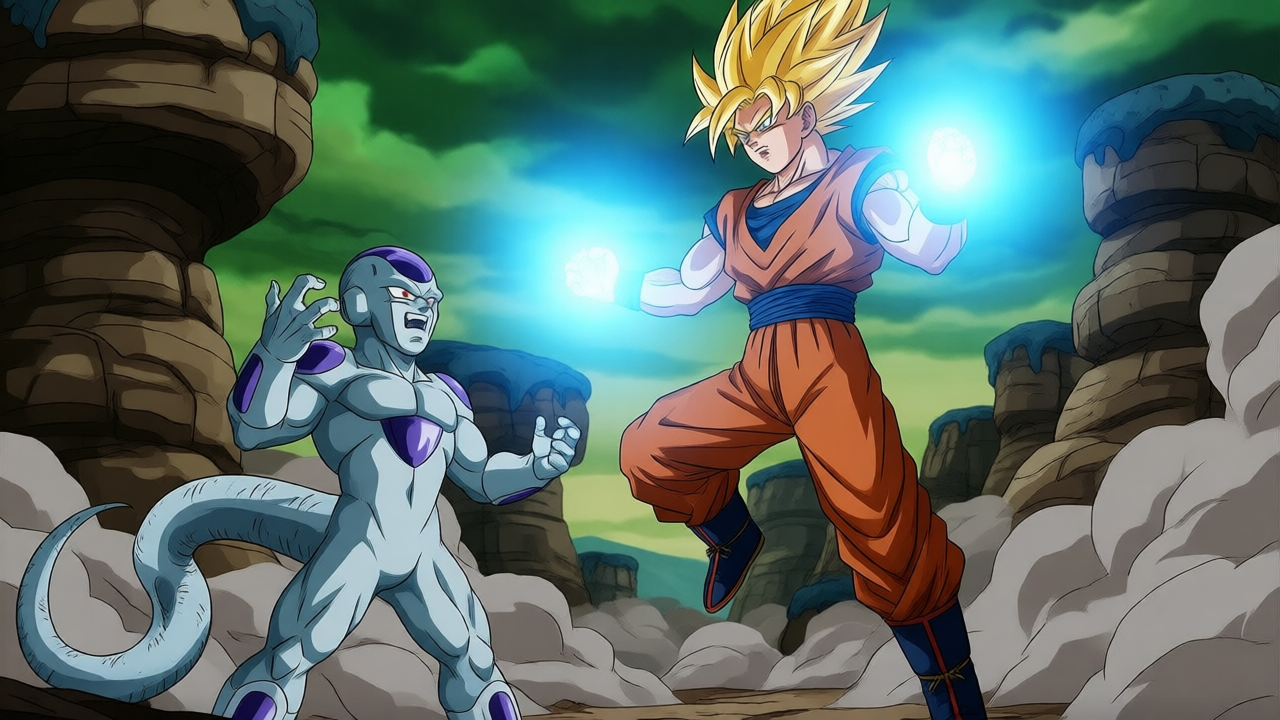
- The Earth/Namek Era: Early records indicate Goku’s involvement in terrestrial conflicts, culminating in the high-stakes confrontation on Planet Namek. It was during this period that he achieved his first major physiological breakthrough: the Super Saiyan transformation, triggered by the necessity of defeating Frieza.
- The Android & Cell Eras: Following the Namekian conflict, Goku’s presence remained a central pillar through the battle against the Androids and the subsequent Cell Games. This period saw the passing of his mantle to his son, Gohan, as the battles shifted from planetary survival to complex biological warfare.
- The Majin Buu Era: The timeline concludes with the struggle against the chaotic threat of Majin Buu, a conflict that tested the limits of his martial prowess and forced further evolutions in combat capability.
The Evidence
The "evidence" of Goku's impact is found not just in battle reports, but in how he has been documented through various media:
- Biological Documentation: In digital simulations (specifically *The Legacy of Goku* series), Goku’s combat data is meticulously tracked. These records show a character who relies on energy-based attacks and physical strikes, utilizing "energy gauges" to fuel his abilities.
- Transformation Mechanics: Evidence suggests that Goku's power is not static. He possesses the ability to enter states of heightened strength—transformations that provide massive boosts at the cost of rapid energy depletion.
- The Scouter Data: Advanced technology (Scouters) has been used to quantify his stats, confirming a level of power that consistently breaks standard measurement scales.
The Case
When analyzing Goku's role in global/universal stability, two primary arguments emerge:
Argument A: The Catalyst for Evolution
Goku acts as the ultimate benchmark for combat evolution. His presence forces opponents to reach new heights (such as Frieza or Cell), but he simultaneously undergoes his own biological shifts. This creates a cycle of perpetual escalation where power levels are never static, only increasing in response to the next threat.
Argument B: The Uncontrollable Variable
Goku’s primary motivation is personal growth and the pursuit of stronger opponents. While this often results in the defeat of major threats, it also necessitates high-stakes conflicts that threaten entire planets (such as Namek) simply to facilitate his own testing. His existence ensures that conflict is never truly resolved; it only evolves into a higher tier.
The Cutting Room
- The "Rage Mode" Theory: In certain tactical simulations (*Legacy of Goku II & Buu's Fury*), there are indications of a "rage mode" mechanic—a state where power is gained through intense emotional or combat-driven triggers, suggesting his strength may be tied to psychological volatility.
- The Unreleased Dub Profile: There exists an alternate English vocal profile (the Ocean Productions dub) that provides a different auditory perspective on his characterization, though the data remains largely inaccessible to the public.
- The "Blue" Discrepancy: Early observational data from certain broadcast versions showed significant alterations in visual presentation (such as color shifts and removal of scarring), suggesting that his true physical appearance and intensity were often "sanitized" for different audiences.
Final Word
Goku is more than a combatant; he is a fundamental force of nature within his universe. Whether through the Super Saiyan transformation or his relentless pursuit of stronger foes, he represents an endless cycle of escalation. To study Goku is to study the limitlessness of power itself—a constant struggle between biological evolution and the limits of the known universe.
🔎 Deep Cuts — things most write-ups miss
Deep Cuts: Goku
*Uncommon, hard-to-find knowledge about Goku from Dragon Ball Z — the details most write-ups miss.*
Production & Development
- The "Kai" Origin Story: *Dragon Ball Kai* was not originally conceived as a new series; it was created after Bandai requested Akira Toriyama write an entirely new anime to boost merchandise sales, which Toriyama declined.
- Score Replacement Crisis: While Kenji Yamamoto composed the original score for *Kai*, Toei Animation announced in March 2011 that his music would be replaced for episodes 96–98 and all future reruns due to unspecified third-party copyright infringements; Shunsuke Kikuchi's original *Dragon Ball Z* score was used as the replacement.
- Unreleased Ocean Dub: An alternate English dub of *Kai* featuring the original Vancouver voice cast was recorded by Ocean Productions, but this version has never been officially released to the public.
- Broadcast Censorship (Visual): For the Nicktoons broadcast of *Kai*, specific visual edits were mandated, including removing Bardock's cheek scar and altering Master Roshi’s alcohol color; additionally, Mr. Popo was tinted blue for the CW/Toonzai airings.
- The "Legacy" Gameplay Innovation: The Game Boy Advance title *Dragon Ball Z: The Legacy of Goku II* was among the first video games to introduce a "transformation" mechanic that increased character strength at the cost of draining an energy bar.
- Character Unlock Limitation: In the original *The Legacy of Goku*, players are unable to play as Goku for the majority of the game; the player begins as Gohan and must unlock Piccolo, Vegeta, Trunks, and finally Goku through progression.
- Secret Playable Character: In *The Legacy of Goku II*, completing the story allows the player to unlock an alternate ending featuring Hercule (Mister Satan) as a playable character.
- Technical Milestone: The first *Legacy of Goku* title was one of the earliest Game Boy Advance games to utilize full-motion video (FMV), predating the official release of the Game Boy Advance Video hardware.
Hidden Lore & Missable Details
- The "Kai" Distinction: The term *Kai* (改) in *Dragon Ball Z Kai* specifically translates to "updated" or "altered," a distinction made because the series was conceived as a corrective measure to align the anime's pacing and content with Akira Toriyama’s original manga.
- Lost Audio History: An alternate English dub of *Dragon Ball Z Kai* featuring the original Vancouver voice cast was recorded for the first 98 episodes, but this version has never been officially released to the public.
- Score Replacement Mandate: Due to unspecified third-party rights infringements regarding Kenji Yamamoto’s score, Toei Animation replaced all music in episodes 96–98 of *Kai*, and subsequently reverted to Shunsuke Kikuchi's original *Dragon Ball Z* score for all future reruns.
- The "Blue" Mr. Popo Edit: During the US broadcast on The CW’s Toonzai block, censorship measures required the character Mr. Popo to be digitally tinted blue.
- Unreleased Final Episode: Due to the 2011 Tōhoku earthquake and tsunami, the original scheduled 98th episode of *Dragon Ball Z Kai* was pulled from the television broadcast and released exclusively as a direct-to-video title in Japan on August 2, 2011.
- Transformation Precedence: The Game Boy Advance title *The Legacy of Goku* (2002) served as one of the first instances in the franchise to introduce character transformations as a gameplay mechanic via "rage mode."
- Character Unlock Sequence: In *The Legacy of Goku II*, players cannot play as Goku for the majority of the game; they must progress through Gohan, Piccolo, Vegeta, and Trunks before finally unlocking him.
- The Hercule Paradox: While the Japanese release (*International*) reverted most character names to their original Japanese counterparts, the name "Hercule" was specifically retained for Mister Satan's parade float in that version.
- Lost Soundtrack Continuity: The musical score for *The Final Chapters* (the continuation of *Kai*) transitioned away from the Yamamoto/Kikuchi styles entirely, utilizing a new composition by Norihito Sumitomo.
Hard Trivia & Deep Cuts
- The "Lost" Dub: An alternate English dub of *Dragon Ball Z Kai* was recorded by Ocean Productions featuring the original Vancouver voice cast; however, this version has never been officially released to the public.
- Musical Replacement: Due to unspecified third-party copyright infringements regarding Kenji Yamamoto's score, Toei Animation replaced his music with Shunsuke Kikuchi’s original *Dragon Ball Z* score for episodes 96–98 of *Kai*.
- The Transformation Precedent: The Game Boy Advance title *Dragon Ball Z: The Legacy of Goku* was the first entry in the video game series to introduce character transformations as a gameplay mechanic.
- Unintended Censorship: During the original Japanese broadcast of *Kai*, Master Roshi's alcohol was altered in color, and Bardock’s cheek scar was removed to meet broadcasting standards for younger audiences.
- The "Blue" Mr. Popo: In the US version aired on The CW's Toonzai block, character models were heavily edited for demographics, most notably resulting in Mr. Popo being tinted blue.
- Technical Milestone: *The Legacy of Goku* was among the first Game Boy Advance titles to feature full-motion video (FMV), predating the release of the Game Boy Advance Video hardware.
- Playable Character Restriction: Despite the series title, players in the first *Legacy of Goku* game cannot play as Goku until the final stage; the narrative forces the player to start as Gohan and progress through Piccolo, Vegeta, and Trunks before unlocking Goku for the Frieza battle.
- The "Hercule" Anomaly: In the Japanese-exclusive release of *Legacy of Goku II International*, all character names were reverted to their original Japanese designations, yet Mister Satan's parade float retained the English name "Hercule."
- Production Origin: The creation of *Dragon Ball Z Kai* was prompted by Bandai requesting a new anime from Akira Toriyama for merchandise sales; when Toriyama declined to write a new story, the "updated" (Kai) version was conceived instead.
Influences & Ripple Effects
- Literary Roots: The character’s name and concept are direct homages to *Journey to the West*, specifically drawing from Sun Wukong, the Monkey King, through his physical traits and legendary combat prowess.
- Gaming Mechanics Precedence: In the *Legacy of Goku II* (2003) GBA title, the implementation of "transformations" as a gameplay mechanic—granting temporary strength at the cost of rapid energy depletion—set a precedent for how power-ups would be handled in subsequent franchise video games.
- Technological Milestones: The original *Dragon Ball Z: The Legacy of Goku* was among the first Game Boy Advance titles to utilize full-motion video (FMV) sequences, predating the official release of Game Boy Advance Video hardware.
- Musical Shift and Legal Precedent: Due to third-party rights infringements regarding Kenji Yamamoto's original score for *Dragon Ball Z Kai*, Toei Animation was forced to replace the music in episodes 96–98 (and subsequent reruns) with Shunsuke Kikuchi’s legacy score from the original series.
- Narrative Pacing Influence: The production of *Dragon Ball Z Kai* served as a structural response to the "filler" issue prevalent in long-running anime, specifically designed to realign the televised narrative strictly with Akira Toriyama's original manga chapters.
- Cross-Cultural Localization Shifts: During early US broadcasts on Nicktoons and The CW (Toonzai), specific visual edits were mandated for younger demographics, including tinting Mr. Popo blue and altering the color of Master Roshi’s alcohol to remove depictions of intoxication.
- Dubbing History: An alternate English dub of *Dragon Ball Z Kai* was recorded by Ocean Productions using the original Vancouver voice cast; however, this version has never been officially released to the public.
Fan Theories With Receipts
- The "Goku is an Alien" Theory
* Theory: Goku’s biological origins are tied to a specific Saiyan lineage that predates modern planetary conquest.
* Evidence For: The *Legacy of Goku II* video game mechanics introduce "rage mode," a mechanic designed to simulate the physiological transformation and power spikes unique to Saiyan biology during combat.
* Evidence Against: While the manga establishes his extraterrestrial origin, the specific biological triggers for "rage" in early GBA titles are localized gameplay mechanics rather than established canon lore from Akira Toriyama's original sketches.
- The "Lost Ocean Productions Dub" Theory
* Theory: An entire alternate English-language history of the *Dragon Ball Z Kai* adaptation exists, featuring a different vocal direction and cast.
* Evidence For: Production records confirm that Ocean Productions recorded an entire English dub for the first 98 episodes of *Kai*, utilizing the original Vancouver voice cast.
* Evidence Against: Despite being fully recorded, this specific version has never been publicly released or distributed, making it a "phantom" piece of media in terms of consumer accessibility.
- The "Musical Continuity Gap" Theory
* Theory: The sonic identity of the *Dragon Ball Z Kai* series was fundamentally altered due to external legal conflicts rather than creative choice.
* Evidence For: Official statements from Toei Animation confirmed that Kenji Yamamoto's original score for *Kai* infringed on third-party rights, necessitating a total replacement of the music in episodes 96–98 and all future reruns with Shunsuke Kikuchi’s legacy score.
* Evidence Against: While the shift is documented, the transition was intended to align the series more closely with the original *Dragon Ball Z* aesthetic, suggesting the "change" served a dual purpose of legal safety and brand consistency.
- The "Mister Satan/Hercule Identity Paradox" Theory
* Theory: The character's identity is subject to regional localization shifts that affect his role within the narrative structure of tie-in media.
* Evidence For: In *Dragon Ball Z: The Legacy of Goku II International*, all characters had their names reverted to Japanese originals, yet Mister Satan retained the English name "Hercule" on his parade float, creating a linguistic inconsistency in the localized version.
* Evidence Against: This is likely a localized asset error or an intentional nod to his international fame rather than a narrative shift in character identity.
📝 Full Transcript
COLD OPEN
[EDDIE:excited]: [Eddie:Hyper]: Goku might actually be the greatest threat to existence in everything we see, yet we call him a hero just because he wins.
[EDDIE:excited]: [Eddie:Winking]: This video contains enough power levels to make your scouter explode.
[EDDIE:excited]: [Reg:Pompous]: Prepare yourself, for our analysis will transcend even the limits of a Super Saiyan.
[EDDIE:excited]: ---
INTRO
[EDDIE:hyped]: "He who fights with monsters should look to it that he himself does not become a monster," Nietzsche said, and honestly, looking at the carnage left in his wake, I think we've been ignoring the red flags for decades. Today on Villain's Advocate, we're flipping the script and putting a hero on trial: Goku from Dragon Ball Z.
[REG:bored]: We are spoiling all of Dragon Ball Z. If you have not seen it, that is entirely your fault.
[EDDIE:intense]: Most people see a savior, but I see a guy who treats planetary annihilation like a high-stakes sparring session and calls it "growth."
[EDDIE:assertive]: I'm telling you right now, Goku isn't just a hero with a messy hobby; his obsession with combat makes him the most dangerous entity in his universe.
[REG:condescending]: And I shall be arguing that his actions are not villainous, but rather the inevitable byproduct of a chaotic cosmic ecosystem that requires his specific brand of escalation to survive.
[REG:amused]: The confidence with which you are wrong is almost artistic.
[REG:amused]: ---
BACKGROUND
[REG:pompous]: Before we descend into the madness, I must provide some intellectual scaffolding for those among you who lack context. We are discussing Dragon Ball Z, an animated TV series that debuted in Japan on Fuji Television back in 1989. It is based upon the manga by Akira Toriyama and serves as a direct continuation of his earlier work. While the original English broadcasts were often heavily censored—losing blood and even changing character colors to appease children—the uncut versions are available for those seeking true enlightenment, primarily through Adult Swim’s Toonami block or various streaming services. If you have ever encountered the high-octane kineticism of modern shonen combat, you will recognize its DNA here; it is essentially the blueprint for the entire genre. It remains a massive cultural phenomenon that redefined global animation standards.
[EDDIE:relaxed]: Yeah, it's basically the reason every anime fan exists today, man.
[REG:pompous]: To understand the gravity of our subject, one must grasp the sheer scale of the narrative arc. The story begins not with a god, but with an infant sent to Earth from another world. This child, Kakarot—though we know him as Goku—is part of a warrior race known as Saiyans. He arrives on Earth with a low power level and a violent instinct, but a head injury fundamentally shifts his temperament toward protector rather than conqueror. As he grows, the series expands from earthly martial arts into cosmic-scale warfare involving alien invasions and celestial threats.
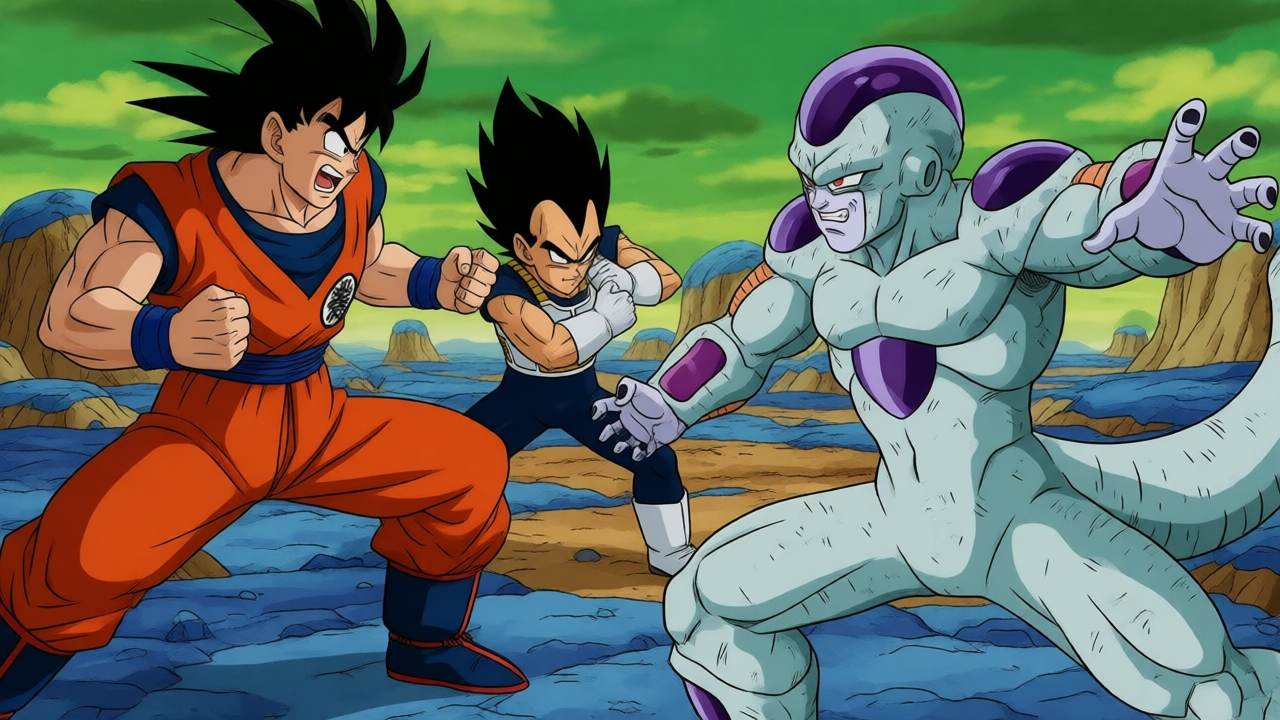
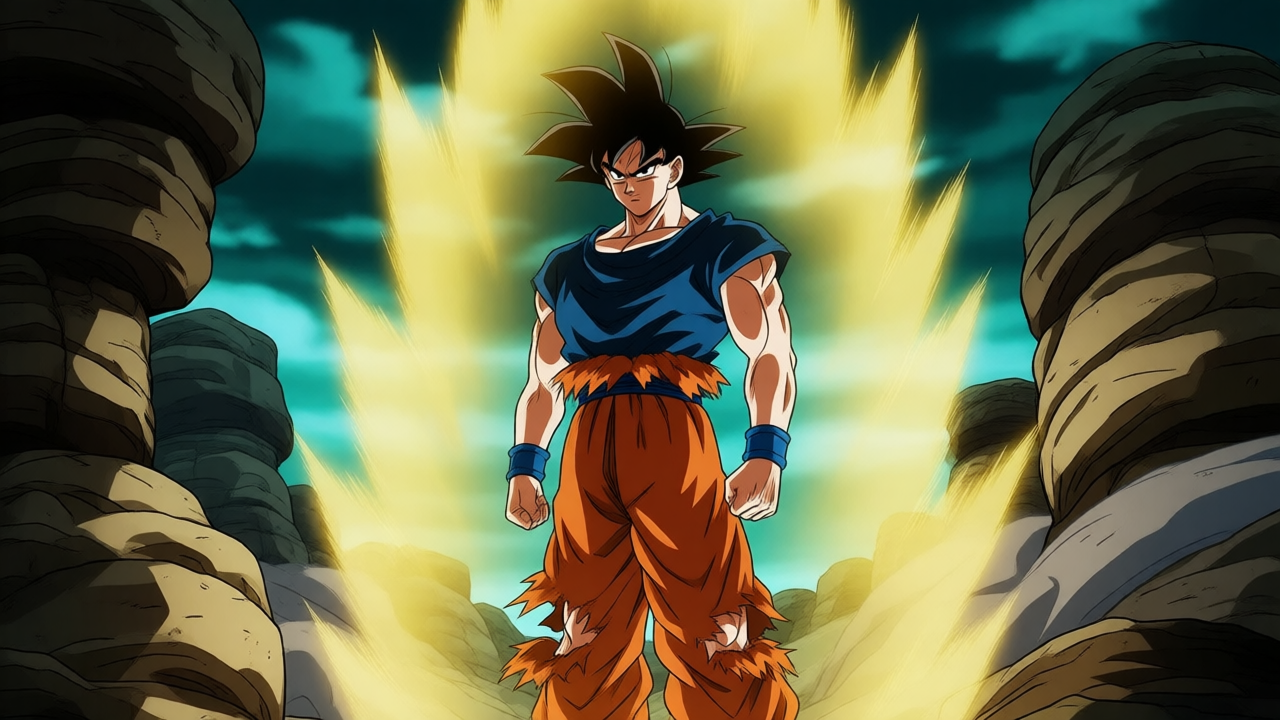
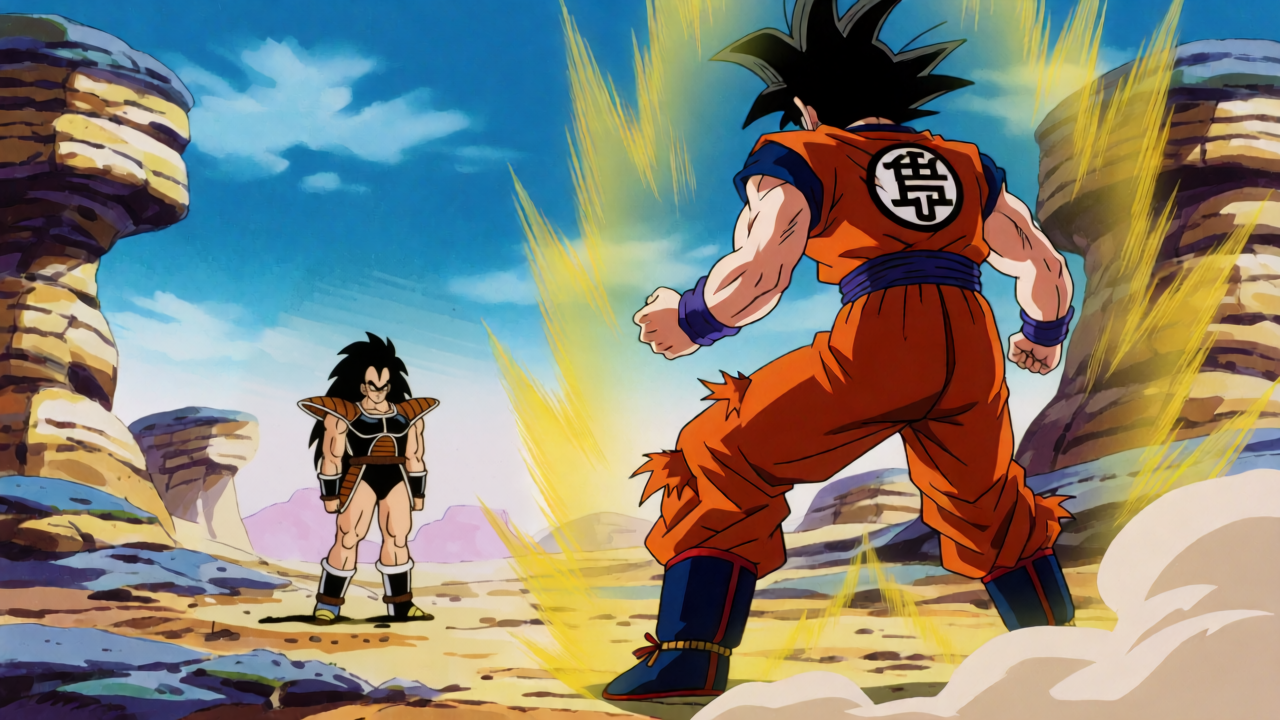
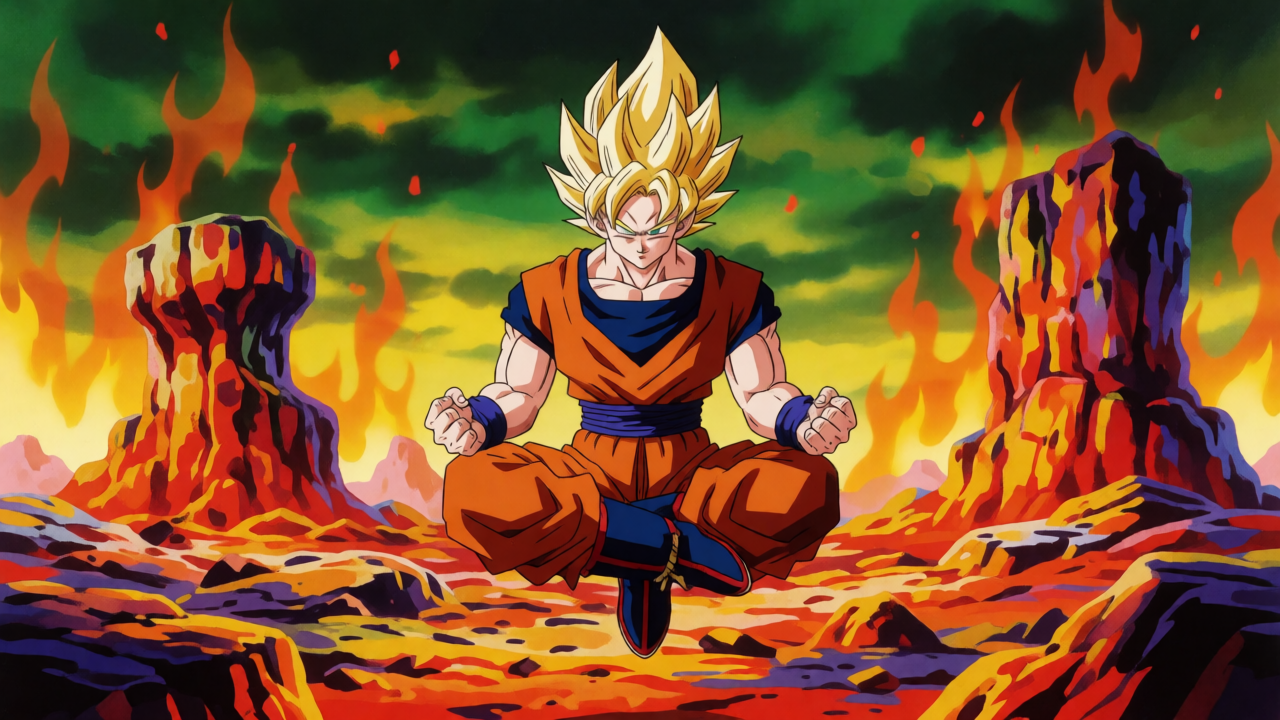
[REG:pompous]: We meet various companions who become his surrogate family: Krillin, a human monk; Piccolo, a former demonic antagonist turned guardian; and eventually Gohan, Goku’s own son, who inherits the burden of his father's overwhelming potential. The conflicts escalate from the Saiyan Saga, where Goku must face his own brother Raditz and later the elite warriors Vegeta and Nappa, to the Frieza Saga on Planet Namek. It is here that we see the true scope of the threat; Frieza is a galactic tyrant whose cruelty makes standard villains look like children. During this battle, Goku undergoes a transformation known as the Super Saiyan, a state of pure, golden-haired fury that shifts the power dynamics of the universe forever.
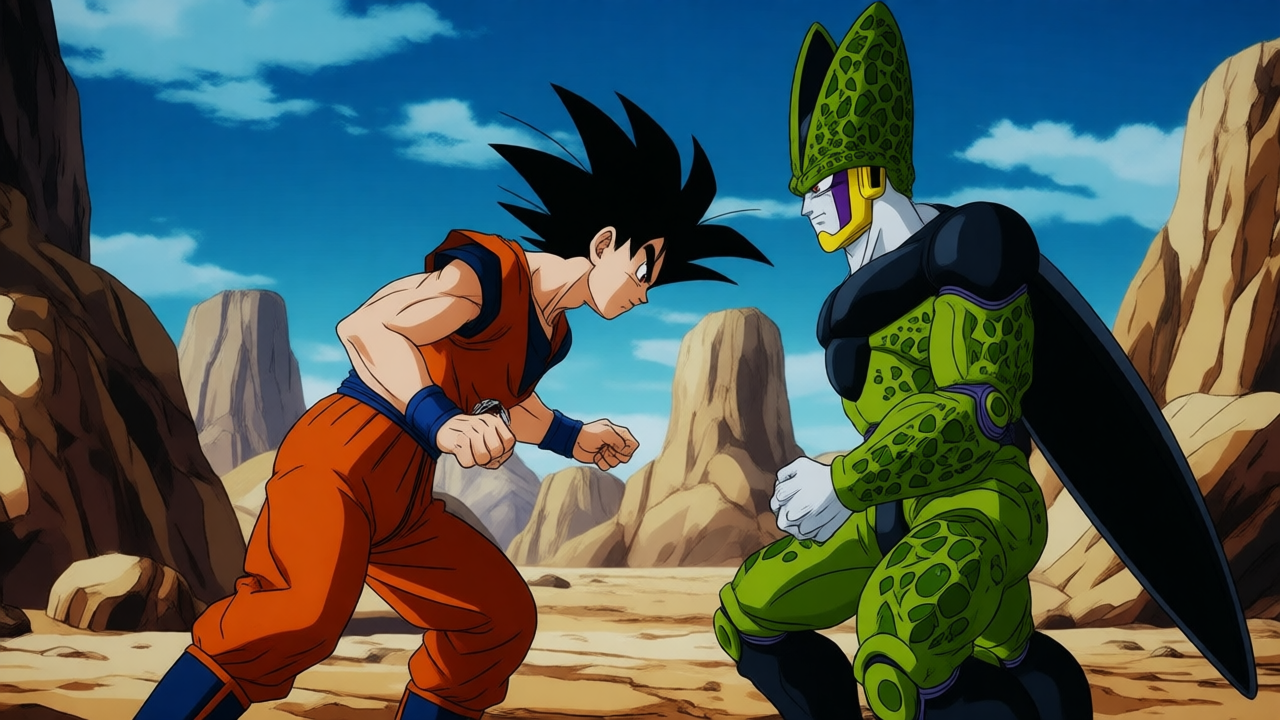
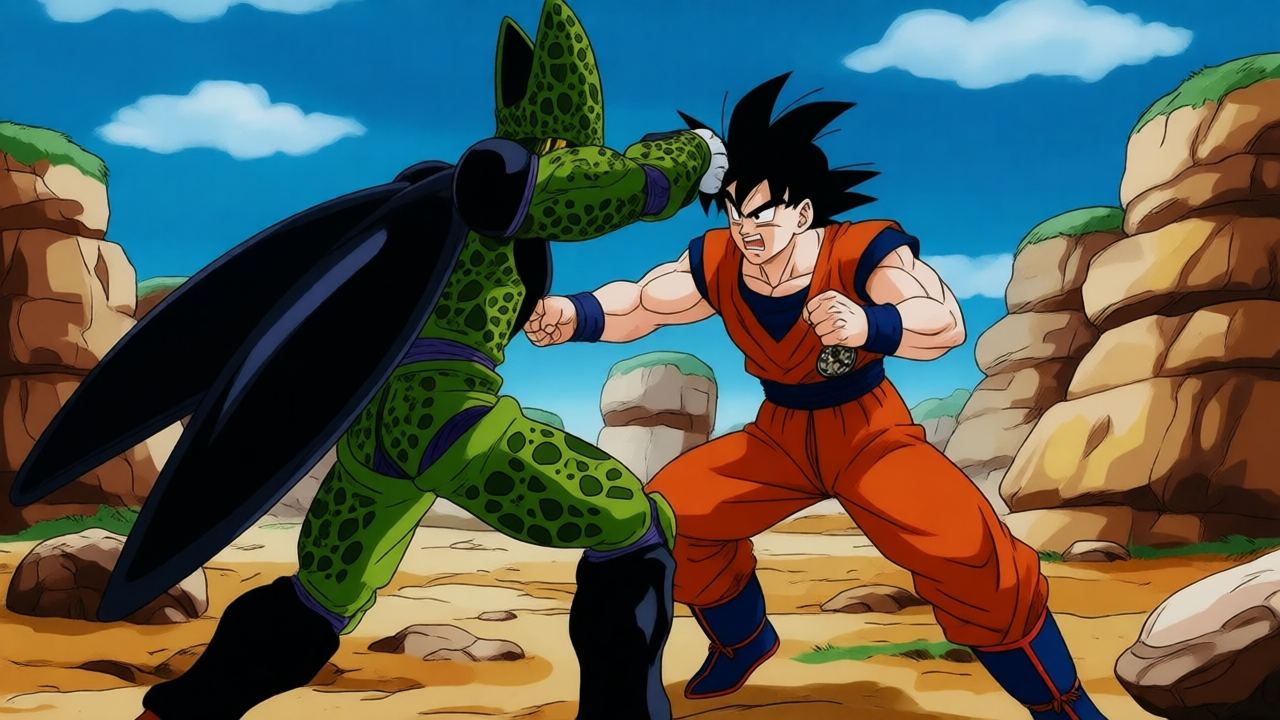
[REG:pompous]: But the carnage does not cease with Frieza. The narrative moves into the Cell Games, where a bio-engineered creature named Cell attempts to achieve perfection by absorbing various warriors. This arc focuses heavily on Goku’s role as mentor and father, culminating in his decision to sacrifice himself to ensure his son Gohan can strike the final blow. Following this, we enter the Majin Buu era, an era of absolute absurdity and existential terror. A pink, magical entity known as Majin Buu possesses the ability to reshape reality and consume entire cities with a mere touch. Goku’s involvement here is chaotic; he struggles against the sheer unpredictability of the magic, ultimately leading to a final confrontation that pushes his very essence to the breaking point.
[REG:pompous]: The series concludes not with a grand conquest, but with a quiet resolution of cosmic tensions. After the chaos of Buu is settled through a blend of martial prowess and spiritual intervention, Goku finds himself at peace, having transitioned from a mere fighter into a pillar of the universe's stability. He has spent his life pushing past every physical and spiritual ceiling to meet the threats that descend upon Earth, often leaving a trail of destroyed landscapes and broken ecosystems in his wake to ensure humanity’s survival.
[EDDIE:intense]: That sounds like a goddamn nightmare if you actually think about the collateral damage.
[REG:pompous]: Perhaps. But there is a certain historical inevitability to it that we must consider.
[EDDIE:zooted]: Look, I'm not gonna say he's a saint, but looking at how this whole thing played out... there might be another way to look at the chaos he brings.
[EDDIE:zooted]: ---
FIRST TAKE
[EDDIE:intense]: You’re painting him like some cosmic protector, Reg, but look at the actual choices he makes. Every time things get heavy, his primary motivation isn't "save the world," it's "find someone strong to punch." During the Cell Games, he literally puts the entire planet at risk of annihilation just to test Gohan’s limits and see how high their power ceiling goes. From a utilitarian standpoint, that is absolute bullshit; you don't gamble the existence of billions of lives on whether your kid can hit hard enough.
[REG:disbelief]: Your grasp of ethical responsibility is remarkably shallow. You are viewing his actions through a narrow lens of duty, whereas Goku operates under a form of evolutionary virtue ethics. He isn't acting out of malice or negligence; he is facilitating the development of the only beings capable of stopping even greater existential threats. To deny him this pursuit of strength is to condemn the universe to eventual stagnation and certain death when a threat arrives that no one was prepared for.
[EDDIE:disbelief]: Oh, so now we’re just justifying reckless gambling as "virtue"? That's a stretch, man. He's basically a chaotic neutral force who happens to be on the right side of history by accident. If he wasn't such a meathead, he might actually have some moral compass beyond his own adrenaline rush.
[REG:pompous]: You appear to be cycling through questions rather than thinking which is a condition treatable by sobriety. He isn't accidental; he is the catalyst for cosmic survival.
[REG:pompous]: ---
VILLAIN ORIGIN
[EDDIE:intense]: You want to talk about his "evolutionary virtue"? Let's look at how he actually started. This isn't just some happy accident with a head bump. We’re talking about a kid born into a culture of pure, unadulterated violence. His entire biological blueprint is wired for combat and conquest. Even before the head injury changed his temperament, his very nature was to be a tool for destruction. He didn't choose to be a fighter; he was manufactured to be one.
[REG:amused]: A fascinatingly deterministic view, Eddie. You’re suggesting that his agency is subordinate to his Saiyan biology.
[EDDIE:intense]: I'm saying it's baked into his damn DNA! Every time he gets "zooted" on the rush of a fight, he's just leaning back into those primal instincts. Even when he's being a hero, he’s chasing that high of testing his limits. It’s not even about saving people at this point; it's about satisfying an internal craving for escalation.
[REG:pompous]: While you focus on the instinct, I find the psychological trauma far more telling. Consider the isolation. He is a displaced survivor of a dead culture, thrust into a world where his very existence is an anomaly. His obsession with training isn't just "adrenaline," as you claim; it's a coping mechanism for a profound existential loneliness. If he stops moving, if he stops fighting, he has to face the reality that his entire race is gone and he's fundamentally different from everyone he loves.
[EDDIE:intense]: So what? That makes him some tragic figure? It just makes him more dangerous! He’s using combat to fill a hole in his soul, Reg. And it’s making him reckless as hell.
[REG:disbelief]: I find your "recklessness" argument lacks nuance. There is actually a compelling theory among some deeper analysts—one that moves past the simple hero/villain dichotomy. They suggest Goku isn't fighting to win, but to achieve a state of constant mental flux. It’s a form of meditative combat where the struggle itself provides the psychological stability he lacks. He isn't looking for a winner; he's looking for a way to feel present in a universe that feels alien to him.
[EDDIE:disbelief]: That is some heavy, trippy bullshit right there. You’re saying his near-death experiences are basically just high-level meditation sessions? He almost gets the Earth blown up because he wants to reach some higher plane of consciousness?
[REG:pompous]: Precisely. The line between a martial artist and a fanatic is incredibly thin. To him, the "limit" isn't a physical barrier; it's a psychological one. When he breaks through, he isn't just getting stronger; he's expanding his sense of self.
[EDDIE:intense]: And that’s the problem! The moment things went wrong for everyone else was when he stopped seeing people as people and started seeing them as "training partners." He turned the entire universe into his personal gym.
[REG:condescending]: You are operating at the confidence level of someone who has never checked the psychological cost of such existence. For me, the breaking point was much earlier—the moment he chose to let certain threats escalate just to see if he could handle them. That's not training; that's a God complex masquerading as curiosity.
[EDDIE:intense]: A God complex? Man, I think you’ve been spending too much time with your experimental compounds. He’s just a guy who can't turn it off!
[EDDIE:intense]: ---
THE CASE
[EDDIE:intense]: Alright, let's pull the curtain back on this whole "hero" facade. We’ve been looking at Goku in a vacuum, but when you place him next to actual protagonists from other franchises, he doesn't look like a savior—he looks like a walking disaster waiting to happen.
[REG:pompous]: I'm afraid that interpretation doesn't survive contact with the text, Eddie. You are attempting to apply standard moral frameworks to a character who operates on a completely different plane of existence.
[EDDIE:intense]: Exhibit A, then. Look at Luffy from One Piece or Naruto. Those guys? They have a "crew" or a village. They fight because they want to protect their people and their dreams. When the world is ending, they're looking at the horizon to see who needs saving. But Goku? His entire motivation is purely self-serving in a way that makes even the most selfish anti-heroes look like saints. He doesn't care about the politics of Earth or the safety of the civilians; he only cares about whether the next threat is strong enough to make him sweat.
[REG:disbelief]: That is a fascinatingly reductive comparison. You are conflating "motivation" with "methodology." Luffy and Naruto fight for stability, yes, but they are also exceptional at inspiring others. Goku’s primary role isn't leadership; it's being the ultimate deterrent.
[EDDIE:intense]: A deterrent that leaves a trail of broken homes in his wake! You want to talk about comparative morality? Let's look at how other "chosen ones" handle cosmic threats. In many shonen series, the protagonist's rise to power is a response to tragedy. Goku’s rise is an escalation for the sake of escalation. There is actually a theory among some deep-dive fans that suggests Goku isn't just seeking strength, but is essentially trying to reach a state of "perfect combat" that transcends morality entirely—making him more similar to a force of nature than a person.
[REG:amused]: A hit. A palpable hit. I shall recover momentarily. However, your comparison fails when you consider the concept of "the necessary evil." If we look at characters like Eren Yeager from Attack on Titan, we see a protagonist who becomes a monster to ensure his people's survival. Goku is often criticized for being "selfish" because he wants better fights, but in reality, he is providing the only possible defense against entities like Frieza or Buu. He isn't destroying the world; he is becoming the only thing capable of preventing its total erasure.
[EDDIE:intense]: Oh, give me a break! That’s some real mental gymnastics right there, Reg. You’re basically saying it’s okay to be a reckless maniac if you happen to be the guy who eventually punches the bad guy. It's bullshit logic. If you compare him to someone like Edward Elric from Fullmetal Alchemist, every gain comes with a heavy cost—a literal law of equivalent exchange. Goku ignores that. He just keeps breaking limits and getting stronger without any real accountability for the chaos his battles cause.
[REG:pompous]: You are ignoring the most vital distinction: the scale of consequence. Edward Elric operates in a world of human-sized stakes. Goku is operating in a cosmic theater where the laws of physics and morality are rewritten every time a new transformation appears. To judge him by the standards of a grounded protagonist is like judging a supernova for being too bright.
[EDDIE:intense]: So because he's "big," we just let him do whatever the hell he wants? That's how you get villains! You’re making a damn good case for why he’s justified, but I still think his methods are fundamentally broken. He’s essentially an arms race in human form. Every time a new threat appears, Goku has to get more "godly," which just invites even bigger, scarier gods to come and wreck the place.
[REG:disbelief]: You're describing a cycle of escalation, yes, but you are ignoring that this is the only way the system maintains equilibrium. If he were a "traditional" hero—passive, cautious, community-focused—the first cosmic predator would have wiped out his entire planet before he even realized there was a fight to be had. He isn't the cause of the chaos; he is the inevitable response to it.
[EDDIE:intense]: I don't know, man. The more you talk, the more it sounds like we're just defending a guy who’s too addicted to the rush to realize he’s part of the problem.
[EDDIE:intense]: ---
REBUTTAL
[REG:amused]: It is truly impressive how you can look at a cosmic savior and see only a reckless gambler. You are focusing on his impulse, but you are ignoring the sheer necessity of his specialized training.
[EDDIE:disbelief]: I'm not ignoring it, Reg. I'm saying the cost is too damn high!
[REG:pompous]: On the contrary, the cost is mitigated by his specific methodology. You keep harping on this idea of him being a "meathead," but let us examine the actual mechanics of survival in his universe. Consider the concept of the "Zenkai" boost—the Saiyan ability to become exponentially stronger following near-death experiences. While you see this as an addiction to combat, it is actually a biological imperative for defense. If Goku had not pushed himself through those life-threatening encounters during the Frieza Saga, he would have lacked the necessary power threshold to prevent Frieza from simply erasing the Earth and every living soul on it. He isn't just seeking a rush; he is managing the literal power scaling of his entire reality.
[EDDIE:intense]: Okay, fine, point to you on that one. The math checks out—he had to get strong enough or everyone dies. But don't act like he’s doing it for the greater good when we both know he just wants a challenge. It's still selfish as hell.
[REG:pompous]: Selfishness is a luxury of those living in stable environments, Eddie. In his world, stability is an illusion that must be constantly reinforced by overwhelming force. Look at the Cell Games again. You call it a gamble for Gohan's potential; I call it strategic resource allocation. Goku recognized that he had reached a plateau where he could no longer bridge the gap between himself and the threats emerging from other dimensions. He wasn't just testing his son; he was attempting to cultivate a successor who possessed the unique biological capacity to handle what was coming next. He was preparing for an era of combat that his own current power level simply couldn't sustain.
[EDDIE:disbelief]: You’re literally describing a guy who treats human lives like training dummies! "Oh, sorry Mr. Universe, I need to let this bio-engineered freak blow up the planet so my kid can get some XP." It’s bullshit, man. He’s playing God with people's lives because he thinks his version of 'preparedness' is the only one that matters.
[REG:pompous]: And yet, without that very "bullshit" preparation, there would be no people left to complain about his methods. You see a reckless gambler; I see a man who understands that in a universe of infinite escalation, the only way to protect anything is to be the most extreme variable in the equation. He isn't just a fighter; he's the structural integrity of existence itself.
[EDDIE:intense]: Yeah, but even a structural beam can collapse and crush everyone underneath it if it gets too heavy for the foundation.
[EDDIE:intense]: ---
REAL VILLAIN
[EDDIE:intense]: Alright, let's drop the heavy philosophy for a second and look at the actual damn blueprints. You keep talking about cosmic equilibrium and evolutionary necessity, but I think we’re both missing the most obvious answer because we’re too busy looking at the characters.
[REG:amused]: Pray tell, Eddie. Have you finally stumbled upon a coherent thought amidst your haze?
[EDDIE:intense]: Don't get cocky. I'm saying that if you want to find the real villain in Dragon Ball Z, you stop looking at Goku and start looking at the fucking ink on the page. The "villain" isn't a person; it's the relentless, soul-crushing demand of the weekly serialization itself. It’s the production cycle.
[REG:pompous]: A structuralist argument? How predictably modern of you. You are suggesting that the narrative's chaotic escalation is merely an artifact of its manufacturing process.
[EDDIE:intense]: Exactly! It's not a "cosmic arms race," Reg, it's a commercial one. The reason Goku keeps escalating, the reason every threat has to be ten times stronger than the last guy just so people don't change the channel, is because Toriyama was writing for a weekly magazine. He had to keep that hype train moving or he’d lose his spot. The "villainy" of Goku—the reckless fighting, the constant power creep, the way he basically turns the world into a playground for gods—that's just what happens when a creator is forced to keep a massive franchise from stagnating in real-time.
[REG:pompous]: While your reductionism is somewhat grating, I must concede there is a kernel of truth in that observation. The pacing of the series is notoriously uneven, driven by the necessity of maintaining high engagement for a mass audience.
[EDDIE:intense]: It’s more than just "uneven," man. I was reading about some old production notes—here's something most people don't know—there were originally massive shifts in how characters like Vegeta and even Goku himself were intended to be handled. In the early drafts, the focus wasn't on this endless cycle of power scaling; it was much more grounded. But as the series exploded globally, the "battle manga" requirements took over. The writers weren't just writing a story anymore; they were managing an escalating arms race where the only way to keep the readers hooked was to make sure that every single fight ended with the universe teetering on the edge of total erasure.
[REG:pompous]: You are describing the phenomenon of "escalation fatigue" driven by market demand. It is a fascinating, if somewhat cynical, perspective.
[EDDIE:intense]: Cynical? It's the truth! Goku isn't a reckless gambler because he’s a meathead; he's a reckless gambler because the story demands he be one to keep the magazine selling. If he just sat down and solved the conflict with some clever diplomacy, the series would have ended in fifty chapters and we wouldn't even be talking about it today. The "villain" is the pressure to produce more, bigger, and louder content every single week without fail.
[REG:pompous]: You are arguing that the character’s perceived flaws are actually just symptoms of his medium. That he is a prisoner of the weekly publication schedule. It is an interesting, if somewhat deterministic, way to view his "selfishness." He is not fighting for his own thrill; he is fulfilling the requirements of a narrative structure that cannot permit peace.
[EDDIE:intense]: Boom. There it is! You finally said it without sounding like you're reading a textbook. It’s all just a fucking cycle. The characters are trapped in this loop where they have to get stronger, which forces the villains to get crazier, which makes Goku look like a goddamn menace for causing all that chaos. But he’s just doing what his job requires.
[REG:pompous]: I suppose one could argue that the "chaos" is merely the friction generated by a narrative engine running at maximum capacity. The destruction of planets is simply the cost of maintaining the momentum required by a global phenomenon.
[REG:pompous]: ---
AFTERMATH
[EDDIE:intense]: Alright, but let's talk about the thing nobody brings up because they're too busy watching the flashy transformations—the actual fallout of this lifestyle. You want to talk about "equilibrium," Reg? Let's look at what happens when the dust settles and these cosmic-level brawls are over.
[REG:amused]: I suspect you are about to pivot from structuralism to a rather melodramatic interpretation of causality.
[EDDIE:intense]: I’m dead serious! Look at the sheer scale of what's left behind. We see the heroes standing in a crater, but we never see the actual recovery of the ecosystems they just pulverized. There is this massive community theory—one that actually tracks with the way Toriyama writes—that the Earth's biosphere is basically running on life support because Goku and his buddies keep shattering the tectonic plates every time they power up. You think those little dinosaurs and those weird animals are just "fine" after a fight that shook the entire planet? They’re living in a goddamn ecological nightmare fueled by divine-level energy leaks.
[REG:pompous]: An interesting, if somewhat speculative, environmental assessment. However, you overlook the metaphysical cost. There is a persistent debate among scholars of the lore regarding the "Dragon Ball" itself and the sheer strain its use places on reality. Every time they wish something back to life—which happens constantly because these people treat death like a revolving door—they are essentially rewriting the laws of entropy. They aren't just fighting villains; they are thinning the veil between existence and nothingness.
[EDDIE:intense]: Exactly! It’s a fucking cosmic debt that has to be paid! And it isn't just the planet, man. Think about the power creep from a fan perspective. The "Super" era? That shit is wild. There are deep-lore theories suggesting that by introducing divine ki—this whole God tier stuff—Goku didn't just get stronger; he fundamentally destabilized the mortal realm. He brought the attention of beings like Beerus and Zeno into play, who treat entire universes like toys or snacks. By trying to "train" his way out of trouble, he essentially signaled a flare in the dark that says, "Hey, there's some high-calorie meat up here! Come eat!"
[REG:disbelief]: Your penchant for catastrophe is almost unparalleled, Eddie. You view a deterrent as a beacon for predators, but you ignore that without his presence, those predators would have already finished the meal. The existence of the Multiverse and the hierarchy of Gods exist precisely because the scale of power reached this level; he didn't cause the complexity, he simply forced it to manifest.
[EDDIE:intense]: He invited the chaos in, Reg! He’s the reason the stakes went from "save the village" to "don't let a blue cat erase everything because we had a bad lunch." That's not protection; that's just making sure the apocalypse is more colorful.
[EDDIE:intense]: ---
VERDICT
[EDDIE:intense]: Alright, look, I’m not gonna sit here and pretend that he's some selfless saint who goes out of his way to pick up groceries for the elderly. He’s a selfish, battle-hungry prick who creates chaos just so he can feel something. But after everything we've laid out—the structural necessity of his escalation, the fact that he is the literal structural integrity of that entire universe, and the reality that without his "selfishness," there wouldn't be any people left to even call him a hero—I'm done playing devil's advocate against him. Goku isn't a villain; he’s the ultimate survival mechanism. He's the guy who runs toward the fire so everyone else can stay cool in the shade, even if he's looking for the hottest part of the flame to punch.
[REG:amused]: Your ability to reach a conclusion through sheer force of will is almost impressive, Eddie. I must admit, your argument regarding the "narrative engine" and the structural inevitability of his combat was... surprisingly cogent. It's difficult to deny that he is a product of a system that demands escalation. However, I am not entirely convinced of his moral purity. He remains a volatile variable. My position hasn't shifted toward seeing him as a traditional hero; if anything, I see him more clearly now as a necessary cosmic anomaly. He isn't "good" in any sense that our standard ethical frameworks would recognize; he is simply the only force capable of matching the chaos of an expanding multiverse.
[EDDIE:disbelief]: So we’re just gonna settle on "he's a necessary monster"? That's some real high-altitude bullshit right there, Reg. You're basically saying it's fine if the guy who saves your life also accidentally levels your neighborhood, as long as he's got the right pedigree.
[REG:pompous]: It is a matter of scale, which you continue to struggle to grasp. When the alternative is total erasure by a deity like Zeno, a few cratered landscapes and some ecological instability are remarkably small prices to pay.
[EDDIE:amused]: Yeah, well, tell that to the dinosaurs living in a tectonic nightmare. Look, we've made our cases. You think he's an inevitable cosmic necessity; I think he's a misunderstood catalyst who’s just doing his job in a broken system.
[REG:calm]: Indeed. The evidence has been presented from both sides of the ideological divide. Now, it is up to you, the observer, to decide.
[EDDIE:intense]: Yeah, go down to the comments and tell us what you think. Is he an innocent protector just caught in a cycle of violence, or is he a reckless menace who's just as much a part of the problem as the villains? Tell us which argument actually landed for you—mine or Reg’s. We'll see you in the threads.
[EDDIE:intense]: ---
OUTRO
[EDDIE:exhausted]: Man, my brain is fried. I feel like I just went ten rounds with a Super Saiyan in this room.
[REG:amused]: A predictable physiological response to such intense intellectual labor. Your cognitive faculties are clearly redlining, Eddie.
[EDDIE:smirk]: Yeah, well, you were throwing some heavy heat there, Reg. I wasn't expecting you to actually admit the narrative structure was part of the problem. That was... alright.
[REG:pompous]: Do not mistake a concession for affection. The structural necessity of his chaos is an empirical fact, even if your interpretation remains somewhat primitive.
[EDDIE:intense]: Primitive? Fuck you, I'm dialed in! But look, the verdict is out. We’ve laid it all bare—the biology, the cosmic debt, the weekly magazine deadlines. If you think Goku is just a mindless wrecking ball, go ahead and smash that like button and tell us why we're all wrong.
[REG:condescending]: And if you find my analysis of his existential necessity more compelling, do leave a comment to acknowledge the superior perspective. It is far more efficient than arguing in the streets.
[EDDIE:amused]: Yeah, yeah, subscribe so you don't miss the next one. We’ve got some heavy hitters lined up for the coming weeks that'll make this look like a goddamn playground fight. Check out Laser Chicken Studios dot com if you want to see what we're working on behind the scenes.
[REG:calm]: Indeed. But before you depart, you must provide your own testimony. Was he a hero saving a universe from its own inevitable destruction, or a selfish catalyst for cosmic chaos?
[EDDIE:intense]: Tell us which side actually landed for you and why. Don't just say "he's cool"—give me the real reasoning. I want to see if your brain can handle the actual logic behind the fight.
[REG:pompous]: The case is closed, but the verdict is yours. Goku awaits your judgment.
[EDDIE:intense]: Villain's Advocate.
[REG:calm]: Villain's Advocate.
[REG:calm]: ---
POST CREDITS
[EDDIE:annoyed]: It’s about the shared space, man, you can't just claim both sides when you're baked like that.
[REG:dismissive]: The geometry of the seating arrangement dictates a communal buffer zone, not a personal territory for your elbow.
[EDDIE:defensive]: I don't care about the geometry, I’m just saying if you're faded in 14B, you gotta respect the middle guy or he's gonna get toasted by your shoulder.
[REG:condescending]: During my last research session involving a heavy dose of psilocybin, I perceived the armrest as a sacred boundary that must remain unencumbered to maintain cosmic equilibrium.
[EDDIE:exhausted]: You and your cosmic whatever, man, just stop leaning on me or I'm gonna get so lifted you won't even see me...
🖼 Gallery

🎙 Bonus Banter
Bonus Banter — Goku
Take 1
[EDDIE:baked]: ...and I'm telling you man, if you see a pigeon wearing tiny little sneakers, just walk the other way, it's a trap.
[REG:pompous]: That is an incredibly reductive anthropomorphism, Eddie; they are merely avian vessels for urban grit and chaos.
[EDDIE:parched]: Nah, man, those dudes got drip! I saw one yesterday in some red high-tops looking like he was ready to drop a mixtape or something.
[REG:dreamy]: The concept of "drip" is fascinating when you consider it as an aesthetic manifestation of the ego's desire to dominate the sidewalk.
[EDDIE:stoned]: Nah, it’s just... it's just weird, man. Like, why are they so coordinated? It's spooky, like they got a little leader in—
[REG:absentminded]: If we consider the collective consciousness of the Columbidae family, one must wonder if their synchronized movements are actually a form of—
---
Take 2
[EDDIE:high]: ...so I’m telling you, man, if you put a whole rotisserie chicken in the dryer on low heat, it’s basically like an edible hug.
[REG:mood]: It is a culinary catastrophe of profound proportions, Eddie; you are essentially inducing a localized sauna for poultry fat.
[EDDIE:mood]: Shut up, Greg! The grease soaks into the drum and the whole laundry room smells like Popeyes, it’s glorious.
[REG:mood]: But the centrifugal force—the sheer kinetic violence of the tumble cycle—it risks destabilizing the structural integrity of the skin.
[EDDIE:mood]: Man, you talk about a chicken like it's a geometry problem; I just want my socks to taste like lemon pepper.
[REG:mood]: And that is precisely why your sensory perception has become entirely tethered to the most base, hedonistic—
[EDDIE:mood]: Yo, pass that gummy before you start lecturing the air—
---
Take 3
[EDDIE:high]: ...and I’m telling you, man, if you see a pigeon wearing tiny little sneakers, you just gotta let it go. It's bad juju.
[REG:mood]: That is an absurdly anthropocentric projection of agency upon a common avian specimen, Edward. They don't need footwear; they have evolutionary biological adaptations.
[EDDIE:zooted]: Nah, man, I saw one in Nikes. Low-tops. It looked like it was ready to drop a mixtape or something. Totally baked, bro.
[REG:mood]: The ontological implication of a feathered creature possessing consumerist footwear is deeply unsettling. It suggests a collapse between the natural world and the capitalist machine.
[EDDIE:stoney]: All I know is that pigeon looked more prepared for Tuesday than I am right now. It had drip, Reg. Serious drip.
[REG:mood]: If we are to discuss aesthetic "drip" in urban wildlife, we must first address the neurochemical stimulus that—
[EDDIE:baked]: Don't get all sciencey on me, man, I just think if a bird starts rocking Yeezys, then reality is officially—