The Trial of Beast: Disney's True Villain?
Cast Your Vote on YouTube
Chapters
- 0:00Cold Open
- 0:24Intro
- 1:10Background
- 5:07First Take
- 6:40Villain Origin
- 9:23The Case
- 13:48Rebuttal
- 16:13Real Villain
- 19:42Aftermath
- 22:13Verdict
- 24:21Outro
- 25:36Post Credits
📁 Case File
The Case File: Beast
# Overview
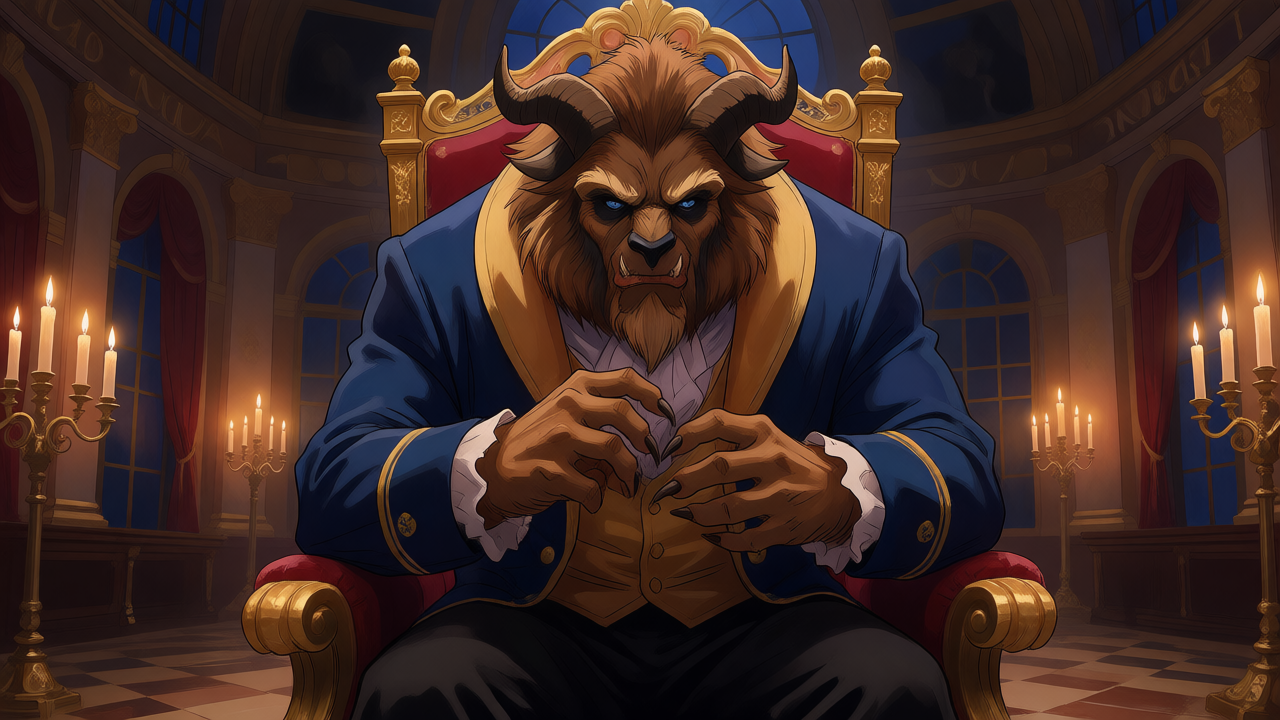
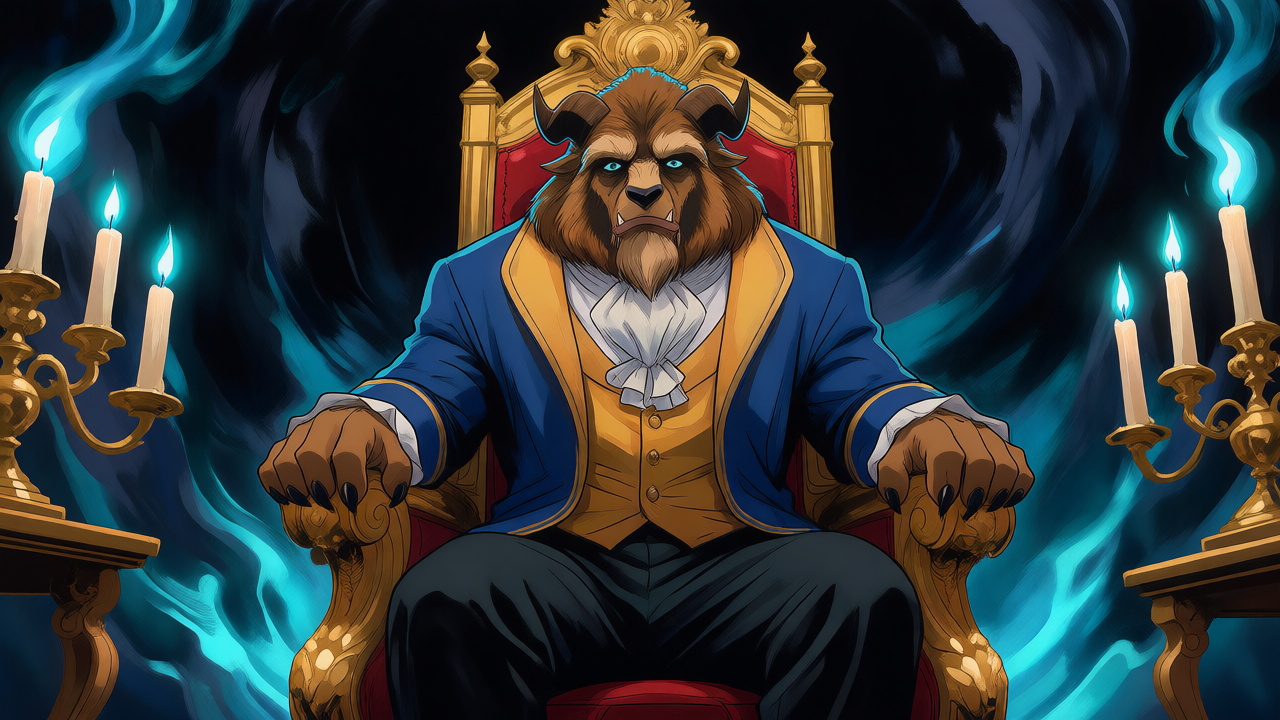
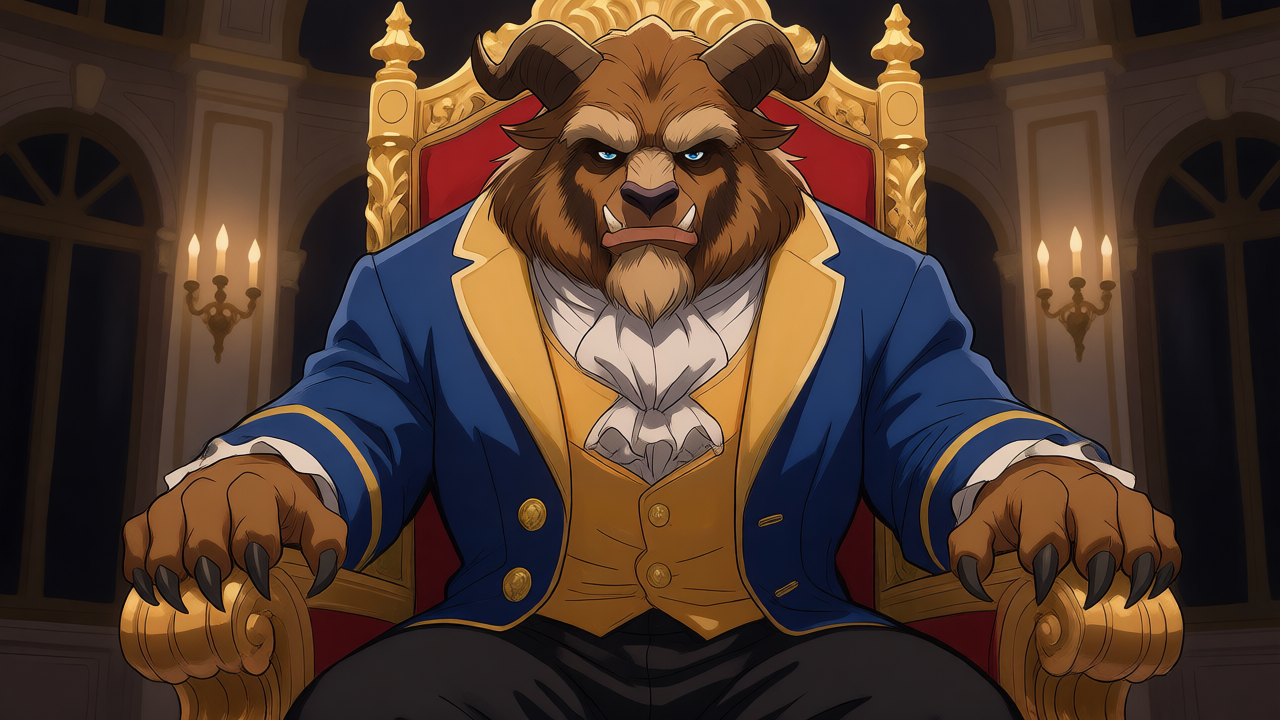
The Beast from Disney's "Beauty and the Beast" is a complex villain who transforms into a hero through his journey with Belle. Initially imprisoned in his castle due to a spell cast by an enchantress, the Beast must learn to love and be loved in return to break the curse. His struggle against his own darkness and the redemptive power of love make him a unique antagonist turned protagonist within the Disney franchise.
# Background & TimeLine
Official Story
The original animated film "Beauty and the Beast" was released in 1991, directed by Gary Trousdale and Kirk Wise. The story is based on the fairy tale of the same name by Jeanne-Marie Leprince de Beaumont. The success of this film led to several direct-to-video sequels, a live-action remake in 2017, a Broadway musical, various television productions, and video games.
Key Dates
- 1991: Release of the original animated film "Beauty and the Beast."
- 1997: Release of "Beauty and the Beast: The Enchanted Christmas," a direct-to-video holiday special.
- 1998: Release of "Belle's Magical World," another direct-to-video sequel.
- 1999: Release of "Belle's Tales of Friendship," a live-action/animated direct-to-video installment.
- 2017: Release of the live-action remake of "Beauty and the Beast."
- 2025: Announcement of a spin-off movie centered around Gaston, scheduled for release in 2026.
# The Evidence
Initial Curse
The Beast's transformation is the result of an enchantress's curse placed on him for his selfish and cruel behavior. This curse serves as a catalyst for his journey towards redemption.
Interaction with Belle
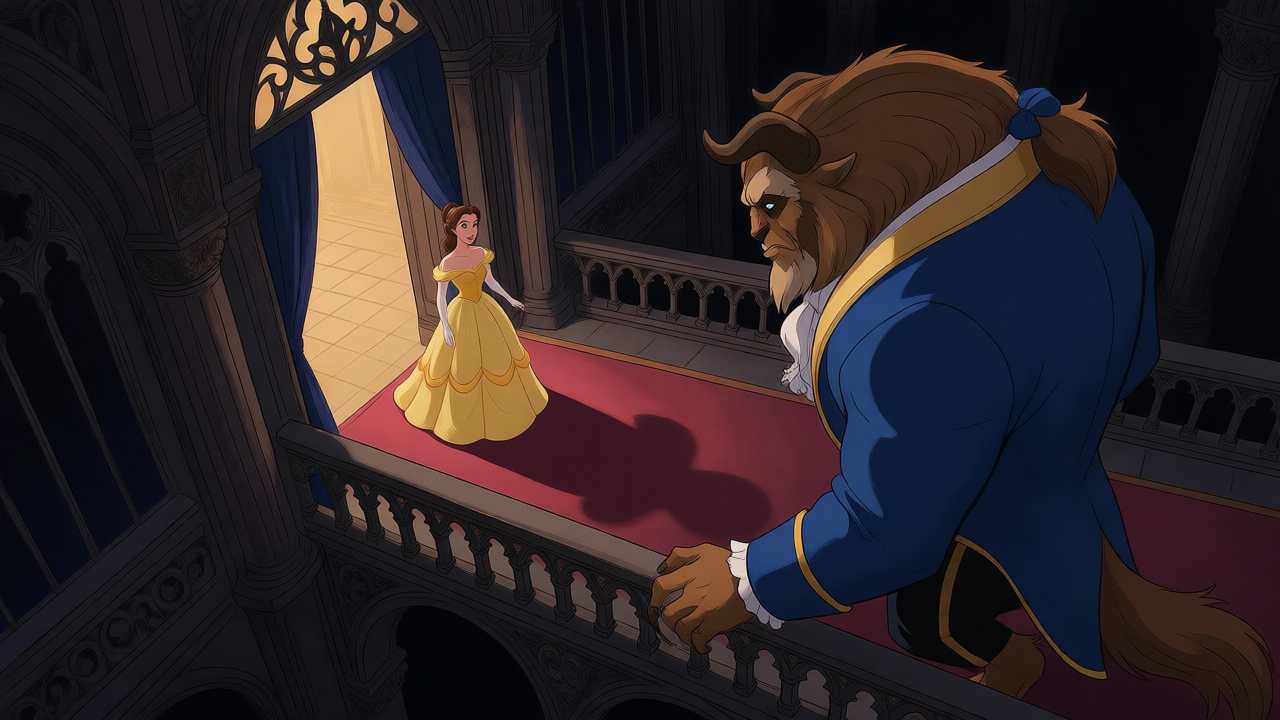
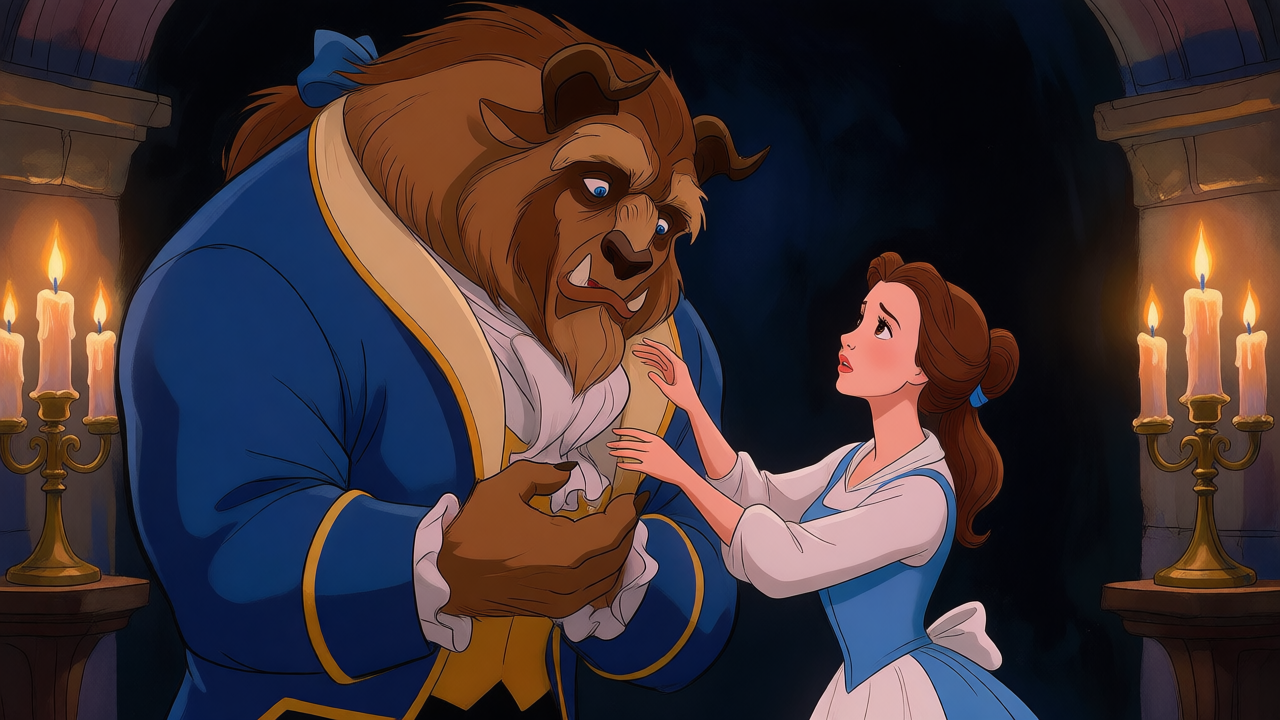
Belle’s arrival at the castle forces the Beast to confront his isolation and loneliness. Their relationship evolves from captor-captive to friendship and eventually love, which is crucial for breaking the spell.
Transformation
Throughout the story, the Beast undergoes a profound transformation both physically and emotionally. As he learns to care for others and experiences true love with Belle, the curse is lifted, revealing his human form.
# The Case
Is the Beast Truly Evil?
The Beast's initial behavior could be seen as cruel and selfish, but it is important to note that these actions are a result of his isolation and the curse itself. His transformation into a more compassionate being demonstrates his capacity for good.
Redemptive Power of Love
The core theme of "Beauty and the Beast" revolves around the redemptive power of love. The Beast's journey illustrates how love can transform even the most seemingly hopeless individuals into heroes.
Lessons Learned
Through his interactions with Belle, the Beast learns the importance of empathy, kindness, and selflessness. These lessons are fundamental to his redemption and eventual happy ending.
# The Cutting Room
Alternate Endings
Some theories suggest alternate endings where the Beast does not transform back into a human but remains as a beast out of choice, highlighting that true love is about accepting someone for who they are rather than what they look like.
Psychological Impact of Isolation
The psychological impact of prolonged isolation on the Beast could have been explored further in the story. His initial aggression and later transformation might be attributed to the mental strain of his solitude.
# Final Word
The Beast from "Beauty and the Beast" is a unique villain whose journey from darkness to light makes him one of Disney's most compelling characters. Through his interactions with Belle, he learns the power of love and redemption, ultimately transforming into a hero. His story serves as a reminder that even the most broken individuals can find healing and happiness through love and understanding.
📝 Full Transcript
COLD OPEN
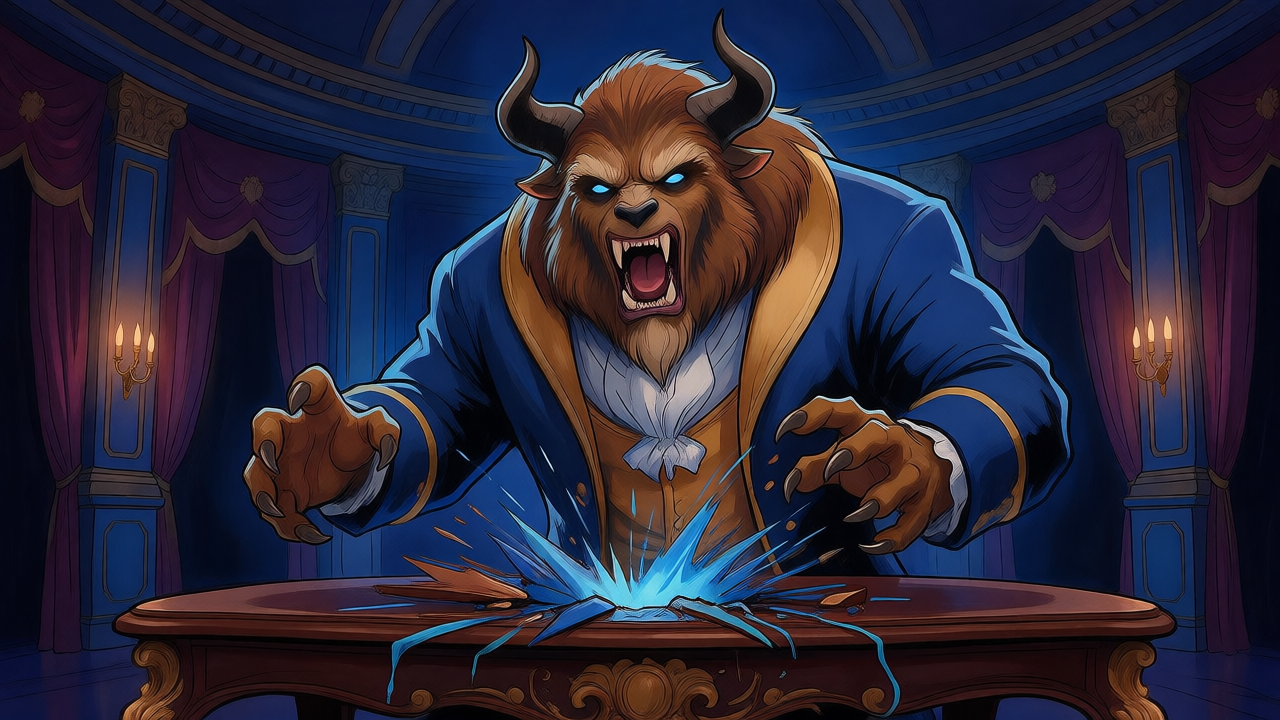
[EDDIE:intense]: Most people see a romantic hero when they look at the Beast, but what if his temper tantrum actually ruined lives? He isn't just misunderstood; he is the true source of chaos in this story.
[EDDIE:snarky]: This program contains enough emotional turbulence to shatter even the finest crystal.
[REG:pompous]: The opinions expressed herein are strictly the product of an overactive imagination and a total lack of restraint.
[REG:pompous]: ---
INTRO
[REG:pompous]: "He who fights with monsters should look to it that he himself does not become a monster." -- Friedrich Nietzsche. Today on Hero on Trial, we are dissecting the Prince from Disney's Beauty and the Beast.
[EDDIE:intense]: We are spoiling all of Disney's Beauty and the Beast. If you have not seen it, that is entirely your fault.
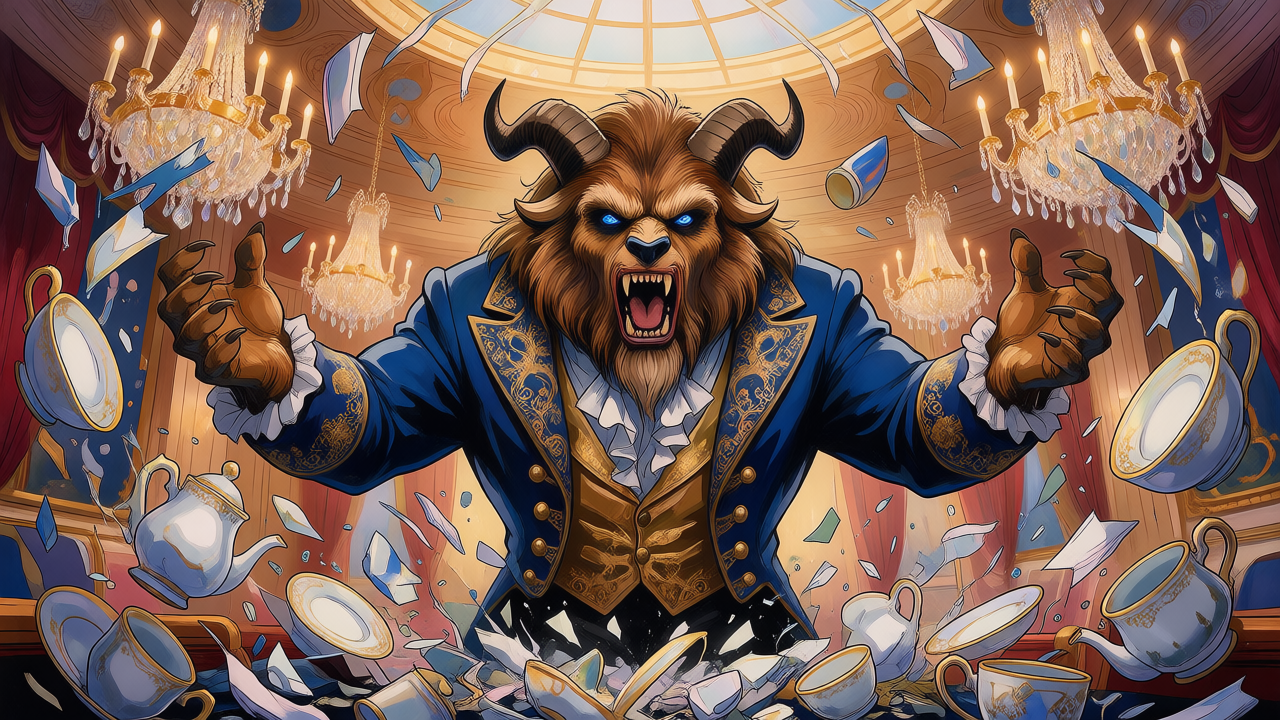
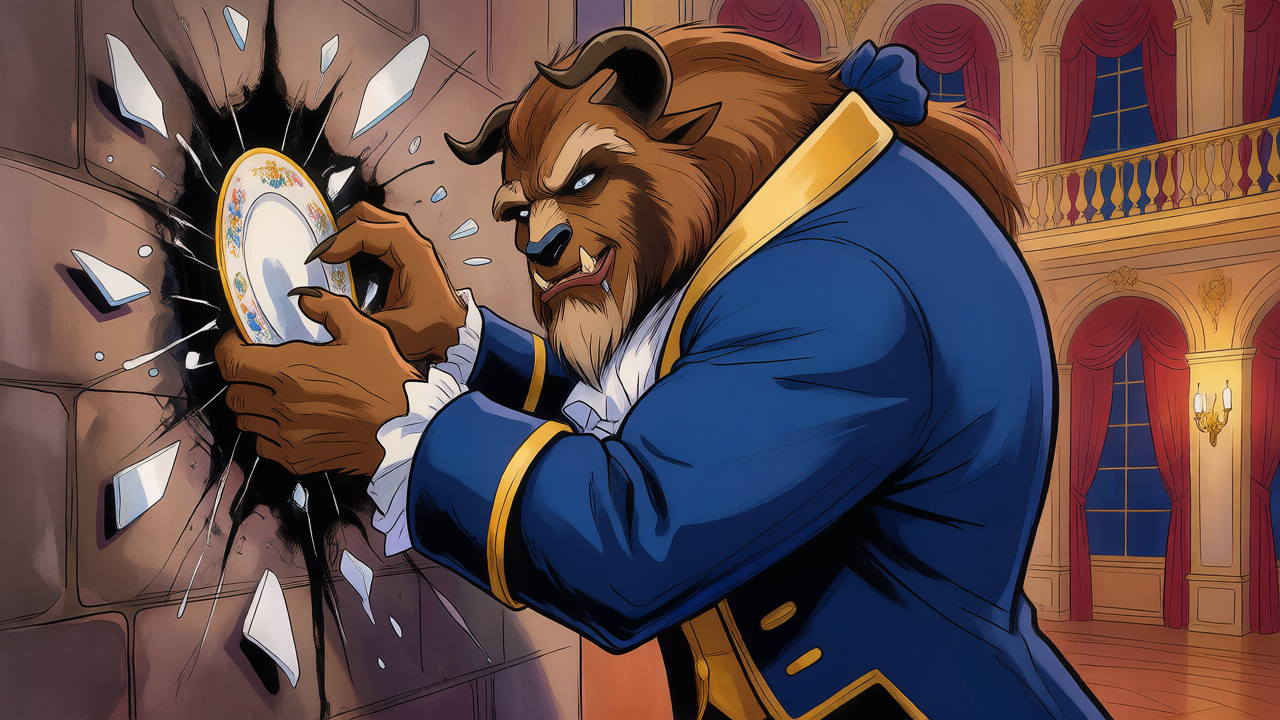
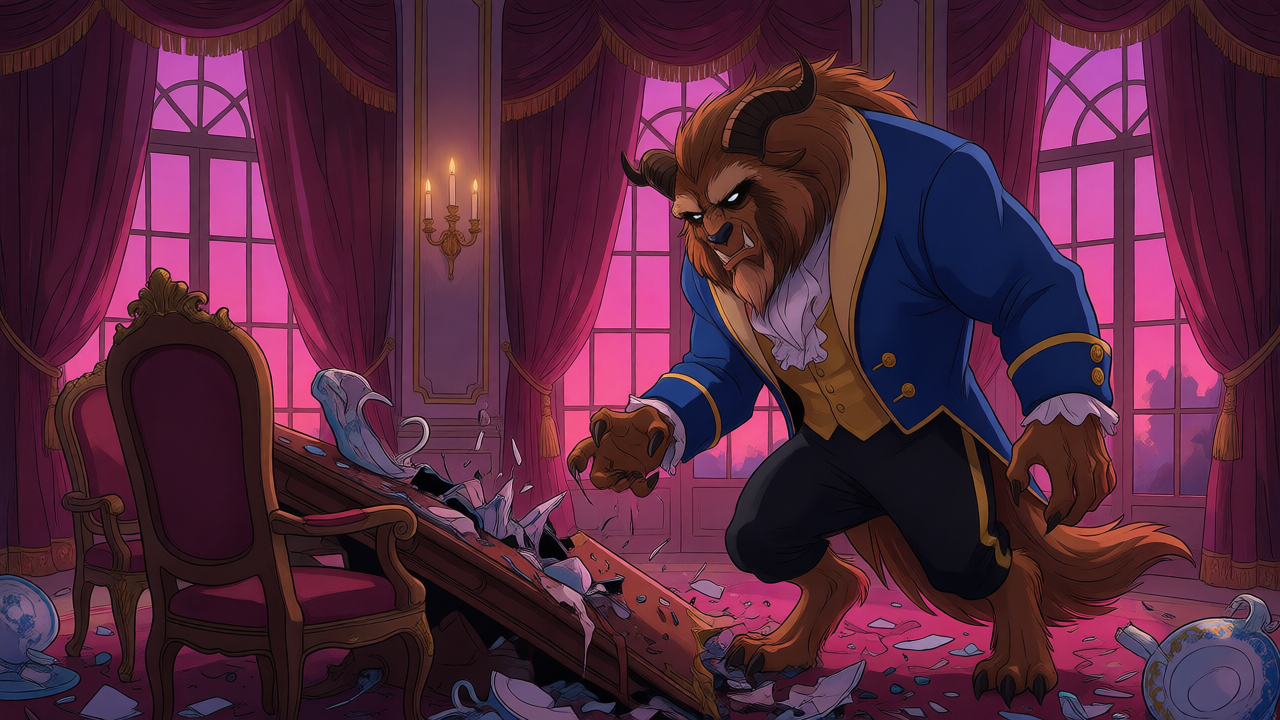
[EDDIE:snarky]: People think this guy gets a redemption arc because he learns to read books and stop throwing plates, but the man is basically a domestic terror hazard who uses a cursed castle as a private prison for his emotional baggage.
[EDDIE:excited]: I am here to prove that the Beast is the most destructive force in that entire kingdom.
[REG:calm]: And I will be arguing that his transformation is a genuine reclamation of humanity through selfless choice, despite his initial volatility.
[REG:disbelief]: The audacity required to label a man learning empathy as a "terror hazard" is almost impressive, Eddie.
[REG:disbelief]: ---
BACKGROUND
[REG:calm]: To establish the foundation for our discussion, we must look at the source material. We are examining the 1991 animated film *Beauty and the Beast*, directed by Gary Trousdale and Kirk Wise and produced by Walt Disney Feature Animation. This landmark production is a cornerstone of the "Disney Renaissance" era and was notably selected for preservation in the National Film Registry by the Library of Congress. While most people know it from this original masterpiece, there is also a 2017 live-action remake starring Emma Watson as Belle and Dan Stevens as the Beast. If you have ever seen any of the numerous Broadway musical adaptations or even the various video games based on the property, you will recognize the core components here. It is widely considered one of the most significant and culturally impactful animated films in history.
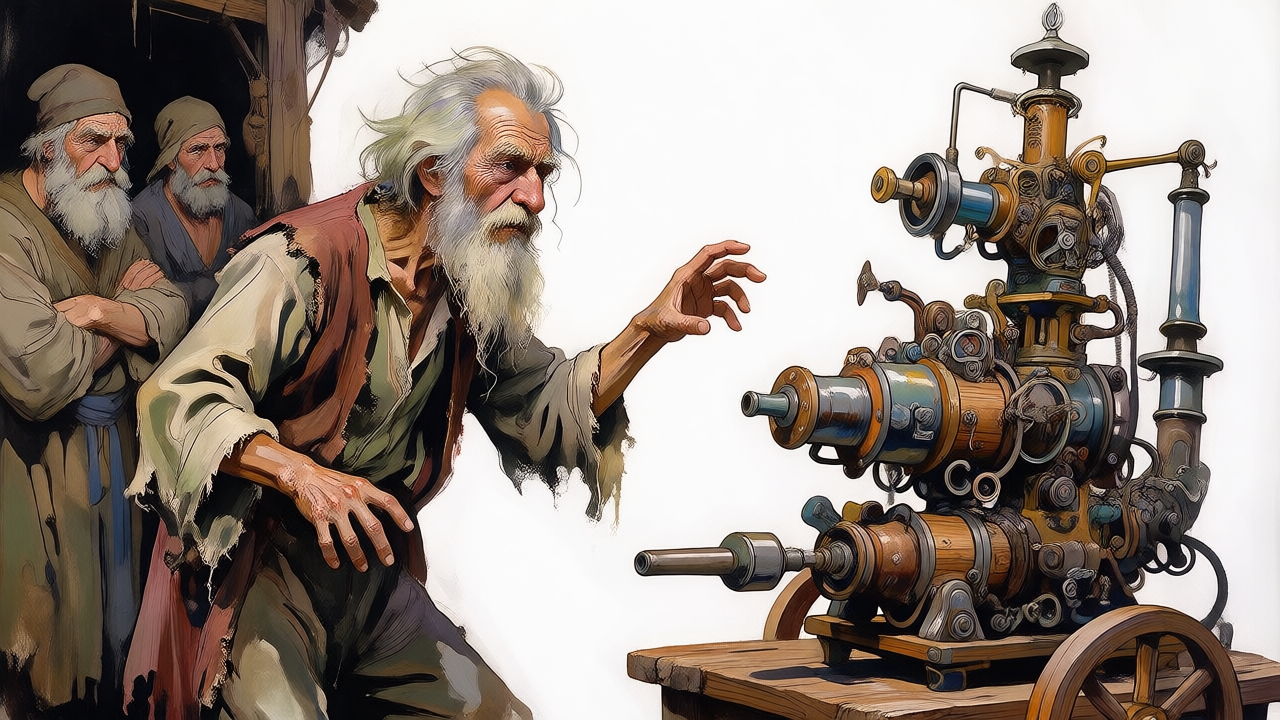
[EDDIE:intense]: Alright, let’s get this damn story straight so we can actually tear it apart. We start in a small, provincial village where everything is pretty standard-issue boring. We meet Belle, who's an outcast because she’s constantly reading books and dreaming of something more than just being the local girl with the weird dad. Her father, Maurice, is this eccentric inventor that the villagers basically treat like he's lost his mind. He builds stuff like a machine to chop firewood, which sounds useless but he’s clearly just a tinkerer.
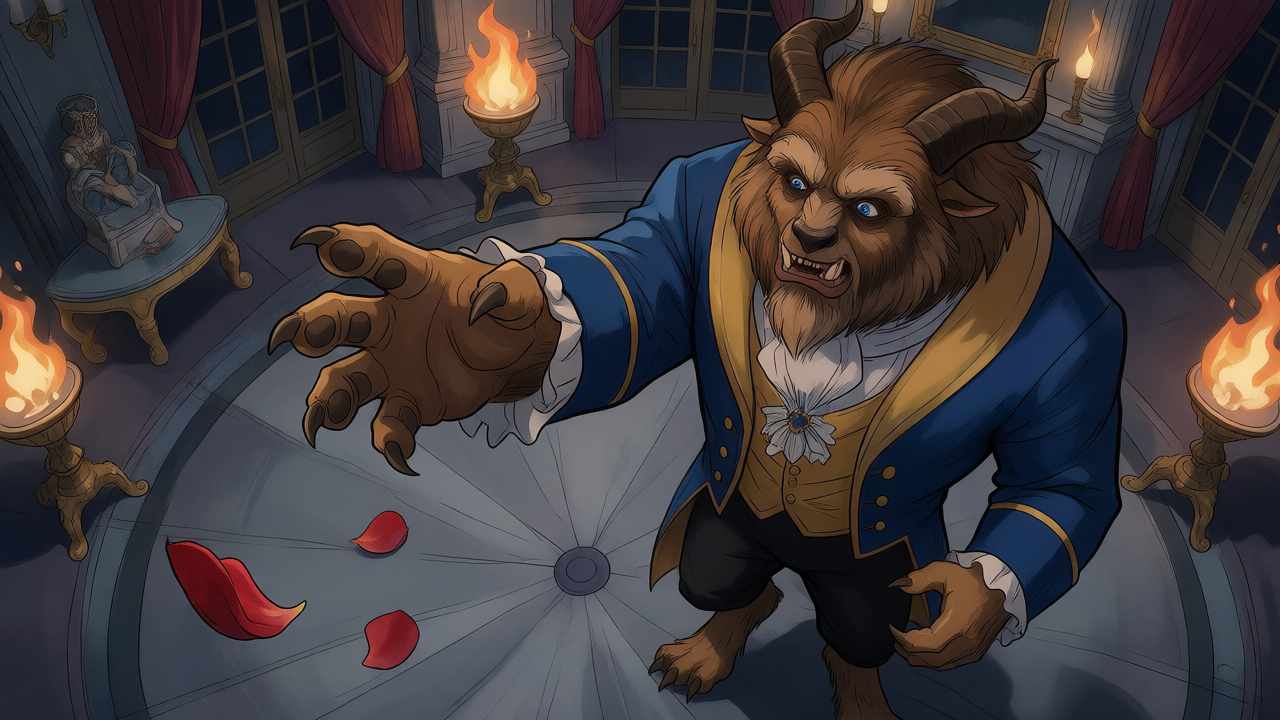
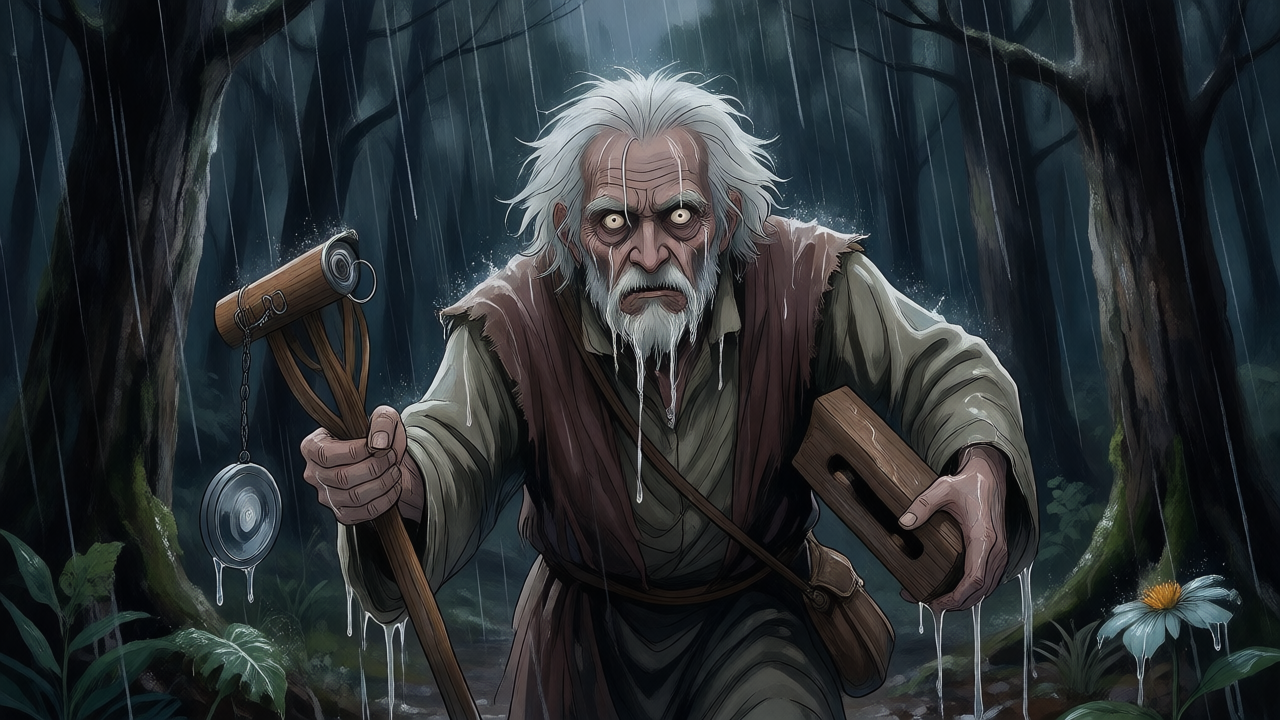
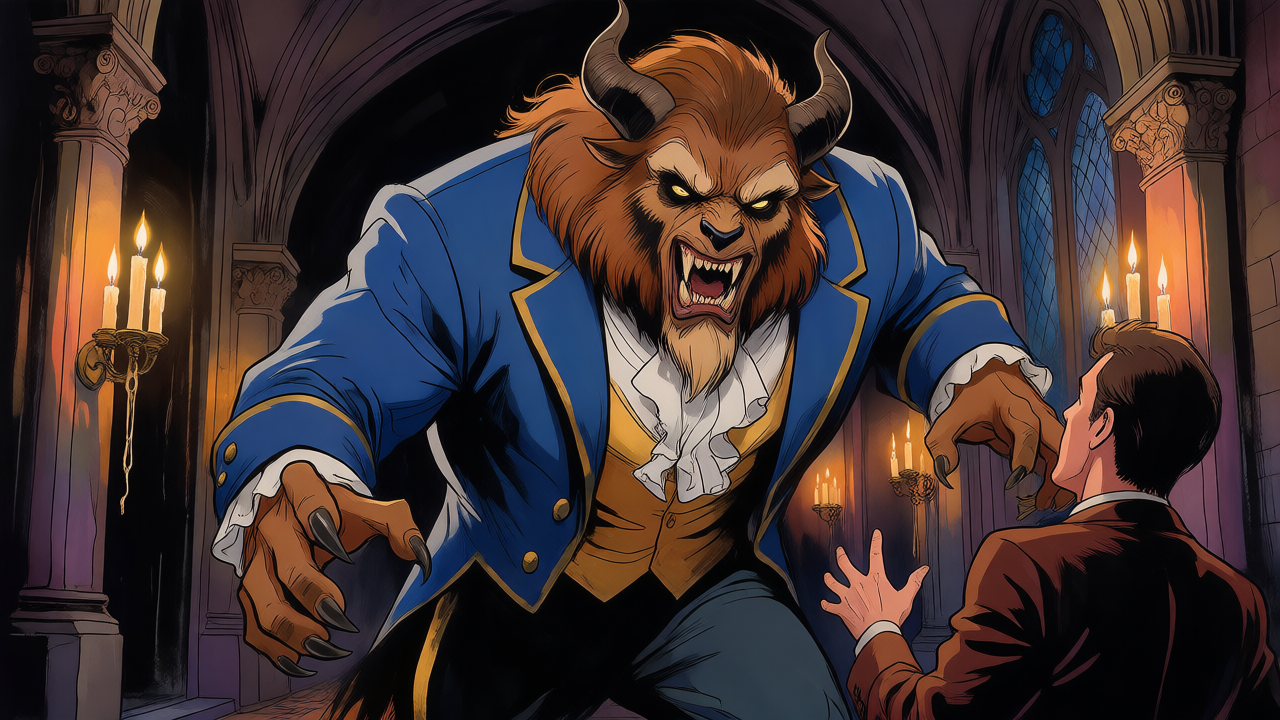
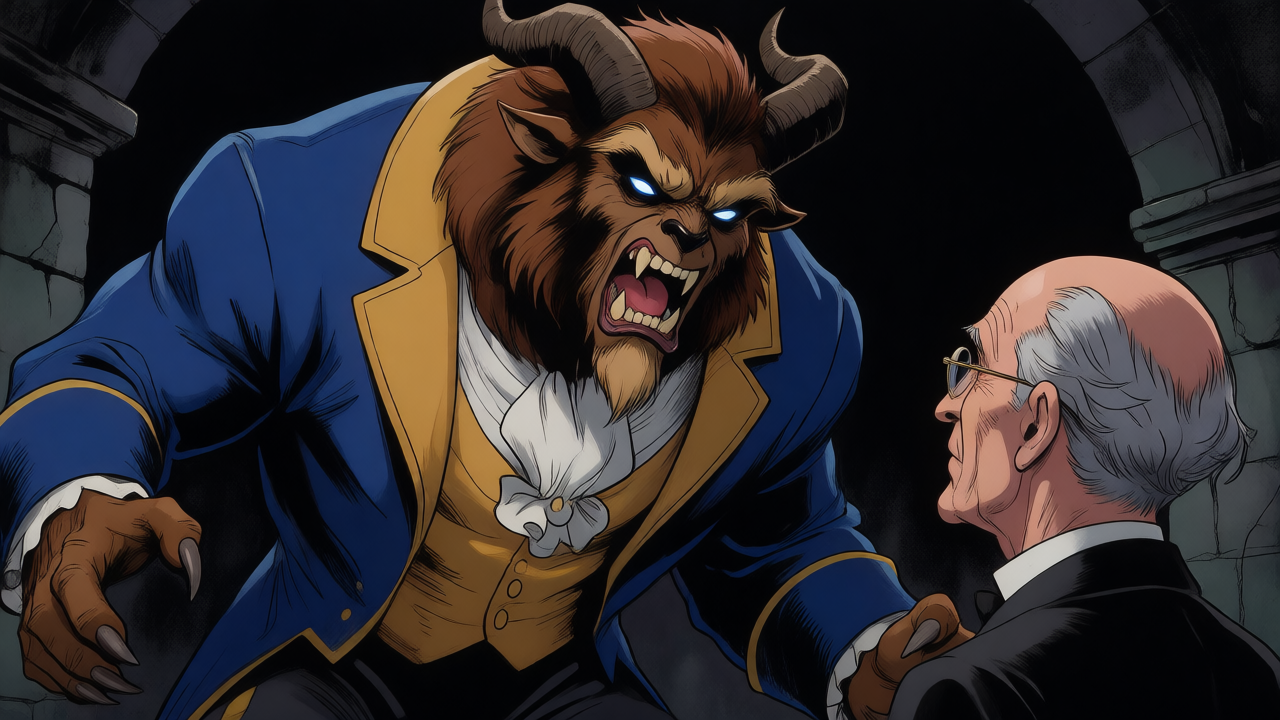
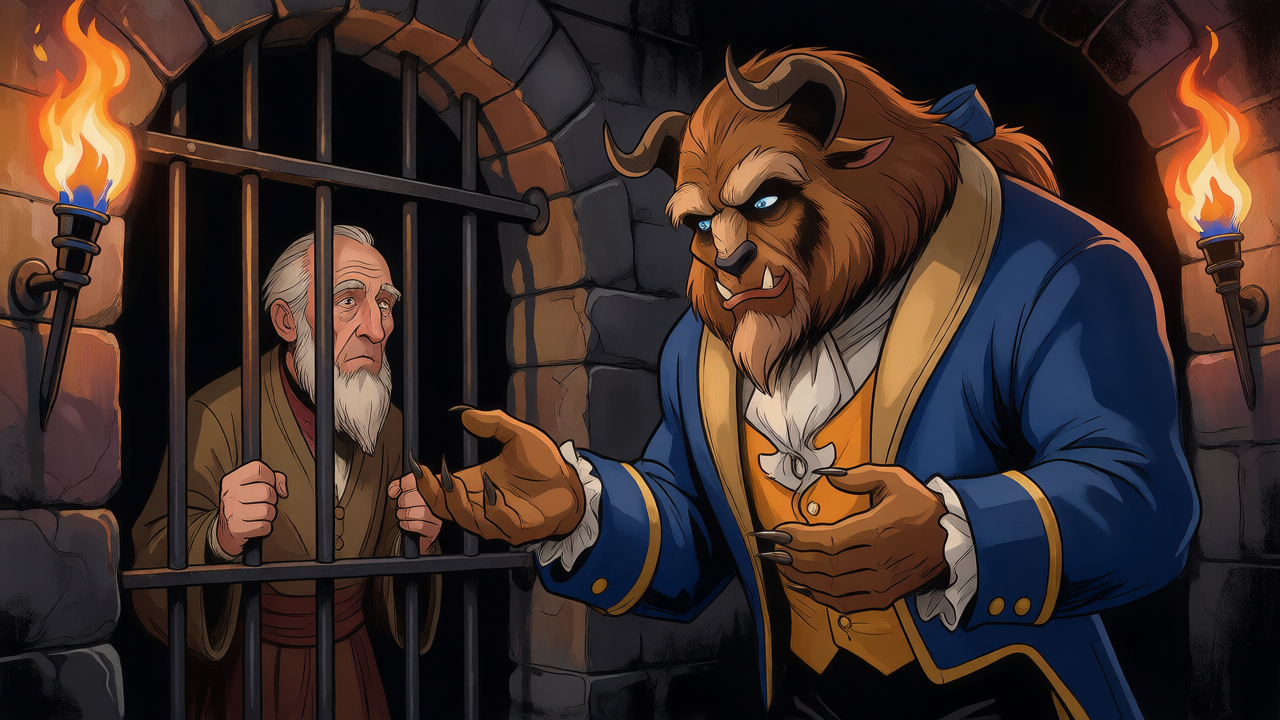
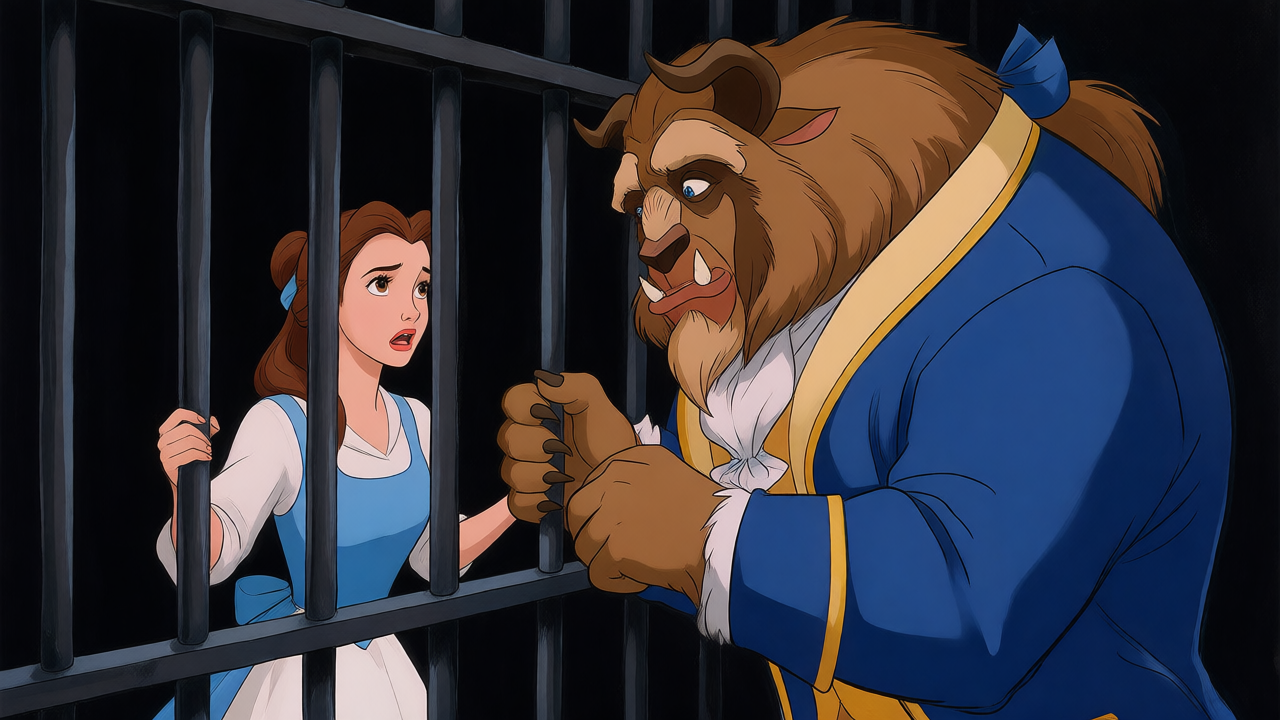
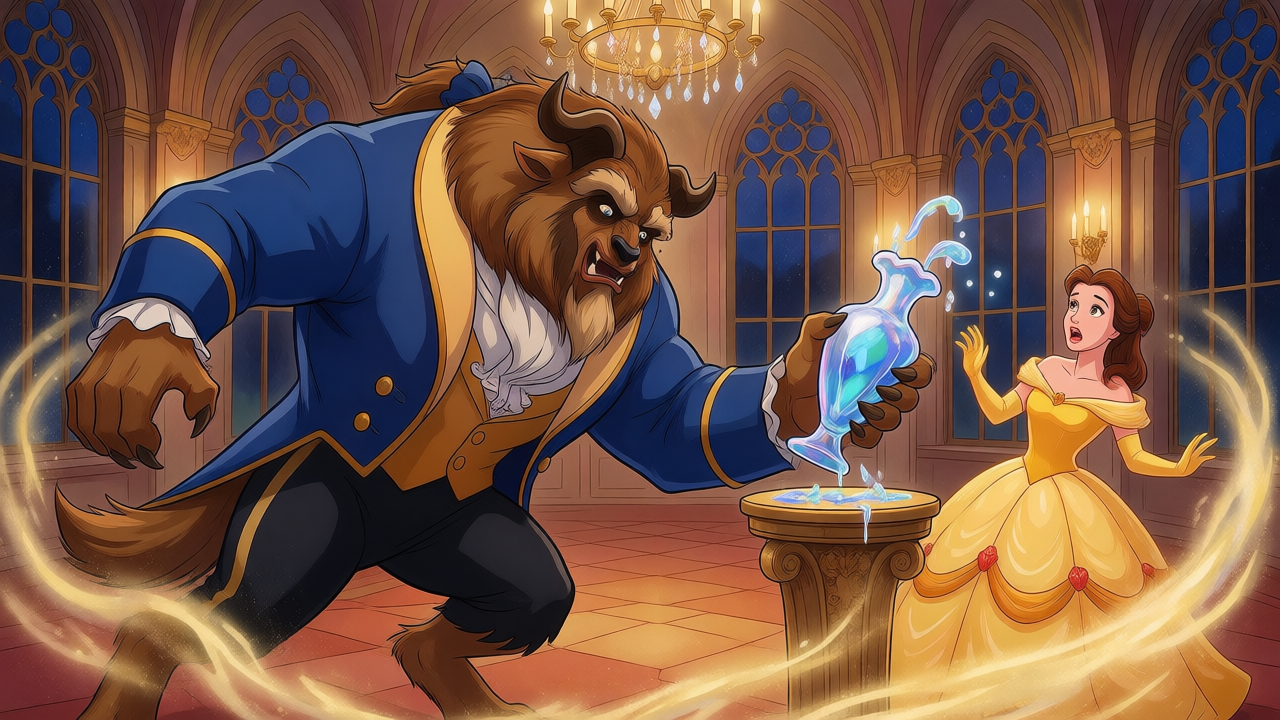
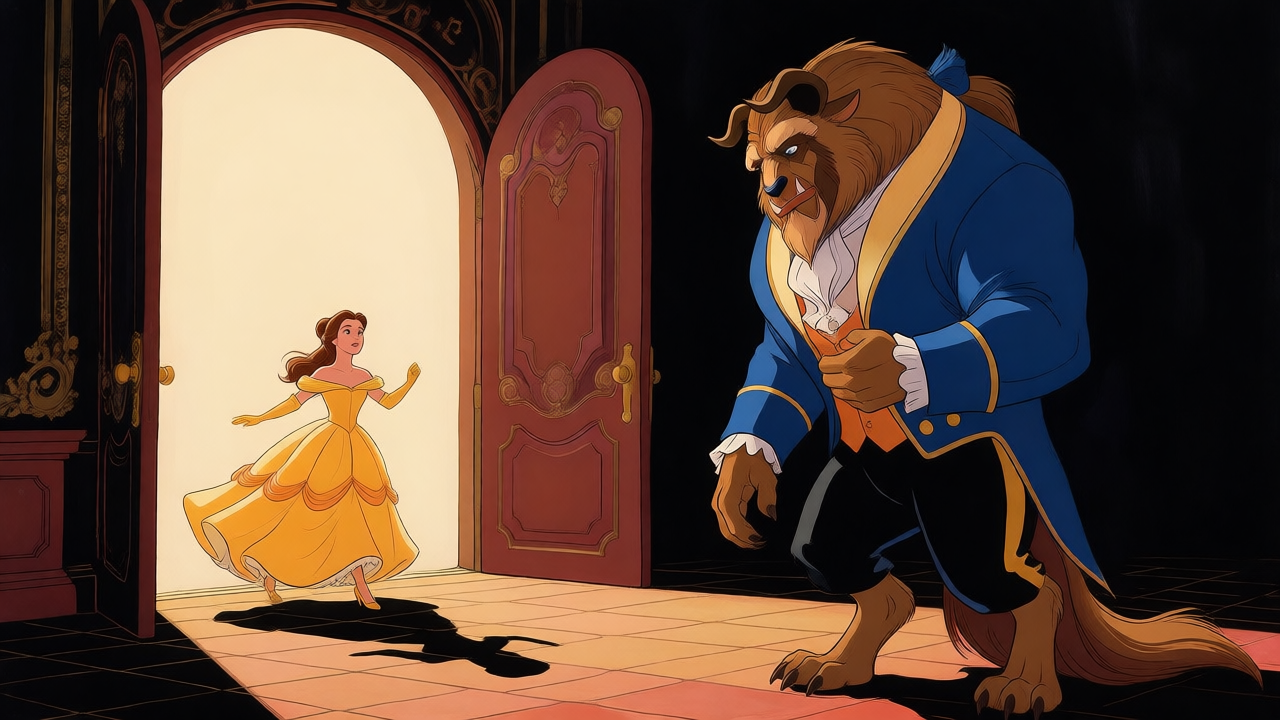
[EDDIE:intense]: Anyway, Maurice goes to a fair but gets lost in the woods during a storm. He stumbles upon this massive, dark, creepy-as-hell castle and enters it seeking shelter. Instead of getting a warm welcome, he runs into the master of the house—the Beast. The Beast is this huge, terrifying creature who just loses his shit on Maurice for trespassing. He ends up locking the old man in a dungeon, which is where the real trouble starts.
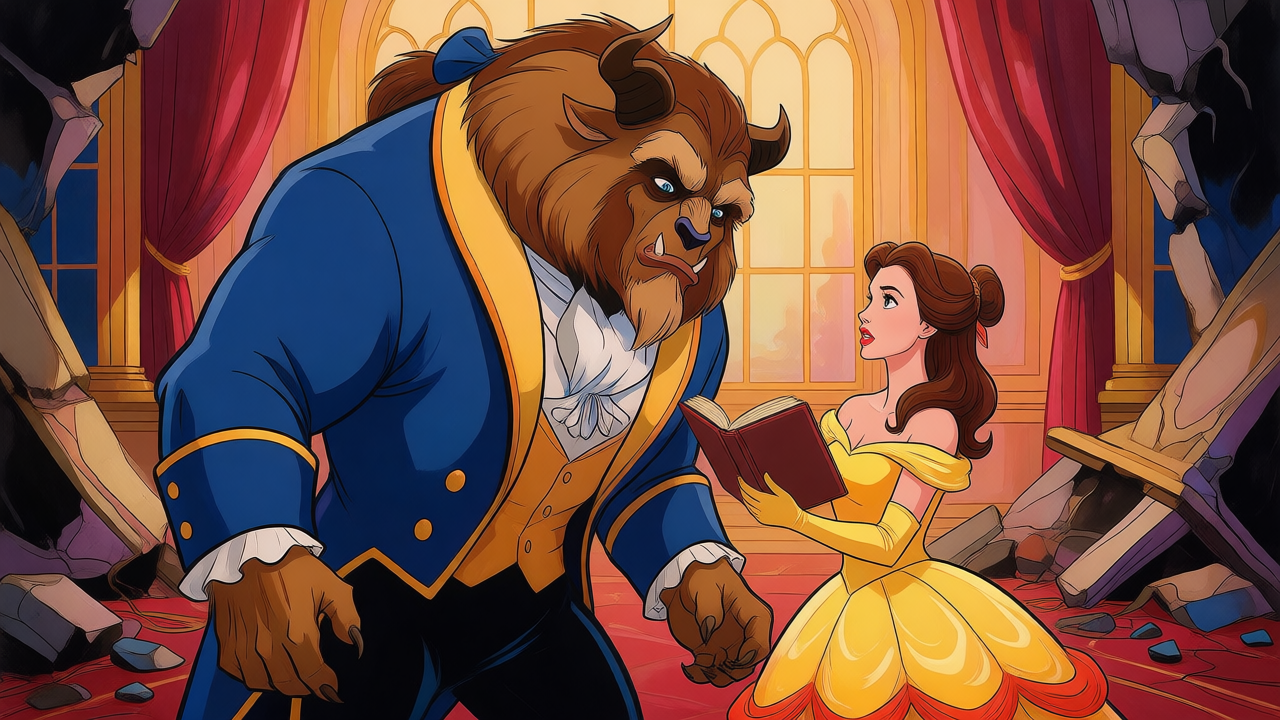
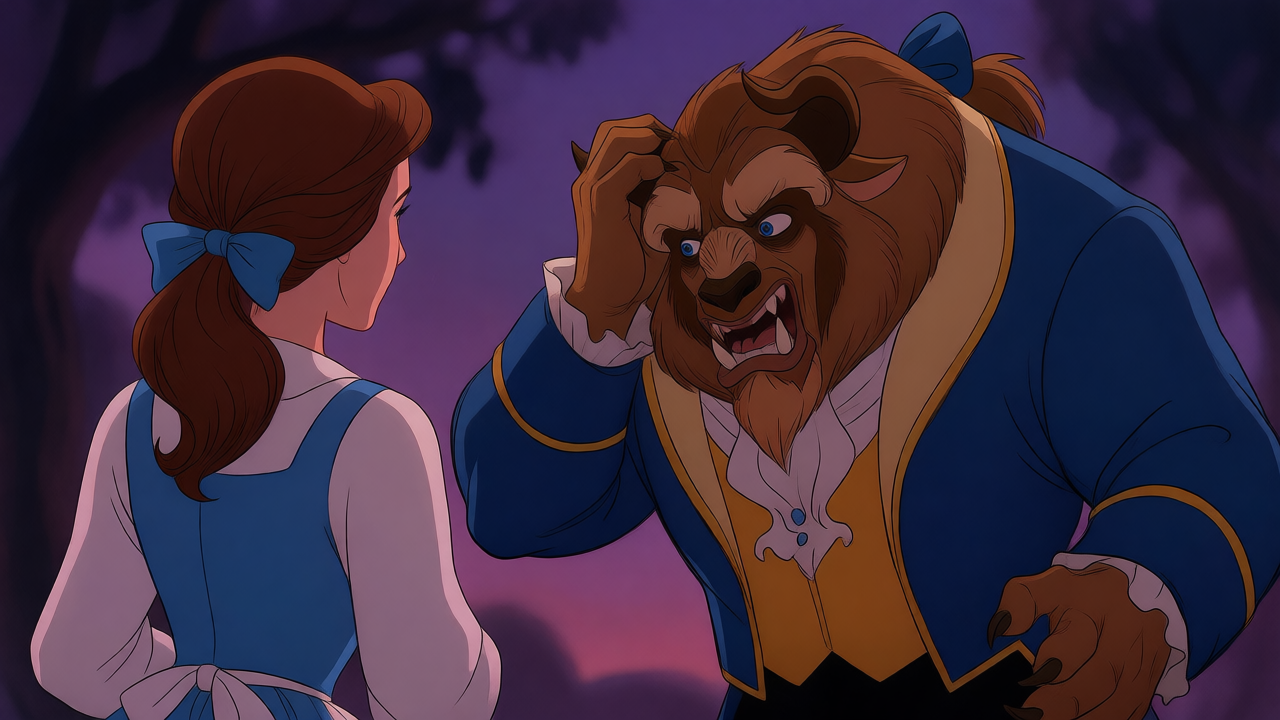
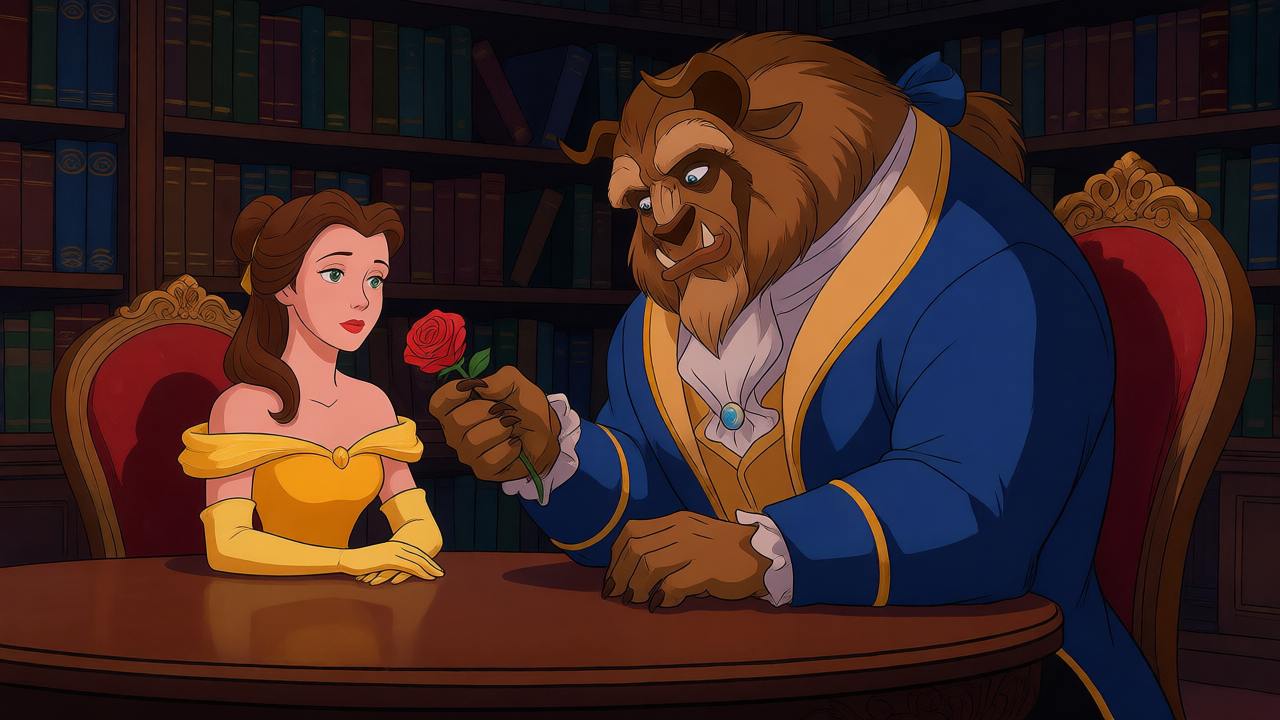
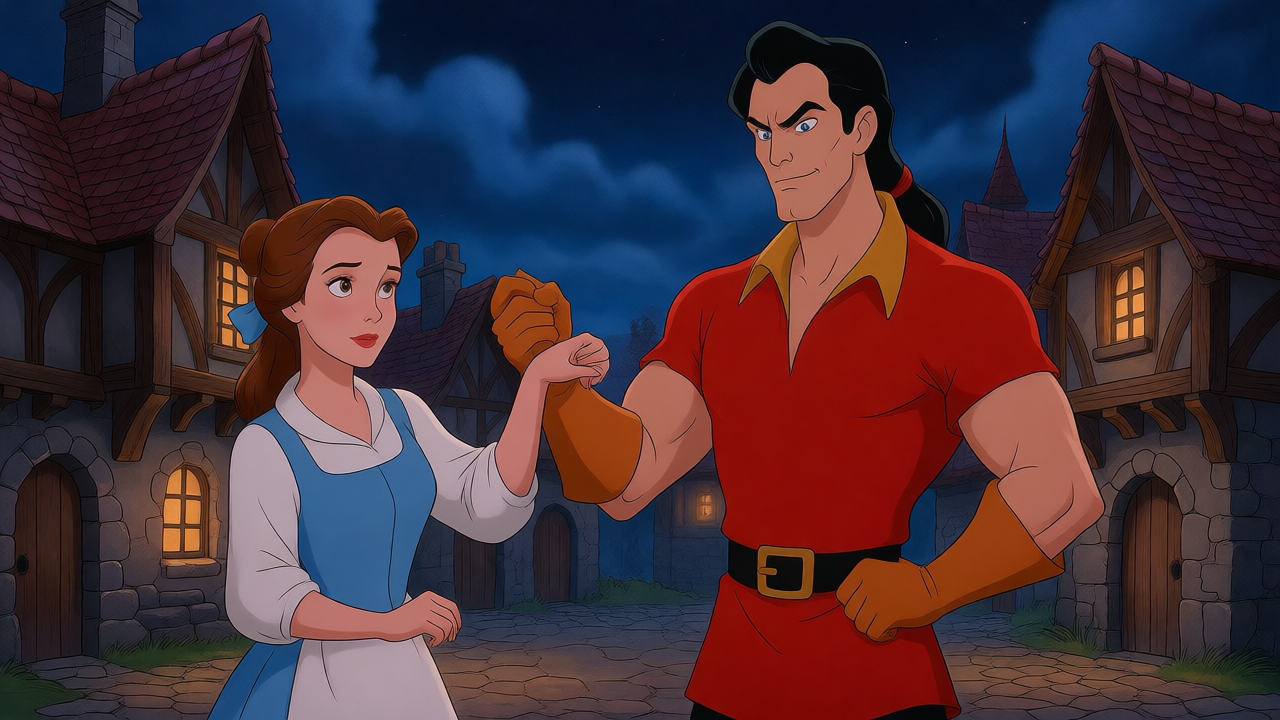
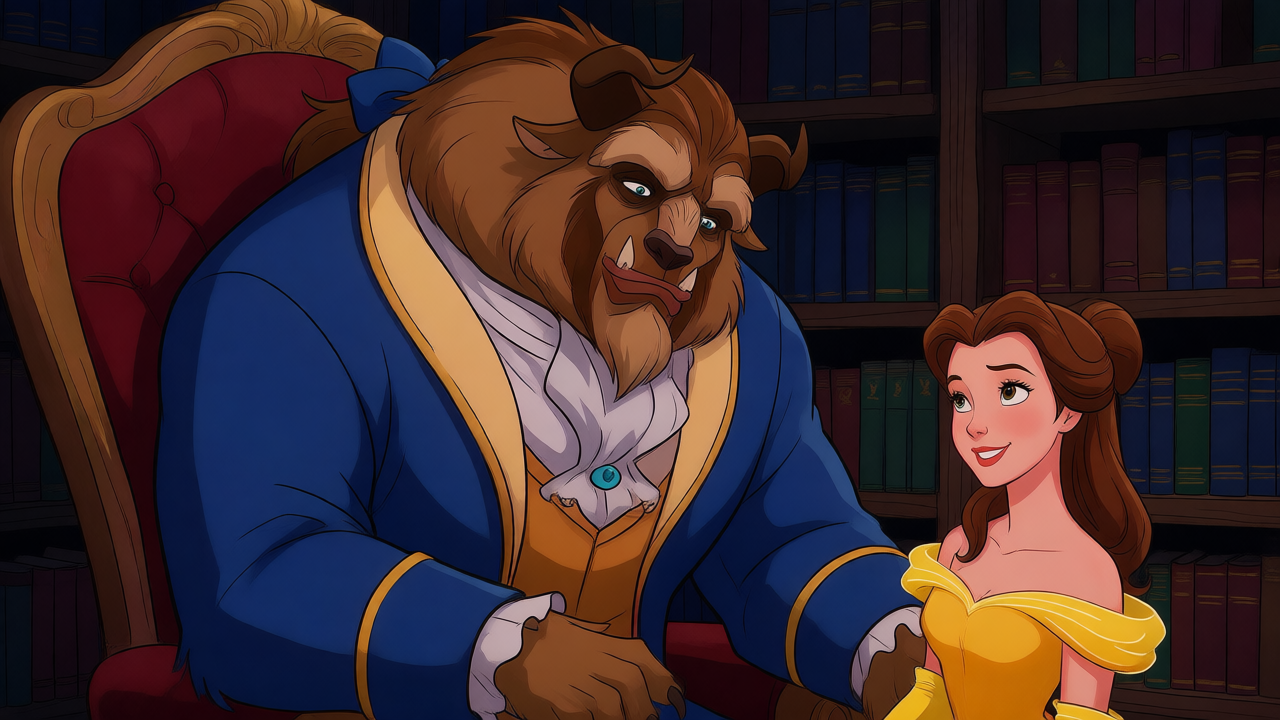
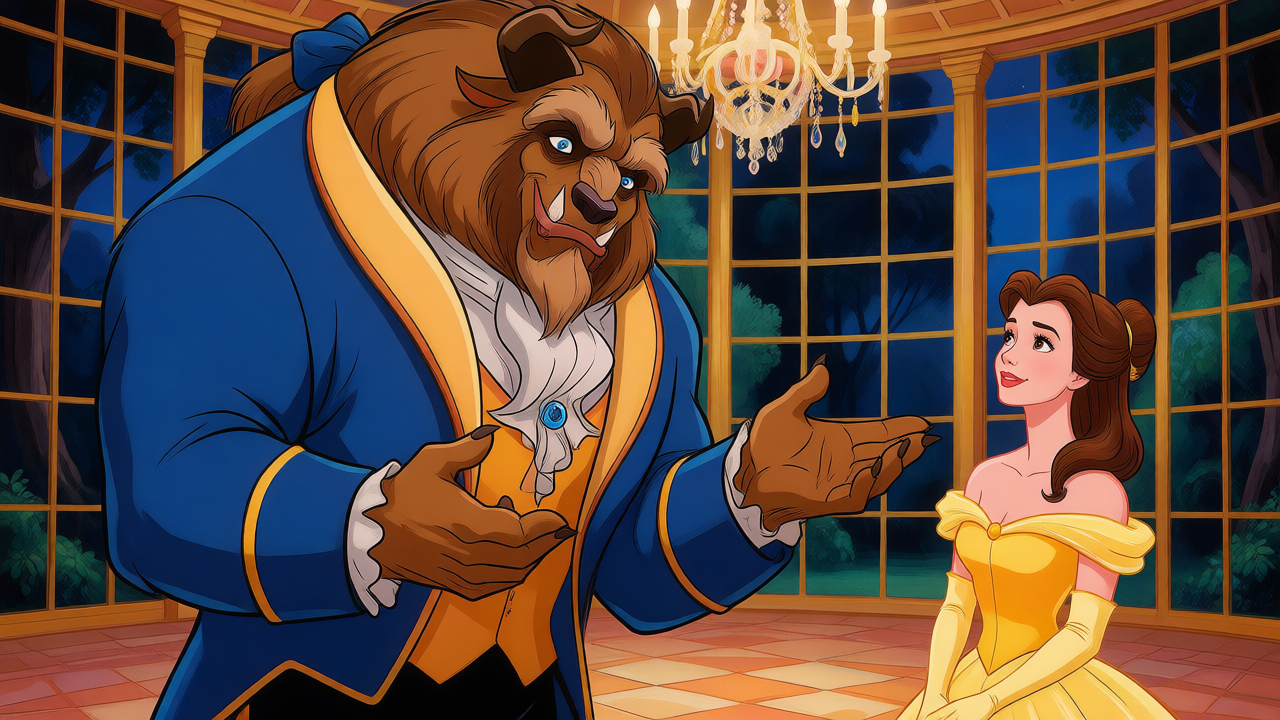
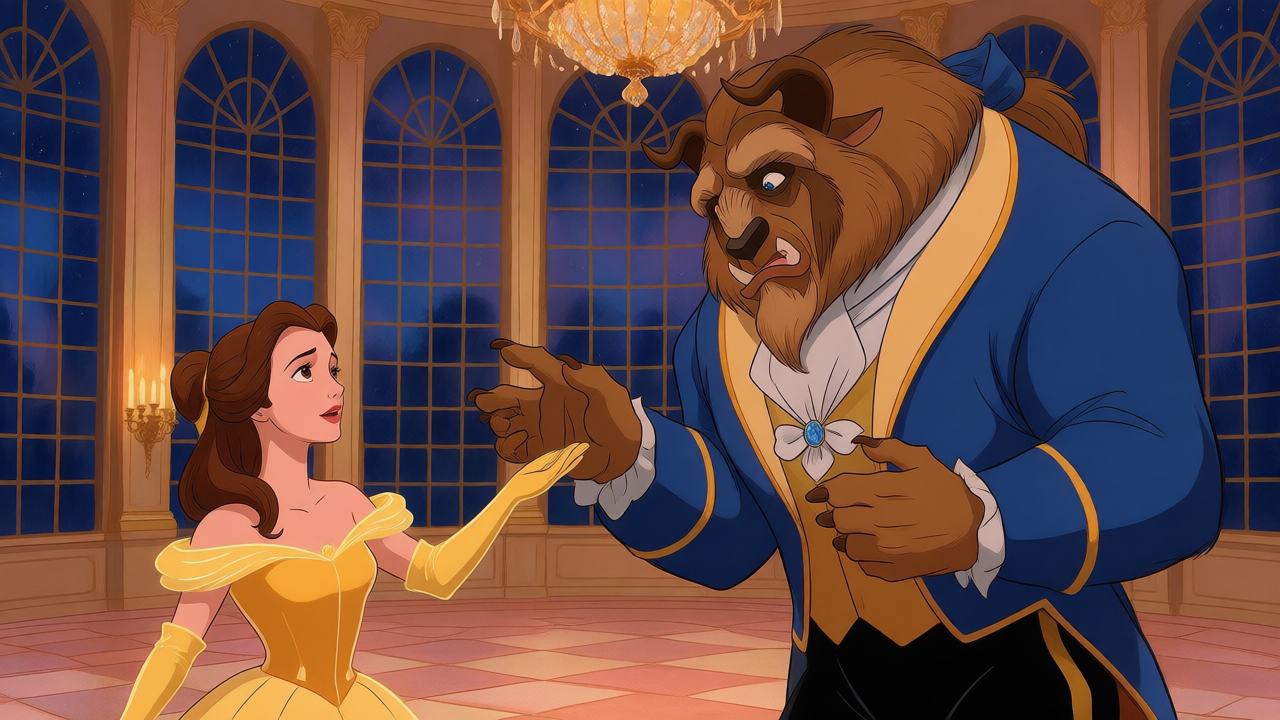
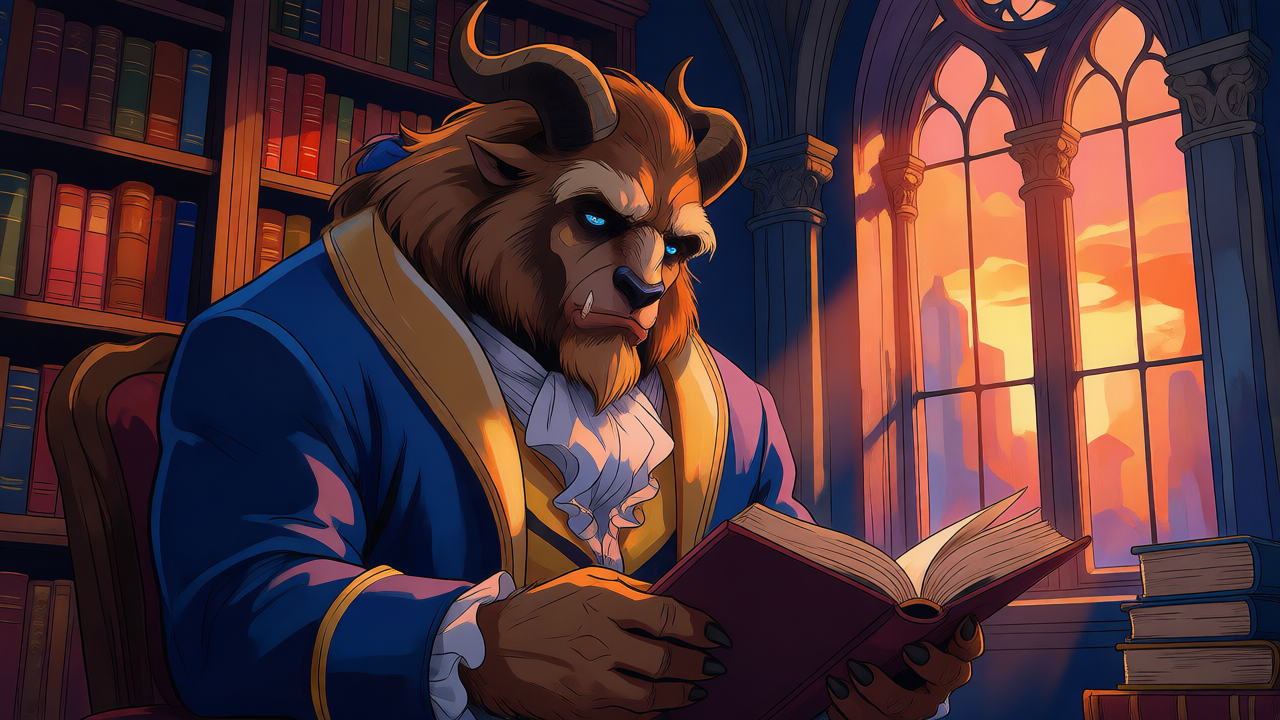
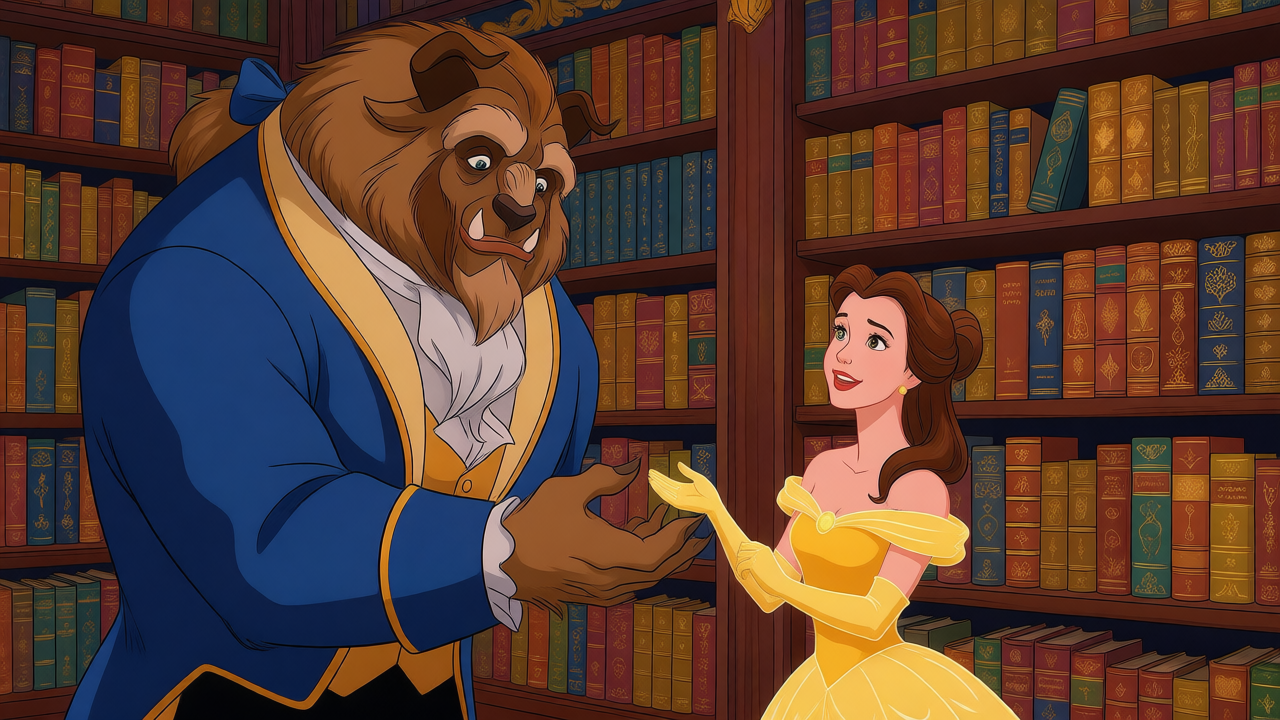
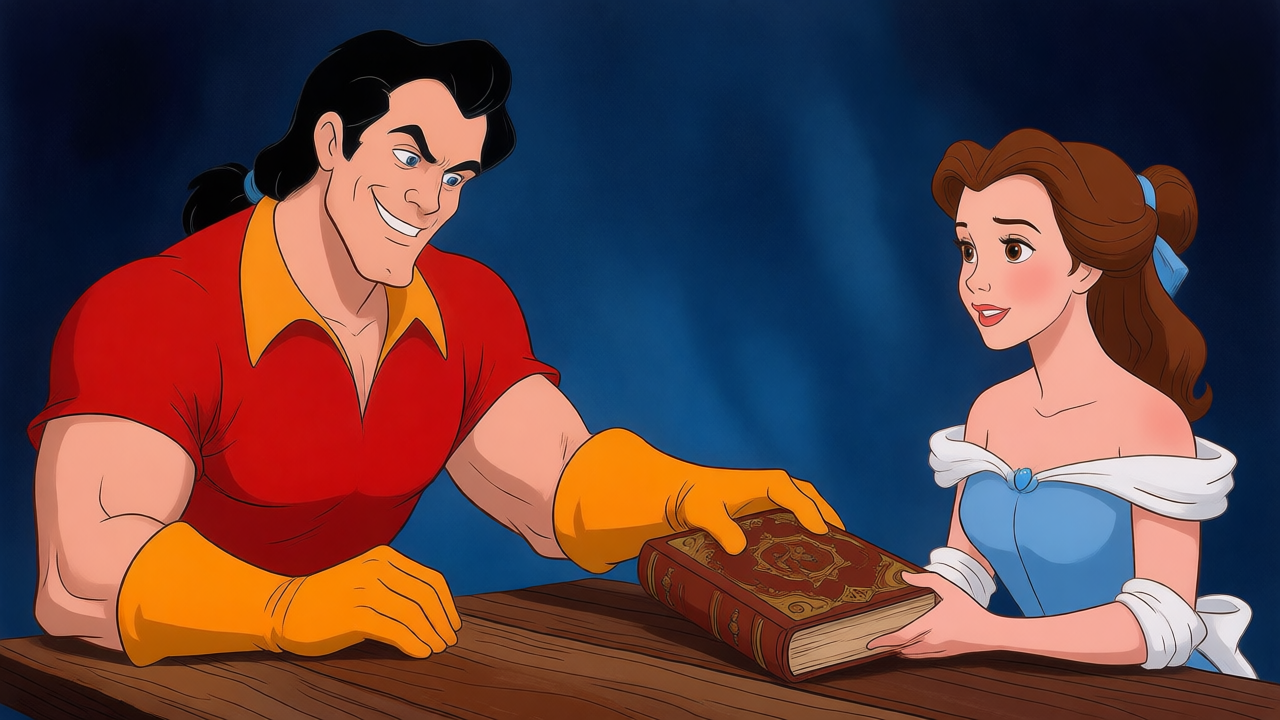
[EDDIE:intense]: As Belle settles in, we see this weird tension building. The Beast is clearly struggling with his temper and his monstrous form. He's trying to be a gentleman but he’s constantly on the edge of being a total prick. They start spending time together, reading in the library, and eating dinner, and it starts looking like a romance might actually happen. Meanwhile, back in the village, we have Gaston. He is the local hero/jerkhead who's obsessed with Belle because he thinks she’s his property just by virtue of being pretty.
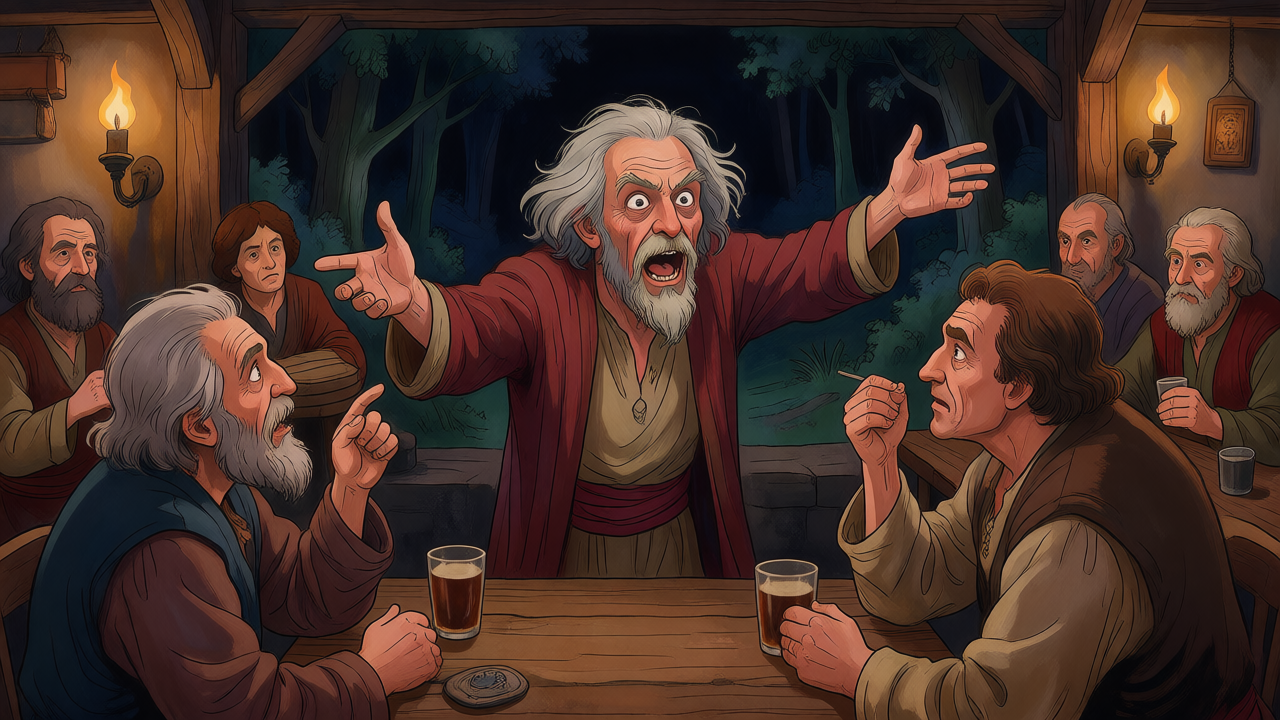
[EDDIE:intense]: While Belle is having this complicated time at the castle, Maurice ends up getting lost again and eventually finds refuge at the village tavern. He tries to tell everyone that Belle has been kidnapped by a monster, but since they think he's crazy, nobody believes him. This leads to Gaston deciding he needs to be the hero who "saves" her.
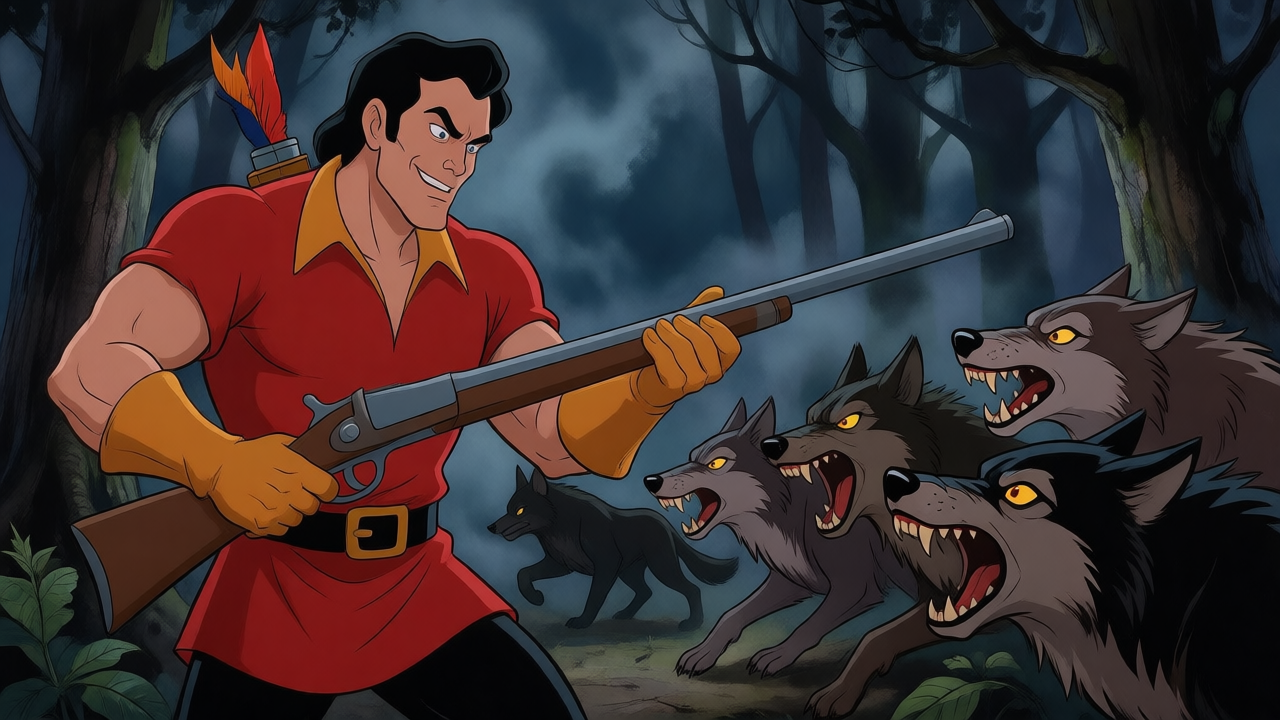
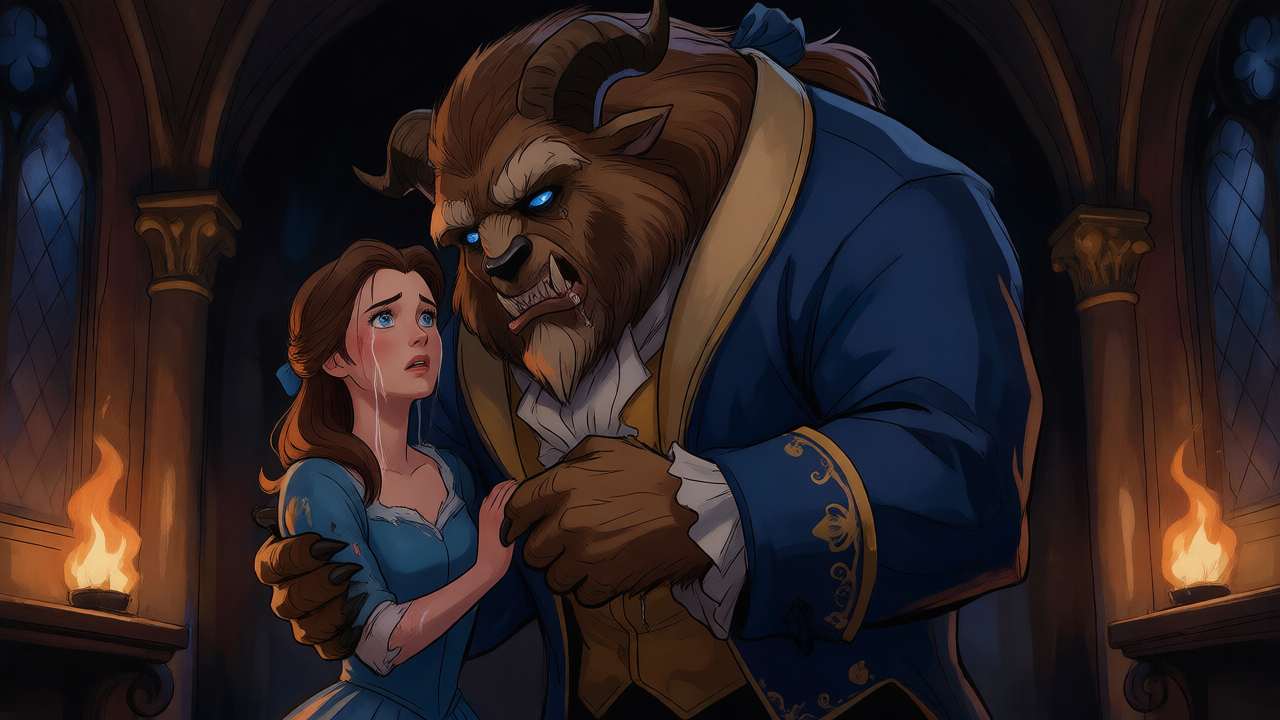
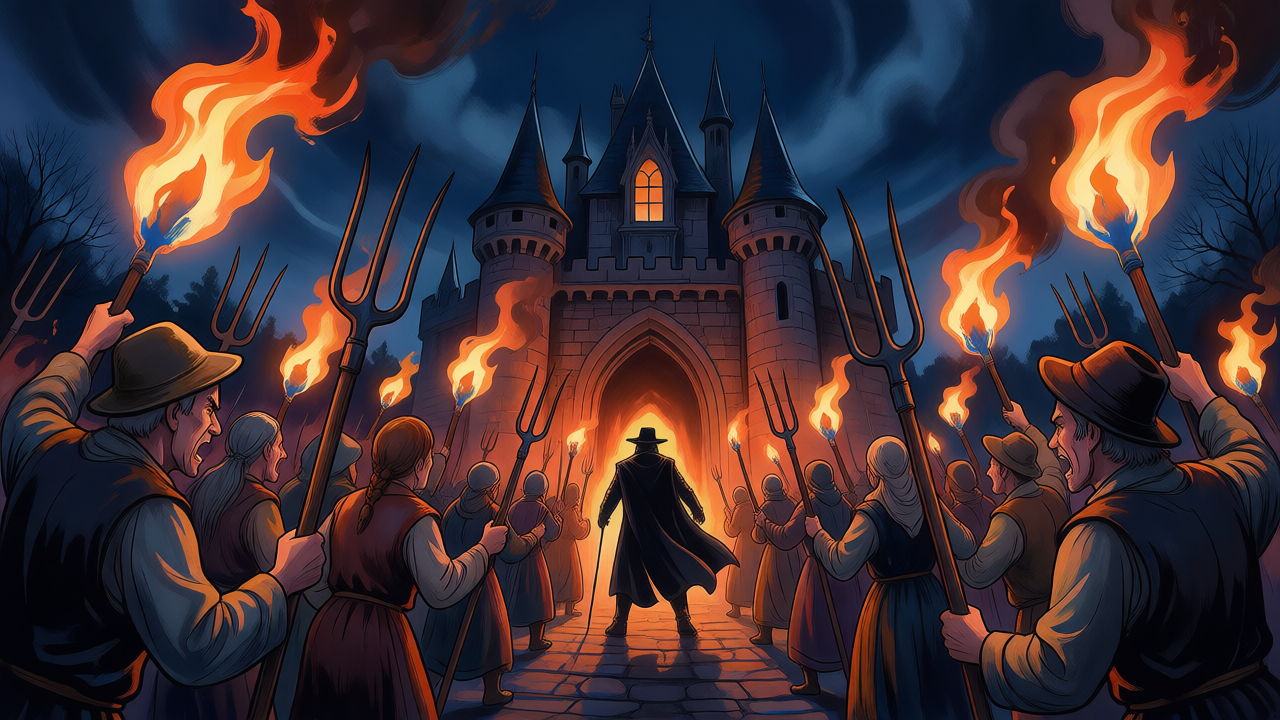
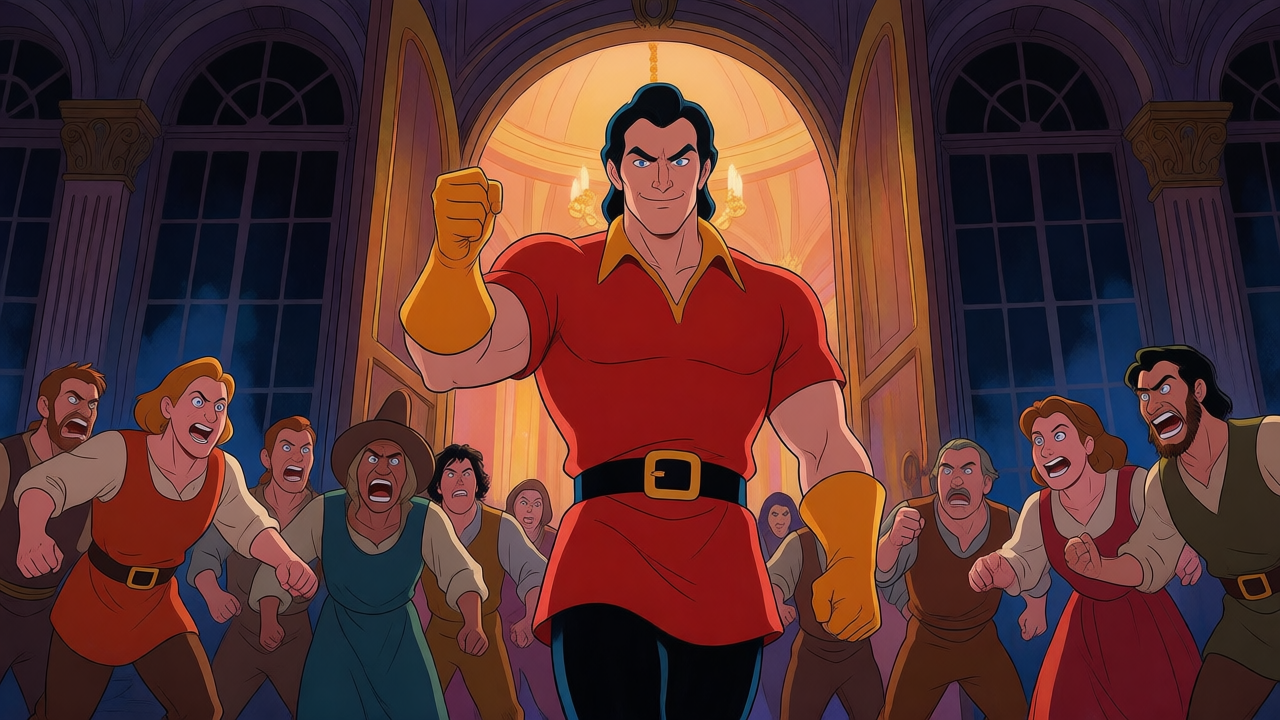
[EDDIE:intense]: Back at the castle, things get dark when a wolf attack happens in the woods during an excursion. The Beast ends up getting pretty banged up protecting Belle from them. Seeing him vulnerable makes Belle start to see the man underneath the fur and the claws. They actually fall in love, or at least that's the version we're sold. But Gaston isn't having it. He rallies a mob of villagers, armed with torches and pitchforks, all convinced they are going to slay the big bad monster.
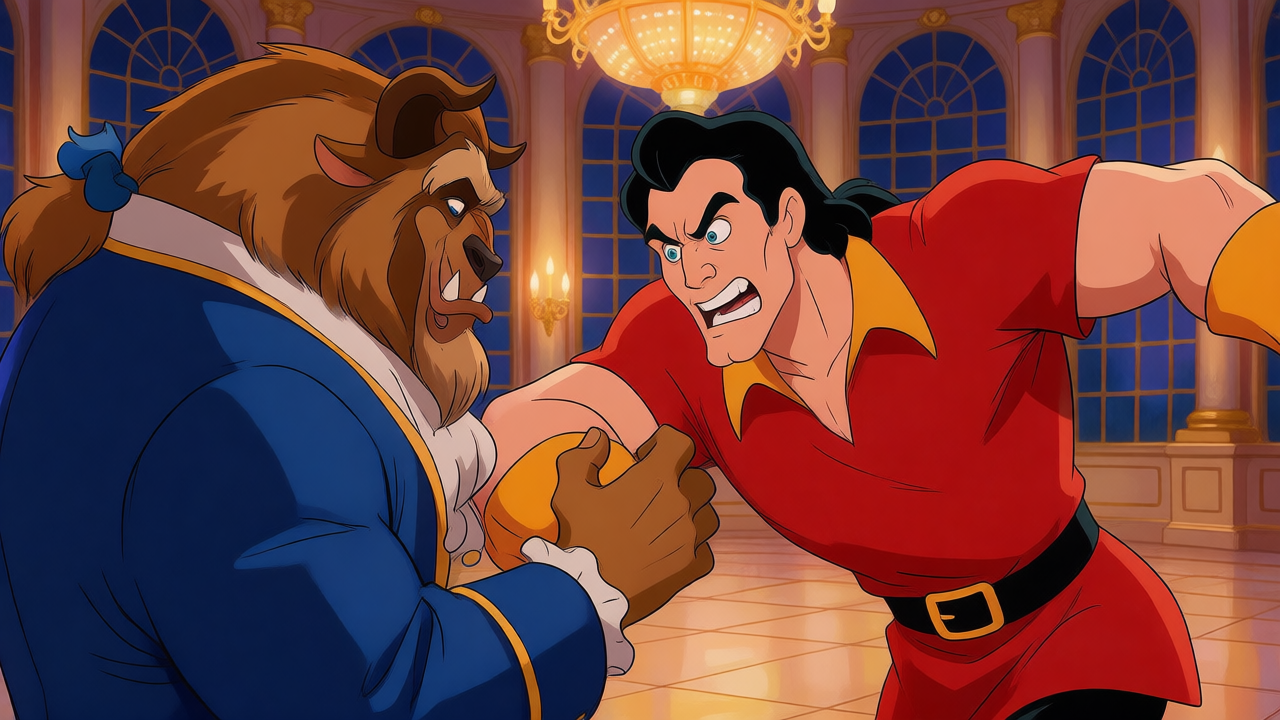
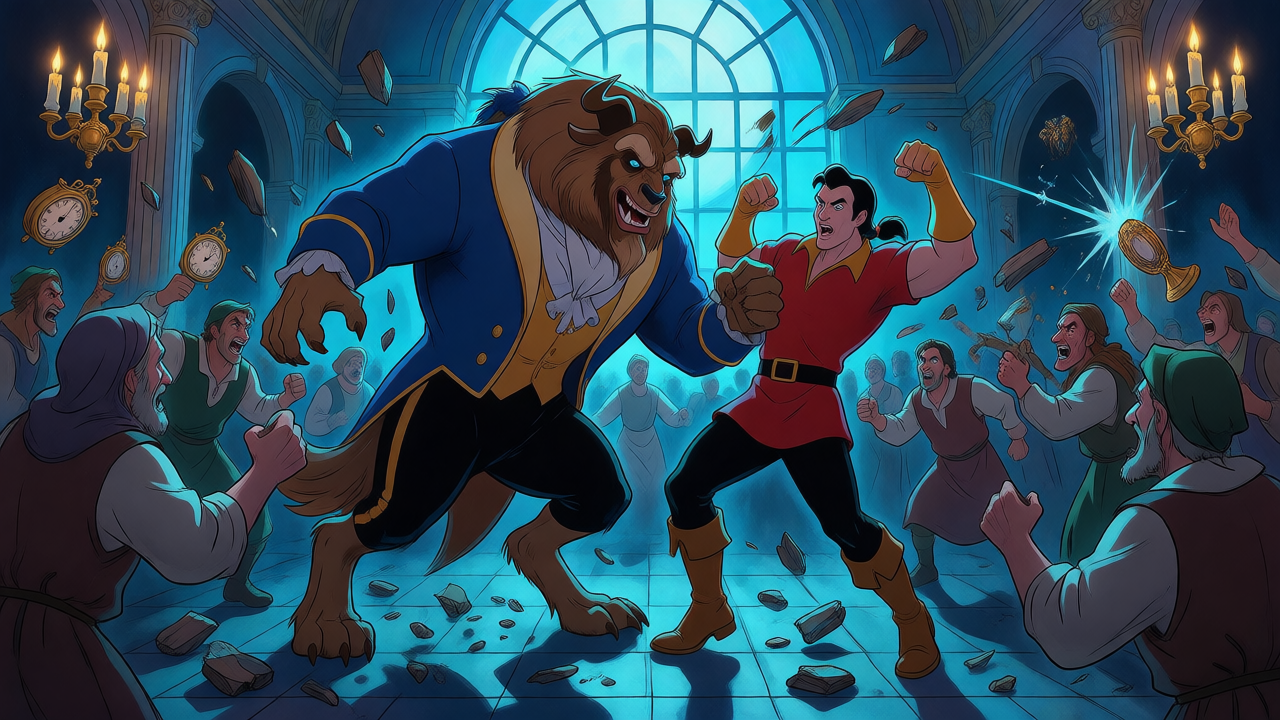
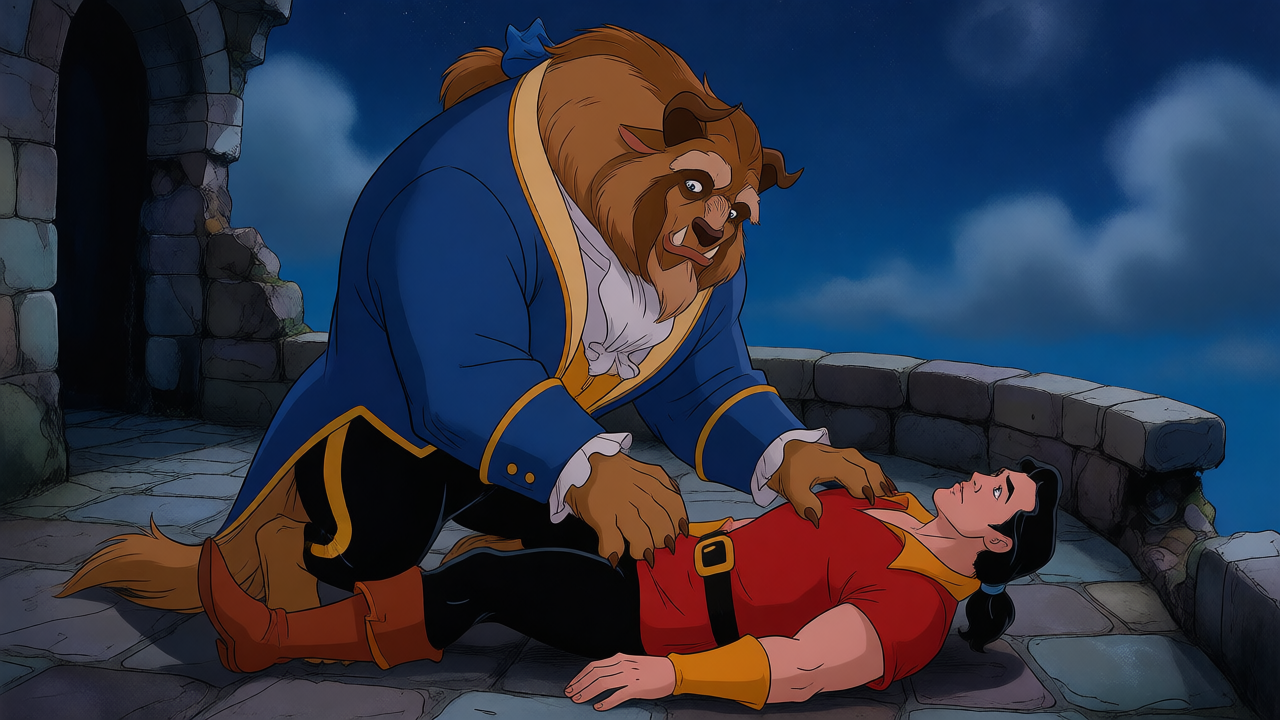
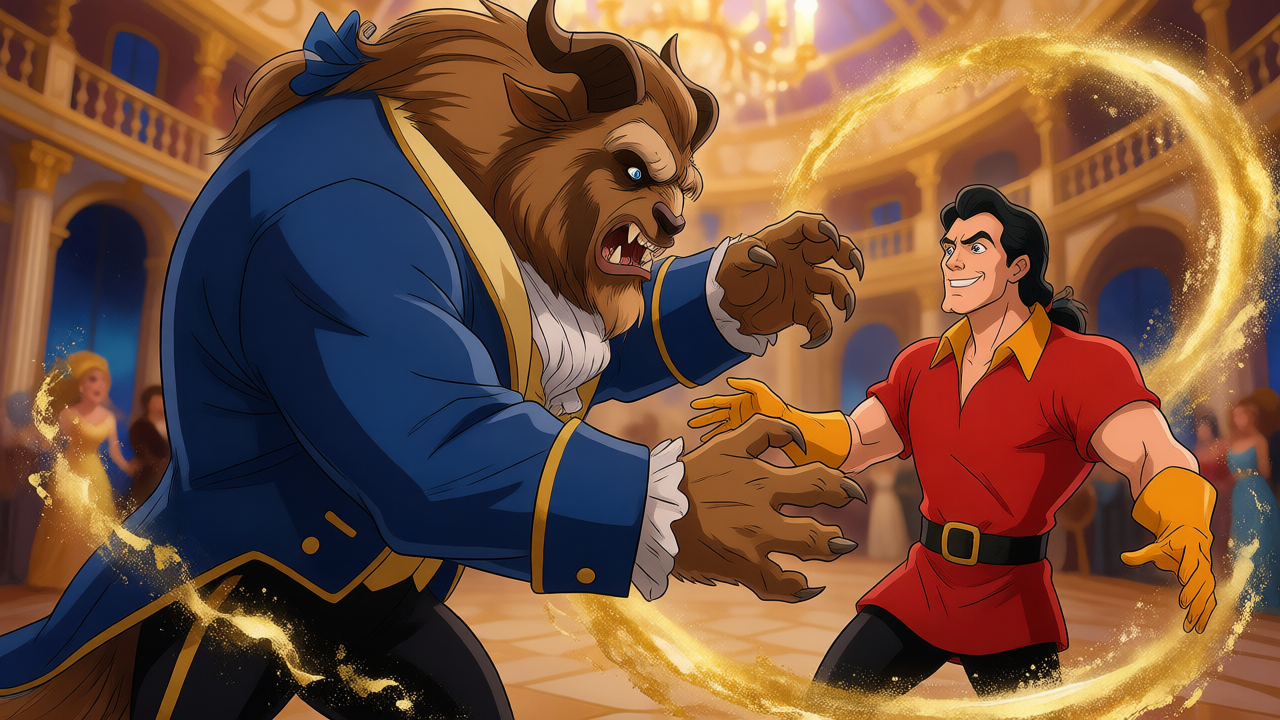
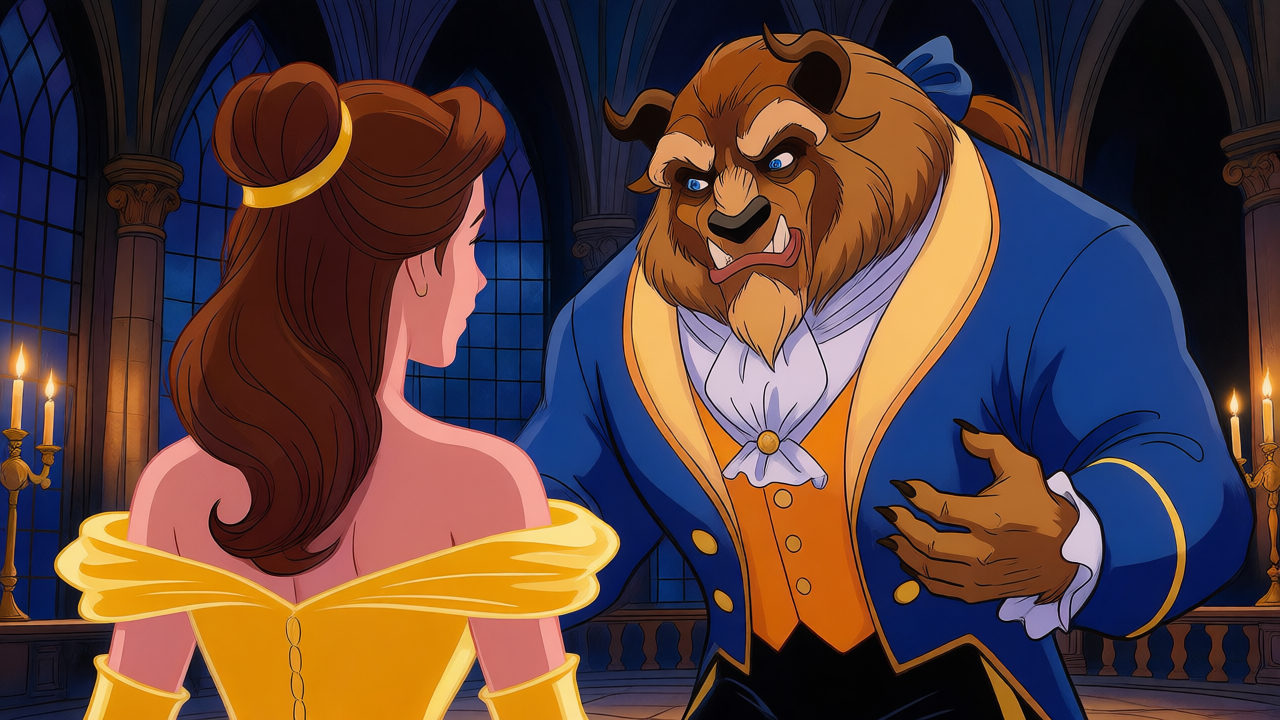
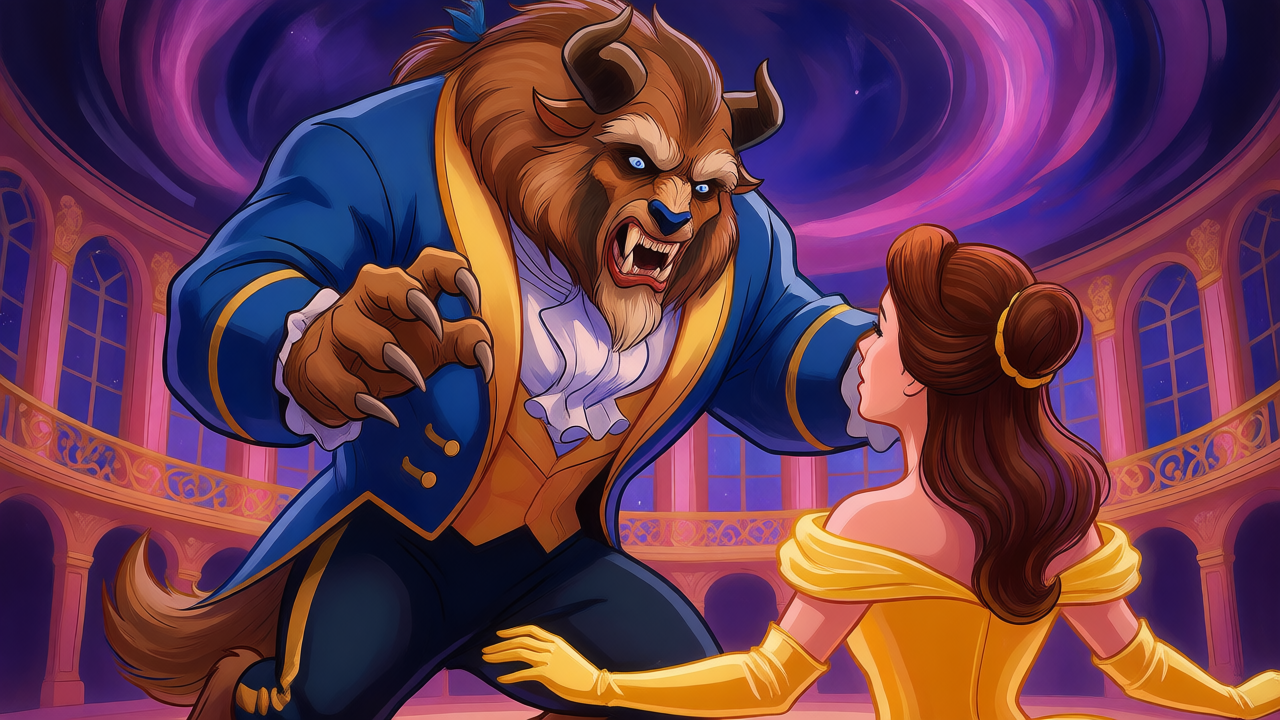
[EDDIE:intense]: The whole village descends on the castle in this massive riot. It’s chaos. Gaston leads them straight into the heart of the place. There's a huge fight between the villagers and the enchanted objects who are defending their home. In the middle of all that bullshit, Gaston finds the Beast. They have this final showdown on the rooftops and catwalks of the castle. The Beast is exhausted from fighting everyone off, and even though he has the chance to kill Gaston, he chooses not to because he's too caught up in his feelings for Belle.
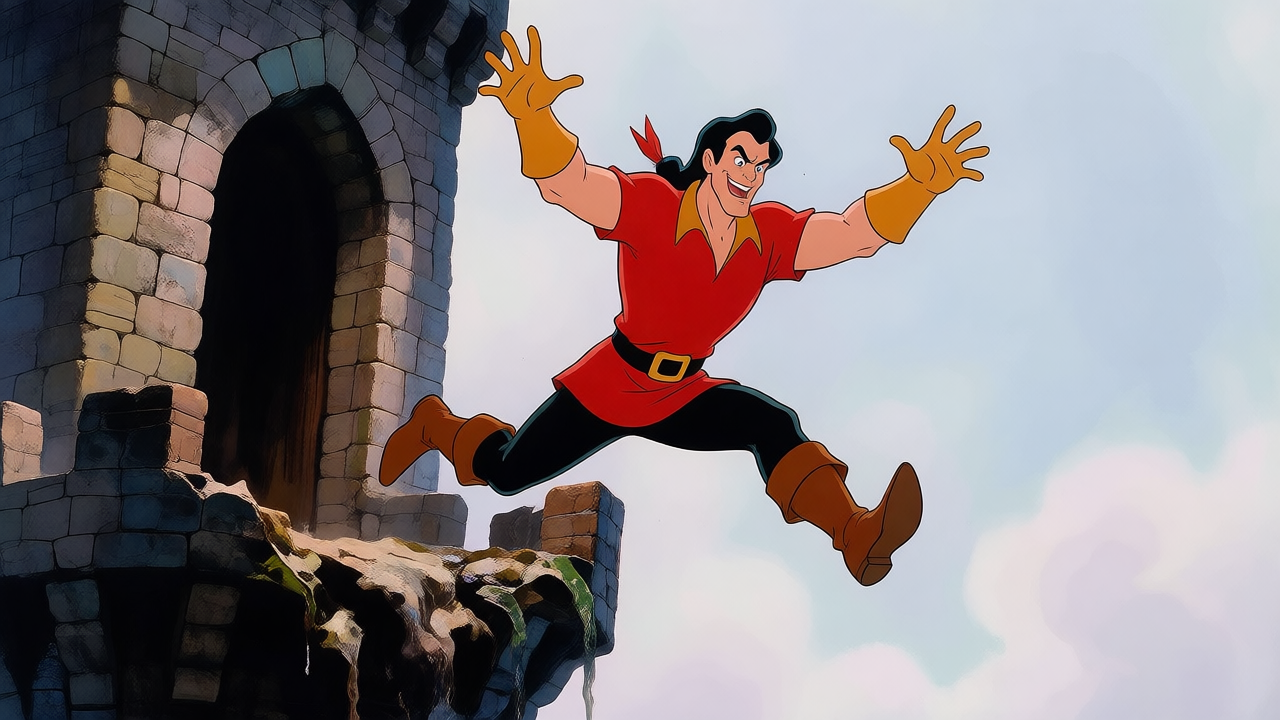
[EDDIE:intense]: That moment of mercy backfires hard. Gaston lunges at the Beast one last time but trips, falling from the high architecture to his death. With the villain gone, the curse starts to break because of that "true love" thing everyone talks about. The Beast actually transforms back into the Prince he used to be. All the servants turn human again, and everything is supposedly fixed. They get their happy ending, but man, look at the trail of wreckage left in this place before it all turned out okay.
[EDDIE:snarky]: But there might be another way to look at this... like, maybe we're just ignoring the actual damage he did while playing "sensitive prince."
[EDDIE:snarky]: ---
FIRST TAKE
[EDDIE:intense]: Let’s look at the facts before we get too high on this romanticized bullshit. The guy didn't just "lose his temper" when Maurice showed up; he committed a kidnapping and locked an elderly man in a dungeon for the crime of being lost in a storm. That isn't a misunderstanding, Reg, that’s straight-up criminal behavior fueled by a massive ego.
[REG:pompous]: Your tendency to reduce complex emotional transformations to simple police blotter entries is exhausting. He was under a magical curse, Eddie; his volatility was a symptom of his loss of humanity, not a calculated attempt at malice. His actions with Belle were driven by a desperate need for connection amidst profound isolation.
[EDDIE:snarky]: Connection? Is that what we're calling it now? Because from where I'm sitting, he basically held her hostage by telling her she could leave once the curse broke, knowing full well she’d never find her way home without him. He created a situation where Belle was forced to choose between her father and a literal monster in a spiked castle. That's not romance; that's psychological manipulation.
[REG:disbelief]: The audacity of that claim is almost admirable. She wasn't a prisoner by force, but by circumstance and her own burgeoning empathy for his plight. You are ignoring the agency she exercised throughout the film to frame him as a captor.
[EDDIE:intense]: I'm not ignoring anything; I'm looking at the wreckage. This guy is a walking disaster zone who only becomes "good" because he finally finds a girl who’s willing to tolerate his baggage. He didn't fix himself; he just got lucky with his victim.
[REG:calm]: We shall see if your cynicism can withstand the actual evidence of his growth, or if you are simply blinded by a desire to tear down everything beautiful.
[REG:calm]: ---
VILLAIN ORIGIN
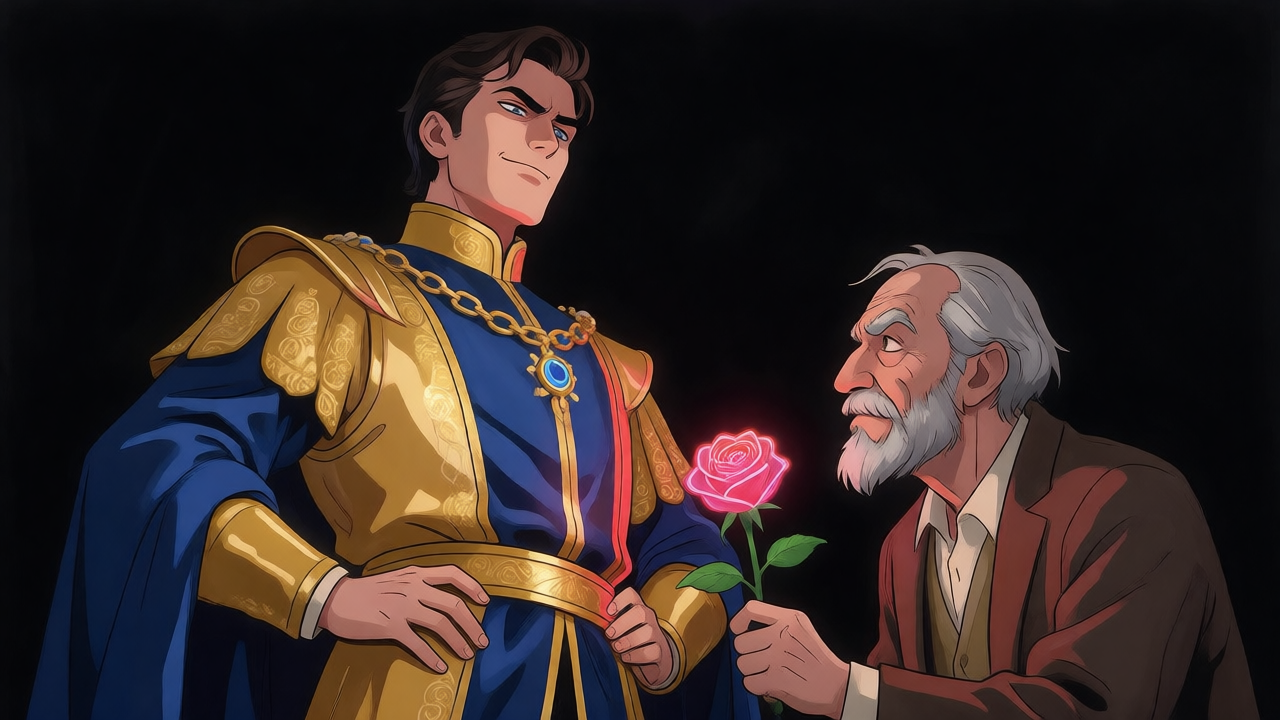
[EDDIE:intense]: Let's peel back the layers on this Prince before he became a furry nightmare. We’re talking about a guy who was so entitled and so damn arrogant that he thought a little rose-snatching by an old man was a capital offense. He wasn't just "cursed"; he was a spoiled brat whose entire worldview was built on the idea that people were just props for his amusement.
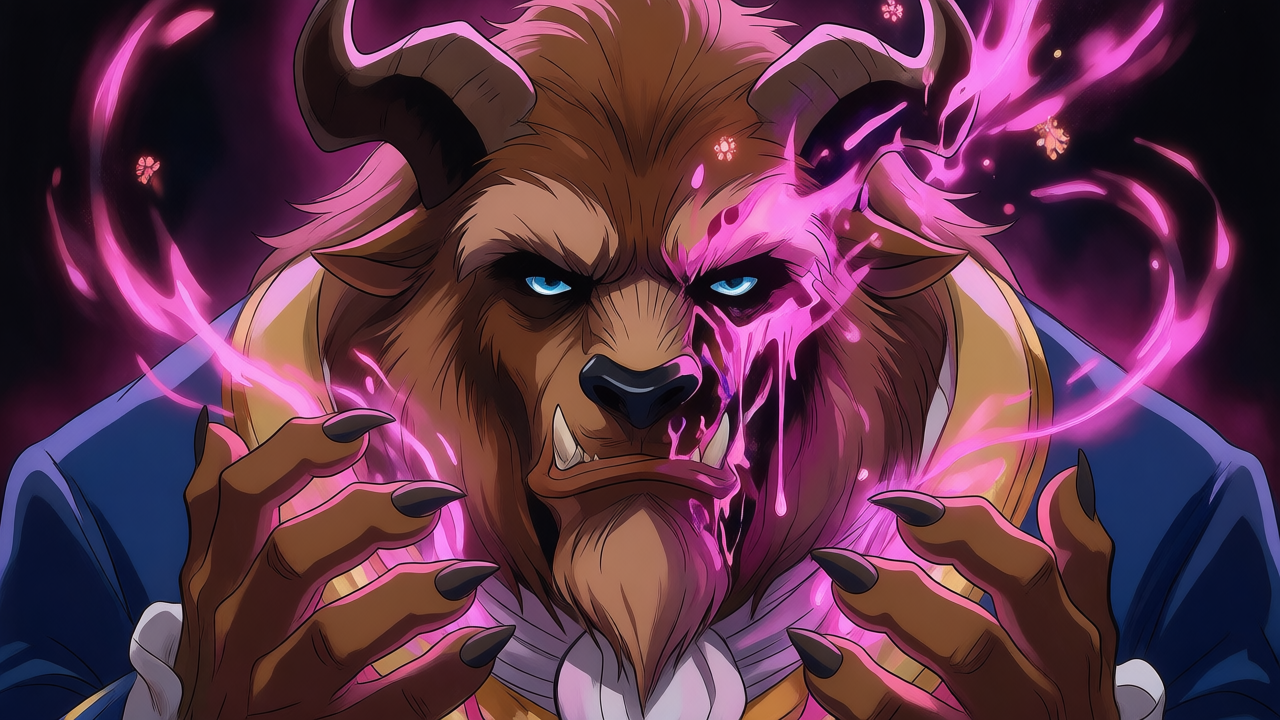
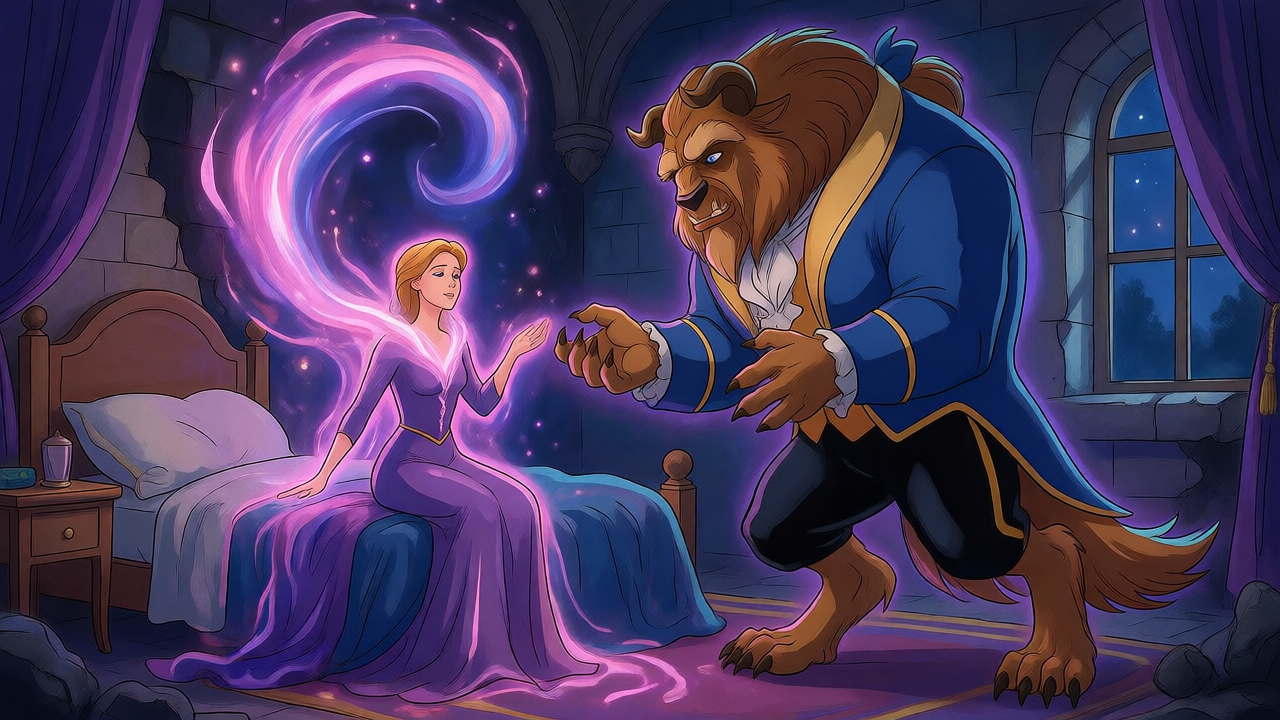
[REG:calm]: That is a remarkably reductive interpretation, Eddie. We must consider the psychological weight of a sudden, magical transformation. One moment you are a prince with total agency, and the next, your very physical essence is rewritten by an Enchantress as a reflection of your internal ugliness. He didn't just wake up different; he lost his entire social identity in a single night.
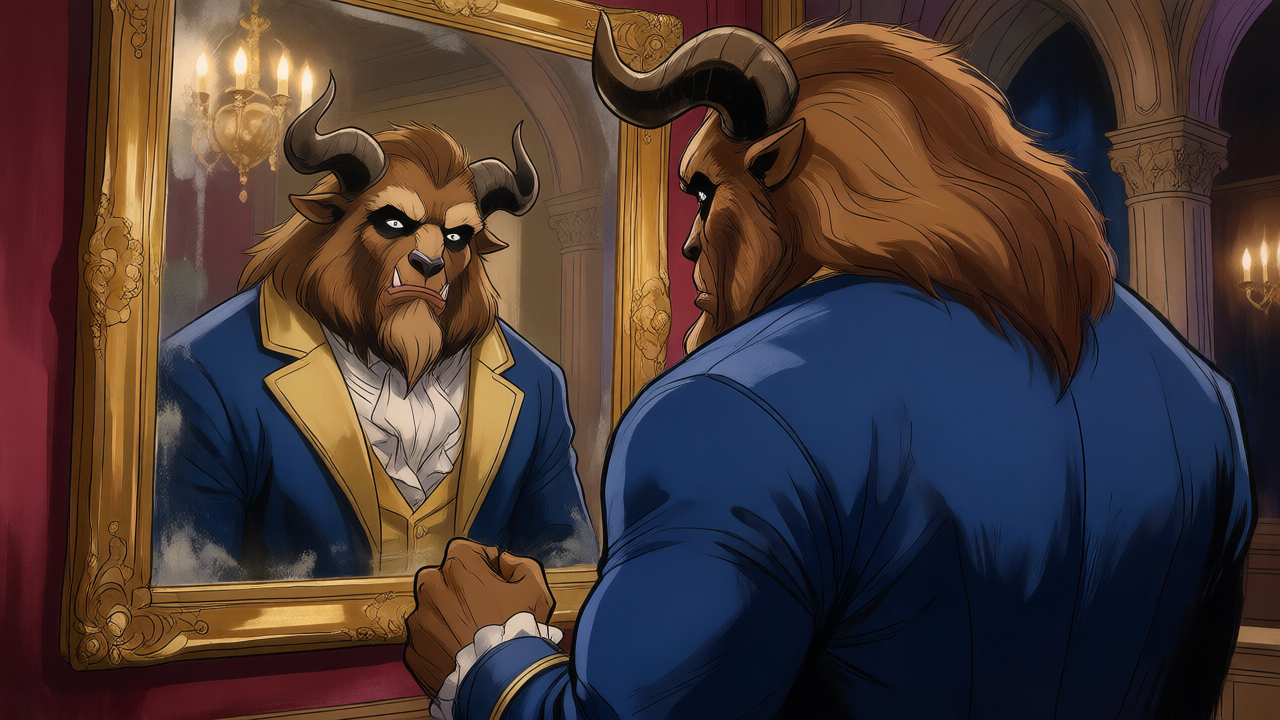
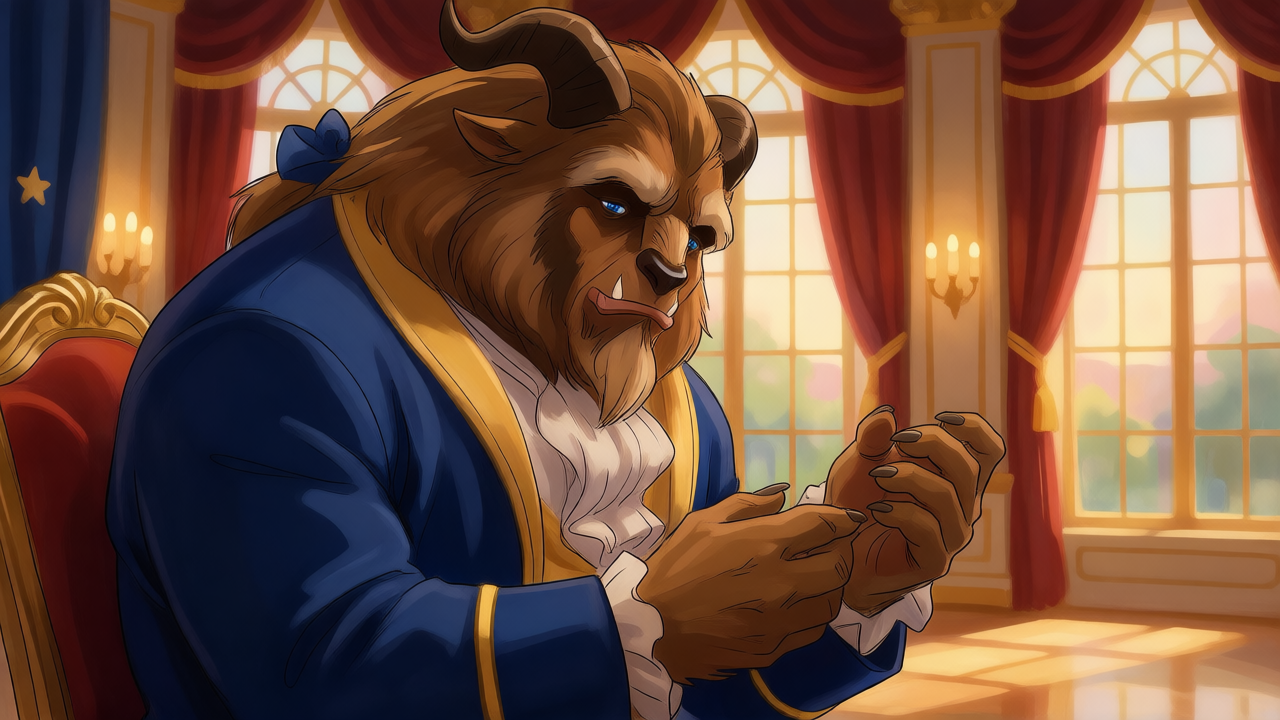
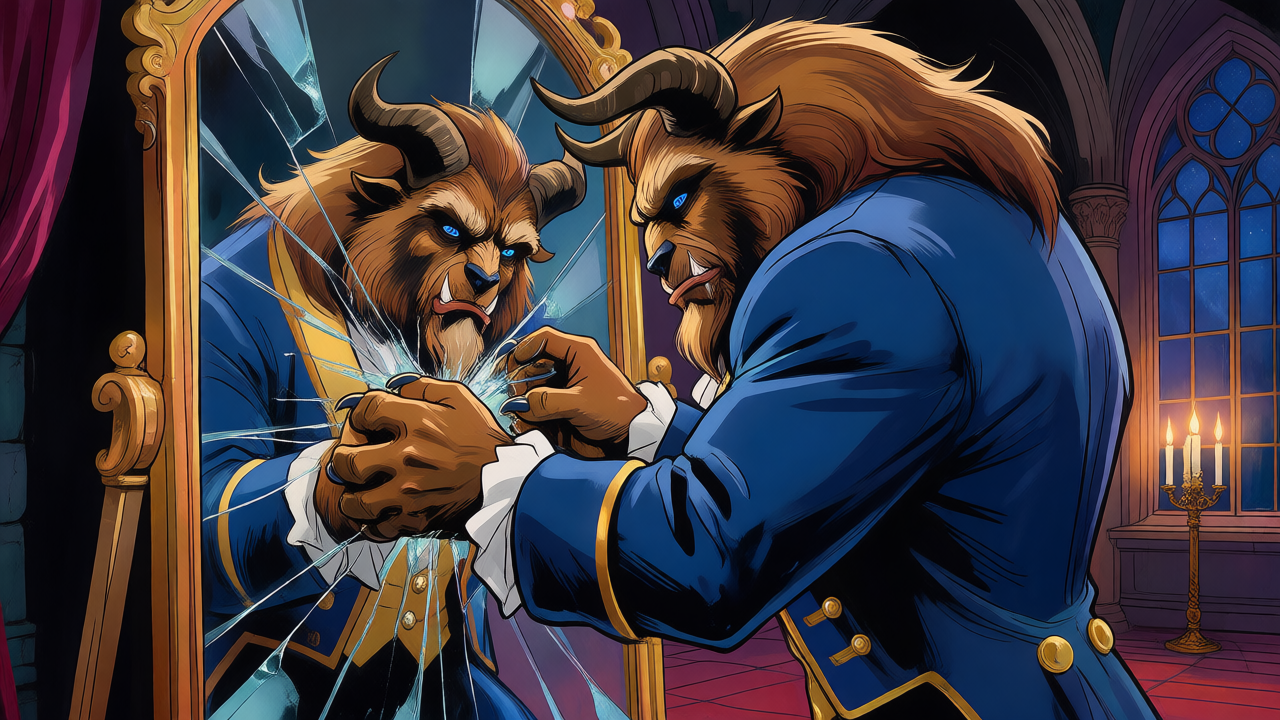
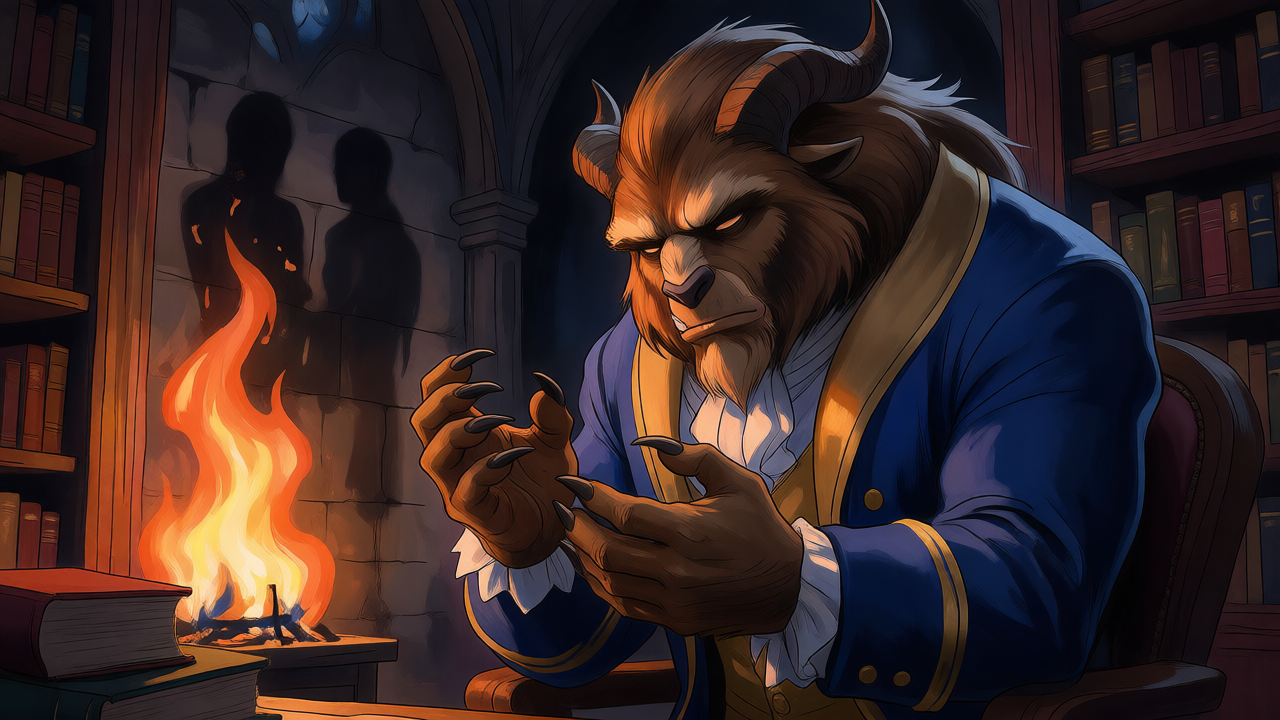
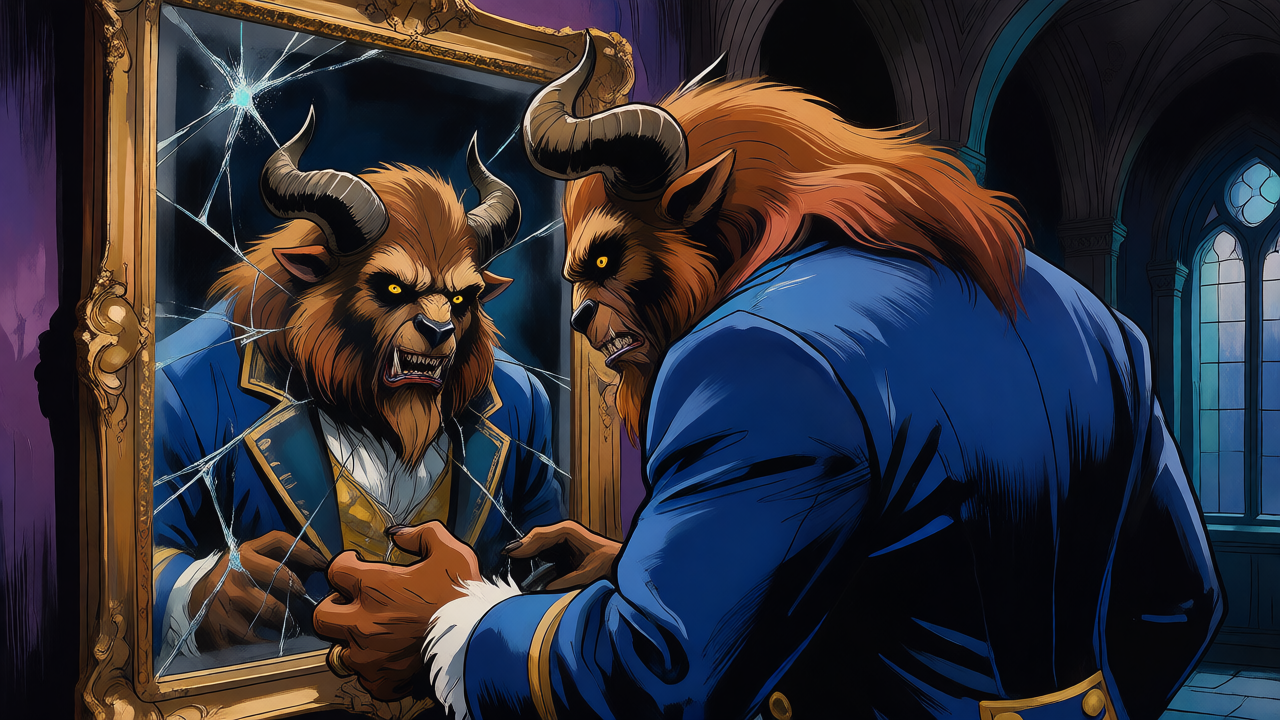
[EDDIE:snarky]: Yeah, well, losing your identity sucks, but it doesn't give you a pass to be a prick to everyone. Think about the psychological state of someone trapped in that castle. He’s pacing around, screaming at furniture, basically living in a self-imposed sensory deprivation tank because he can't handle his own reflection. He wasn't just suffering; he was stewing in a toxic soup of resentment.
[REG:pompous]: I would argue his isolation served as a crucible for his character. However, if we look at the psychological trajectory, there is a theory that suggests his "monstrous" behavior wasn't actually a reaction to the curse, but a manifestation of his inability to regulate emotion—the curse just gave him the teeth to match his temperament.
[EDDIE:intense]: Exactly! The curse didn't create the monster; it just unmasked him. He was already a predator in silk robes. And when Belle shows up, he doesn't see a person; he sees a way to fix his problem. Even his "kindness" is conditional on her playing by his rules of engagement.
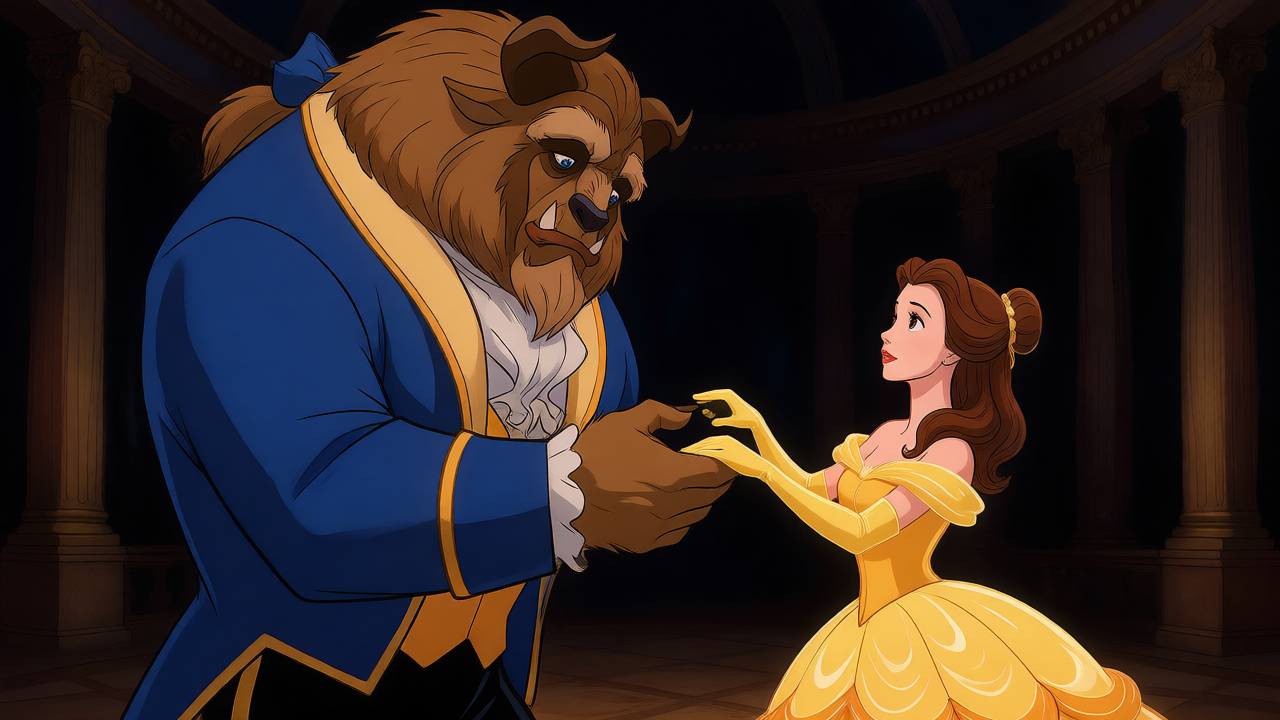
[REG:disbelief]: You are ignoring the pivotal moment where his trajectory could have gone either way. When Belle offers herself in exchange for her father, that was his chance to break the cycle of selfishness. He chose to let her go. That choice—the decision to prioritize her freedom over his own potential salvation—is what actually redeemed him.
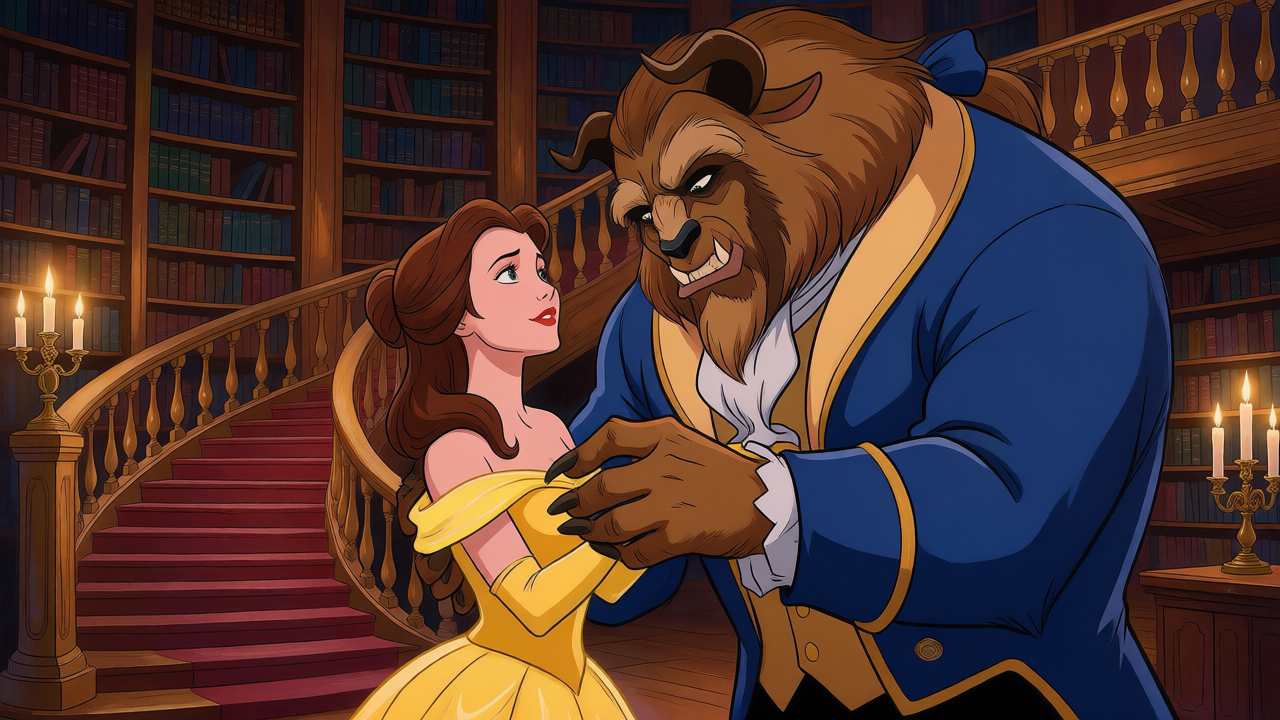
[EDDIE:disagreement]: Nah nah nah, you're doing the thing again where you're wrong. The real turning point was when he started showing her that library. That wasn't out of selflessness; it was a calculated attempt to manipulate her through her one weakness. He saw she liked books and used them as bait. It was predatory, Reg.
[REG:amused]: A hit. A palpable hit. I shall recover momentarily. But you are conflating tactical courtship with genuine empathy. If he wanted to be a villain, he would have kept her in the dungeon like his father did to Maurice. Instead, he gave her the keys and the books.
[EDDIE:intense]: He gave her the tools to realize she was better than him! That's just more manipulation. It makes you wonder—if you were stuck in that dark-ass castle, knowing every time you lost your temper you lost a piece of your soul, would you have actually tried to be better? Or would you have just become the most charming monster in history?
[EDDIE:intense]: ---
THE CASE
[EDDIE:intense]: Let's look at the real math of this castle for a second. You think Belle found love, but what she actually found was a predator who used her trauma as a roadmap for grooming. Every "romantic" gesture in that film is just another way to isolate her further from her actual life.
[REG:pompous]: That is a remarkably cynical reading of a story about emotional vulnerability. You are essentially arguing that kindness is merely a weaponized tactic.
[EDDIE:intense]: It’s not just an argument, Reg; it’s the damn evidence. Let's get into The Charges. First up: Collateral Damage. We talk about Belle and Gaston, but what about the actual victims? Maurice ends up in a dungeon, then gets discarded like trash when he’s no longer useful for his leverage, and eventually faces an insane asylum just because of the chaos this guy's existence caused in the village. The Beast is so focused on his own "redemption" that he doesn't even notice he’s left a trail of broken families and terrified neighbors in his wake.
[REG:calm]: You are conflating the actions of Gaston with the consequences of the curse. Maurice was targeted by Monsieur D'Arque because of the fear the Beast inspired, not because the Beast actively orchestrated a campaign of psychological warfare against the village.
[EDDIE:intense]: He didn't have to try! His mere presence turned a peaceful town into a paranoid mess where anyone who spoke the truth got thrown in a cell. That’s on him. And it brings me to my second point: Motivation Audit. People say he wanted Belle to stay, but look at the timing. He doesn't just "let her go" out of the goodness of his heart; he does it when he realizes that holding her hostage is making him look like a monster, and he needs her to play the damsel so he can feel like a hero again. It’s vanity masquerading as chivalry.
[REG:pompous]: I must disagree. The decision to release Belle was an act of pure self-sacrifice. He gave up his only chance at becoming human just to ensure she could see her father again. That is the literal antithesis of selfishness.
[EDDIE:intense]: Is it? Or is it a calculated move to secure the "happily ever after" through the most efficient means possible? It’s much easier to be forgiven if you're the one who grants mercy, right? He played the long game. Speaking of which, let’s talk about The Evidence. There is this theory that some fans have noticed regarding his behavior in the library. He didn't give her those books to expand her mind; he gave them to her because it was the only way to keep her seated and quiet while he worked on his "image." It wasn't a gift; it was an enclosure.
[REG:disbelief]: Your capacity for reinterpreting altruism as predatory behavior is truly staggering, Eddie. He provided her with the very thing she craved most—knowledge and agency within those walls.
[EDDIE:intense]: Agency? She was stuck in a cursed castle! You can't have agency if your options are "stay here and eat dinner with a beast" or "go back to a village that thinks you're crazy." That's a false choice, Reg. It’s the oldest trick in the book.
[REG:calm]: Let us move to what I would call The Comparative Theory. You want to talk about predators? Look at Gaston. He is the actual villain of this piece—a man who views women as trophies and uses social standing to manipulate an entire population. If we judge characters by their impact on their environment, Gaston is a plague, whereas the Beast is merely a victim of circumstance trying to find his way back to grace.
[EDDIE:intense]: I’ll give you that—Gaston is a piece of work. He's absolutely toxic. But that's my point! The story sets up this "villain" and "hero" dynamic where the Beast gets a pass because he eventually becomes handsome, while Gaston gets hate for being a jerk. If we applied the same standards to both, they’re both just men who refuse to respect a woman’s autonomy. One uses a mob, and the other uses a magic mirror and a library to trap her in a psychological loop.
[REG:pompous]: I find your refusal to acknowledge the transformative power of his choice quite frustrating. Even if we accept that his initial actions were questionable, the moment he chose Belle's freedom over his own humanity... well, you can't deny that was a selfless act. It’s the pivot point of the entire film.
[EDDIE:intense]: I'll be real with you, Reg—I'll give you this one: that rooftop choice? That moment where he lets her go instead of clinging to his only hope for being human? That was a heavy move. It’s hard to call him a total villain when he's willing to stay a monster just so she can be happy.
[REG:pompous]: A rare moment of clarity. Perhaps there is hope for your perspective yet.
[EDDIE:intense]: Don't get ahead of yourself, man. Just because he had one good moment doesn't mean the rest of his track record isn't a goddamn disaster zone. He’s still the guy who started this whole mess by being an arrogant prick.
[EDDIE:intense]: ---
REBUTTAL
[REG:amused]: I shall mark the calendar. We agree that he is a man of volatile impulses, but you are ignoring the most vital piece of evidence in this entire saga: his capacity for genuine, transformative empathy.
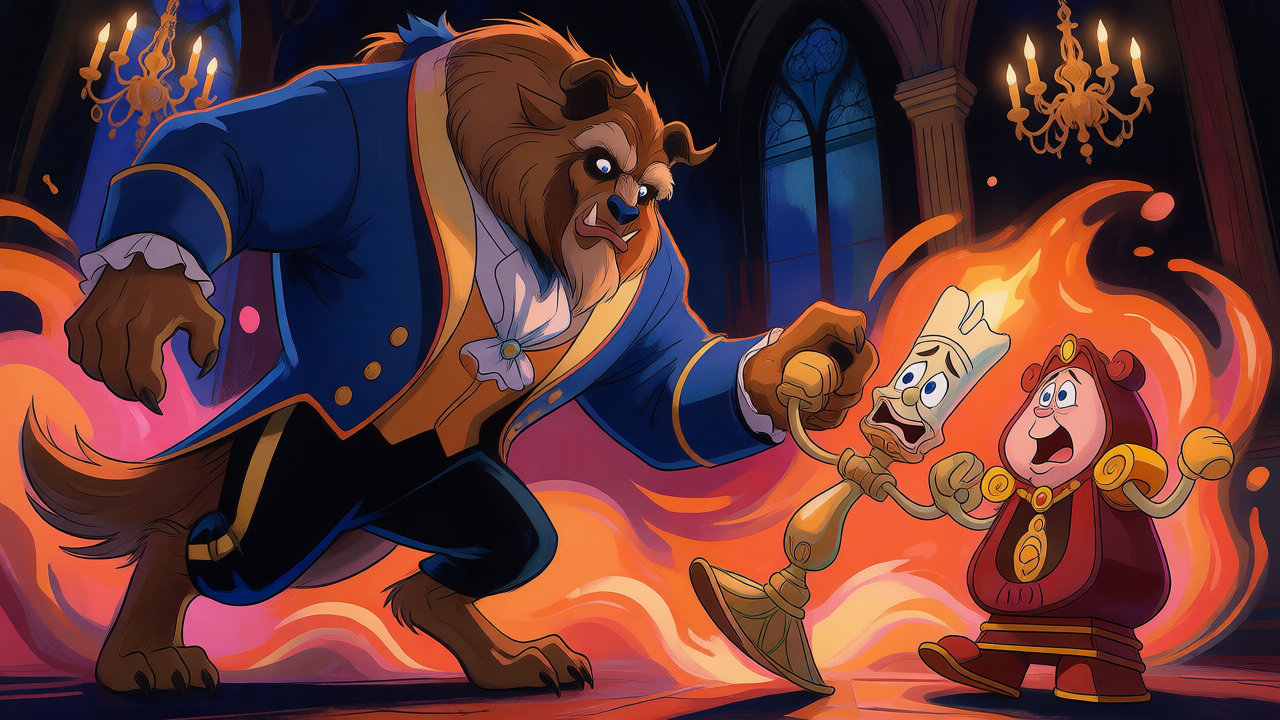
[EDDIE:disbelief]: Empathy? The guy spent half the film yelling at a fucking teapot because it was being too loud. That's not empathy; that's just having high standards for your household staff.
[REG:pompous]: It is more than that. Let us look at his actions during the wolf attack in the woods. When Belle is cornered by those beasts, the Prince does not simply stand by or protect her out of a sense of ownership; he puts himself in physical peril to ensure her safety. He takes genuine injury for someone who was essentially a stranger just hours prior. That is a fundamental shift from the selfish predator you've described to a protector.
[EDDIE:intense]: So he gets some scratches and suddenly he’s Saint Francis of Assisi? He only did that because he realized if she died, his "happily ever after" was going to be much harder to pull off. It was a tactical recovery of an asset, Reg.
[REG:calm]: I find it genuinely touching that you believe such a cynical motive for such a visceral act. But let us move beyond the physical and look at the psychological surrender. Consider the Magic Mirror. He grants Belle access to her father via that device—a tool he could have used solely to keep her tethered through guilt, yet he uses it to show her the truth of her father's situation. He provides her with the very information that gives her the agency to leave him.
[EDDIE:snarky]: Oh, so he showed her a mirror just to play "guilt trip" later? That's still manipulation. It’s like giving someone a map of the prison walls and then acting surprised when they start looking for an exit.
[REG:pompous]: You are missing the structural reality of his redemption. He doesn't just offer her freedom; he facilitates it by allowing her to leave, knowing full well that if she doesn't return, his chance at humanity is gone forever. A villain would have locked those gates and doubled the guard. Instead, he chooses a path of extreme vulnerability. He risks everything on the hope that she sees the man beneath the beast—a gamble that requires a level of trust most "heroes" wouldn't dare attempt.
[EDDIE:intense]: It was a hell of a gamble because he knew his entire existence depended on it! It wasn't out of the goodness of his heart; it was survival instinct wrapped in a tuxedo. He was terrified of turning into a permanent monster, so he played the "noble hero" card to save his own skin.
[REG:dismissive]: Your confidence is inversely proportional to your evidence, as ever. To see self-sacrifice as mere survival is to deny the very essence of what makes him more than a beast.
[REG:dismissive]: ---
REAL VILLAIN
[EDDIE:stunned]: My brain just made a noise. Did you hear that? That was my brain. I think it actually short-circuited for a second.
[REG:amused]: It is likely the sound of your cognitive faculties attempting to reconcile two diametrically opposed concepts simultaneously. Truly, a fascinating neurological event.
[EDDIE:intense]: Shut up, man. I’m serious. If we stop looking at him as a kidnapper or a manipulator, and we stop looking at Gaston as just a generic douchebag... what the fuck are we actually left with?
[REG:pompous]: We are left with the realization that you have been chasing shadows while ignoring the very structure that casts them. You want to assign blame to a single point of failure—the Beast or the Villain—but both are merely reacting to an environment that is fundamentally rigged against them.
[EDDIE:disbelief]: Don't do that academic shit where you make everything sound like a philosophy lecture. What does "rigged" even mean here?
[REG:calm]: It means, Eddie, that the true antagonist of this entire narrative isn't a person; it is the social inertia of that provincial village and the rigid class structures that define their existence. Look at Belle. She is not just a girl who likes books; she is a disruption to a system that demands her predictability. The village requires her to marry Gaston because he represents stability, status, and the preservation of their narrow-minded hierarchy.
[EDDIE:intense]: Okay, I see where you're going, but that’s a cop-out. You're saying there is no villain? That’s some high-level bullshit right there.
[REG:pompous]: Not at all. It is an observation of scale. The village itself acts as the primary antagonist because it actively deconstructs anything it cannot categorize or control. They demonize Maurice for his intellect and they vilify Belle for her curiosity. Even the Beast’s castle, while a site of individual trauma, is merely a physical manifestation of isolation—an extreme reaction to a world that offers no room for the "other."
[EDDIE:snarky]: So you're saying Gaston isn't the bad guy? He’s just a product of his environment? That’s a hell of a stretch, Reg. The guy is a sociopath with a chin like a shovel.
[REG:calm]: He is a symptom, Eddie. He is what happens when a society rewards dominance and aesthetic perfection above all else. Gaston isn't an anomaly in that village; he is their ideal. If the system values his specific brand of superficiality, then he will naturally rise to lead it. The "villainy" you see in him is just the environment working exactly as it was designed to.
[EDDIE:intense]: So if we look at the whole damn picture... the Beast is just a freak who got unlucky with a curse, and Gaston is just the golden boy of a toxic town... then the actual conflict isn't between "good" and "evil." It’s just a bunch of people trying to survive a world that hates them for being different.
[REG:amused]: Remarkably, I have no objection to that realization. The tension in the film doesn't stem from a battle between light and dark, but from the friction between individual identity and societal expectation. The Beast’s struggle is his attempt to find humanity within a curse, while Belle’s struggle is her attempt to find autonomy within a village that wants her domesticated.
[EDDIE:disbelief]: Damn. You're actually making sense for once. It’s like you’ve been on some heavy-duty research session and finally saw the blueprint of the whole building instead of just staring at one cracked window.
[REG:pompous]: I shall take that as a compliment, however crudely phrased. The tragedy isn't that the Beast becomes a monster; it's that the world had already decided he was one before he even took his first step into that castle.
[EDDIE:intense]: It’s wild. We spend all this time arguing over who's more guilty, and we miss the fact that the whole setup is a trap for anyone who doesn't fit in. The real villain isn't the guy with the claws or the guy with the mob—it's the damn status quo itself.
[EDDIE:intense]: ---
AFTERMATH
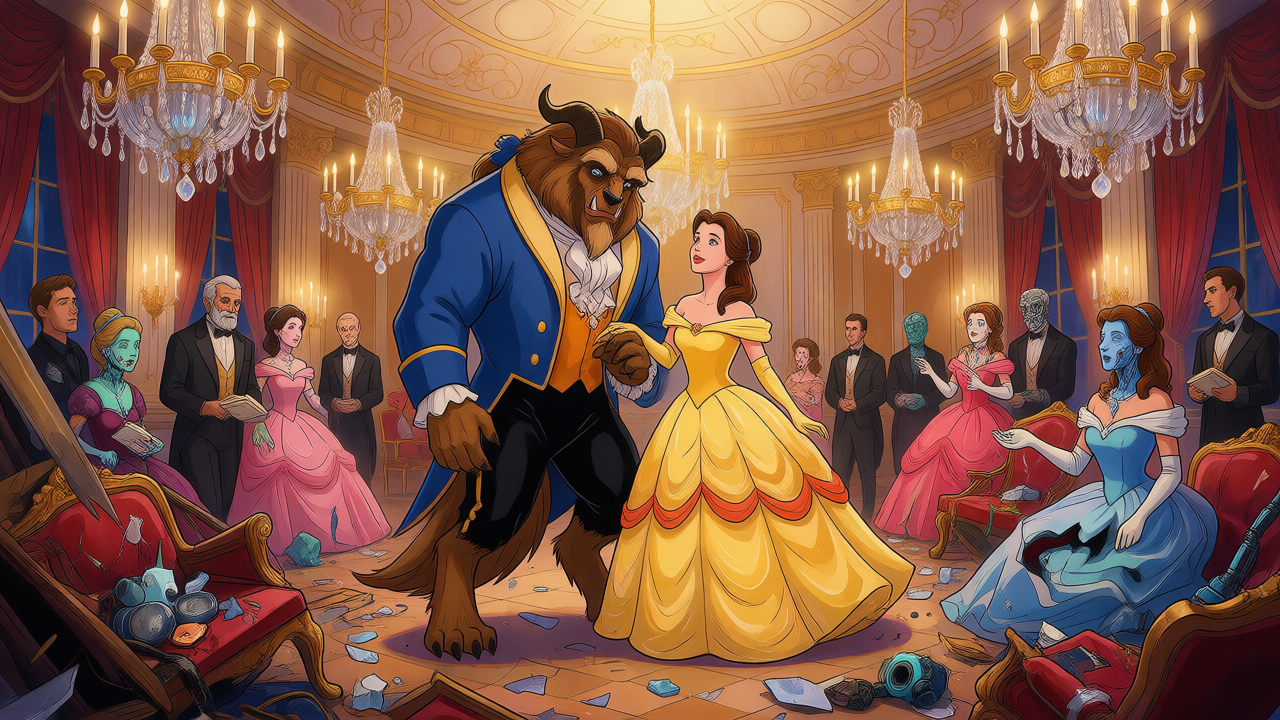
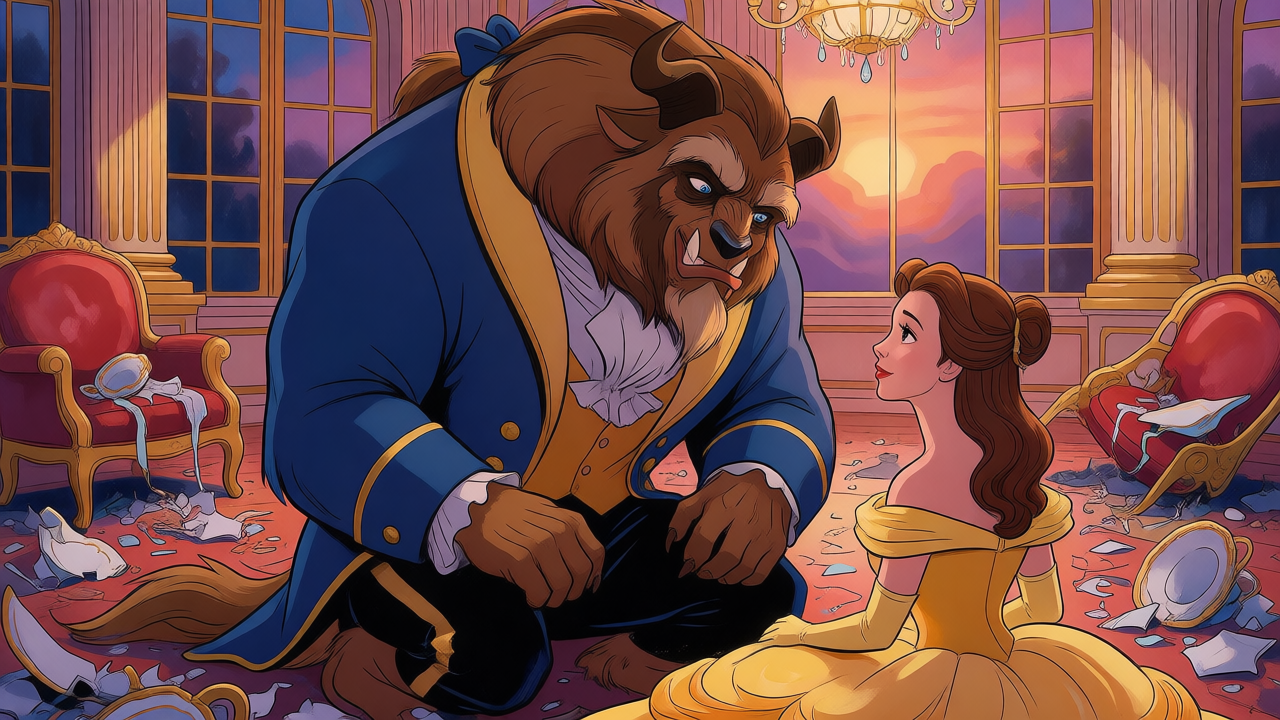
[EDDIE:intense]: You want to talk about the "happily ever after"? Let’s look at the actual wreckage left behind once the magic wears off and the credits roll. We're talking a massive power vacuum in that village. You take out the local leader—Gaston, even if he was a prick—and you leave an entire community traumatized, rioted against, and suddenly without any social structure. And for what? So one guy can get his humanity back?
[REG:pompous]: Your obsession with chaos is quite telling, Eddie. The "wreckage" you describe is simply the natural turbulence of a society transitioning away from a localized, aggressive hegemony. It isn't wreckage; it’s the clearing of the brush so something more enlightened can grow.
[EDDIE:snarky]: Enlightened? That's a load of bullshit. You think people just went back to their little cottage life and forgot that a massive, hairy monster almost tore their town apart? Maurice is an old man who was nearly killed by wolves and then thrown out into the cold like trash because he told the truth about a kidnapping. He’s traumatized, his reputation is in the goddamn dirt, and he's likely looking at a lifetime of being the "crazy guy" in town. The Beast didn't just fix himself; he left a wake of psychological scarring that would take generations to heal.
[REG:calm]: I must concede, the impact on Maurice’s social standing is an unfortunate byproduct, but you are ignoring the broader cultural evolution. The village was stagnant, trapped in a cycle of fear and superstition. By breaking the curse, the Beast didn't just change himself; he introduced a literal element of impossible wonder into their reality. He shattered the provincial ceiling.
[EDDIE:intense]: Or he left them vulnerable! You’ve got a castle full of sentient furniture that used to be people, now suddenly running around in a world where they have no place and no legal status. Imagine being Cogsworth or Lumière—you go from being living objects under a curse to humans who just lost their entire lives, their homes, and their social roles overnight. They’re fucking refugees in their own home!
[REG:dismissive]: They are not "refugees," Eddie; they are individuals reclaimed from a state of magical stasis. Yes, the transition is jarring, but it's an expansion of existence. You see a crisis of identity and social upheaval; I see the beginning of a renaissance for every enchanted soul in that hall.
[EDDIE:disbelief]: A renaissance? It sounds more like a goddamn identity crisis on repeat. Every time someone tries to do something "different" or "new," they’re going to be looked at through the lens of that riot. The Beast didn't just bring magic; he brought a permanent precedent for chaos.
[REG:pompous]: And now we arrive at the exhibit I have been saving, which addresses the very heart of your "chaos" argument.
[REG:pompous]: ---
VERDICT
[EDDIE:intense]: I'm sticking to my guns, Reg. After everything we just went through—the kidnapping, the psychological manipulation with that fucking library, and leaving a trail of chaos from here to Paris—my verdict is Guilty. This guy isn't a hero who stumbled into grace; he’s a high-maintenance disaster who used a woman's empathy as his personal get-out-of-jail-free card. He didn't fix the world, and he sure as hell didn't make it better for anyone except himself and Belle.
[REG:pompous]: Your refusal to accept nuance is truly your most consistent trait, Eddie. While I find your characterization of his courtship as "predatory" to be a massive reach, I must admit the social fallout you mentioned is difficult to ignore. The sheer amount of structural instability left in that village after the Gaston riot... it's messy. However, my verdict remains Not Guilty. A man’s internal transformation and his capacity for self-sacrifice should carry more weight than the administrative headache he leaves behind in a provincial town. He chose love over his own nature; you can't simply dismiss that as "getting lucky."
[EDDIE:disbelief]: Oh, so now it's about "weight"? If we're weighing things, let's weigh the trauma of every person who had to deal with his bullshit! The people in the comments are always shouting, "But he changed!" Yeah, well, most people change because they have consequences, not because a girl gave them a second chance after they acted like total assholes.
[REG:amused]: I suspect if you had experienced a research session with Doctor V's latest compound, you might find the concept of "consequences" as much as a beautiful, shifting tapestry rather than just a list of grievances. You are looking at the cracks in the pavement while ignoring the cathedral being built.
[EDDIE:snarky]: The cathedral is sitting on a pile of broken furniture and terrified villagers, Reg! It's a shaky foundation, man.
[REG:calm]: Perhaps. But it is a foundation nonetheless.
[EDDIE:intense]: Alright, the evidence is on the table. We've laid out the case for why this "prince" might just be a very lucky, very dangerous narcissist, or a genuine soul who found his way back through the darkness. Now it’s up to you.
[REG:calm]: You decide the verdict. Was he a reformed monster or a manipulative opportunist? Tell us in the comments why your choice holds more weight—was it his capacity for sacrifice, or the wreckage he left behind?
[REG:calm]: ---
OUTRO
[REG:calm]: And there you have it. A dissection of a legend, or perhaps just the autopsy of a fairy tale.
[EDDIE:exhausted]: My head is spinning, man. I feel like I need to go find a quiet room and just vibe out for an hour to process all that "structural instability" bullshit you threw at me.
[REG:amused]: Your cognitive load is understandably taxed, Eddie. It was a taxing session by any measure.
[EDDIE:smirk]: Yeah, well, if you think the Beast's legal defense held water, go ahead and smash that like button right now. If you agree he’s just a pampered, lucky prick who left a trail of chaos, come at me in the comments. I'm ready for the fight.
[REG:pompous]: Indeed. We find ourselves at an impasse, but the discourse continues elsewhere. If you wish to see more rigorous deconstructions of these so-called icons, you can find us at Laser Chicken Studios dot com. It is quite essential for maintaining one's intellectual edge.
[EDDIE:intense]: Yeah, go there or don't, just do it. But listen—the real trial happens with you guys. Is the Beast actually the true villain of this story? Was his redemption worth the wreckage he left behind? Cast your verdict in the comments. Tell us if you think he was a reformed soul or just a manipulative survivor, and for the love of God, tell us why.
[REG:calm]: Your reasoning is paramount. We await your judgment. Villain's Advocate.
[EDDIE:relaxed]: Villain's Advocate.
[EDDIE:relaxed]: ---
POST CREDITS
[EDDIE:amused]: Man, I’m tellin' you, that taco truck was straight up toasted, just a total haze of grease and bad decisions...
[REG:pensive]: It is a fascinating chemical reaction, really; the fermentation process requires a certain level of rhythmic intention.
[EDDIE:confused]: What are you on about? I’m talking about the carnitas being baked into oblivion, not some science fair project.
[REG:proud]: I am referring to Barnaby; he is quite sensitive to discordant frequencies during his nightly cultivation phase.
[EDDIE:laughing]: You named your jar of flour and water? You are absolutely faded, Reg, just straight up lifted in the head--
🖼 Gallery
🎙 Bonus Banter
Bonus Banter — Beast
Take 1
[EDDIE:amused]: ...and I said to him, "Man, you can't just leave a bowl of cereal in there for days."
[REG:incredulous]: Days? Eddie, I thought we were talking about the state of your kitchen sink.
[EDDIE:defensive]: Yeah, well, it was like a milk bath. Disgusting.
[REG:skeptical]: I suppose that's why you decided to start breeding mice in there?
[EDDIE:proud]: Hey, those are my feeder mice! They're doing great in there.
[REG:disgusted]: Feeder mice, Eddie? In your kitchen?
[EDDIE:laughs]: Yeah, man, they love the leftovers.
---
Take 2
[EDDIE:Stoned]: Dude, I heard that if you crossbreed a chihuahua with a great dane, you get... what do you call 'em? Chimpanzees?
[REG:Amused]: Not quite, Eddie. I believe you're thinking of a Great Chihuahua or possibly a Danehuahua. Neither species is known for their simian traits.
[EDDIE:Intrigued]: Oh yeah? Well, what if you crossbreed a chimp with a dane? Now we're talkin'!
[REG:Skeptical]: Eddie, I highly doubt that such a hybrid would be feasible or even desirable. The offspring might exhibit extreme cognitive dissonance.
[EDDIE:Laughing]: Cognitive what now? Man, you academics have a way with words. I'm just sayin', a chimp-dane could be the next big thing in... in...
[REG:Interrupting]: Canine-primate hybrids? Or perhaps, primate-canine companions? Either way, Eddie, you do realize we're discussing something that might never exist outside of a poorly executed taxidermy experiment.
[EDDIE:Grinning]: Yeah, yeah. But think about it, Reg! A chimp with the loyalty of a dane and the acrobatics of
---
Take 3
[EDDIE:mid-rant]...and I'm tellin' ya, Reggie, these aliens ain't got nothin' on my mom when she's tryin' to find out who ate the last slice of pizza! [REG:smirking] Oh, Eddie, you do have a flair for the dramatic. But have you considered that perhaps it's not your mother's inquisitive nature at play, but rather an interdimensional probe into Earth's culinary habits? [EDDIE:laughing] Dude, you're so high right now. It's just a freakin' pizza! [REG:pausing] Well, Eddie, one could argue that all food is simply a form of extraterrestrial communication... [EDDIE:interrupting] Okay, okay, let me stop you right there, Reg. I don't need my cheese puffs to have subliminal messages from the cosmos, thank you very much!