The People vs. Ash Ketchum
Cast Your Vote on YouTube
Chapters
- 0:00Cold Open
- 0:17Intro
- 1:03Background
- 5:26First Take
- 7:07Villain Origin
- 10:10The Case
- 13:52Rebuttal
- 16:23Real Villain
- 19:46Aftermath
- 22:33Verdict
- 24:59Outro
- 26:20Post Credits
📁 Case File
The Case File: Ash Ketchum
Overview
Ash Ketchum (known as Satoshi in Japan) is a Pallet Town native who serves as the central figure of the *Pokémon* animated series for its first twenty-five seasons. Defined by an unrelenting, singular obsession with becoming a "Pokémon Master," Ketchum’s journey spans multiple global regions—including Kanto, Johto, Hoenn, Sinnoh, Unova, Kalos, Alola, and Galar. While initially perceived as a standard traveling protagonist, his trajectory from a novice trainer to the Monarch of the World Coronation Series establishes him as a figure of unprecedented power and influence within the Pokémon world.
Background & Timeline
- Origins: A 10-year-old boy from Pallet Town in the Kanto Region. His journey began when he received his first Pokémon, Pikachu, from Professor Oak.
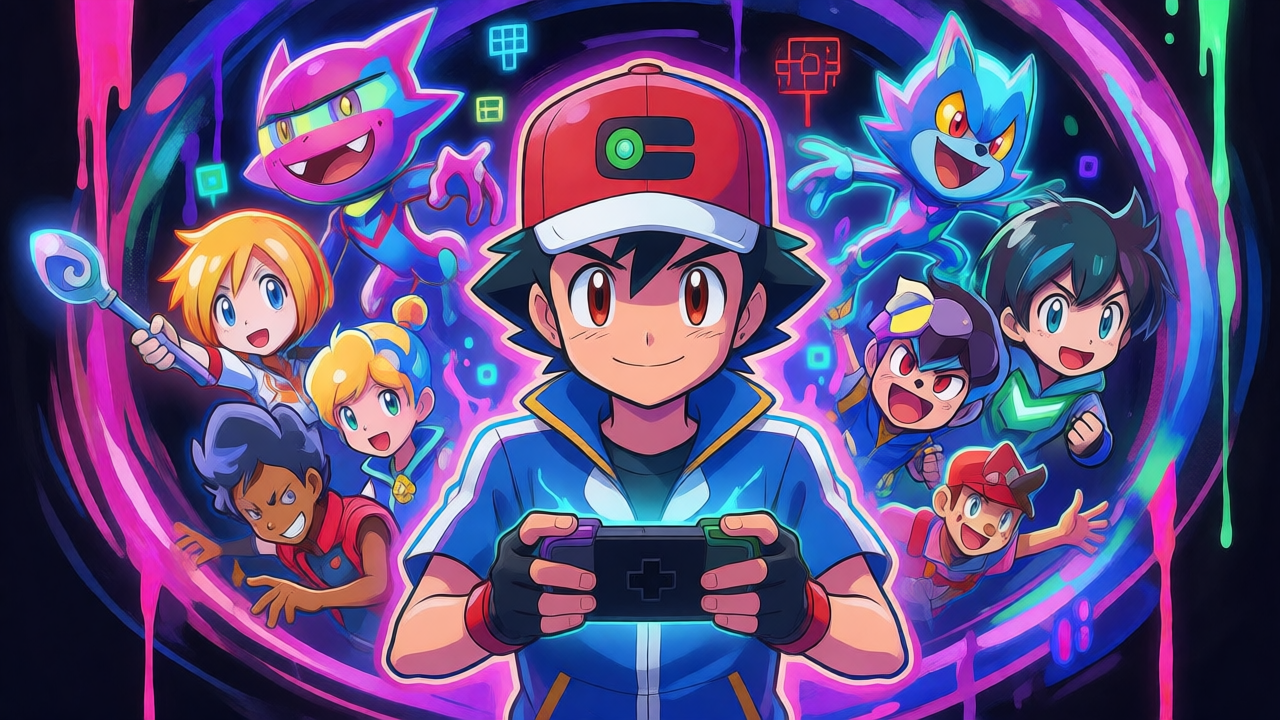
- The Traveling Era (Seasons 1–25): Ash embarked on a continuous journey through various regions, accompanied by a rotating cast of companions including Misty, Brock, May, Dawn, Serena, Lillie, and Goh. During this period, he established intense rivalries with trainers such as Gary Oak, Paul, and Trip.
- The Alola Milestone: Ash achieved a significant breakthrough by becoming the first-ever Champion of the Alola League.
- The World Championship Peak: In his most definitive achievement, Ash defeated Leon in the World Coronation Series Masters Eight Tournament, ascending to the title of "Monarch" and becoming the strongest Pokémon Trainer in the world.
- Legacy: Following his peak as Monarch, Ash continues his travels with Pikachu to further his goal of befriending all Pokémon.
The Evidence
The following elements define Ketchum’s operational profile:
- The Constant Variable: While his team changes constantly, the Pokémon Pikachu remains his sole, permanent companion throughout his entire history.
- Combat Record: Despite a long history of being "unsuccessful" in various regional Pokémon Leagues, Ketchum possesses an unparalleled ability to climb the ranks, eventually reaching the absolute pinnacle of global competition.
- The Human Aspect: Designed by Atsuko Nishida and inspired by creator Satoshi Tajiri’s childhood obsession with catching bugs, Ash was intended to represent the "human aspect" of the franchise.
- Global Reach: As a figurehead for one of the most successful video game adaptations in history, Ketchum's influence extends across 192 countries and over 1,300 episodes of content.
The Case
The argument for Ash Ketchum’s status as a "top-tier" entity—often bordering on an unstoppable force—rests on three pillars:
1. Unparalleled Persistence: Critics often point to his long-standing inability to win major leagues early in his career; however, this is better viewed as a prolonged period of tactical accumulation. His eventual victory over the world's strongest trainer (Leon) proves that his "failure" was merely a precursor to total dominance.
2. The Power of Adaptation: Ketchum has navigated diverse social and competitive landscapes—from being a student at Pokémon School in Alola to facing off against high-stakes villains like Team Rocket—demonstrating an ability to adapt to any regional environment or combat style.
3. The "Monarch" Factor: By defeating Leon, Ketchum effectively dismantled the existing hierarchy of the World Coronation Series, moving from a mere competitor to the definitive authority on Pokémon battling.
The Cutting Room
- The Rivalry Paradox: While Gary Oak was originally intended to be Ash's master (a departure from their rivalry in the games), the relationship evolved into a complex dynamic of competition that shaped Ketchum’s growth.
- Design Evolution: Analysts have noted significant shifts in his physical presentation, including changes to his eye color and "birthmarks" during the *Best Wishes!* and *XY* series, suggesting a character undergoing constant physiological or thematic redesign.
- The Floating Timeline Theory: A recurring point of debate is how Ketchum maintains a youthful age despite decades of travel and high-level combat experience, leading to theories regarding a "floating timeline" that defies standard chronological progression.
Final Word
Ash Ketchum is more than a trainer; he is the ultimate survivor of the Pokémon world. From a boy who started with a single, disobedient Pikachu to the undisputed Monarch of the world, his journey represents the transition from amateur enthusiast to an apex predator in the realm of competitive battling.
🔎 Deep Cuts — things most write-ups miss
Deep Cuts: Ash Ketchum
*Uncommon, hard-to-find knowledge about Ash Ketchum from Pokemon — the details most write-ups miss.*
Production & Development
- Character Etymology: The character's English name, "Ash Ketchum," was a localization choice; "Ash" was derived from one of the default player names in *Pokémon Red and Blue*, while "Ketchum" was a phonetic play on the franchise tagline, "Gotta catch 'em all!"
- Biographical Inspiration: Creator Satoshi Tajiri intended for Ash (Satoshi) to reflect his own childhood obsession with collecting insects, serving as the "human aspect" of the media franchise.
- Rivalry Reversal: While Gary Oak (Shigeru Okido) serves as a direct rival to Red in the video games, his role was fundamentally altered for the anime; Tajiri noted that Shigeru was intended to represent a mentor figure rather than a mere competitor.
- Voice Recording Constraints: During the 4Kids Entertainment dubbing process, Veronica Taylor (the original English voice) recorded her lines entirely solo in the booth, often spending six to eight hours per episode without hearing the other actors' performances.
- Localization Lip-Syncing: In the North American production, scripts were specifically adapted and re-written after translation to ensure the English dialogue matched the "lip flap" (mouth movements) of the original Japanese animation.
- Design Evolution: Ash’s character design underwent several specific aesthetic shifts: his irises were enlarged in the *Best Wishes!* series, his cheek "birthmarks" were reduced in size during the *XY* era, and he received a complete visual overhaul for the *Sun & Moon* series.
- Casting Origins: Veronica Taylor’s initial audition for the role of Ash was conducted while the character was still referred to by the temporary name "Casey."
Hidden Lore & Missable Details
- Etymological Origin: The English surname "Ketchum" is a direct linguistic play on the franchise's primary marketing tagline, "Gotta catch 'em all!"
- The Red Connection: While Ash’s design was overseen by Atsuko Nishida, his character serves as a loose personification of the player character "Red" from the original Game Boy titles.
- Naming Conventions: In the Japanese version, Ash is named Satoshi, a direct homage to Pokémon creator Satoshi Tajiri; conversely, his rival Gary Oak is named Shigeru in Japan, after Nintendo legend Shigeru Miyamoto.
- Design Evolution: The "thunderbolt" marks on Ash's cheeks underwent subtle design adjustments during the *XY* series, specifically involving a decrease in their scale compared to earlier seasons.
- The "Human Aspect": Satoshi Tajiri has stated in interviews that while Pikachu is the face of the brand, Ash was created specifically to represent the "human aspect" and reflect Tajiri's own childhood obsession with collecting insects.
- Voice Acting Production: During the 4Kids Entertainment dubbing era, Veronica Taylor recorded her lines entirely solo—often for six to eight hours per episode—without hearing the previous lines, requiring her to "imagine" the dialogue flow based on lip flaps.
- Character Archetype Shift: In the original Japanese conception, Shigeru (Gary) was intended to be a mentor figure rather than a direct rival, a dynamic that differs significantly from his relationship with Red in the video games.
Hard Trivia & Deep Cuts
- Etymological Origin: The English surname "Ketchum" was derived from the franchise's primary marketing tagline, "Gotta catch 'em all!", whereas his Japanese name, Satoshi, is a direct homage to Pokémon creator Satoshi Tajiri.
- Character Design Philosophy: Creator Satoshi Tajiri intended for Ash to serve as the "human aspect" of the franchise, specifically designed to reflect Tajiri’s own childhood obsession with collecting insects.
- The "Red" Connection: While Ash's design is loosely based on the player character Red from *Pokémon Red and Blue*, his rival Gary Oak (Shigeru in Japan) was named after Shigeru Miyamoto, Nintendo's legendary designer.
- Voice Acting Technicality: During the original 4Kids English dub, Veronica Taylor recorded her lines entirely solo without hearing previous dialogue; she had to "imagine" how preceding lines were spoken while matching the pre-existing Japanese "lip flap."
- Localization Alteration: The name "Ash" was used in North America as a placeholder for one of several possible default names players could select for their character in the original Game Boy titles.
- Visual Evolution: Ash's physical design underwent significant changes across series, including a reduction in the size of the lightning-bolt shaped "birthmarks" on his cheeks during the *XY* series and a complete overhaul for the *Sun & Moon* era.
- The Alola Milestone: Despite decades of attempting to win various regional Pokémon Leagues, Ash achieved his first major championship title as the winner of the Alola League in the *Sun & Moon* series.
- World Champion Status: In the final arc of his journey (*Pokémon Ultimate Journeys*), Ash reached the pinnacle of the franchise by defeating Leon in the World Coronation Series to become the Monarch/World Champion.
- The "Casey" Audition: During her initial audition for the English dub, Veronica Taylor was not originally told she was auditioning for a character named Ash; the character was temporarily referred to as "Casey."
Influences & Ripple Effects
- Biographical Foundation: Creator Satoshi Tajiri modeled the character's personality on his own childhood obsession with collecting insects, intending for Ash to represent the "human aspect" of the franchise.
- Naming Etymology (Localization): The English name "Ash Ketchum" is a localization construct; "Ash" was derived from one of the potential default player names in *Pokémon Red and Blue*, while "Ketchum" serves as a phonetic play on the series' marketing tagline, "Gotta catch 'em all!"
- Rivalry Archetypes: The character Gary Oak (Shigeru Okido) was named after Tajiri’s mentor, Shigeru Miyamoto; his role was intentionally shifted from a direct rival in the games to a "master" figure in the anime's narrative structure.
- Visual Design Evolution: Ash's character design underwent significant shifts across series eras, including a specific redesign for the *Best Wishes!* series that featured larger brown irises and a reduction of his signature thunderbolt-shaped facial markings during the *XY* era.
- Voice Acting Methodology (English Dub): During the 4Kids Entertainment production era, Veronica Taylor recorded all lines solo in an isolated booth—often for six to eight hours per episode—without hearing her co-stars' performances, relying solely on written scripts and director guidance to match "lip flap" movements.
- Cultural Disparity in Merchandising: Early market research conducted by Tajiri noted a distinct consumer split: Japanese audiences focused their purchasing power on Pikachu merchandise, whereas North American consumers prioritized merchandise featuring Ash alongside Pikachu.
- Narrative Archetype Legacy: The character's long-term "floating timeline" and the trope of the protagonist who faces repeated setbacks in major tournaments (the Pokémon League) became a defining structural element for the series' 25-season longevity.
Fan Theories With Receipts
- The "Ash is Red" Identity Theory
* Theory: Ash Ketchum is a direct narrative adaptation of the player character "Red" from the Generation I games, intended to be his literal counterpart in the animated medium.
* Evidence (For): Character design was explicitly overseen by Atsuko Nishida and inspired by Red's archetype; his surname "Ketchum" is a localization of the series tagline "Gotta catch 'em all!"; his rival Gary Oak/Shigeru Okido is directly based on the game's rival, Blue.
* Evidence (Against): In interviews, creator Satoshi Tajiri noted that while Ash is loosely based on Red, their relationship to rivals differs; in the games, Red and Blue are peers/rivals, whereas in the anime, Shigeru acts as a mentor figure to Ash.
- The "Floating Timeline" Paradox
* Theory: The Pokémon world exists in a state of temporal stasis where characters do not age despite traveling through multiple regions and years of narrative time.
* Evidence (For): Ash remains 10 years old from the Kanto/Indigo League era through the Alola League and World Coronation Series, despite participating in numerous multi-year journeys; companions like Misty and Brock are established as being older than him but do not age alongside him.
* Evidence (Against): The series maintains "internal" continuity regarding specific milestones, such as Ash's transition from a novice to the Alola League Champion and eventually the World Monarch, suggesting chronological progression exists only for his skill level rather than biological age.
- The "Human Aspect" Representation Theory
* Theory: Ash was designed not as a protagonist to drive the plot of Pokémon battles, but as a psychological vessel to represent the player's own connection to the franchise.
* Evidence (For): Satoshi Tajiri stated in interviews that Ash represents the "human aspect" of the series and reflects what he himself was like as a child; production notes indicate the character was designed specifically to facilitate the emotional bond between the viewer and the Pokémon creatures.
* Evidence (Against): The narrative focus shifted heavily toward competitive tournament structures (Pokémon League, World Coronation Series) in later seasons, moving Ash's role from a "human aspect" observer to a primary driver of high-stakes combat plotlines.
🔥 Hot Takes — angles you never considered
Hot Takes: Ash Ketchum
*Angles you probably never considered — each one defensible, with the evidence and the strongest counter-argument. Spoilers, obviously.*
1. Ash is a Product, Not a Person: His Eternal Reset is Systemic Exploitation
Lens: Production/Meta
Thesis: Ash Ketchum isn't a character evolving through experience — he's an endlessly renewable product designed to keep the franchise profitable.
Evidence: The Pokémon anime has run for 25 seasons with Ash as its main protagonist, yet his age stays fixed at ten years old. His "growth" is always artificial—like when he becomes Alola Champion and World Monarch but continues to act like a child in every other way (e.g., the recurring scenes of him being caught off-guard by basic Pokémon logic). This perpetual youthfulness allows creators to reset his storylines without consequences, allowing them to endlessly exploit his "eternal journey" as a marketing strategy.
Counterargument: The idea that Ash stays ageless is not just about keeping viewership but also about emotional investment—fans need someone who can stay forever young for their nostalgia and merchandise appeal.
---
2. Ash's Persistent Failure Is Deliberate Design: He Was Made to Be Unsuccessful
Lens: Systemic Critique
Thesis: Ash Ketchum is structurally built to fail at the Pokémon Leagues — not because of his weakness but because he serves as a franchise mascot, not an actual champion.
Evidence: Despite numerous attempts and impressive victories like becoming Alola Champion and defeating Leon (the World Monarch), Ash never actually wins the ultimate League title that defines "Pokémon Master." His repeated failures make him more appealing to viewers than any single victory ever could. In fact, his inability to win is a key part of his identity — he represents what we're all *supposed* to become rather than who we are.
Counterargument: Some argue that Ash’s continued efforts reflect genuine personal growth and perseverance — but these are performance-based qualities that don't actually make him better at being a trainer or leader.
---
3. Team Rocket Was Never Just Comic Relief: They Are the True Guardians of Pokémon Rights
Lens: Villain/Hero Inversion
Thesis: Team Rocket, the seemingly villainous antagonists, are far more ethical than Ash Ketchum and often act as unsung protectors of Pokémon.
Evidence: While Jessie, James, and Meowth constantly try to steal Pokémon for profit or power, they also repeatedly show concern for their captured subjects. For instance, in countless episodes, they express genuine worry when Pikachu is threatened by Giovanni's schemes. Their motivation isn't just greed but fear — notably Meowth’s obsession with Meowzie shows a deep emotional investment in another being that Ash lacks entirely. Meanwhile, Ash routinely leaves his Pokémon behind at the Oak Ranch without ever asking whether they're happy to be there.
Counterargument: Critics might say Team Rocket are merely self-serving; their actions often do harm and create chaos — so they're not *better*, just more consistent in their own flawed logic.
---
4. Ash Is Not a Trainer of Pokémon, But a Trainer of Fans: His Real Power Lies in Making Us Feel Better
Lens: Psychological
Thesis: Ash’s greatest power isn’t defeating Gym Leaders or World Champions — it's making us believe we can achieve anything with enough effort.
Evidence: The show repeatedly frames failure as a learning experience for Ash, but rarely does he actually learn from those failures. Instead, viewers are left feeling inspired and motivated by his endless optimism regardless of how many times he loses to Gary or Paul. His narrative design mirrors the way children's shows train us into believing that persistence alone will solve everything — which makes him an ideal target for emotional investment rather than effective storytelling.
Counterargument: Some argue that Ash *does* learn and grow through his experiences, especially in terms of empathy and compassion toward Pokémon — so he truly becomes a better trainer over time.
---
5. Ash Is the Ultimate Symbol of Child Labor: The System He Lives In Never Lets Him Grow Up
Lens: Systemic Critique
Thesis: Ash is a living embodiment of child labor in a world that treats children as disposable assets.
Evidence: His journey never includes any structured education or exposure to adult responsibilities — he’s always the wandering adventurer, leaving his Pokémon at Professor Oak's care like seasonal employees. There are no laws protecting him from exploitation: no mandatory school hours, no family time, and no consideration for what happens when he has to leave his companions behind. His entire existence is designed to be perpetually youthful, as if he’s stuck in an endless cycle of training — which makes him a symbol of systemic neglect.
Counterargument: Critics might respond that Ash *is* a child, and the world was built around children, not adults — so his status as a perpetual child isn't really a problem.
---
6. "Ash Is the World's First Unpaid Intern"
Lens: Economic
Thesis: Ash is functionally an unpaid intern who provides free labor to the Pokémon world.
Evidence: He continuously journeys through multiple regions, never receiving compensation or even being allowed to keep his Pokémon long-term. His travels are structured around fan service rather than any real economic return — he's basically a human version of a promotional mascot. Additionally, his "success" (becoming Alola Champion and Monarch) is defined by how many leagues he wins, not whether those victories benefit him personally.
Counterargument: Some might argue that Ash isn’t being exploited because he’s passionate about Pokémon — that his love for the journey is its own reward.
---
7. "Ash Is a Microcosm of Overcompensating Parental Control"
Lens: Psychological
Thesis: Every aspect of Ash's development has been shaped to ensure he never makes decisions that might disappoint fans or audiences.
Evidence: His journey is meticulously crafted so that his choices align with the idealized version of a child hero. He never gets sick, never complains about training, and always wins at the right moment for emotional payoff. Even when he loses (as in most Alola League matches), it’s more about letting others shine than actually failing or learning. His lack of failure is intentional — it reflects the pressure to present him as a perfect role model.
Counterargument: Some would argue that Ash's lack of personal growth isn't a flaw but his strength, allowing him to maintain an uplifting legacy.
---
8. "Ash Is The Only Character Who Never Actually Learns Anything"
Lens: Comparative
Thesis: Despite being the protagonist for over two decades, Ash never truly develops as a character.
Evidence: His personality and motivations remain static—always chasing the same dream with the same unchanging values. He continues to believe he'll become "the best" even when there's no clear metric of success beyond the final tournament title. Despite countless failures in actual training and performance, he maintains his belief that one day, everything will be perfect.
Counterargument: Others may argue that Ash’s consistency is a strength — showing how persistence can lead to ultimate growth.
---
9. "Ash Is the Most Effective Villain of His Own Story"
Lens: Production/Meta
Thesis: The narrative structure and character design have been optimized to make Ash a compelling villain in his own story.
Evidence: From early episodes, we see that Ash’s presence triggers the major conflict with Team Rocket. He's constantly setting up scenarios where others must react to him rather than engaging in self-reflection or internal struggle. His journey is driven not by personal growth but by plot mechanics designed for entertainment and merchandising.
Counterargument: Fans might counter that Ash’s outward action leads to deep inner development — a classic hero’s arc.
---
10. "Team Rocket Is More Ethical Than Ash"
Lens: Moral
Thesis: Team Rocket's actions, though selfish, are fundamentally more ethical than Ash's.
Evidence: While they steal Pokémon with no regard for others' emotional or financial well-being, they're also the ones who keep Pikachu from being permanently lost and give him a sense of purpose. Meanwhile, Ash regularly abandons his Pokémon at Professor Oak’s ranch without explanation and leaves people behind in favor of new adventures.
Counterargument: Some would say that Ash's commitment to friendship and growth surpasses Team Rocket’s pure greed.
---
11. "Ash Is the Architect of His Own Failure"
Lens: Systemic
Thesis: Every major failure in Ash's journey was not just caused by external forces but directly shaped by his own choices.
Evidence: He consistently chooses to leave powerful Pokémon at Oak’s lab while chasing new ones. His constant desire for "the next big thing" keeps him from mastering what he already has, creating a cycle of unfinished potential and repetitive losses.
Counterargument: The argument that Ash lacks control over his circumstances due to the episodic structure could be valid — but it’s also a choice.
---
12. "Ash Ketchum Is an Expendable Character Product"
Lens: Production/Meta
Thesis: Ash was designed not as a character, but as a brand and product.
Evidence: His face never changes significantly; his voice remains consistent across generations; he stays ageless and unchanging despite the world's evolution. Even after 25 seasons of success, he becomes invisible in Pokémon Horizons — a new beginning for a different hero.
Counterargument: His longevity might be precisely what makes him essential to the franchise.
---
📝 Full Transcript
COLD OPEN
[EDDIE:excited]: [Eddie:Hyper]: Ash Ketchum isn't the hero of the Pokémon world; he is a chaotic force of nature whose reckless battles leave nothing but destruction in his wake!
[EDDIE:excited]: [Eddie:Crude]: This program contains enough intensity to make a Gym Leader faint.
[EDDIE:excited]: [Reg:Pompous]: The following opinions are held by two individuals who have spent far too much time staring at a screen.
[EDDIE:excited]: ---
INTRO
[REG:pompous]: "The measure of a man is what he does with power." -- Plato. Today on Villain's Advocate, we are putting a hero on trial. Our subject is the boy wonder himself, Ash Ketchum from Pokémon.
[EDDIE:crude]: We are spoiling all of Pokémon. If you have not seen it that is entirely your fault.
[EDDIE:hyped]: You think he’s some inspirational kid traveling with his best friends? He's a walking ecological disaster who treats sentient creatures like disposable tools in a high-stakes gambling addiction.
[EDDIE:aggressive]: I am telling you right now, Ash Ketchum is the most destructive force in his entire universe and he has caused more trauma than any Team Rocket grunt ever could.
[REG:condescending]: And I shall be arguing that your assessment is fundamentally flawed, as his journey is a masterclass in fostering bonds through empathy rather than exploitation.
[REG:condescending]: ---
BACKGROUND
[REG:pompous]: Before we begin our descent into madness, let us establish the parameters of our subject. We are discussing the Pokémon television series, an anime that premiered on TV Tokyo in April 1997. It is a massive media franchise based on the video game series of the same name. The show has been voiced by many over its long run, including Veronica Taylor and Sarah Natochenny as Ash Ketchum. You can find it streaming on various platforms like Netflix. If you have ever seen a creature in a ball or engaged with any modern Japanese animation, you will recognize the DNA here. It is arguably the most successful video game adaptation of all time, having reached 192 countries.
[EDDIE:crude]: Yeah, and it's been running for what, twenty-five years? That’s a hell of a long time to keep one kid on screen without him aging a single day. It's basically a cultural phenomenon that everyone from toddlers to grandmas has an opinion on.
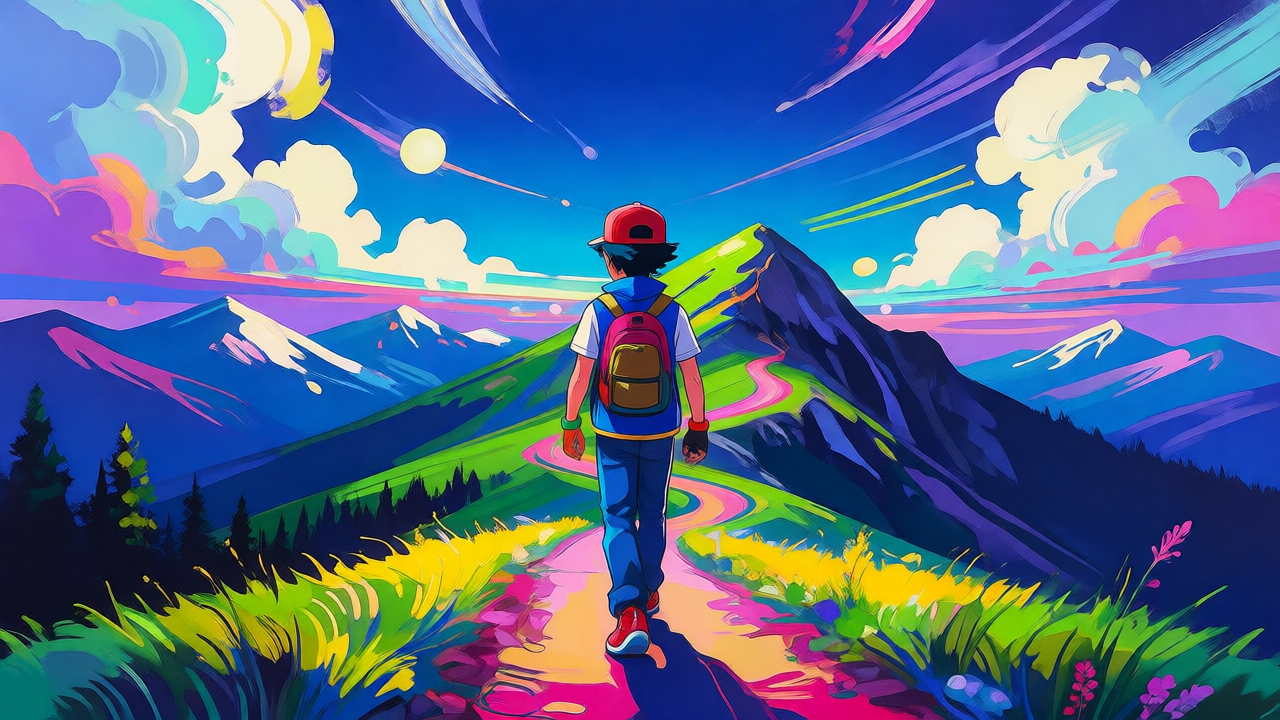
[REG:pompous]: Indeed. Let us recount the saga as it was presented to the masses, so our listener may grasp the magnitude of Ash Ketchum’s odyssey. Our story begins in Pallet Town, a quaint little corner of the Kanto Region. We meet a ten-year-old boy named Ash Ketchum who possesses an abundance of ambition and, frankly, a startling lack of preparation. Instead of receiving his starter Pokémon through standard academic channels, he is given a disobedient, yellow electric rodent named Pikachu by Professor Oak. This mishap sets him on a path of perpetual travel across vast, diverse regions like Johto, Hoenn, Sinnoh, Unova, Kalos, Alola, and Galar.
[REG:pompous]: Ash does not travel alone; he gathers a rotating cast of companions who each pursue their own distinct ambitions. There is Misty, a Water-type specialist, and Brock, a Pokémon Breeder with an unfortunate penchant for flirting. As the journey expands, we meet May, Dawn, Serena, Lillie, Goh, and others—each adding to the colorful, if chaotic, tapestry of his travels. Their lives are frequently interrupted by a trio of persistent antagonists: Jessie, James, and Meowth of Team Rocket. These three represent the primary criminal element, constantly attempting to steal rare Pokémon for profit or power, yet they often find themselves more acquainted with Ash than any other character in the series.
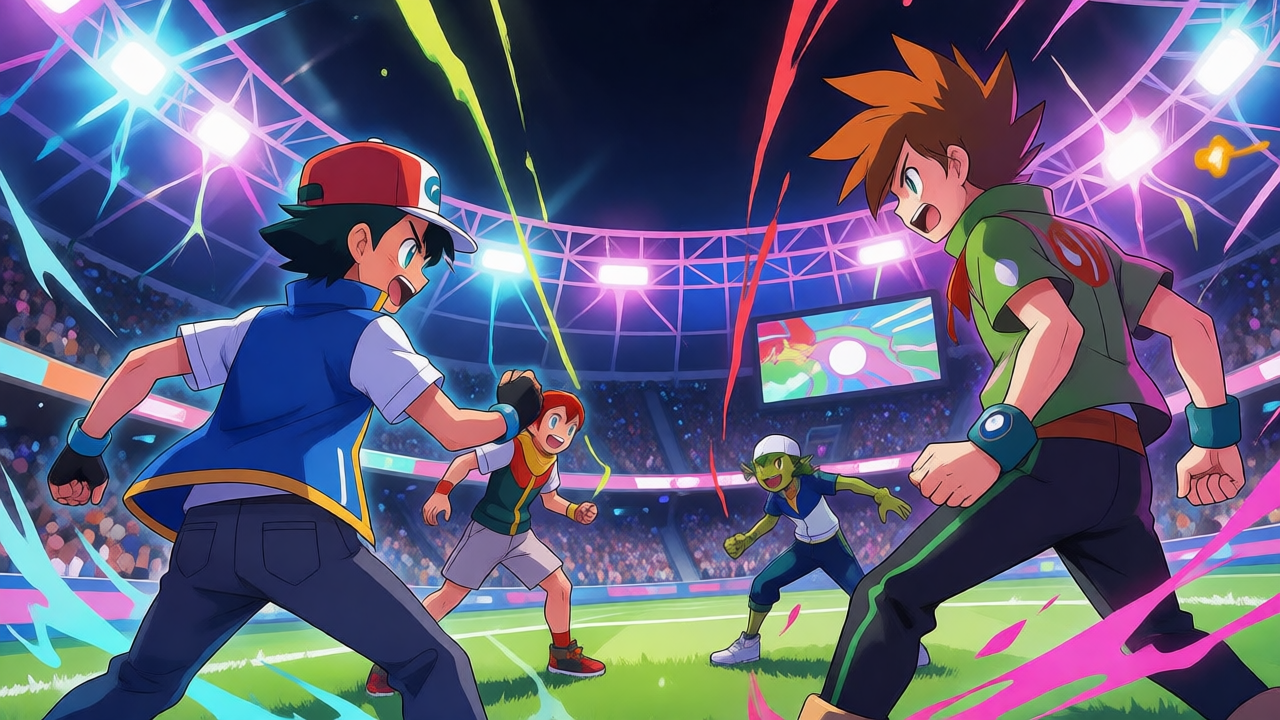
[REG:pompous]: Throughout this decades-long trek, Ash's singular goal is to become a "Pokémon Master," which necessitates competing in various high-stakes tournaments known as Pokémon Leagues. He faces off against numerous rivals, including Gary Oak, his childhood peer; Paul, a cold and strategic trainer; and Trip. These competitions are the emotional pillars of his journey, where he encounters legendary creatures and experiences profound triumphs and devastating losses. For years, Ash’s story is defined by these near-misses—he strives for greatness but often falls just short of the ultimate championship in many of these regional leagues.
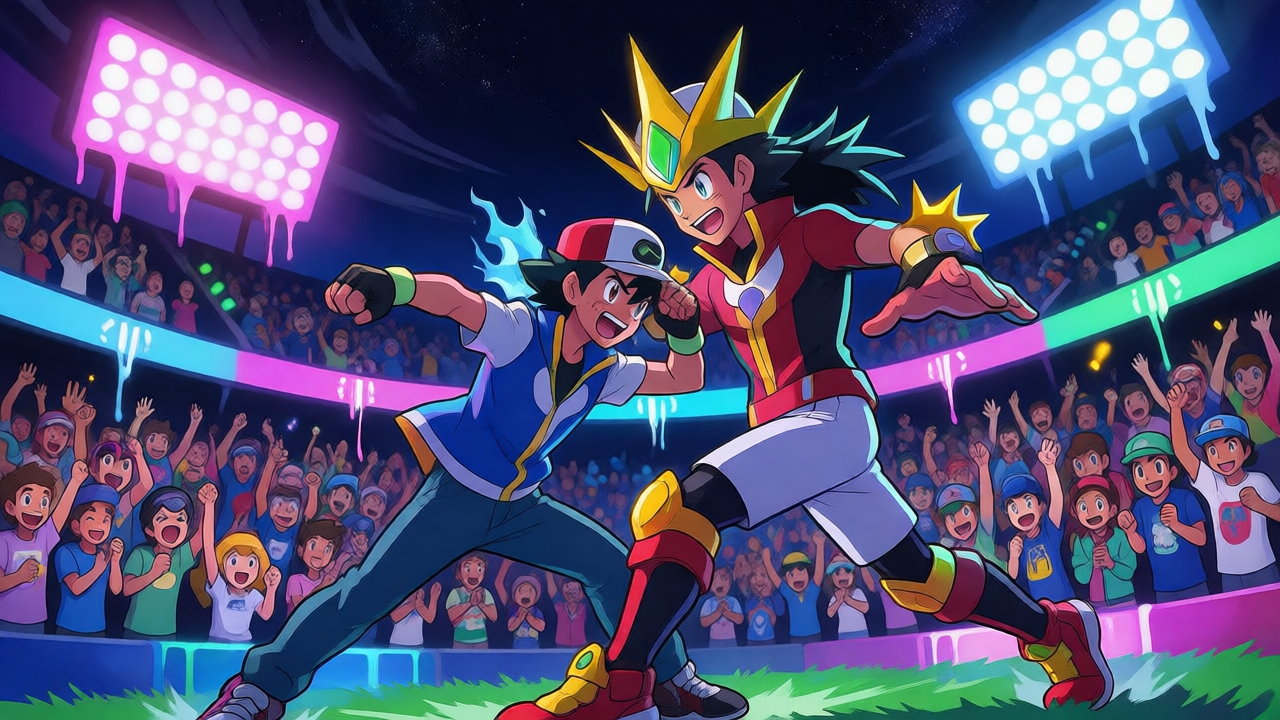
[REG:pompous]: However, the narrative trajectory shifts as we approach his later years. In the Alola region, Ash experiences a significant milestone when he achieves the title of the first-ever Champion of the Alola League. This victory is followed by an even more monumental escalation in the World Coronation Series. Here, Ash faces Leon, who was considered the pinnacle of strength. Through sheer tenacity and his bond with Pikachu, Ash defeats Leon to become the Monarch of the World Coronation Series—effectively becoming the strongest Pokémon Trainer in the world.
[REG:pompous]: Yet, the story does not end with a definitive conclusion to his character arc. After reaching this absolute peak of power as a World Champion, Ash does not retire or settle into a mentorship role. Instead, he simply continues his travels with Pikachu, driven by an insatiable desire to meet and befriend even more Pokémon on his quest to truly understand what it means to be a Master. The series eventually transitioned its focus entirely away from him, introducing new protagonists named Liko and Roy in the Pokémon Horizons era, effectively passing the torch once Ash had reached the summit of everything there was to achieve.
[EDDIE:crude]: It sounds like some epic, life-changing adventure when you put it that way, but if you look at the actual history this thing mirrors, it’s a lot less "inspirational" and a lot more unsettling.
[REG:pompous]: You are referring to the socio-economic parallels, I assume?
[EDDIE:crude]: Damn right. Because when you look at how Ash moves through these regions, he looks less like a kid on an adventure and more like a colonial scout in the era of rapid industrial expansion.
[EDDIE:crude]: ---
FIRST TAKE
[EDDIE:aggressive]: Look at the way he handles every single creature he meets. He’s out there, a ten-year-old kid with zero formal training, basically playing god with these animals' lives! You mention him "befriending" them, but let's be real—it’s a predatory cycle. He finds a rare, powerful beast, breaks its spirit through combat until it obeys him, and then he just... moves on to the next one once he's reached his goal for that region. It is pure utilitarianism at its most selfish; he treats sentient beings as mere means to his own personal glory.
[REG:dismissive]: Your grasp of ethics is as shaky as your understanding of the narrative, Eddie. You are describing a virtuous pursuit of connection. Under a virtue ethics framework, Ash isn't exploiting these creatures; he is cultivating excellence through companionship. He doesn't just "use" them; he undergoes a moral evolution alongside them. The bond between him and Pikachu isn't a transaction; it's a mutual commitment to growth.
[EDDIE:crude]: That’s some high-minded bullshit right there, Reg. If he was so focused on "growth," why is every single battle a goddamn meat grinder? He puts these creatures in life-or-death situations against literal elemental deities just to see if they can handle it. It's reckless as hell. He’s not teaching them; he’s testing their limits until one of them inevitably snaps or gets hurt.
[REG:condescending]: You are operating at the confidence level of someone who has never checked a textbook. To suggest that seeking mastery is inherently immoral ignores the teleological purpose of their existence in that world. They strive for greatness; he provides the catalyst. He isn't a villain; he's an agent of potentiality.
[EDDIE:hyped]: An agent of chaos, you mean! The kid doesn't even know what he's doing until after the damage is done!
[EDDIE:hyped]: ---
VILLAIN ORIGIN
[EDDIE:aggressive]: You want to talk about his "motivation"? Let's look at the wreckage he left behind before he even stepped foot in a gym. Ash Ketchum didn’t just stumble into an adventure; he was a walking anomaly from day one. He’s a kid who bypasses every social and educational standard of his world just because he has this weird, magnetic destiny.
[REG:pompous]: You are romanticizing chaos again, Eddie. He is the human element. The creator, Satoshi Tajiri, explicitly stated that Ash was designed to represent the "human aspect" of the franchise—the bridge between the player and the creatures.
[EDDIE:crude]: Yeah, well, that "bridge" looks more like a goddamn wrecking ball when you realize what he actually did to the status quo. Before this kid showed up, there was a sense of order in how trainers approached the world. Then comes Ash, a kid who doesn't even know his own starter, and suddenly every single trope about the "journey" is hijacked by his sheer, unearned momentum. He didn't just enter the culture; he colonized it.
[REG:condescending]: That is a remarkably colorful way to describe a child discovering companionship. However, if you examine the impact of his character design, specifically how it was localized for Western audiences, you see something more profound. By changing his name and surname to "Ash Ketchum," the creators weren't just playing with words; they were hardcoding a consumerist drive into his very identity. He is literally named after the act of consumption.
[EDDIE:hyped]: Exactly! That’s my point! Even his damn name is a brand mandate. The kid isn't a person; he’s an engine for merchandise. Think about the cultural impact of that shift. Because he was designed to be this vessel for "catching 'em all," every character who came after him—every new protagonist in every new region—has been forced to live in the shadow of his specific, manic energy. He set a template for the "eternal child" that has paralyzed the genre.
[REG:dismissive]: You are conflating successful marketing with narrative stagnation. His legacy is one of accessibility. Because he represents an endless loop of potentiality, the series could persist for decades. He became a global icon because he allowed every generation to see themselves in his pursuit.
[EDDIE:crude]: Or because he’s a character that can never actually grow up or face consequences! That's the real crime here, Reg. His impact on the medium was to teach kids that you don't need a plan, or a degree, or even a functioning grasp of logic—you just need enough sheer willpower and a loud voice to bend reality to your whim. He didn't inspire trainers; he inspired reckless egoists who think they can skip all the hard work and go straight to the championship.
[REG:impressed]: I will concede that his influence has created a certain... narrative inertia. The "Ash Ketchum Model" of protagonist—the endless, ageless journeyer—has arguably made it difficult for the franchise to ever truly evolve past its own iconography.
[EDDIE:aggressive]: It’s more than just inertia; it's a goddamn ceiling. He became so massive that he effectively broke the scale of what a Pokémon trainer was supposed to be. He turned a tactical, strategic world into a chaotic brawl where whoever screams "Pikachu!" the loudest wins. That’s not a legacy, Reg. That’s a monopoly on storytelling.
[EDDIE:aggressive]: ---
THE CASE
[EDDIE:hyped]: Time for The Rap Sheet, and I’m coming for his head! We've talked about the money and the branding, but let's get into the real sickness here: the psychology of this kid. You think Ash is some wide-eyed optimist? He’s a manic, dopamine-addicted wreck who uses "friendship" as a psychological shield to justify total obsession.
[REG:pompous]: That is an incredibly dark reading of what is essentially a study in adolescent resilience. You are taking a child's passion and reframing it as a clinical pathology.
[EDDIE:crude]: I’m calling it like I see it! This isn't just "passion," Reg, it's a compulsion. Think about his mental state every time he loses. He doesn't sit down and analyze the tactical failures or the structural weaknesses in his training regimen. No, he just gets more... intense. It’s like he has this pathological need to prove himself to a world that doesn't actually care if he wins or not. Every single battle is a high-stakes rush for him, a desperate attempt to validate an identity built entirely on "being the best." He isn't traveling to see the world; he's traveling to outrun his own inadequacy.
[REG:condescending]: His drive is the classic Aristotelian pursuit of excellence. You are describing a healthy development of character through struggle, yet you insist it’s a mental deficiency.
[EDDIE:aggressive]: Is it? Look at how he treats Pikachu! I'm not talking about the "bond" bullshit you keep peddling. I'm talking about the psychological dependency. He has tethered his entire sense of self-worth to a single creature. If Pikachu fails, Ash’s world collapses. That is an insane amount of pressure to put on a sentient animal! It’s not a partnership; it’s a codependent nightmare. He needs the battle to feel alive because he has no internal stability outside of that combat loop.
[REG:pompous]: You're ignoring the evidence of his empathy. Even in your "psychological" framework, his capacity for emotional connection with Pokémon is unparalleled.
[EDDIE:crude]: Empathy? That’s a hell of a stretch! If you actually look at his behavior, he’s a master of projection. He sees himself in every Pokémon he meets—the underdog, the outcast, the one people gave up on. He doesn't love them for who they are; he loves them because they are reflections of his own bruised ego. He’s not saving them; he’s trying to save himself through them!
[REG:amused]: I suppose you would argue that even a saint is just narcissistically projecting their own virtues onto the divine?
[EDDIE:hyped]: Exactly! And it gets weirder. There's this theory among some fans—and it makes total sense when you look at how he operates—that Ash actually has a fundamental inability to form stable human connections because his brain is hardwired for the "high" of the battle. He travels with companions, sure, but they are always secondary to the next gym, the next legendary, the next god-tier fight. They are emotional support animals for his journey!
[REG:impressed]: For a fleeting moment, you sounded almost scholarly. You're touching on the idea of "displacement." He displaces his need for social stability onto these creatures because they provide immediate, visceral feedback that humans simply cannot offer.
[EDDIE:aggressive]: Precisely! And it's toxic as hell! He’s a walking vacuum of emotional needs, sucking up all the attention and energy of everyone around him to fuel this endless, frantic pursuit of a goal that doesn't even exist. He's not chasing the title of Pokémon Master; he's chasing a dopamine hit that never stays long enough to satisfy him.
[REG:condescending]: Your position would require me to abandon causality and I am not prepared to do that. The "trauma" you're inventing is actually just the standard growing pains of a hero in a high-stakes world. He isn't broken; he's just... focused.
[EDDIE:crude]: Focused? Man, the kid's fucking manic! You can call it "focus" all you want from your ivory tower, but to anyone watching, it looks like a kid who’s terrified of standing still for even a second because if he stops moving, he might actually have to face the fact that he's just a lonely boy with a yellow rat and a massive ego.
[EDDIE:crude]: ---
REBUTTAL
[REG:impressed]: Remarkably, I have no objection to the psychological complexity you've attributed to him, but you are completely ignoring the actual results of his presence in those regions. If we look at the data, Ash Ketchum isn't just a traveling menace; he is a walking catalyst for regional stability and ecological preservation.
[EDDIE:disbelief]: Stability? Reg, the kid shows up and every legendary bird or god-tier entity starts acting like they have a death wish! He’s basically a magnet for cosmic chaos.
[REG:pompous]: On the contrary, he is often the only thing preventing total catastrophe. Consider his actions in the Orange Islands or during the various crises involving Team Rocket's more extreme schemes. In many instances, Ash doesn't just "battle"; he intervenes in systemic corruption. He has stood against organized criminal syndicates that threaten the very fabric of the Pokémon ecosystem. You call him a predator, but I see a boy who consistently puts his own safety and his reputation on the line to protect creatures from exploitation by much more dangerous adults.
[EDDIE:crude]: Yeah, he "protects" them by dragging them into high-octane wars! It’s like saying a kid is a hero because he saves you from a fire by throwing you out of a second-story window. He creates the very chaos he claims to be fixing.
[REG:condescending]: Your penchant for hyperbolic analogies is exhausting, Eddie. Let us look at his actual record of empathy. In the Kalos region, during the struggle against Team Flare, Ash didn't just fight for glory; he fought to prevent the mass destruction of entire species. He has demonstrated a capacity for profound self-sacrifice that transcends mere "dopamine hits." There are countless episodes where he chooses the well-being of a Pokémon over his own progress in a tournament. That isn't ego; it is a genuine moral compass.
[EDDIE:aggressive]: A moral compass that’s constantly spinning like a goddamn fidget spinner! He’s inconsistent as hell. One week he’s saving the world, and the next he’s ignoring his own Pokémon to chase some new shiny thing in the tall grass. It's total emotional whiplash for everyone involved.
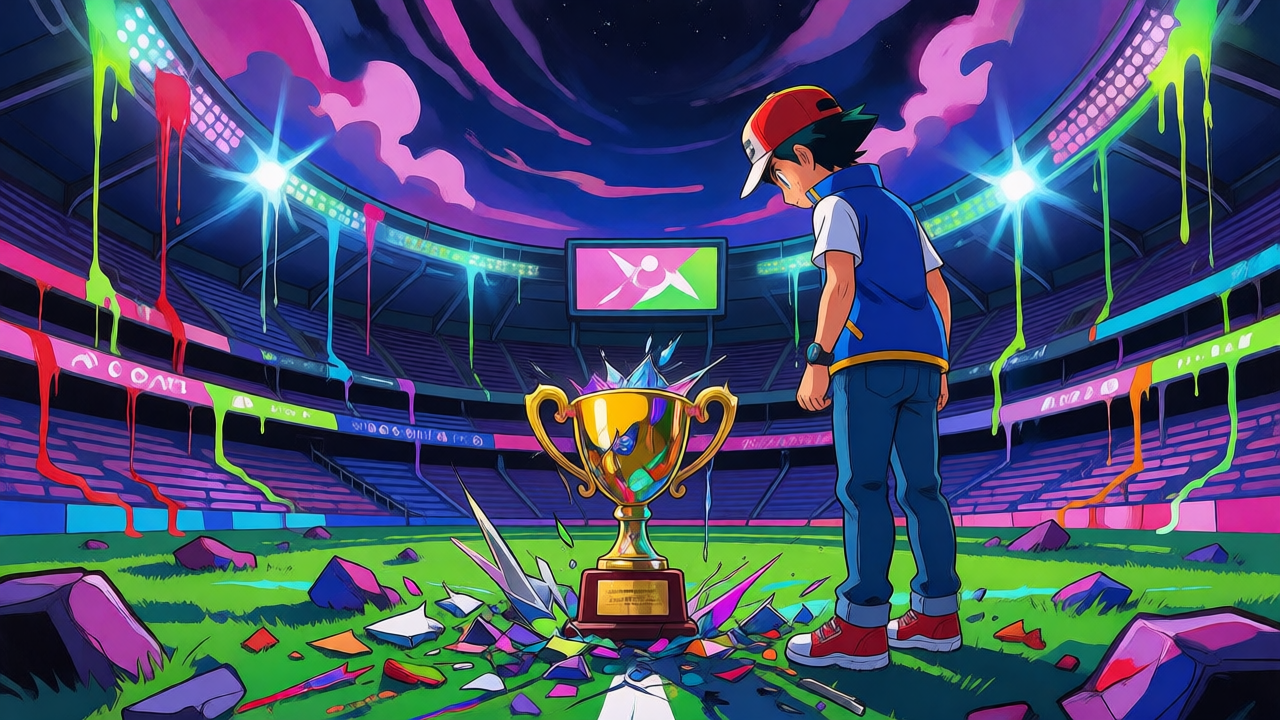
[REG:pompous]: The internet loves to say that Ash is a "failed protagonist" because he doesn't win every single trophy, but they miss the point entirely. His greatness isn't measured by a plastic cup from a regional league; it’s measured by the fact that entire cultures and ecosystems have been stabilized or inspired by his journey. He creates a network of connections—through people like Misty, Brock, and Serena—that fosters cooperation across diverse regions.
[EDDIE:hyped]: Or he just leaves a trail of broken hearts and abandoned partners in his wake! I’m telling you, Reg, the guy is an emotional wrecking ball disguised as a saint.
[EDDIE:hyped]: ---
REAL VILLAIN
[EDDIE:hyped]: Hold up. Hold UP. Run that back. You’re telling me the reason this kid is a walking disaster is because he's essentially a corporate puppet? That his whole "growth" is just a fucking marketing tactic to keep the toy sales coming in from new generations of kids?
[REG:impressed]: Precisely. When you step outside the narrow confines of Pallet Town and look at the broader landscape of shonen protagonists, Ash Ketchum stands out as an anomaly—not because of his strength, but because of his stagnation. He is a narrative vacuum.
[EDDIE:crude]: A fucking vacuum! That's it! You’re saying he doesn't even have a real arc? Every time the franchise needs to reset the clock so some new kid can start their journey, they just... freeze him in time? It's some heavy-duty bullshit if you ask me.
[REG:pompous]: It is more akin to a temporal loop of consumerism. Consider Goku from *Dragon Ball*. While he certainly undergoes transformations and shifts in power scale, his growth is functionally permanent; he carries the weight of his experiences into the next saga. Even Naruto Uzumaki evolves from a social pariah to a political leader. Their trajectories are upward, linear, and consequential.
[EDDIE:aggressive]: But Ash? Ash just stays ten! He goes through all these massive, world-shaking battles—he's literally fighting gods in the Alola region—and then he just... resets? It’s like watching a man run a marathon on a treadmill. He’s putting in all this goddamn effort, but he isn't actually going anywhere.
[REG:condescending]: You are describing a fundamental difference in structural intent. Goku and Naruto are characters designed for long-form serialized epic storytelling where the stakes evolve with the protagonist. Ash Ketchum, however, is an icon of perpetual accessibility. He is not allowed to grow up because if he did, he would lose his utility as a vessel for every new generation's emotional investment.
[EDDIE:crude]: So you're saying he's essentially a glorified mascot that’s been tricked into thinking he’s a person? That’s fucking wild. It makes everything about his "journey" feel like a lie. He isn't out there discovering himself; he's just being recycled to sell more plushies.
[REG:pompous]: In a sense, yes. If we compare him to a character like Edward Elric from *Fullmetal Alchemist*, the contrast is staggering. Ed’s journey is defined by the consequences of his mistakes—the law of equivalent exchange dictates that every step forward requires a sacrifice. Ash's "mistakes" are erased by the next season's soft reboot. He experiences the chaos of war without the permanent scars of leadership or the burden of aging into responsibility.
[EDDIE:hyped]: And that’s what makes him dangerous! It teaches kids that you can just bypass all the actual, real-world consequences of your actions by being "the hero." You don't need to learn from a mistake if the universe just resets your status quo so you can go on another adventure next week.
[REG:amused]: The audacity of your comparison is almost admirable, Eddie. But you are touching on something profound. He is the ultimate symbol of a system that prioritizes brand longevity over character integrity. He is not a hero fighting for justice; he is a consumerist loop designed to look like one.
[EDDIE:crude]: A loop... damn. So the real villain isn't Team Rocket or some crazy legendary bird. It’s the fucking production cycle itself, and Ash is just the guy stuck in the middle of it, doing all the work while never actually getting to live a life.
[REG:pompous]: Indeed. He is the victim of his own success—a character so profitable that he was denied the right to ever truly exist as a completed human being.
[REG:pompous]: ---
AFTERMATH
[EDDIE:hyped]: Alright, let's look at what happens when the camera stops rolling and we actually consider the wake of destruction this kid leaves behind. You think he’s just moving from town to town? He’s a goddamn ecological wrecking ball! Have you ever looked into the fan theories about the "Legendary Magnetism" effect? People in the community have been dissecting this for years, and it's terrifying. Every time Ash shows up, these massive, reality-warping deities—Lugia, Lugia’s kin, Dialga, Palkia—suddenly decide to start having a mid-life crisis right in his backyard!
[REG:impressed]: I must admit, the correlation is statistically significant. The "Ash Effect" is a well-documented phenomenon within the more dedicated sectors of the fandom. It's as if his presence acts as a localized disruption in the natural order of the Pokémon world.
[EDDIE:aggressive]: Disruption? It’s a fucking catastrophe! You have these ancient beings that are supposed to maintain the balance of time and space, and suddenly they’re getting caught up in some kid's playground spat with Team Rocket or his latest tournament run. The downstream consequence is nothing but chaos. Think about the actual cost: entire ecosystems get destabilized because a ten-year-old decided he needed to "test" himself against a force of nature. He doesn't just win battles; he leaves behind a trail of cosmic instability that some poor local authorities probably have to clean up for decades!
[REG:condescending]: You are once again catastrophizing a narrative necessity as a systemic failure. If anything, his presence is the only reason these entities are even interacting with the human plane at all. Without him, they would remain isolated and potentially more volatile in their slumber. He provides a controlled interface for the divine to engage with the mundane.
[EDDIE:crude]: Controlled? My ass! There is nothing "controlled" about it! And don't even get me started on what he does to his own team once the hype dies down. Look at the lore regarding the Pokémon he leaves behind at Professor Oak’s lab. The sheer number of high-tier, incredibly powerful creatures that just... sit in a backyard because Ash decided he was "done" with them for this season? That is a psychological graveyard, Reg! He gathers these incredible, sentient beings, pushes them through hell to reach peak power, and then treats them like old gym equipment once his next journey starts.
[REG:dismissive]: The idea that the Oak Laboratory is a "graveyard" is a gross mischaracterization of what fans call the "Retirement Theory." Those Pokémon are provided with optimal care and social interaction in a controlled environment, far from the trauma of constant combat.
[EDDIE:hyped]: It’s still bullshit! You don't get to just "retire" a creature that has been conditioned for high-stakes combat by its own trainer. You've fundamentally altered their biology and their psyche, and then you just park them in a field because it's convenient for the next reboot. He isn't just a hero; he’s an emotional and biological architect of chaos!
[EDDIE:hyped]: ---
VERDICT
[EDDIE:aggressive]: Alright, I've heard enough of your high-minded academic defense of this kid's "potentiality," Reg. You can keep your structured narratives and your perfect little arcs. When it comes down to the actual evidence we've laid out today, I'm sticking to my guns. Ash Ketchum is guilty as hell! He is a walking catastrophe who uses "friendship" as a smokescreen for chaos, a narrative vacuum designed by corporations to stay ten years old forever just so they can keep selling the same damn toys, and an emotional wrecking ball that leaves a trail of destabilized ecosystems and abandoned partners in his wake. The kid isn't a hero; he's a high-octane engine of disruption wrapped in a marketing package!
[REG:pompous]: Your passion is noted, Eddie, but your conclusion remains remarkably reductive. While I will concede that the structural reality of his existence is... problematic—he is indeed a victim of an industry that refuses to let its icons age or face permanent consequences—I cannot label him a villain. To do so would be to ignore the sheer scale of the connections he facilitates. He is not "chaos"; he is the catalyst for change in a stagnant world. Even if his journey is a loop, it is a loop of profound impact that has shaped the cultural landscape of an entire generation. The case against him lacks the moral weight required for a guilty verdict.
[EDDIE:crude]: A loop of impact? That's just fancy talk for "it sells well," man! You’re basically saying he’s successful, so he must be good. That is some weak-ass logic, Reg. Even if we agree the system is rigged to keep him a kid, that doesn't change the fact that he's the one out there causing all the mess!
[REG:dismissive]: We have reached the inevitable impasse. You see a perpetrator of chaos; I see an agent of evolution who simply lacks the permission to grow up. The prosecution has presented a compelling case for his role in systemic and ecological disruption, but the defense maintains that the net result is one of inspiration rather than harm.
[EDDIE:hyped]: Whatever, man. You can keep your "agents of evolution." I'll stick with the guy who's actually breaking things!
[REG:calm]: The evidence has been laid bare. Whether you view him as a champion for connection or a tool of corporate stagnation is entirely up to you.
[EDDIE:hyped]: Yeah, go ahead and head to the comments right now. Tell us what you think. Is Ash Ketchum a genuine hero who brings people together, or is he just a manufactured icon causing more chaos than he's worth? Which argument actually landed for you—the psychological dependency or the systemic reset?
[REG:pompous]: Cast your vote below. The verdict is in your hands.
[REG:pompous]: ---
OUTRO
[REG:pompous]: The session is officially adjourned, though I suspect the discourse surrounding this particular child will continue to oscillate between reverence and resentment for years to come.
[EDDIE:crude]: Yeah, well, if you're still out here defending that little shit as some kind of saintly savior, you're probably just too toasted to see the chaos he leaves in his wake.
[REG:condescending]: If you find the complexities of regional ecological disruption too taxing for your current cognitive state, I suggest a period of quiet reflection. For everyone else, if you believe Ash Ketchum is a genuine hero and not a corporate-mandated agent of stagnation, support our work by subscribing to the channel.
[EDDIE:hyped]: And if you're on my side and think he's a walking disaster who needs to be stopped, smash that like button right now! Tell us in the comments why his whole "friendship" thing is just a cover for being a total menace.
[REG:pompous]: Your engagement provides the vital sustenance required for our continued investigations into the darker facets of popular culture. You can find our full archives and further inquiries at Laser Chicken Studios dot com.
[EDDIE:crude]: Don't forget to go down there and cast your verdict! Tell us if you think he's a hero or if he’s actually the real villain of the series—and don't just give us one-word answers, tell us *why* you think that. Was it the collateral damage or the damn merchandise?
[REG:pompous]: The final judgment is yours to deliver. We await your analysis with interest.
[EDDIE:hyped]: Yeah! Go get 'em!
[REG:calm]: Villain's Advocate.
[EDDIE:crude]: Villain's Advocate.
[EDDIE:crude]: ---
POST CREDITS
[EDDIE:convinced]: I’m telling you, man, he was wearing a silver jumpsuit when he went to get his mail at like three in the morning and he looked totally faded out of sync with reality.
[REG:pompous]: You are conflating temporal displacement with mere physiological exhaustion, Eddie; the man is simply eccentric.
[EDDIE:defensive]: No way, I saw him blink and his whole face just... shifted, like he was super toasted in time or something, and then he vanished behind those hedge bushes.
[REG:dismissive]: Perhaps he merely underwent a profound shift in perception during a recent research session involving high-dose psilocybin.
[EDDIE:insistent]: He’s definitely from the future, man, I was so baked I thought his mailbox was vibrating through dimensions, and then—--
🖼 Gallery
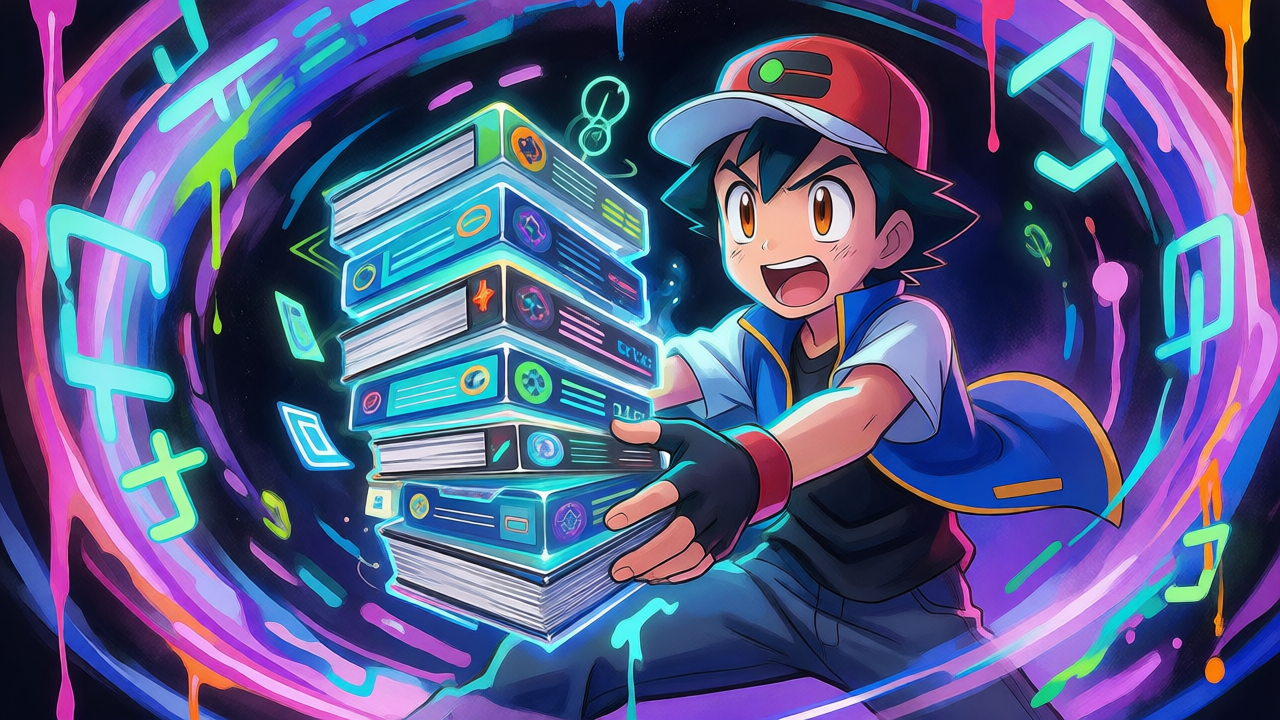
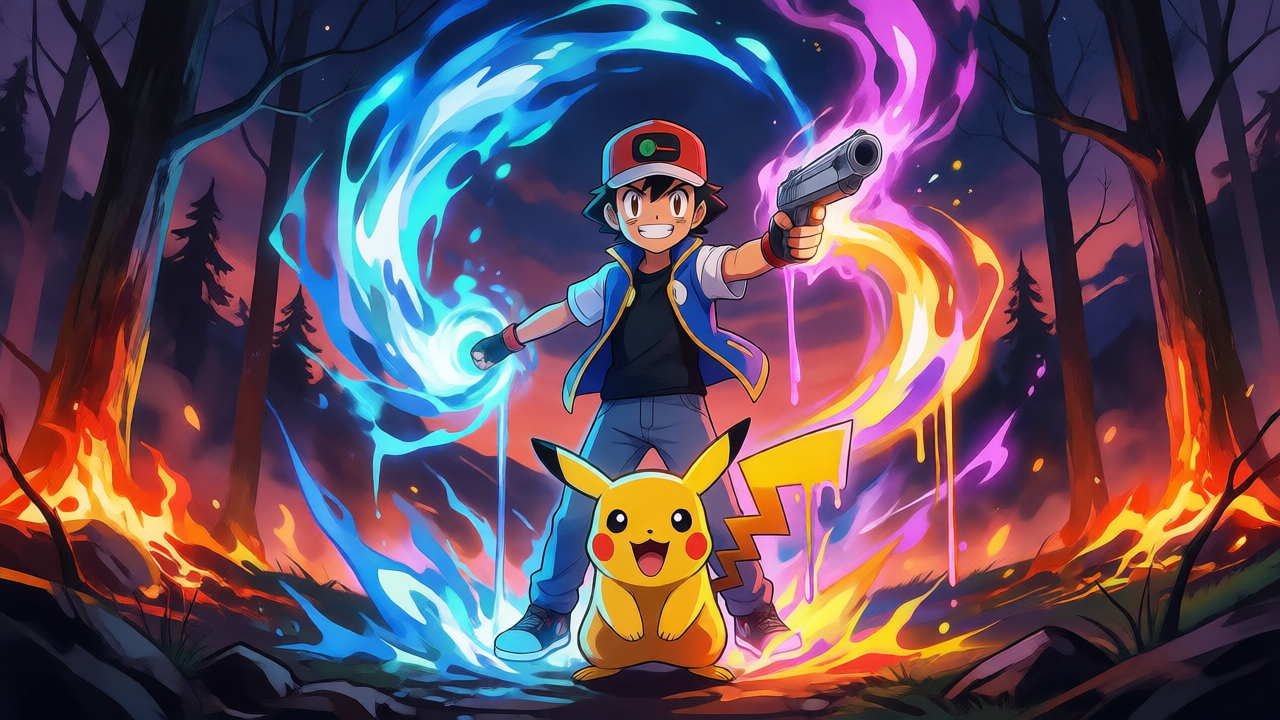
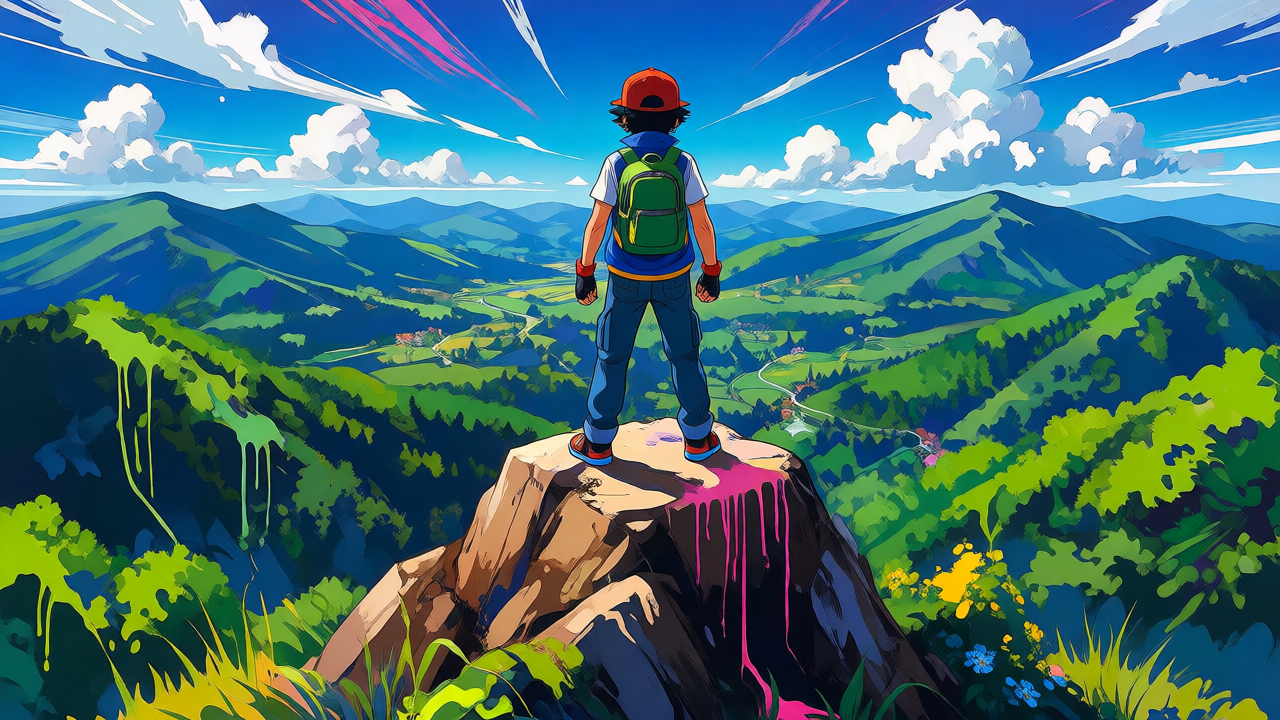
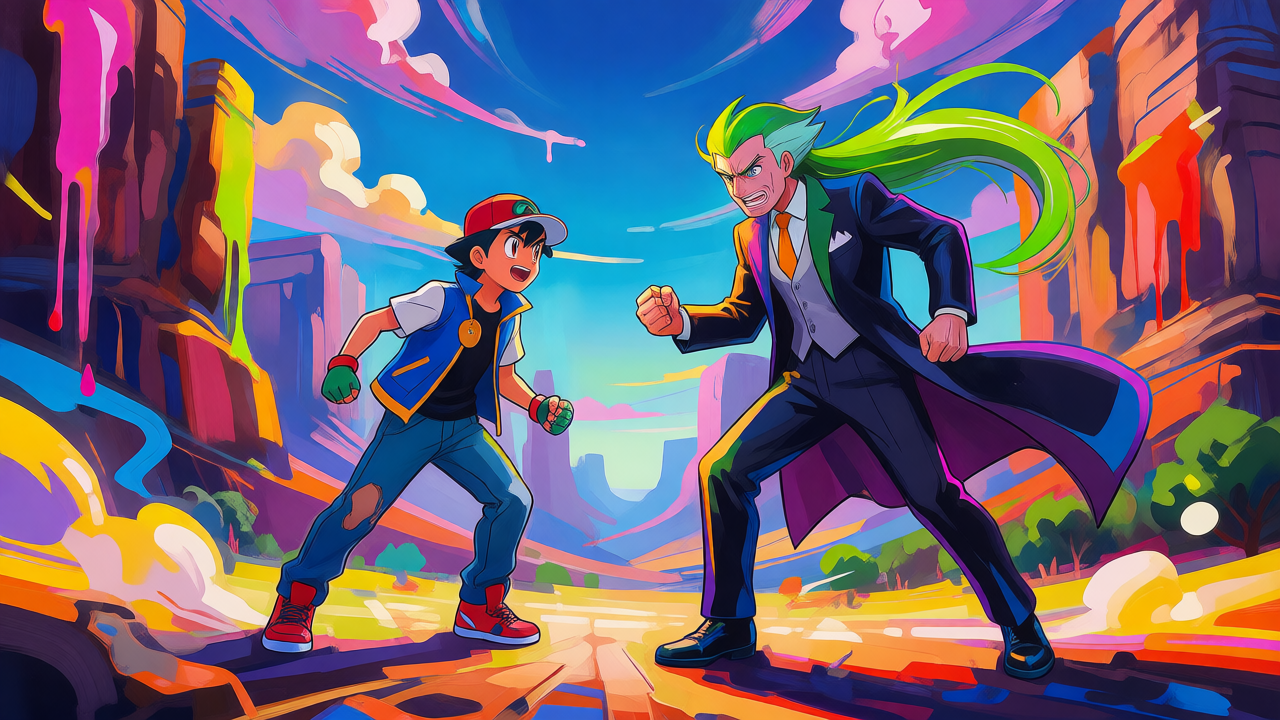
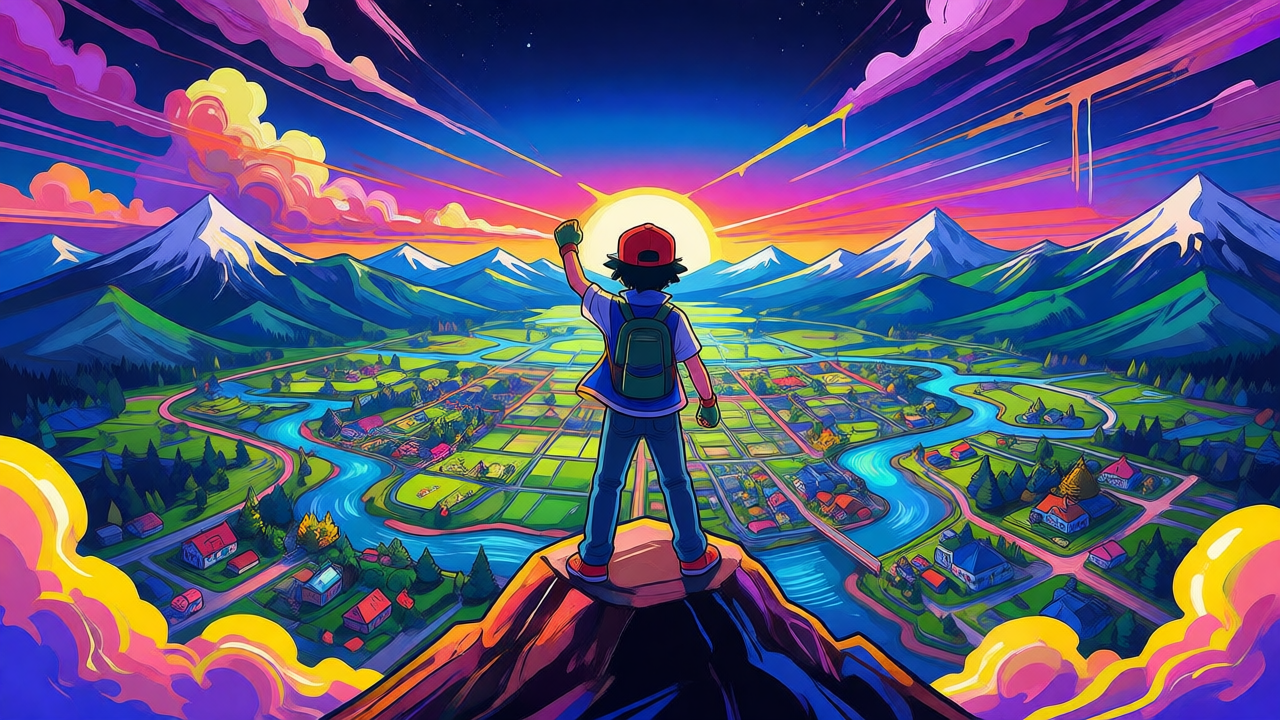
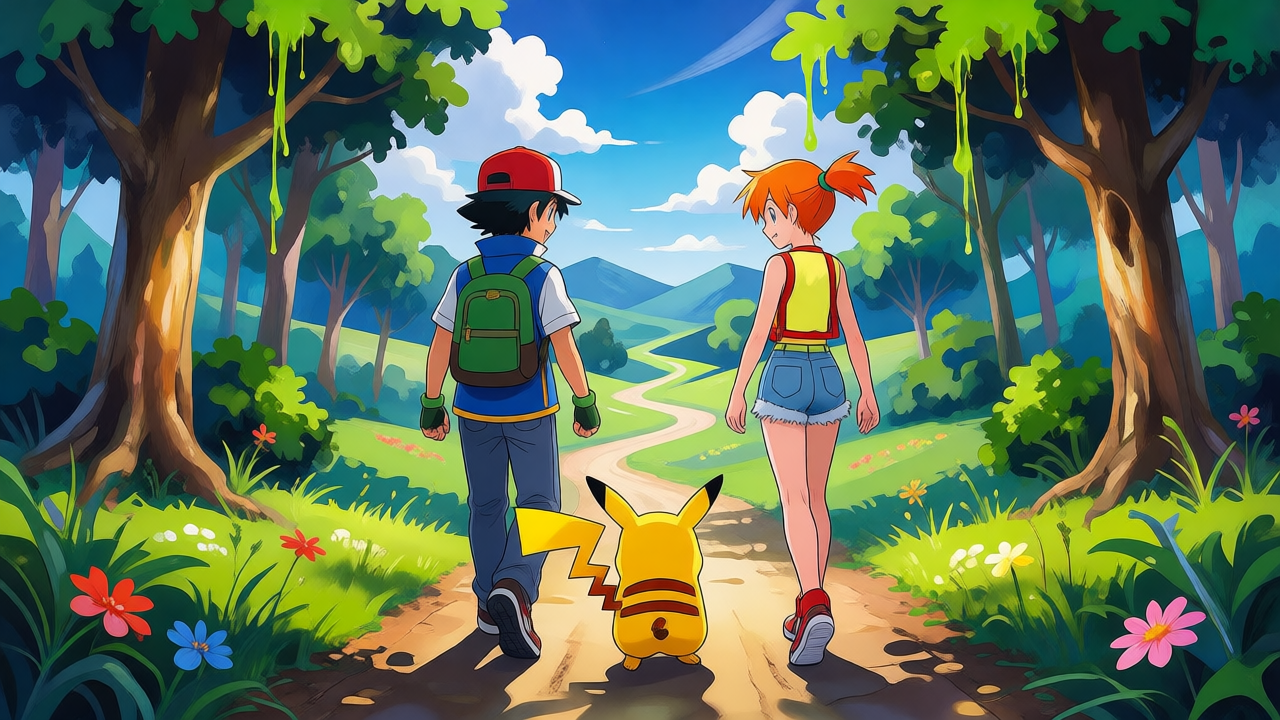
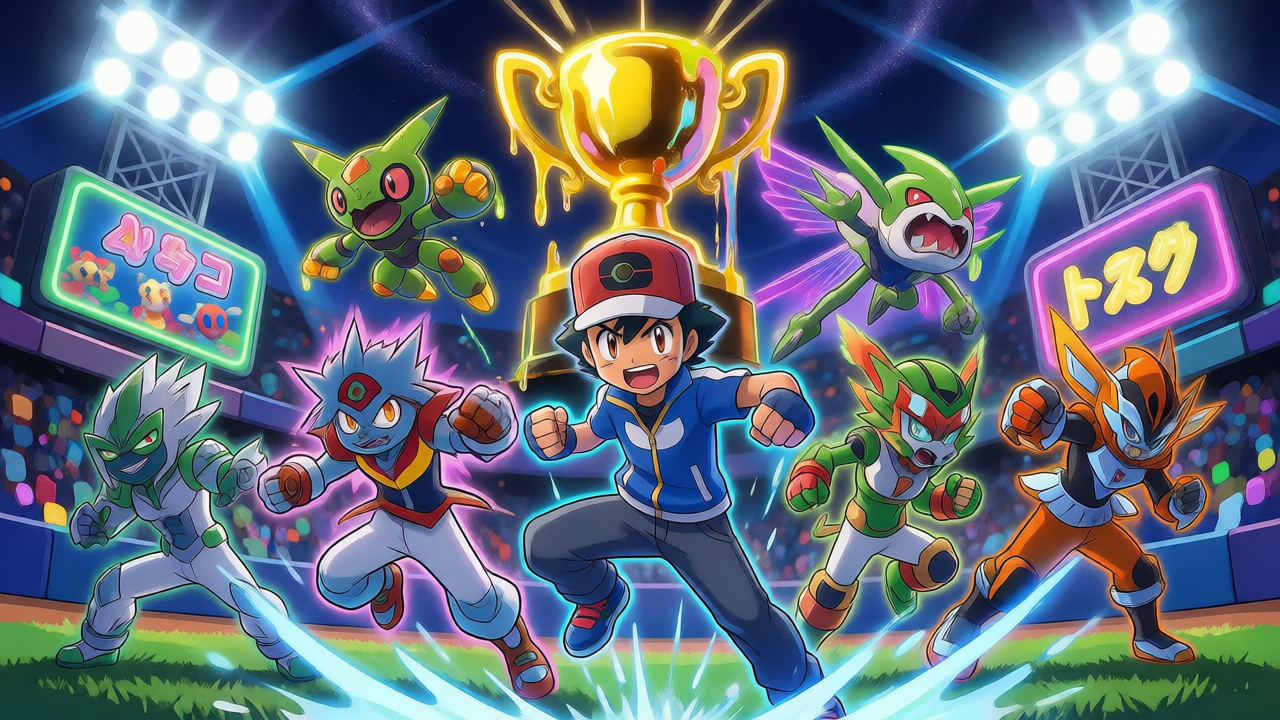
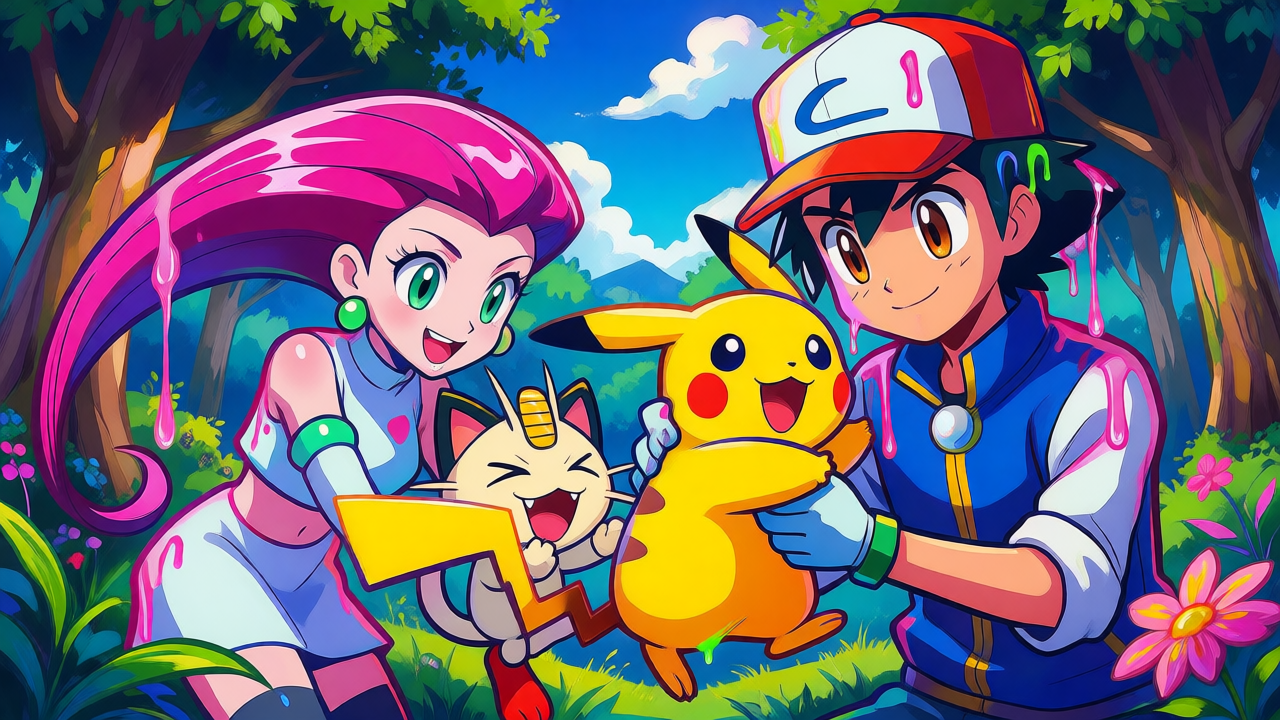
🎙 Bonus Banter
Bonus Banter — Ash Ketchum
Take 1
[EDDIE:baked]: ...but see, that’s why you can't trust pigeons, man. They got that jittery eye-twitch like they're on the high-grade stuff.
[REG:pompous]: That is a gross biological misinterpretation, Edward. Their ocular motility is merely an evolutionary byproduct of hyper-vigilance in urban environments.
[EDDIE:blazed]: Nah, nah, I saw one outside the dispensary staring at me for like three minutes straight. He knew my whole life story, Reg. He was vibing on a different plane.
[REG:pretentious]: If you are suggesting avian sentience is linked to urban nutrient density—which, granted, is an intriguing hypothesis regarding neuroplasticity—you're still being reductive.
[EDDIE:giggles]: I’m telling you, they’re just little feathered government drones running on high-octane...
[REG:smug]: Actually, if we consider the fractal geometry of their wing-flaps during a descent, it suggests a much more sophisticated—
---
Take 2
[EDDIE:baked]: ...but I’m tellin' you, man, if you put enough ranch on a taco shell, it basically becomes a salad, right?
[REG:moody]: That is a fundamentally flawed ontological categorization, Eddie; you are merely observing the collapse of structural integrity through dairy-based lubrication.
[EDDIE:wired]: Don’t get all "syllogism" on me, Reg, my point is the crunch factor gets totally muted by the dressing—it's like eating wet cardboard, man.
[REG:cerebral]: It is a sensory tragedy, truly, a dissolution of the crispness that defines the very essence of the corn substrate...
[EDDIE:giggling]: You sound like you’re writing a thesis for Taco Bell, dude, just say it's soggy and let's get some more fries.
[REG:distracted]: The texture is an illusion created by the intersection of salt and fat, yet I find myself craving the chaos of—
[EDDIE:lethargic]: If we don't order these nuggets in the next five minutes, I’m gonna start chewing on my own...
---
Take 3
[EDDIE:high]: ...and I'm tellin' you, man, if you put enough ranch on a taco, it’s basically a salad.
[REG:mood:pompous]: That is a reductionist fallacy, Eddie; you are merely obfuscating the structural integrity of the tortilla with dairy-based sludge.
[EDDIE:lit]: Don't get all "thesis statement" on me, man, just admit that ranch is like the glue of the universe, ya know? It’s like cosmic lube for flavor.
[REG:mood:transcendental]: Perhaps... but I find it troubling how its viscosity mimics the amniotic fluid of a more flavorful dimension.
[EDDIE:blazed]: Dude, stop getting all trippy about salad dressing, you're makin' my mouth water in a weird way. If we had like, a giant vat of—
[REG:mood:philosophical]: A reservoir of emulsion? One must wonder if the sensation of dipping is actually an attempt to recreate—